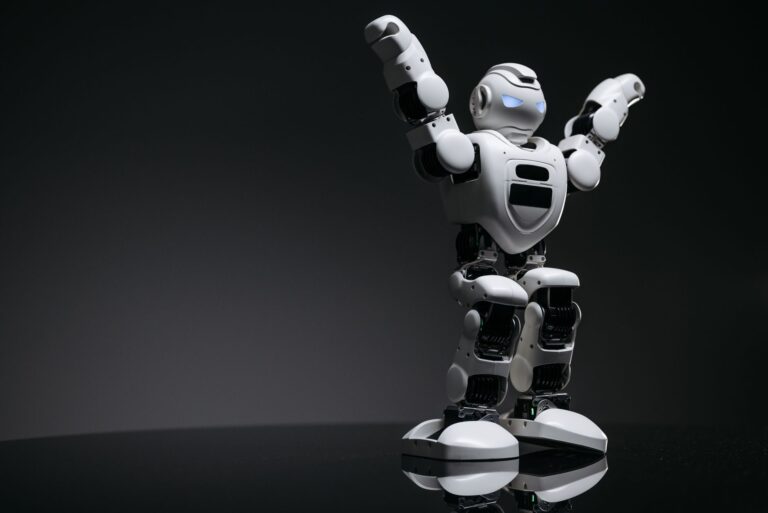

The next Nvidia in robotics isn’t a separate company emerging to dethrone the chipmaker—it’s Nvidia itself, using the convergence of artificial intelligence and physical automation to extend its dominance into an entirely new market. As AI capabilities reach maturity in the data center, the real growth frontier is embodied AI: training machines to perceive, reason, and act in the physical world. Nvidia has positioned itself at the center of this shift. The company committed over $40 billion to AI equity investments in 2026, announced new physical AI models like Cosmos and GR00T, and secured partnerships with nearly every major robotics player—from Boston Dynamics and Caterpillar to ABB and FANUC. Jensen Huang, Nvidia’s CEO, crystallized the moment at CES 2026 when he declared: “Physical AI has arrived. Every industrial company will become a robotics company.” The infrastructure layer matters most when industries transform, just as it did during the GPU revolution.
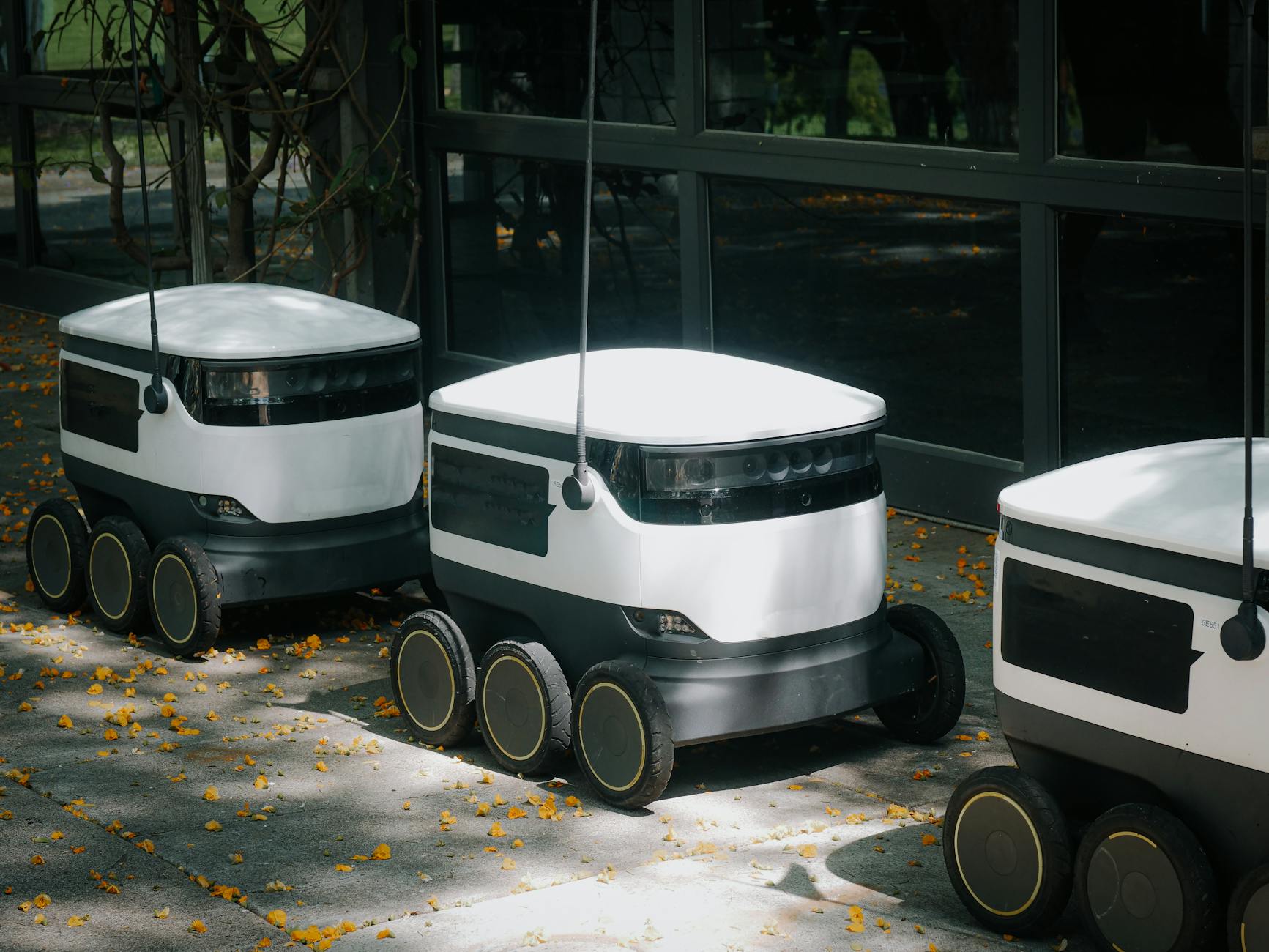
Companies building robots need the hardware, software, and frameworks to train embodied AI. Nvidia is supplying all of it. But this convergence has also created explosive opportunities for specialized robotics platforms and automation companies. Skild AI, which builds AI systems for warehouse robots, raised $1.4 billion in a Series C funding round in early 2026—tripling its valuation from $4.5 billion to over $14 billion in seven months. Figure AI, known for its humanoid robots, is in talks for a $1.5 billion funding round at a $39.5 billion valuation. These companies aren’t challenging Nvidia’s dominance; they’re building the next layer on top of it, benefiting directly from the convergence Nvidia enabled.
Table of Contents
- Why Robotics Companies Are Securing Record Funding in the Age of AI
- Nvidia’s Physical AI Platform Changes the Game, But Execution Remains Uncertain
- The Funding Disparity Reveals Which Companies the Market Sees as Winners
- How Industrial Companies Are Adapting to Become Robotics Companies
- The Real Challenges in Deploying Embodied AI at Scale
- Investor Enthusiasm Is Outpacing Market Adoption Evidence
- The Next Decade: Infrastructure Dominance and Market Consolidation
- Conclusion
Why Robotics Companies Are Securing Record Funding in the Age of AI
The robotics industry closed 2025 with $9.4 billion in venture capital funding, a 41 percent jump from 2024. But the real acceleration came in Q1 2026, when global venture funding reached $300 billion across 6,000 AI startups—up 150 percent quarter-over-quarter. Robotics startups captured $2.26 billion of that windfall, with over 70 percent flowing to warehouse and industrial automation. The concentration is striking: the top 10 funding rounds accounted for 58 percent of all robotics venture capital in 2025. That concentration tells you something important—investors are betting that a few infrastructure and platform companies will become the standard tools that all robotics companies depend on. Why this acceleration? Because AI and robotics were historically separate domains.
Robots followed pre-programmed paths, while AI lived in the cloud. The convergence changes everything. Modern robots now use vision transformers to navigate unstructured environments, large language models to understand commands, and foundation models trained on embodied data to reason about physical constraints. Building these systems required exactly what nvidia offered: chips, frameworks, and a software ecosystem mature enough to handle embodied AI. Startups that previously struggled to compete with traditional industrial robot makers—which relied on years of hard-coded automation—can now move faster by leveraging pre-trained models and off-the-shelf AI infrastructure. Skild AI’s Series C valuation jump isn’t an anomaly; it’s the market recognizing that the oldest problem in robotics—getting machines to reliably handle variation in the real world—now has a viable solution: AI.
Nvidia’s Physical AI Platform Changes the Game, But Execution Remains Uncertain
Nvidia’s announcement of Cosmos and GR00T models, along with the Isaac Lab-Arena evaluation toolkit and OSMO edge-to-cloud compute framework, represents a deliberate strategy to own the robotics software stack the way the company owns GPU computing. Cosmos is a foundation model trained on 46 billion hours of video data—designed to teach robots how the physical world actually works. GR00T is a general reasoning model for robot task planning. OSMO handles the infrastructure burden of running these models on edge devices and cloud systems simultaneously. Together, they form a complete stack: Nvidia provides the training infrastructure, the pre-trained models, the evaluation tools, and the deployment framework. Robotics companies license or use these tools, build their specific robot hardware on top, and capture the margin on the integrated system. The risk is execution and adoption friction. Robotics is fragmented by robot type, application domain, and legacy software.
Unlike the cloud where you can abstract away hardware differences, robotics innovation sometimes requires deep domain knowledge. A manipulation arm’s gripping problem is different from a mobile base’s navigation problem. FANUC and ABB, two of Nvidia’s announced partners, have decades of proprietary software baked into their systems. Even with Nvidia’s resources, integrating Physical AI models into these legacy systems requires significant engineering work on both sides. Additionally, the foundation models powering embodied AI are still young. Cosmos was trained on internet video, which contains biases toward horizontal surfaces, well-lit environments, and common objects. Robots operate in warehouses with poor lighting, cluttered shelves, and novel objects daily. Nvidia will need to demonstrate that these models transfer effectively to real industrial deployments, not just benchmark tests. Companies like Skild AI are betting they can, but the track record still includes failures—and the companies that over-promise on AI robotics convergence will lose to those that under-promise and over-deliver.
The Funding Disparity Reveals Which Companies the Market Sees as Winners
Look at the funding data and you spot a winner-take-most dynamic. While $2.26 billion flowed to robotics startups in Q1 2026, the largest rounds went to companies positioned as infrastructure or platforms rather than point solutions. Skild AI’s $1.4 billion Series C and Figure AI’s pending $1.5 billion raise both exceed the annual robotics venture budget of most developed nations. These companies are capturing investor attention because they’re perceived as owning a layer of the stack—either the software that makes warehouse robots intelligent, or the embodied AI-first robot platform.
By contrast, many specialized robotics startups—companies building better grippers, faster conveyor automation, or novel sensor hardware—have raised far less. The market is effectively betting that AI will commoditize hardware innovation, at least in the near term. If you can train a robot to adapt to variation through embodied AI, you need fewer hand-engineered mechanical solutions. This creates a paradox: companies that focus purely on hardware differentiation are going out of favor, while companies that integrate AI + hardware (like Figure AI’s humanoid robots) or provide the AI layer (like Skild AI’s warehouse intelligence platform) are seeing their valuations explode. NEURA Robotics and Humanoid, both announced as Nvidia partners, are well-positioned in this world, but younger robotics hardware startups without a clear AI differentiation story will struggle.
How Industrial Companies Are Adapting to Become Robotics Companies
Nvidia’s declared mission—”every industrial company will become a robotics company”—isn’t aspirational. It’s an observation about market consolidation. Traditional manufacturers of industrial equipment (Caterpillar, ABB, FANAC, KUKA, YASKAWA) are all moving upmarket into robotics-as-a-service and AI-powered automation. They have the customer relationships, the domain expertise, and now, through Nvidia partnerships, the AI infrastructure to integrate embodied AI into their existing product lines. A construction equipment maker can now offer “AI-powered excavators that adapt to site variation.” A factory automation company can sell “self-configuring production lines.” These aren’t pure robotics plays, but they’re robotics-adjacent, and they’re all competing for the same capital as pure-play robotics startups.
The comparison is instructive: legacy industrial companies move slower but have capital, customer trust, and supply chain relationships. Robotics startups move faster but burn cash and face commercialization uncertainty. In the AI robotics convergence, the advantage swings to the startup for the first 2-3 years—they can move at machine-learning speed, iterate on models, and pivot business models. But by years 5-7, once the AI layer stabilizes, the advantage swings back to legacy industrial companies that own manufacturing, distribution, and customer relationships. Skild AI and Figure AI are betting they can capture enough of the market value by year 3-5 to be worth the $1.4-1.5 billion valuations. If they can’t—if the technology takes longer to mature or adoption is slower than expected—they’ll face pressure to grow into those valuations or risk significant dilution.
The Real Challenges in Deploying Embodied AI at Scale
The robotics industry has a history of over-promising on timelines. When you read that Cosmos is trained on “46 billion hours of video data,” it’s tempting to assume the problem is solved. It isn’t. Foundation models trained on internet video perform well on clean, controlled test data but degrade significantly in real-world robotics deployments. A warehouse robot doesn’t encounter the objects and lighting conditions seen in YouTube videos. An outdoor construction robot faces dust, glare, and occlusion that online datasets don’t capture well. The solution isn’t more video—it’s domain-specific fine-tuning on actual robot deployments. Skild AI and other companies racing to deploy Cosmos-based systems will need to invest heavily in data collection, labeling, and model retraining for each customer’s specific environment.
Additionally, robotics adoption in real industries is slow. Warehouse automation, the largest addressable market, has been “five years away” from full autonomy since 2015. Humans are surprisingly good at exception handling, and robots are not. A warehouse with 80 percent automation handles the other 20 percent variation with people. Scaling from 80 to 95 percent automation requires solving not just the technical AI problem, but the cost problem. If hiring workers costs $15 per hour and deploying a robot costs $500,000, the ROI math only works if the robot operates 24/7 with minimal maintenance. Embodied AI makes robots more flexible, but hasn’t solved the unit economics problem yet. Companies claiming that “AI robotics convergence” is a solved problem are selling hype. The real winners will be those that demonstrate steady, incremental improvements in real deployments while managing customer expectations.

Investor Enthusiasm Is Outpacing Market Adoption Evidence
The CVPR 2026 conference (held May 19, 2026) showcased next-generation embodied AI and robotics systems, and the keynotes were breathless about the potential. The venture funding numbers back up that enthusiasm—$300 billion globally in Q1 2026, with robotics getting an increasing share. But there’s a gap between capability and adoption. How many warehouses are using AI-powered robotic systems in production today, not as pilots? How many have seen the cost-per-unit-handled drop enough to justify the capital expenditure? The honest answer is: fewer than the funding euphoria would suggest. This creates a risk for late-stage robotics startups. Skild AI’s $1.4 billion Series C valuation implies the company will reach billions in revenue within a few years.
Figure AI’s $39.5 billion valuation implies humanoid robots will become a major economic product category soon. These are possible, but not guaranteed. The companies that over-raise in this euphoric environment face pressure to hit impossible growth targets. If actual adoption of embodied AI robots is slower than expected, well-funded startups with high burn rates will face difficult choices: dilutive down rounds, asset sales, or shutdown. The robotics industry has seen this cycle before (2008-2012, 2018-2020). Investors are bullish now, but if 2027-2028 sees slower-than-expected deployments, sentiment can shift quickly.
The Next Decade: Infrastructure Dominance and Market Consolidation
If you zoom out to a 10-year timeline, the AI robotics convergence looks like a replay of the GPU revolution. Nvidia didn’t make the first graphics cards, but it owned the architecture and ecosystem that became standard. In robotics, Nvidia isn’t inventing embodied AI from scratch, but it’s positioning the company to own the standard stack: chips, models, software, frameworks, and partnership networks. By 2036, robotics engineers will build systems on Cosmos, GR00T, and OSMO the way today’s ML engineers build on PyTorch and CUDA.
That kind of dominance captures a disproportionate share of industry profits. But the market is large enough for multiple winners. Skild AI and Figure AI aren’t competing with Nvidia—they’re competing with each other and with traditional industrial companies. The next five years will determine which category of company wins: startups that capture the software layer and exit into strategic acquisitions, pure-play robotics companies that achieve massive scale and IPO, or legacy industrial companies that use their capital and relationships to absorb robotics innovation. Nvidia wins either way—infrastructure players have the highest optionality in consolidating markets.
Conclusion
The convergence of AI and robotics isn’t creating a new Nvidia replacement; it’s allowing Nvidia to extend its dominance into a new, massive market. But that extension is creating opportunities for specialized robotics companies that move fast, focus on domain-specific problems (like warehouse automation), and leverage pre-trained models effectively. The $2.26 billion in robotics funding in Q1 2026 and the record valuations of Skild AI and Figure AI reflect confidence that the technology is mature enough to deploy at scale. That confidence isn’t unfounded—embodied AI models are real, and the partnerships between Nvidia and major industrial players suggest serious commercialization intent.
The risk is execution. Deploying embodied AI in real warehouses, factories, and construction sites is harder than benchmark tests suggest. Companies that under-promise and over-deliver on timelines and unit economics will win long-term market share. Companies that over-raise and over-promise will face difficult corrections when reality meets expectations. For investors and industry participants watching this convergence, the next two years will determine which startups become the next category of billion-dollar companies and which become cautionary tales about betting too heavily on technology adoption curves that move slower than anticipated.