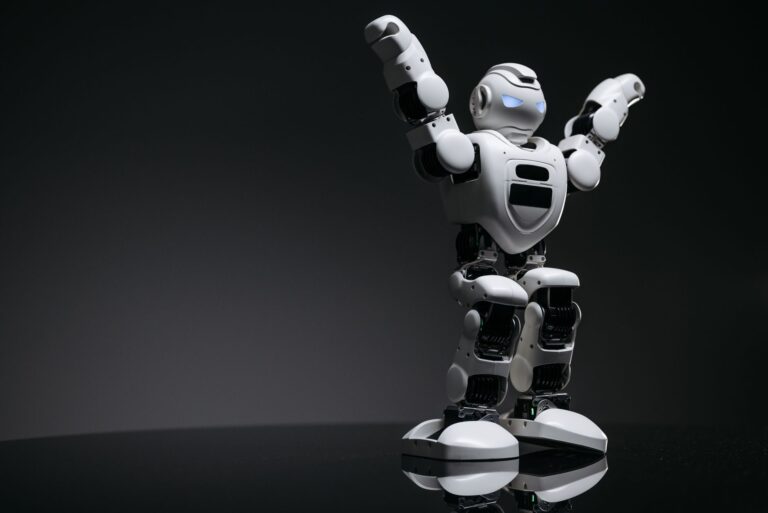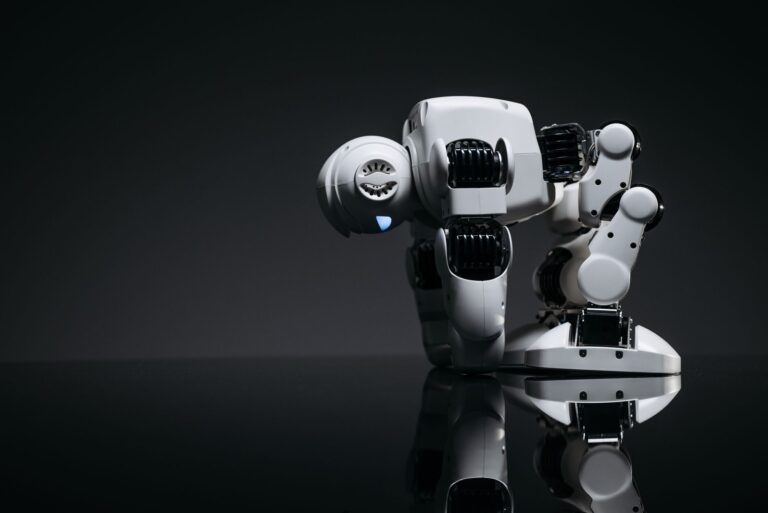

NVIDIA has positioned itself as the semiconductor foundation for the next wave of robotics automation, and the massive surge in AI capital spending across every industry is funneling investment directly into the company’s robotics platforms. The evidence is in the numbers: NVIDIA’s automotive and robotics segment generated $1.7 billion in revenue for fiscal year 2026, up 55 percent year-over-year, with quarterly growth that reached 103 percent in Q4. This growth trajectory mirrors what happened with NVIDIA’s data center dominance, except this time the wave is physical—robots that need to see, think, and move in the real world.
The parallel to NVIDIA’s earlier ascent is not accidental. Just as the AI boom created insatiable demand for GPU compute, the robotics explosion is creating demand for specialized processors and software platforms that can run AI inference on hardware-constrained robots. Tesla’s decision to convert its Fremont manufacturing facility to produce Optimus humanoid robots, with public sales targeted for late 2027, signals where the industry believes the economic value lies. For NVIDIA, that means a $650-billion wave of capital expenditure across manufacturing, logistics, and automation is flowing toward companies that can ship the brains for these machines.
Table of Contents
- Why Robotics AI Spending Is Accelerating Now
- The Platform Ecosystem and Developer Lock-In
- Revenue Growth and the Path to Scale
- Real-World Applications Driving Capital Allocation
- Competition and Margin Pressures
- The Software and Services Opportunity
- What Comes Next in Robotics AI
- Conclusion
- Frequently Asked Questions
Why Robotics AI Spending Is Accelerating Now
The surge in robotics investment is not happening in isolation—it’s riding on top of the broader AI capital cycle. Companies across manufacturing, warehousing, and logistics are racing to deploy automation, and nvidia‘s Isaac robotics platform and Jetson edge computing products have become the default infrastructure. Over 1.2 million developers are now working with these platforms, and more than 10,000 customers and partners have integrated NVIDIA technology into their robot deployments. This creates a compounding effect: as more developers build on NVIDIA hardware, the switching costs for competitors increase, and the platform becomes harder to displace. The scale of this deployment is striking when you look at who is involved. Amazon Robotics, Agility Robotics, Figure AI, Caterpillar, Foxconn, Toyota, and TSMC are all building robots powered by NVIDIA silicon. These are not niche startups—they are multinational companies with billions in capital budgets. Amazon’s warehouse robots handle millions of packages daily.
Toyota and Caterpillar operate in industries where automation represents millions of dollars in efficiency gains. When that kind of capital starts flowing toward a technology, the growth rates tend to accelerate faster than analyst forecasts predict. The comparison to NVIDIA’s data center trajectory is useful but incomplete. Data centers are relatively standardized environments where performance metrics are predictable. Robotics is messier—different manufacturers have different hardware, different use cases require different software optimizations, and integration challenges are legion. Yet this complexity is also a moat. The companies that can abstract these differences away and provide developers with tools that work across different robot hardware have significant competitive advantages. NVIDIA’s platform consolidation puts it in that position.
The Platform Ecosystem and Developer Lock-In
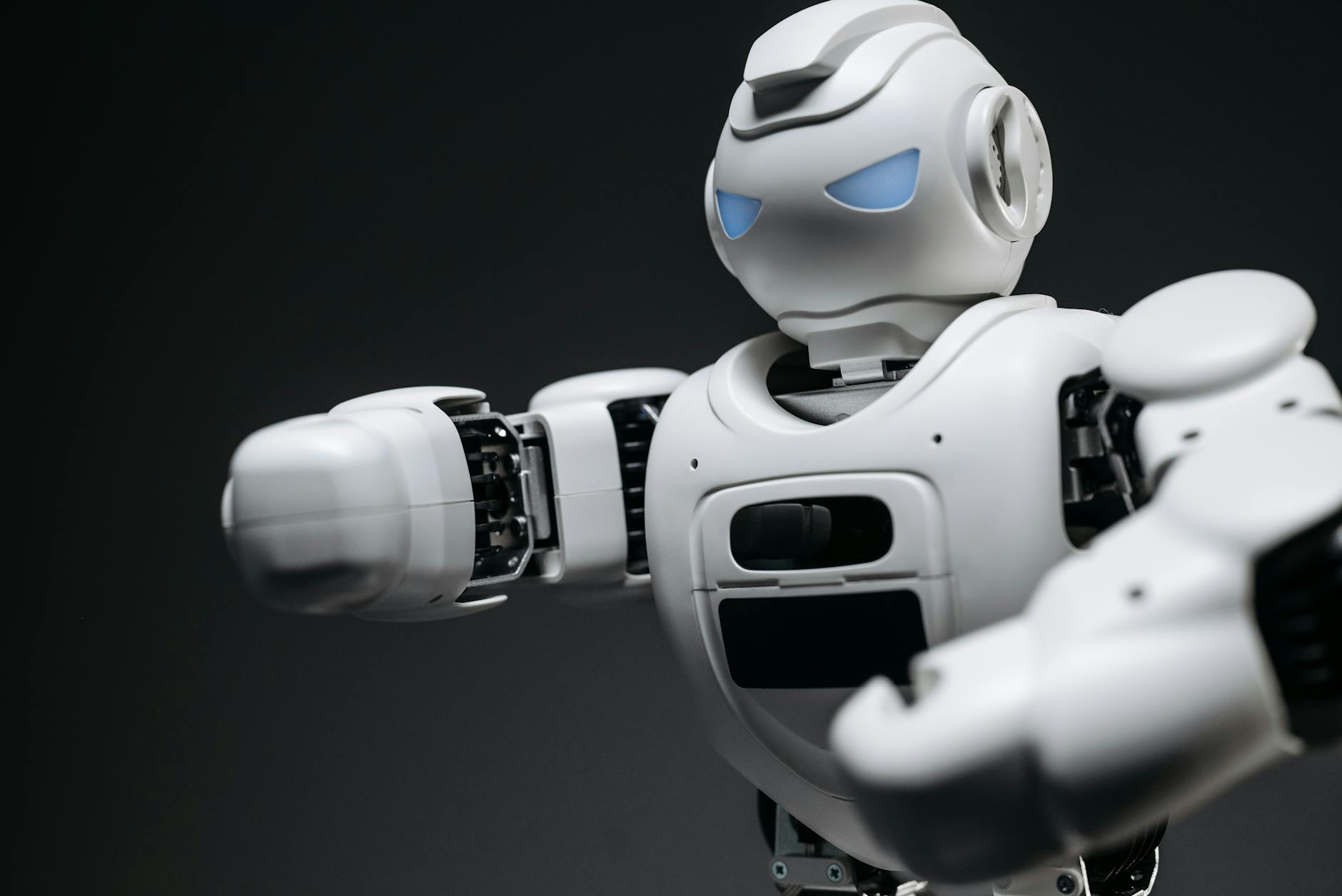
NVIDIA released its Project GR00T foundation model for humanoid robots as part of a broader push to move robotics beyond specialized, single-purpose machines toward more general-purpose automation. The release signaled a shift in strategy—instead of selling processors to robot manufacturers, NVIDIA is now selling software and models that work on top of those processors. this is a higher-margin business and a much stronger moat than hardware alone. The Isaac platform updates announced in early 2026 added generative AI models specifically designed for physical AI applications—the kind of work where a robot needs to reason about real-world constraints, incomplete information, and real-time decision-making. The developer ecosystem has responded by building thousands of applications on top of these primitives. But this is where a limitation emerges: as more of the robotics industry becomes dependent on NVIDIA’s platforms, questions about vendor lock-in become more serious.
If your manufacturing operation runs on NVIDIA Jetson hardware and NVIDIA Isaac software, switching to a competitor’s stack means retraining teams, rewriting code, and potentially redesigning hardware integration. That friction protects NVIDIA’s market position, but it also makes customers wary. Another consideration is that the robotics industry lacks the standardization that data centers have. Two robot manufacturers may use completely different mechanical designs, control systems, and sensor suites. This means NVIDIA’s platform has to support tremendous variability. The company has done well on this front, but the ongoing maintenance burden is higher than selling homogeneous cloud GPU infrastructure. This creates a risk that if a competitor emerges with a more specialized platform for a particular robotics segment—warehouse robots, manufacturing robots, or humanoids—that competitor could capture share by offering better-integrated solutions.
Revenue Growth and the Path to Scale
The financial performance of NVIDIA’s automotive and robotics segment over the past year shows both explosive growth and the early signs of where the company expects future revenues. In Q3 FY2026, automotive revenue hit $592 million, growing 32 percent year-over-year. By Q4, that segment reached $570 million, growing 103 percent from the same quarter a year prior and 27 percent from the previous quarter. Over the full fiscal year 2026, the segment generated $1.7 billion, representing a 55-percent year-over-year increase. To put this in context, $1.7 billion in annual robotics revenue is still small relative to NVIDIA’s total company revenue, which exceeded $120 billion in FY2026. But the growth rate is the crucial metric here.
When a segment is growing at 55 percent year-over-year, and the underlying market drivers—AI capital spending and automation demand—show no signs of abating, Wall Street treats that as a future revenue driver worth significant valuation multiples. The assumption is that this segment will eventually represent a much larger chunk of overall company revenue, just as data center compute did a decade ago. A realistic warning: growth rates this steep rarely continue indefinitely. As the robotics market matures and NVIDIA’s penetration approaches saturation in certain segments, growth will moderate. Additionally, the profit margins on robotics hardware and software may not match the margins NVIDIA commands in its data center business. Robots require more support, integration work, and customization than cloud GPUs do. This means that even if robotics revenue doubles again, it may not double profits at the same rate.

Real-World Applications Driving Capital Allocation
The reason capital is flowing into robotics so aggressively is that the economic case is becoming clearer and more compelling. In manufacturing, a robot that costs $150,000 and works for eight years can replace two human workers, each costing $50,000 annually in wages, benefits, and overhead. The math is straightforward. In warehousing, Amazon’s already extensive robotic operations reduce picking time per item, which directly reduces labor costs and increases throughput. These are not theoretical benefits—they are documented in real financial results. Tesla’s conversion of its Fremont factory to manufacture the Optimus humanoid robot is a critical example of where the industry believes the leverage lies. Tesla built Optimus as a platform, with the intention of selling units to other manufacturers and enterprises.
If Tesla successfully scales Optimus production and sells thousands of units annually at margins anywhere near automotive levels, the addressable market for humanoid robots expands dramatically. Every robot sold with NVIDIA silicon in its compute module represents recurring revenue opportunity through software licensing, model updates, and platform subscriptions. The comparison between Optimus and earlier robot deployments is instructive. Before humanoid robots became viable, companies had to design robots specifically for each use case—conveyor systems for warehouses, welding arms for auto manufacturing, picking arms for e-commerce fulfillment. Each specialized robot required different software and different NVIDIA configurations. Humanoid robots, if they reach sufficient capability, could work across multiple use cases with software retraining rather than hardware redesign. For NVIDIA, this means a shift from selling specialized embedded processors to selling flexible compute infrastructure that can support many different robotics workloads.
Competition and Margin Pressures
While NVIDIA dominates the robotics AI infrastructure market today, the space is not without competitors. Other chip designers are investing in robotics processors, including startups and established semiconductor companies. Additionally, some large robotics manufacturers are exploring custom silicon designed specifically for their own robots, which could over time reduce their dependence on NVIDIA. Tesla’s development of custom AI accelerators for use in Tesla vehicles shows that large manufacturers with sufficient capital and expertise can potentially reduce supplier lock-in. The broader challenge for NVIDIA is that as robotics becomes a larger part of its business, the company must balance growth ambitions with the reality that robotics is more fragmented than cloud computing. A cloud GPU can work identically for thousands of different applications. A robotics platform must adapt to different mechanical designs, sensor configurations, and use cases.
This requires more engineering resources, more customer support, and more willingness to customize. If NVIDIA is not careful, the need for customization could erode the company’s famously high gross margins. Another limitation worth noting: the robotics market is still in early stages of commercialization. Tesla hasn’t shipped the first Optimus units to external customers yet. Agility Robotics and Figure AI are scaling production, but they are still ramping. This means that much of the optimism priced into NVIDIA’s robotics segment is based on future adoption that has not yet materialized. If any of the major robotics platforms stumble in production or fail to achieve expected adoption rates, the revenue and growth assumptions for this segment could be challenged. Additionally, the regulatory environment around autonomous systems and workplace robots is still developing, and new regulations could slow commercialization in key markets.
The Software and Services Opportunity
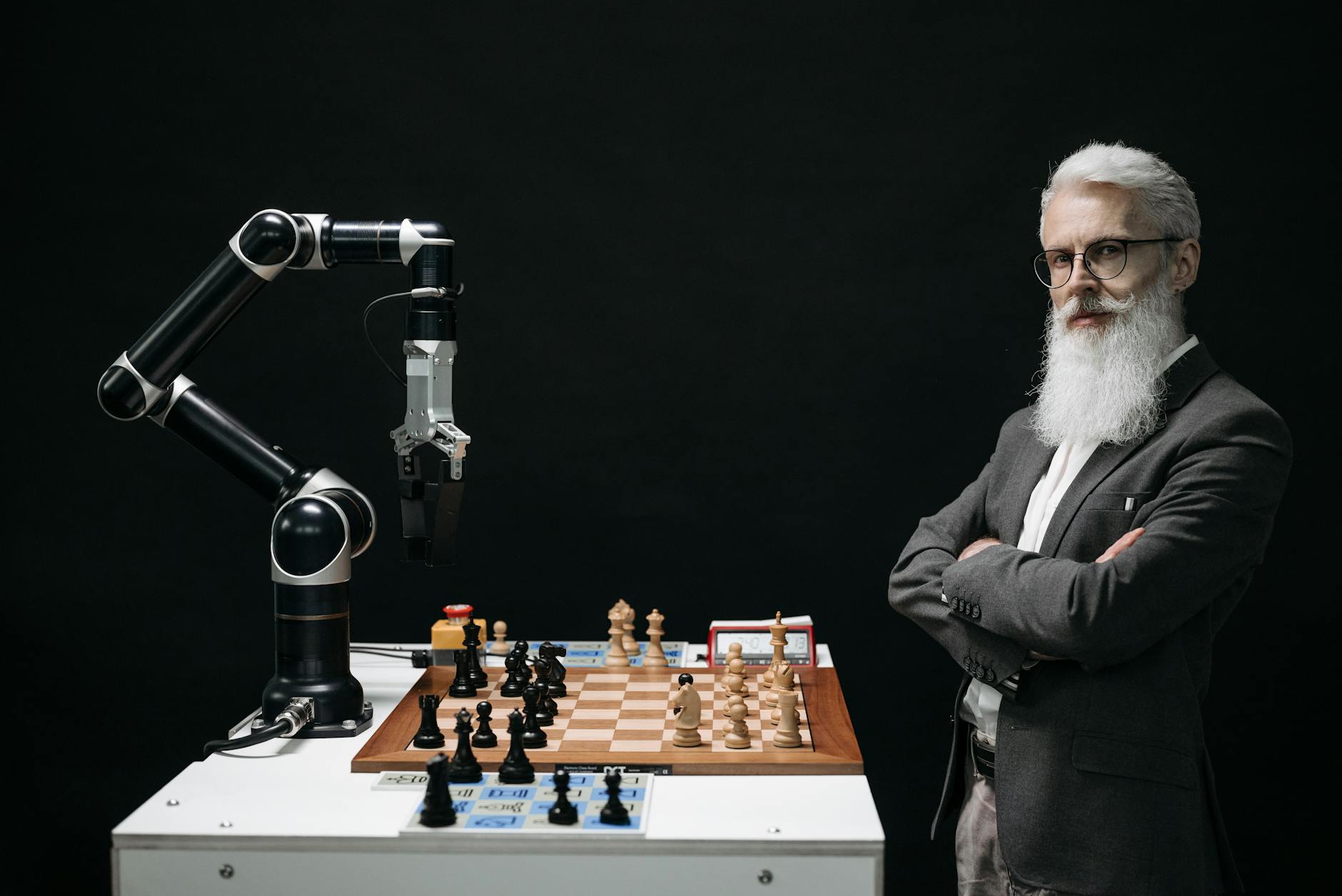
NVIDIA’s opportunity in robotics is not just about selling processors—it is about creating a software ecosystem that makes it harder to leave the platform. The Isaac SDK, Jetson software stack, and Project GR00T models represent the company’s attempt to build a complete platform rather than just a component. This is a higher-leverage business model because software scales efficiently once built, and the switching costs for customers increase with every line of code they write using NVIDIA’s tools.
Consider a robotics company that has trained 50 engineers on the Isaac platform, built proprietary models optimized for NVIDIA hardware, and integrated NVIDIA software throughout their manufacturing pipeline. Moving to a competitor’s platform would require retraining those engineers, rewriting code, and validating that new models perform as well as the ones they built on NVIDIA. That friction translates directly to revenue stability and pricing power for NVIDIA.
What Comes Next in Robotics AI
The robotics industry is at an inflection point similar to where autonomous vehicles were five years ago—plenty of hype, real progress, but also genuine uncertainty about when mass adoption happens. NVIDIA’s bet is that it can be the infrastructure provider that powers whatever robotics applications eventually win in the market. This is a reasonable position, but it requires the company to maintain a lead in processor design, software platform completeness, and developer mindshare. The company is currently winning on all three fronts.
Looking forward, the key question is whether robotics becomes a standalone massive market or whether it remains a specialized segment of broader AI infrastructure. If humanoid robots, autonomous warehouse systems, and other advanced robots reach mainstream deployment over the next three to five years, NVIDIA’s robotics segment could easily grow to $5-10 billion annually. If adoption is slower, or if competitors gain share, growth moderates significantly. The $650 billion in planned capital spending across the industry suggests the market believes the former scenario is more likely.
Conclusion
NVIDIA is benefiting from AI spending in robotics because it has established itself as the default platform for companies trying to build and deploy intelligent physical systems. The company’s financial results in the automotive and robotics segment—$1.7 billion in FY2026 revenue, growing 55 percent year-over-year—demonstrate that this is not a theoretical opportunity but a real source of revenue and growth. The 1.2 million developers building on NVIDIA’s platforms and 10,000 customers deploying NVIDIA-based robots create a durable competitive advantage.
The path forward depends on whether the robotics industry can deliver on its commercialization promises and whether NVIDIA can maintain its platform leadership as the market scales. The company has the resources, the technology, and the market position to remain dominant, but competition is real, margin pressures are emerging, and much of the current growth is priced into the stock based on adoption that has not yet happened. For investors and industry observers, the robotics segment is worth monitoring closely because it may ultimately drive NVIDIA’s growth trajectory for the next decade, just as data center compute did for the last one.
Frequently Asked Questions
How much of NVIDIA’s total revenue comes from robotics?
As of FY2026, robotics and automotive represented $1.7 billion in annual revenue, which is roughly 1-2 percent of NVIDIA’s total company revenue. However, the growth rate is significantly higher than the company’s overall growth rate, which is why investors view it as a future growth driver.
Can competitors challenge NVIDIA’s position in robotics?
Yes, potential competitors include specialized robotics chip designers, custom silicon developed by large manufacturers like Tesla, and established chip companies entering the market. However, NVIDIA’s platform ecosystem, developer base, and software integration create significant switching costs that protect its position in the near term.
What is Project GR00T and why does it matter?
Project GR00T is a foundation model designed for humanoid robots, released by NVIDIA in early 2026. It represents the company’s strategy to provide not just hardware but also pre-trained AI models that can be fine-tuned for specific robotics applications. This shifts NVIDIA’s robotics business toward higher-margin software and reduces the commoditization risk of hardware alone.
How soon will humanoid robots reach mass deployment?
Tesla is targeting public sales of the Optimus humanoid robot by late 2027, though commercial deployment in high volumes likely depends on achieving sustained production scale and proving economic viability. Industry projections vary widely, but most observers expect significant growth in humanoid robot deployment within three to five years.
What are the main risks to NVIDIA’s robotics growth?
Key risks include slower-than-expected adoption of robots in the real world, emergence of specialized competitors with better platforms for specific robotics segments, customer development of custom silicon to reduce supplier dependence, and regulatory hurdles that could delay commercialization in certain markets.
Why is the $650 billion in planned capital spending relevant to NVIDIA?
The $650 billion in capital expenditure announced across the manufacturing, logistics, and automation industries represents the overall market size for robotics and AI automation. Much of this spending is expected to flow toward companies building robots that use NVIDIA silicon and software, which provides a large addressable market for the company’s robotics segment.