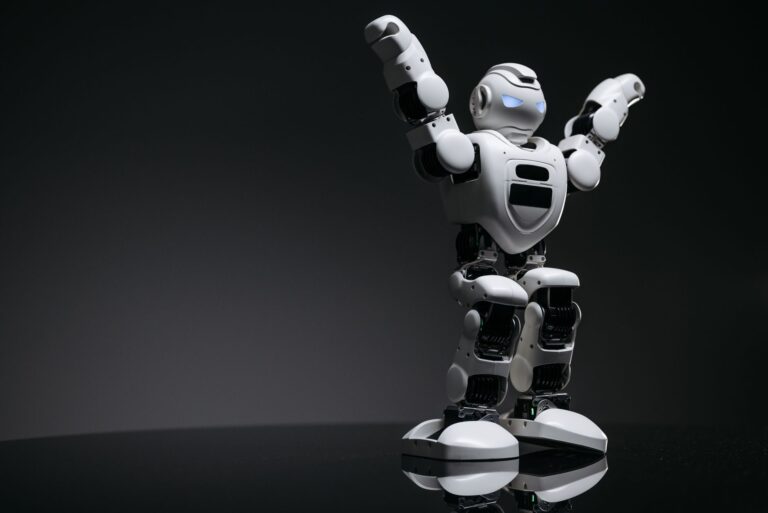

The next Nvidia in robotics likely isn’t a hardware company. It’s a robotics simulation platform. As the global robotics market explodes past $38 billion in 2026—a 34% jump year-over-year—simulation has become the critical chokepoint that will determine which companies build the most capable robots. Just as Nvidia’s CUDA platform became indispensable infrastructure for AI development, a dominant robotics simulation platform could own the entire software layer that underlies robot training, testing, and deployment. This isn’t speculation.
The numbers confirm it. Robotics simulation software spending is projected to more than double from $714 million in 2025 to $1.4 billion by 2030. The robotic software platforms market grew from $7.30 billion in 2025 to $8.79 billion in 2026. Billions of dollars of robot development work will run through simulation first. Whoever builds the most essential simulation platform—the one every roboticist defaults to—will capture enormous value without building a single physical robot.
Table of Contents
- Why Simulation Has Become the Bottleneck in Robotics Development
- The Simulation Platform Becomes the Layer Where Value Concentrates
- Synthetic Data and the Physics Engine Advantage
- Building a Dominant Platform: Lessons from Nvidia’s CUDA Playbook
- The Sim-to-Real Gap Still Exists—And It’s the Problem Nobody’s Solved
- The Market Consolidation Play
- The Next Decade Belongs to Simulation-First Robotics
- Conclusion
- Frequently Asked Questions
Why Simulation Has Become the Bottleneck in Robotics Development
Robot development teams face a brutal constraint: training on real hardware is expensive, slow, and dangerous. A single robot arm might cost $100,000 to $500,000. Running experiments 24/7 accelerates learning but requires capital, maintenance, and careful safety protocols. this is where simulation steps in. Before touching expensive hardware, teams can iterate thousands of times in a digital environment, testing new behaviors, debugging policies, and validating designs at machine speed. The shift toward simulation is accelerating because sim-to-real transfer is actually working now. Researchers at CMU and Stanford demonstrated that robot policies trained on 40% synthetic data matched the performance of policies trained on 100% real data.
This benchmark matters: it means you don’t need to run most experiments in the real world anymore. You can run them in simulation, then transfer the learned behavior to hardware with minimal additional tuning. The cost advantage is enormous. nvidia recognized this early. At GTC 2026, Nvidia announced Isaac Lab 3.0 with a new Newton physics engine and PhysX software development kit specifically designed for dexterous manipulation simulation. They also launched Cosmos 3 world models to enable physically-based synthetic data generation and robot policy evaluation entirely within simulation. This isn’t Nvidia building robots—it’s Nvidia building the infrastructure that every robot company will depend on.

The Simulation Platform Becomes the Layer Where Value Concentrates
Here’s the dangerous reality for hardware robotics companies: the companies with the best simulation platforms will train the best robots, and they’ll do it faster and cheaper than competitors still relying on real-world data. This creates a winner-take-most dynamic similar to Nvidia and CUDA. The platform becomes so central to the workflow that switching costs become prohibitive. Dassault Systèmes, Siemens, ABB, and Visual Components are the current leading players in the robotics simulation market. ABB is integrating Nvidia Omniverse into its RobotStudio platform, with their HyperReality release expected in 2026. But here’s the limitation: incumbent players often move slowly.
They’re built to serve legacy customers and maintain backward compatibility. This creates an opening for newer, faster-moving simulation platforms to establish dominance with new generation roboticists who never built muscle memory on the older tools. Startup funding confirms this opportunity. Antioch raised $8.5 million in seed funding in April 2026 at a $60 million valuation, specifically to build a robotics simulation platform. That’s serious capital for a company with no robots, just software. Investors clearly see simulation platform defensibility and value concentration.
Synthetic Data and the Physics Engine Advantage
The quality of a simulation platform is directly determined by the accuracy of its physics engine. If the physics simulation doesn’t match reality, the robot policy trained in simulation will fail when deployed on hardware. This is the fundamental sim-to-real gap. The best physics engines don’t just simulate rigid bodies—they model friction, contact dynamics, deformation, cable routing, fluid dynamics, and all the messy reality that simple rigid body solvers ignore. Nvidia’s Newton physics engine, part of Isaac Lab 3.0, was built specifically to handle complex contact scenarios like dexterous manipulation with fingers. This is harder than pushing objects around. When a robot hand grasps something, dozens of contact points form and break dynamically.
The physics engine has to simulate all of it in real-time while remaining numerically stable. Get the physics wrong by even 5%, and the hand misses the grasp in simulation but then fails on hardware in unpredictable ways. The winner here owns the physics. Developing a best-in-class physics engine takes years of specialized expertise. It’s not something a team can build in six months. This is why Nvidia’s Isaac Lab—with decades of PhysX development behind it—poses such a threat to older platforms. It’s also why any new platform that wants to compete needs either partnerships with companies like Nvidia or their own serious physics research team.
Building a Dominant Platform: Lessons from Nvidia’s CUDA Playbook
Nvidia’s dominance in AI came from three things: the best hardware, the best software toolkit (CUDA), and early ecosystem adoption. A robotics simulation platform needs a similar strategy, but with one difference—you don’t need to sell hardware. You can sell pure software and still build a $10 billion business if enough robots train on your platform. The playbook looks like this: make the platform free or cheap to start with, so adoption is frictionless. Offer powerful tools for advanced users. Build integrations with other essential robotics software—ROS (the Robot Operating System), popular deep learning frameworks, physics engines. Create a community.
Run courses and certifications. Make switching platforms genuinely painful by becoming the default. The tradeoff is obvious: early free or cheap adoption requires patient capital. You’re trading short-term revenue for long-term defensibility. Mind Robotics announced $400 million in new funding in May 2026 to expand industrial robotics deployment, bringing their total investment to over $1 billion. This is the kind of capital required to build at scale. A robotics simulation platform company would need similar backing to establish dominance against entrenched players.
The Sim-to-Real Gap Still Exists—And It’s the Problem Nobody’s Solved
Simulation advances have been real, but let’s be honest: the sim-to-real gap hasn’t disappeared. It’s narrowed. The CMU and Stanford result—40% synthetic data matching 100% real data—is impressive, but that’s still one specific task in a controlled lab environment. In the wild, with different floor surfaces, lighting conditions, camera calibration drift, and hardware variability, the gap opens back up. This is a warning for companies betting everything on simulation. You still need real robot hardware to validate and fine-tune policies. Simulation can reduce the amount of real-world data you need by 60%, but it can’t eliminate it entirely.
This means the robotics companies with physical robot fleets will still have an advantage over pure simulation players. Simulation is a force multiplier, not a replacement. The other hidden problem: physics simulation is computationally expensive. Running a realistic simulation of a robot with 10 joints, deformable objects, and contact dynamics requires significant compute resources. If your simulation takes 10x wall-clock time to train a policy that would take 1x on real hardware, simulation loses its advantage. Optimization matters enormously, and it’s a technical moat. Companies that solve simulation speed without sacrificing accuracy will win.
The Market Consolidation Play
Just as Nvidia’s market value soared when it became clear CUDA was the infrastructure layer for AI, a robotics simulation platform company could see explosive valuation growth. The robotics software platforms market grew to $8.79 billion in 2026. A simulation platform company that captures 15-20% of that market could be worth $1.3 billion to $1.8 billion—and that’s just from the pure robotics segment.
But consolidation risk is real. Established software companies like PTC (which integrates Onshape with Nvidia Isaac Sim), Siemens, and Dassault Systèmes have distribution, customer relationships, and capital. They might not build the best simulation platform themselves, but they can acquire one. Antioch’s $60 million Series A valuation is reachable acquisition price for a well-funded tech company looking to strengthen its robotics portfolio.
The Next Decade Belongs to Simulation-First Robotics
By 2030, the robotics industry will bifurcate. Companies using advanced simulation platforms to train policies will iterate faster, reduce capital requirements for physical testing, and deploy robots at lower cost. Companies still heavily reliant on real-world data collection will fall behind—they’ll be slower and more expensive. The competitive advantage goes to whoever owns the simulation platform layer.
The parallel to Nvidia is imperfect but instructive. Nvidia didn’t become valuable because it made the most popular GPU. It became valuable because every AI researcher and engineer needed to use CUDA to deploy serious AI. Similarly, the next Nvidia in robotics will be the company whose simulation platform becomes so central to robot development that not using it puts you at a competitive disadvantage. That company hasn’t necessarily emerged yet—but the market forces are clear, the capital is flowing, and the winner will capture an outsized share of the robotics boom.
Conclusion
The robotics market is racing forward with $38 billion in annual spending and accelerating growth. But behind every deployed robot will be thousands of simulated robots, trained in simulation environments. The company that owns the most advanced, most widely adopted simulation platform will capture enormous value—not from building robots, but from being the essential infrastructure that every robotics company depends on. This is precisely how Nvidia captured the AI infrastructure market, and the robotics industry is following the same pattern. The race is on.
Nvidia is betting on Isaac Lab and Omniverse. Established robotics companies are integrating simulation into their platforms. New startups are raising serious capital to build pure-play simulation platforms. Within the next 3-5 years, it will be clear which platform won. When it is, that company’s valuation will reflect its position as the invisible backbone of the entire robotics ecosystem.
Frequently Asked Questions
Does a robotics company need to use the most advanced simulation platform to be competitive?
Not necessarily for specialized applications. A robotics company solving a narrow problem might use a simpler, cheaper simulation tool effectively. But for companies building general-purpose robots or deploying at scale, the best platform accelerates development dramatically and reduces costs. The gap compounds over years.
Can multiple simulation platforms coexist, or is this a winner-take-most market?
Multiple platforms will exist, just as multiple deep learning frameworks exist (PyTorch, TensorFlow, JAX). But in practice, one or two platforms will dominate for each major robotics category—industrial, humanoid, mobile manipulation. The leader will capture 60-70% of developer mindshare and ecosystem activity.
What’s the difference between simulation for manufacturing robots and humanoids?
Manufacturing robots often perform repetitive, well-defined tasks in controlled environments. Simulation is easier because the environment is stable and predictable. Humanoid robots operate in unstructured environments with infinite edge cases. They need more sophisticated simulation for sim-to-real transfer to work well. Simulation platforms optimized for humanoids are more complex and computationally expensive.
If simulation becomes commoditized, won’t profits collapse?
Possibly. But the window for establishing dominance is still open. Once a platform becomes the standard, switching costs lock in users. That defensibility is worth billions. Even if margins compress eventually, the installed base and switching costs create sustainable value.
How much real-world testing do robots still need after simulation training?
It depends on the task and environment. Simple, structured tasks might need 5-10% real-world validation. Complex manipulation in unstructured environments might need 20-30%. The CMU/Stanford research showed 40% synthetic data was sufficient for their specific tasks, but mileage varies widely. Every roboticist still budgets for real hardware.