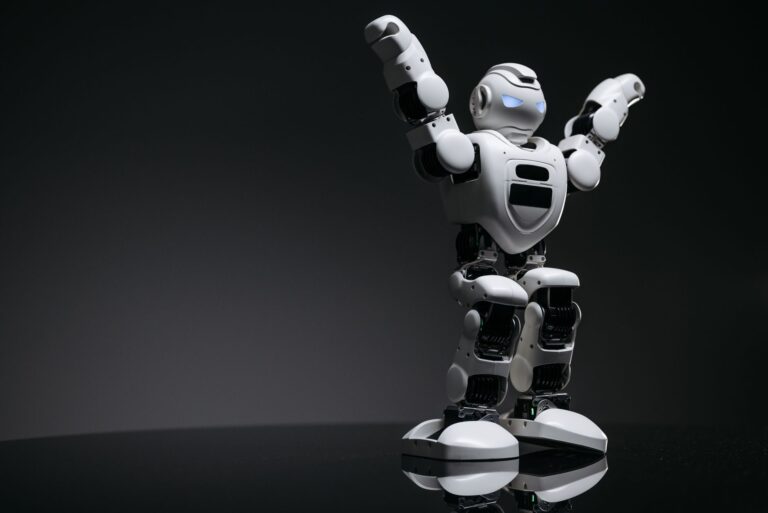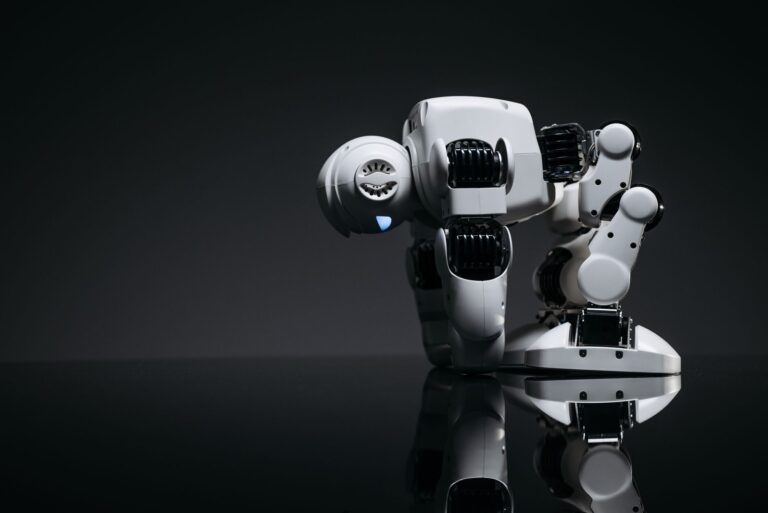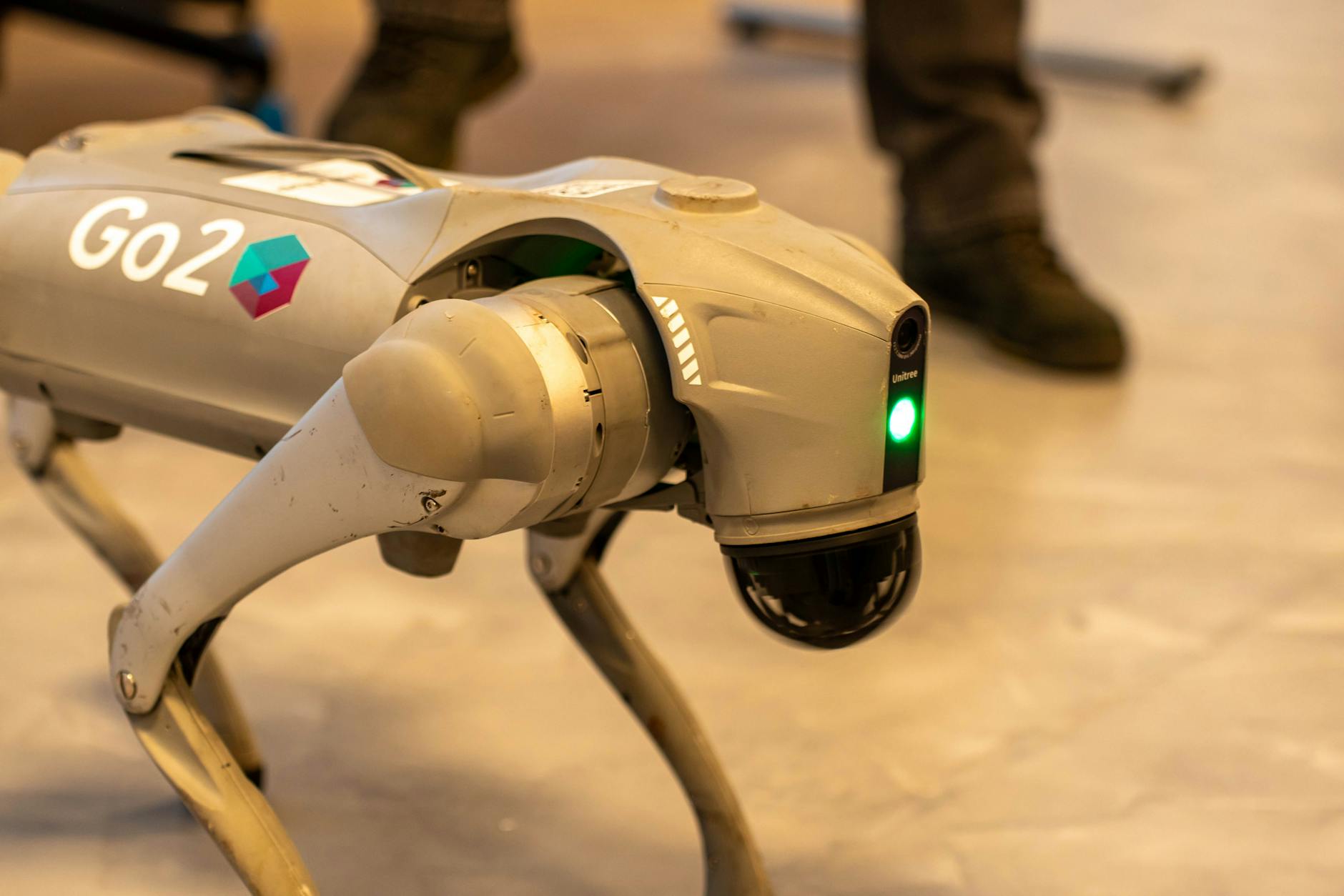

The next NVIDIA in robotics will likely be a company that makes hardware standardization and accessibility the centerpiece of its strategy—not just the company with the fastest processors. NVIDIA has dominated robotics through Jetson chips and the GR00T foundation model because they solved the infrastructure problem: they gave developers a common platform to build on. The robotics hardware enabler that emerges next will need to replicate this playbook, providing an open yet controlled ecosystem that reduces complexity for manufacturers at every scale, from startups building their first prototype to enterprises deploying fleets of 30,000 units annually. This matters now because the robotics market is accelerating faster than ever.
The global robotics market reached $38 billion in 2026 with a 34% year-over-year increase—the fastest growth rate in a decade—and is projected to reach $218.56 billion by 2031. Venture investment totaled $9.4 billion globally in 2025, up 41% from the prior year. But this growth is creating a hardware fragmentation problem. Twelve commercial humanoid platforms became available for purchase in 2026, and manufacturers like Hyundai are scaling production to 30,000 robots annually by 2028. Without standardized hardware enablers, each platform becomes an island, and that’s where the next opportunity lies.
Table of Contents
- Why Robotics Hardware Enablement Matters More Than Raw Processor Speed
- The NVIDIA Blueprint: How One Company Became Indispensable to Robotics
- The Growing Infrastructure Gap in Robotics Hardware
- Venture Capital Is Betting on Distributed Hardware Solutions
- The Risk of Moving Too Slowly in a Fast-Scaling Market
- Where Proprietary Components Meet Open Ecosystems
- The Future Enabler Will Own the Integration Layer
- Conclusion
Why Robotics Hardware Enablement Matters More Than Raw Processor Speed
The distinction between a robotics processor and a robotics hardware enabler is crucial and often misunderstood. nvidia‘s dominance doesn’t come from having the fastest chip—it comes from providing a complete ecosystem that manufacturers can adopt immediately. Their Jetson T4000 module, released at CES 2026, delivers 4x greater energy efficiency and AI compute compared to the previous generation, but that’s just the hardware layer. What matters more is that companies like Boston Dynamics, Caterpillar, LG Electronics, and NEURA Robotics can take the same foundation and build differentiated products on top of it. This reduces their time-to-market and engineering overhead dramatically.
Competitors are starting to recognize this pattern. Qualcomm unveiled the Dragonwing 1Q10 at CES 2026, an 18-core CPU designed as a full-stack robotics solution that directly competes with NVIDIA Jetson. Intel provides comprehensive robotics solutions including simulation tools and libraries. Both understand that a true hardware enabler must do more than sell chips—it must provide developer tools, simulation environments, and integration pathways that make it simple for manufacturers to adopt. The company that gets this balance right first, offering just enough standardization without stifling innovation, will command the market in the same way NVIDIA has.
The NVIDIA Blueprint: How One Company Became Indispensable to Robotics
NVIDIA’s path to robotics dominance reveals the template for the next enabler. They released GR00T, a foundation model for humanoid robots, in early 2026 and immediately put it in the hands of major manufacturers through partnerships. this wasn’t primarily about the model itself—it was about reducing the barrier to entry for AI-powered robotics. When Boston Dynamics began moving Atlas into production, when Hyundai committed to manufacturing 30,000 robots annually, both were betting partly on having access to proven, battle-tested AI infrastructure. NVIDIA created the dependency, not through lock-in, but through competence.
But there’s a hidden weakness in NVIDIA’s dominance that the next enabler can exploit: their focus remains on the GPU/AI compute layer. They excel at providing processing power and AI models, but they don’t control everything downstream. Robotics involves actuators, sensors, batteries, mechanical design, and software stacks that exist outside NVIDIA’s direct control. A hardware enabler that can move up the stack—providing not just compute but standardized interfaces to the broader ecosystem—could displace NVIDIA’s influence more rapidly than people expect. The danger for NVIDIA is becoming a component supplier rather than a platform provider.
The Growing Infrastructure Gap in Robotics Hardware
As the market expands and more manufacturers enter robotics, the infrastructure gap widens. Twelve commercial humanoid platforms now exist, and each one makes its own decisions about sensors, actuators, power delivery, and compute layout. This creates inefficiencies: engineers can’t easily swap components between platforms, supply chains fragment, and knowledge from one project doesn’t transfer to the next. NVIDIA’s Jetson chips address the compute problem, but they don’t solve the mechanical standardization problem.
This gap is especially visible in manufacturing environments. When a factory deploys collaborative robots from different vendors, integration becomes extraordinarily complex. An enabler that could standardize the hardware abstraction layer—providing common mechanical interfaces, standardized sensor APIs, and unified power delivery specifications—would offer enormous value. Companies like Franka Robotics and others are moving toward this, but none have yet achieved platform-scale dominance. The next NVIDIA in robotics might come from standardizing what sits below the silicon.
Venture Capital Is Betting on Distributed Hardware Solutions
The venture funding landscape suggests where the next enabler might emerge. HAX hardware accelerator is investing $250,000 for 6-9% equity in robotics startups, providing prototyping facilities and manufacturing partnerships. Y Combinator is committing $500,000 for 7% equity to robotics-focused companies. Intel Capital has invested over $12.5 billion across 1,500+ companies globally, with explicit support for robotics startups.
This capital isn’t flowing to chip makers—it’s flowing to companies solving integration and manufacturing problems. The most interesting insight is that VC money is funding distributed solutions rather than centralized ones. Instead of waiting for one company to build the perfect robotics platform, investors are backing multiple approaches: component standardization, modular robot architecture, manufacturing partnerships, and supply chain optimization. This hedging strategy suggests investors don’t expect a single NVIDIA-like winner, at least not in the near term. The next hardware enabler might actually be a consortium of companies that agree on standards, rather than a single dominant player.
The Risk of Moving Too Slowly in a Fast-Scaling Market
The robotics market is moving at a pace that punishes slowness. Boston Dynamics is scaling production. Hyundai is committing to 30,000 units annually. Caterpillar, LG Electronics, Mercedes-Benz, and General Motors are all adopting NVIDIA’s stack because it’s available now and it works. A startup or established player that’s building the “perfect” hardware enabler platform could find itself obsolete before it launches if the market has already standardized around a competitor’s approach.
This is a critical risk. NVIDIA didn’t wait for perfect; it shipped Jetson chips and iterated. It released GR00T into the hands of partners and refined based on real-world feedback. An alternative hardware enabler that takes too long to achieve broad adoption will lose the window of opportunity. The advantage goes to whoever can move fast enough to become the de facto standard before the market locks in.

Where Proprietary Components Meet Open Ecosystems
The tension between proprietary advantage and ecosystem openness will define the next hardware enabler’s success. NVIDIA maintains control over its software stack while allowing manufacturers to build proprietary designs on top. This balance is intentional: NVIDIA keeps the valuable layer (the AI compute and models) while letting partners compete on everything else.
The next enabler would need to replicate this formula, identifying which components are truly strategic and which should be commoditized. A practical example: control over motor drivers and power delivery systems might remain proprietary, but sensor interfaces could be standardized across vendors. This allows the enabler to capture profit from the most specialized layers while accelerating adoption of the platform through openness. Companies like NEURA Robotics are exploring this balance, but none have yet achieved the scale that would make them a true industry standard.
The Future Enabler Will Own the Integration Layer
Looking forward, the next NVIDIA in robotics will likely be the company that owns the integration layer—the middleware that connects high-level robot control software to low-level hardware drivers, sensors, and actuators. This is less glamorous than owning AI models, but it’s more defensible and more valuable to manufacturers. Every robot company needs to solve this problem, and solving it once at scale would create the kind of dependency that NVIDIA enjoys with Jetson.
The robotics market is large enough and growing fast enough to support multiple platforms, unlike the GPU market, which consolidated around a few winners. This means the next hardware enabler doesn’t need to defeat NVIDIA entirely—it needs to carve out a defensible niche where it owns the abstraction layer and the ecosystem around it. The companies to watch aren’t necessarily the ones with the fastest processors or the most advanced AI models, but the ones building the plumbing that everyone else depends on.
Conclusion
The next NVIDIA in robotics won’t look like NVIDIA did in GPUs. It will emerge as a company that solves integration and standardization problems more effectively than anyone else, making it simple for manufacturers to build diverse robots on a common foundation. As the robotics market grows from $38 billion today to $218.56 billion by 2031, the manufacturer that owns the abstraction layer—the interface between software and hardware—will command disproportionate influence and profit.
Watch for enablers that are building consortium standards, expanding manufacturing partnerships, and moving deliberately into the integration layer. The opportunity exists right now because no company has yet achieved complete dominance in robotics hardware enablement. The player that gets to platform scale first, while maintaining the balance between proprietary advantage and open ecosystem, will define robotics infrastructure for the next decade.