
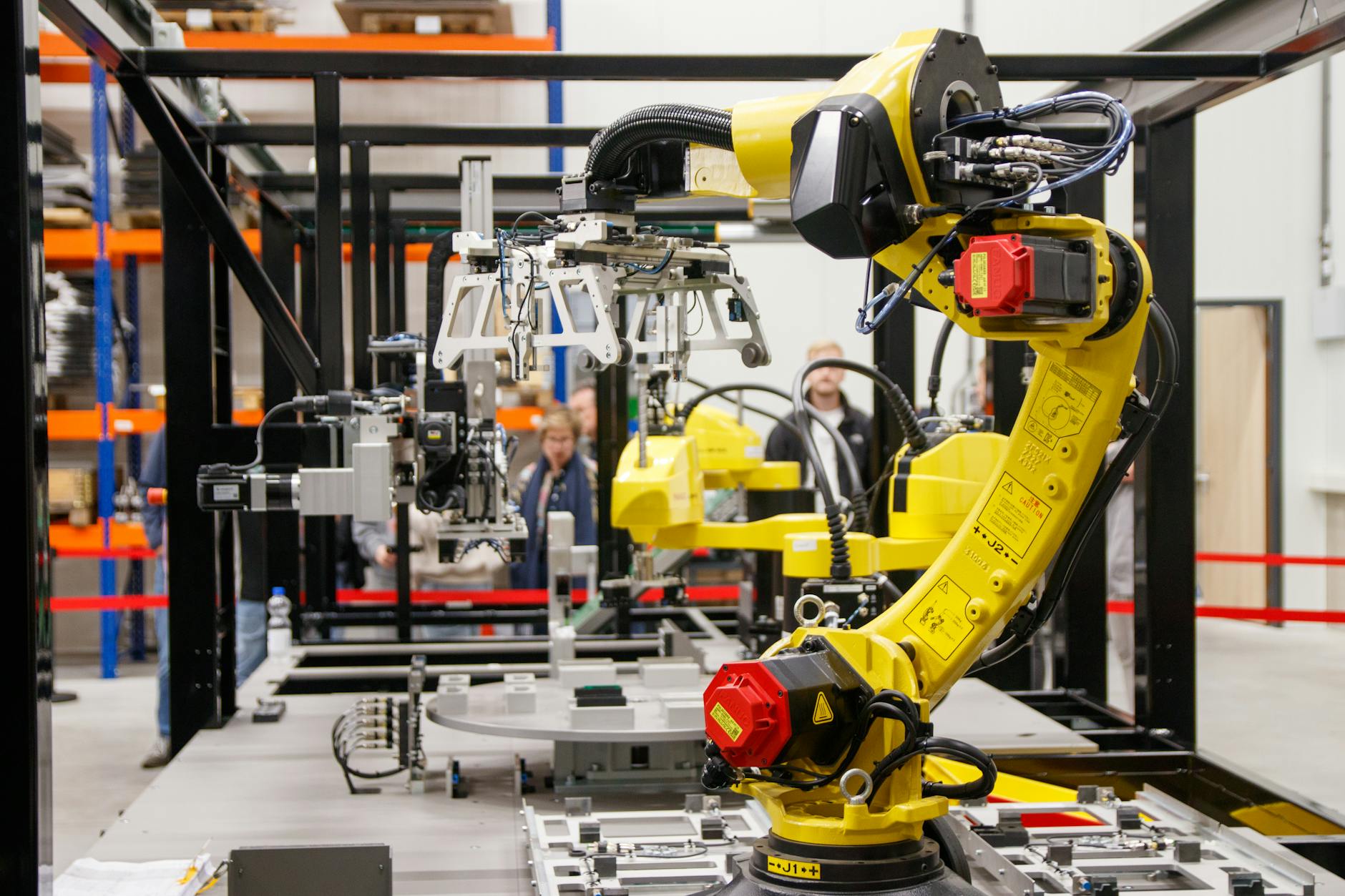
FANUC deserves the comparison to Nvidia because it occupies the same architectural position in factory robotics that Nvidia does in AI infrastructure—a dominant platform provider that others build upon. With a $47.3 billion market cap, $5.69 billion in trailing revenue, and an installed base of 1.1 million robots already deployed worldwide, FANUC has become the foundational layer that manufacturers depend on. But the comparison goes deeper than market size. Just as Nvidia enabled AI’s explosion by providing the computing backbone and software tools that developers needed, FANUC is enabling the physical AI revolution by upgrading its existing robot fleet with generative AI capabilities.
In May 2026, FANUC announced an integration with Google’s Gemini Enterprise and Intrinsic robotics platform, allowing those 1.1 million legacy robots to understand natural language commands and coordinate autonomously—a transformation that puts FANUC at the center of manufacturing’s next phase. The real strength of FANUC’s position isn’t just new hardware, but the ability to breathe new capabilities into machines already operating in factories. This installed base is FANUC’s moat. A manufacturer with 100 FANUC robots on the floor doesn’t want to rip them out and start over; they want those robots to get smarter. FANUC has shifted from being a hardware vendor into a platform play, and that’s what makes it comparable to Nvidia—not the business model exactly, but the strategic positioning as the indispensable layer that everything else builds on.
Table of Contents
- THE TRILLION-DOLLAR MANUFACTURING MOMENT AND FANUC’S SCALE
- THE GOOGLE-NVIDIA PARTNERSHIP TRAP AND DOUBLE DEPENDENCY
- HARDWARE ITERATION AND VERTICAL-UP WELDING CAPABILITY
- NATURAL LANGUAGE PROGRAMMING AND THE SKILL SHORTAGE PARADOX
- THE SUPPLY CHAIN INTEGRATION RISK AND COMPETITION PRESSURE
- STOCK PERFORMANCE AND THE AI PREMIUM VALUATION
- THE FUTURE OF PHYSICAL AI AND MANUFACTURING TRANSFORMATION
- Conclusion
THE TRILLION-DOLLAR MANUFACTURING MOMENT AND FANUC’S SCALE
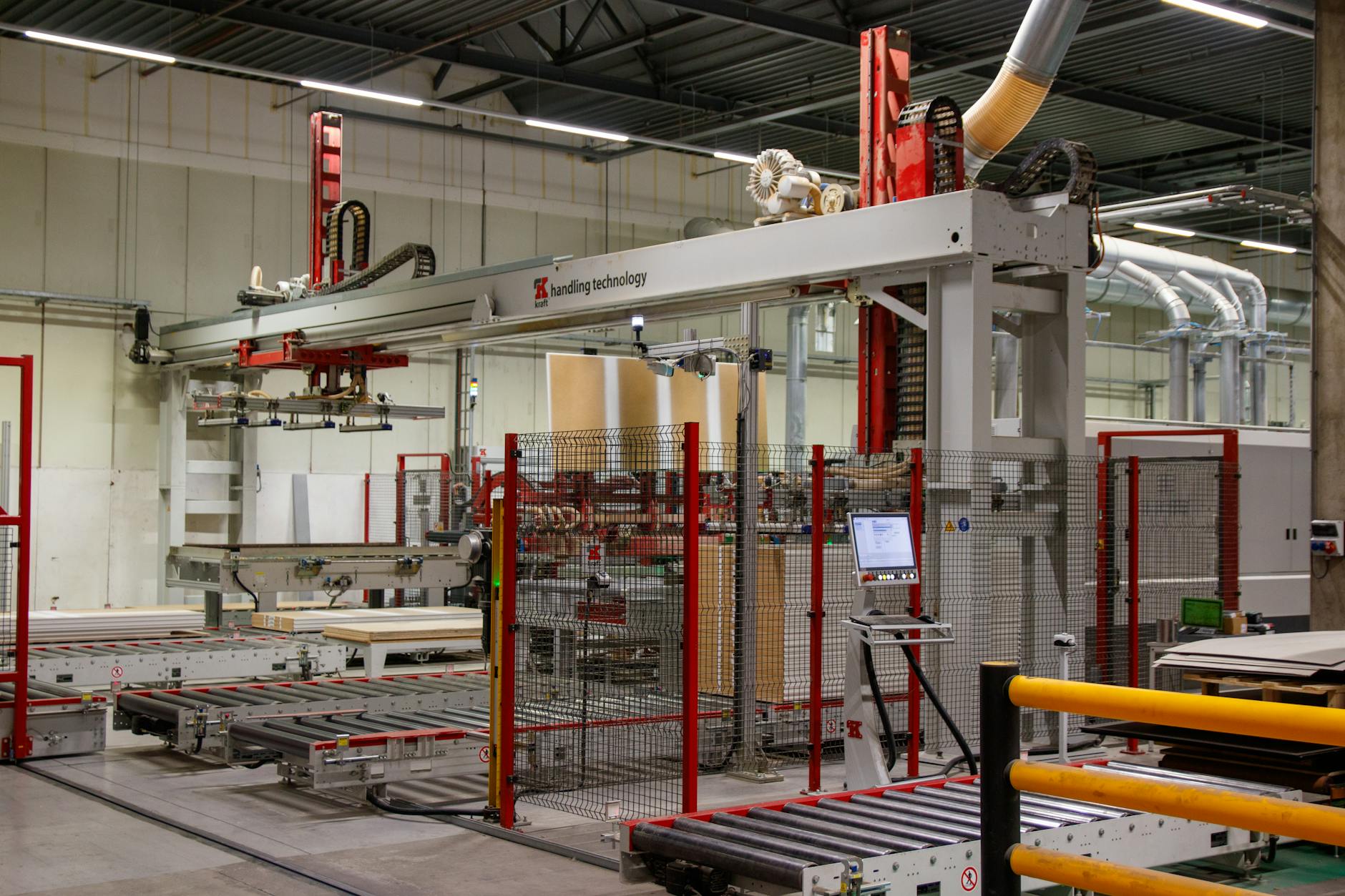
Manufacturing globally is in a labor shortage crisis that’s only accelerating, with aging workforces and fewer workers entering factory jobs. FANUC’s 1.1 million installed robots represent the largest single workforce augmentation in modern manufacturing—a scale that dwarfs most competitors. For context, that’s not 1.1 million robots sold once; it’s an active, working installed base. A factory that already relies on FANUC robots for 40% of its welding or assembly capacity has enormous switching costs. Those robots are integrated into production lines, trained by technicians, and generating data that feeds back into operations. The barrier to replacing them is almost impossibly high. This scale advantage compounds with every new AI partnership FANUC announces.
When FANUC integrated nvidia Isaac Sim with its own ROBOGUIDE simulation software in March 2026, that wasn’t a feature launch—it was a signal to the market that FANUC robots can now be trained and tested in digital environments before physical deployment. FANUC’s stock surged 9.4% to its highest level since July 2021 after that NVIDIA announcement. That stock reaction captured investor recognition of a critical point: FANUC just became the bottleneck for physical AI adoption in manufacturing. If you want to deploy AI-trained robots at scale, FANUC’s platform is the most practical starting point because the infrastructure already exists. But scale isn’t automatic safety. A platform with 1.1 million nodes means security vulnerabilities propagate across factories worldwide. FANUC’s integration of cloud-based systems like google Gemini introduces network dependencies that legacy standalone robots never had. If a security flaw gets discovered in the cloud layer, the exposure is massive.

THE GOOGLE-NVIDIA PARTNERSHIP TRAP AND DOUBLE DEPENDENCY
In May 2026, FANUC announced a deeper partnership with Google that moved beyond hardware integration into software architecture. FANUC robots can now process natural language instructions through Google Cloud’s Gemini Enterprise, understand the intent, and execute assembly sequences autonomously. Over 1,000 FANUC robots have already shipped with these physical AI capabilities since December 2025. For a manufacturing facility, this is genuinely transformative. A line worker can walk up to a collaborative robot and say, “weld the brackets on this panel the way we did last Tuesday,” and the robot—with Gemini translating the command into executable instructions—can interpret context from historical data and perform it. Yet this capability creates a structural dependency that manufacturers should understand clearly. FANUC robots are now tethered to both NVIDIA’s simulation infrastructure and Google’s cloud services. If either partnership falters, or if Google changes its terms of service, FANUC customers lose access to the intelligence that makes those robots valuable.
This is the opposite of the locked-in, proprietary systems FANUC built its dominance on. You can run a legacy FANUC robot without Google Cloud. You cannot run the new physical AI FANUC robots without cloud connectivity. For factories with strict data residency requirements—pharmaceutical manufacturers, defense contractors, certain overseas operations—this is a serious limitation. FANUC offers on-premise alternatives, but they sacrifice the scale and recency of the models trained on millions of robot-hours of factory data. The Google and NVIDIA partnerships also signal that FANUC recognizes it cannot build best-in-class AI and simulation infrastructure alone. That’s a healthy admission of reality, but it means FANUC is no longer a fully vertical integration story. FANUC executes what it does best—mechanical systems, control logic, and manufacturing domain expertise—and outsources the AI and simulation layers to specialists. This is pragmatic, but it fragments the architecture in ways that create operational complexity for customers.
HARDWARE ITERATION AND VERTICAL-UP WELDING CAPABILITY
At Automate 2026 in May, FANUC unveiled the R-2000/E series, a rework of its flagship industrial robot with enhanced axis speeds and increased wrist load capacities. The core use case is automotive spot welding, where a few milliseconds of speed gain per cycle compounds into significant throughput improvements. At the same event, FANUC debuted the CRX-3iA cobot—an 11-kilogram collaborative robot with a feature that’s been technically difficult for the industry: vertical-up welding capability. Vertical-up welding matters because most collaborative robots work best when the weld orientation is horizontal or gravity-neutral. Welding a panel that’s standing upright, with the seam running vertically, requires the robot to maintain precise pressure and heat control while fighting gravity. It’s technically harder and usually required larger, heavier robots. The CRX-3iA’s 11kg payload with vertical-up capability is a specific answer to a real manufacturing bottleneck—it lets factories deploy faster, lighter robots in applications that previously required heavy-duty, dedicated machines.
This is the kind of incremental innovation that looks unsexy until you deploy it and save three months of tooling redesign on a production line. The limitation here is that FANUC is playing catch-up in collaborative robotics. ABB, Universal Robots, and other competitors have had lighter, faster, more intuitive cobots on the market for years. FANUC’s advantage is that it can bundle them with the installed base and AI capabilities—CRX Vibe Coding, FANUC’s new feature, translates spoken commands directly into executable Python code through generative AI. A technician can describe a task and the robot generates its own code. That’s genuinely novel. But FANUC is not the category leader in cobot design; it’s the category leader in leverage. The cobot matters primarily because it gives FANUC a tool to migrate smaller manufacturers and new applications into its ecosystem.

NATURAL LANGUAGE PROGRAMMING AND THE SKILL SHORTAGE PARADOX
CRX Vibe Coding represents a critical shift in how robots get programmed. Historically, getting a robot to perform a complex assembly sequence required an engineer or a highly trained technician to write motion code—specifying positions, velocities, acceleration profiles, force feedback, and conditional logic. This was a specialized skill. Manufacturing plants faced a real bottleneck: not enough people who could program robots, and the knowledge tended to be siloed. Natural language programming, powered by generative AI, democratizes this. A factory floor supervisor can describe a sequence, the system generates Python code, and the robot executes it. This is genuinely powerful for reducing deployment time and skill barriers.
But there’s a critical tradeoff: you’re trading off optimization for accessibility. When an experienced engineer writes robot code, they optimize for factory constraints—minimizing energy consumption, respecting cycle time budgets, accounting for tool wear. When generative AI translates natural language into code, it produces something functional and reasonably efficient, but not optimized. For high-volume, cost-sensitive manufacturing (automotive, electronics), that inefficiency compounds into significant cost over millions of cycles. FANUC is betting that the accessibility gain outweighs the optimization loss, especially as generative AI models improve. That’s probably right for mid-complexity tasks and for factories that don’t have specialized robotics engineering teams. But it means FANUC’s competitive advantage in programming ease comes with a subtle performance cost for customers who can afford to optimize.
THE SUPPLY CHAIN INTEGRATION RISK AND COMPETITION PRESSURE
FANUC’s dominance in factory robotics is real, but it’s not unchallenged. ABB and Yaskawa (another Japanese industrial robotics giant) control significant installed bases in different regions and customer segments. Smaller, more agile competitors like Techman Robot and Dobot have made inroads in specific verticals by offering lower cost and faster deployment. The physical AI opportunity is big enough that all these competitors are moving fast, and FANUC’s partnerships with Google and NVIDIA don’t guarantee market dominance, only platform advantage. More concerning is the fact that FANUC, like much of Japanese manufacturing, depends on a global supply chain that’s become more fragile.
The robots themselves are manufactured in Japan and integrated globally. Component shortages, geopolitical friction, and tariff changes all pose real risks. During the 2021-2023 supply chain crisis, robotic equipment orders shot up not because factories suddenly needed more robots, but because existing delivery timelines stretched to 12-18 months. FANUC’s backlog looked like dominance, but it was partly a supply constraint masquerading as demand. As supply chains normalize, order books normalize with them, and FANUC’s stock has already priced in higher growth assumptions than underlying robot demand may support.
STOCK PERFORMANCE AND THE AI PREMIUM VALUATION
At $47.3 billion in market cap, FANUC is valued like a software company, not a manufacturing equipment vendor. This valuation is almost entirely dependent on the market’s belief that FANUC will successfully monetize the physical AI transition. The 9.4% stock surge after the NVIDIA partnership announcement in March 2026 illustrates this dynamic—the news itself didn’t change FANUC’s near-term earnings, but it reset the probability estimate for long-term competitive advantage in physical AI.
If FANUC executes well on physical AI integration and convinces manufacturers that upgrading existing robots is better than buying new equipment from competitors, that valuation is justified. If the adoption curve flattens, if cloud dependencies become a deal-breaker for enterprise customers, or if competitors successfully offer alternatives, the stock will have further to fall. FANUC investors are essentially betting on the physical AI transition happening faster and larger than the skeptics believe.
THE FUTURE OF PHYSICAL AI AND MANUFACTURING TRANSFORMATION
What FANUC represents is less about robotics innovation per se and more about the shift from machines that execute pre-programmed sequences to systems that adapt and learn from environment and instruction. The 1,000+ physical AI robots shipped since December 2025 is a tiny number compared to the 1.1 million installed base. But it’s the leading edge. Over the next 3-5 years, FANUC’s strategy depends on upgrading that installed base progressively, selling software licenses and cloud services alongside hardware, and maintaining the platform positioning that makes it the obvious choice for AI-enabled robot deployments.
If FANUC executes this transition, it will have achieved something genuinely remarkable: not inventing the most advanced robots, but being the platform that manufacturers default to when they decide to modernize. That’s the Nvidia comparison in full—owning the infrastructure layer that everyone else builds on top of. The risk is that FANUC’s scale becomes a liability if the market decides it wants something different. Then the installed base becomes not a moat but a dead weight of legacy systems that customers eventually abandon.
Conclusion
FANUC deserves the “Nvidia of Factory Robots” label because it owns the architectural position that the next wave of manufacturing modernization will build on top of. With 1.1 million robots in the field, partnerships with Google and NVIDIA, and first-mover advantage in integrating physical AI into existing equipment, FANUC has positioned itself as the platform provider for the next decade of manufacturing. The company’s ability to upgrade the installed base with AI capabilities, rather than forcing customers to buy new equipment, is a real competitive advantage.
But FANUC’s dominance is neither inevitable nor permanent. It depends on execution of the physical AI strategy, on maintaining partnerships that deliver genuine value rather than vendor lock-in that customers resent, and on navigating a competitive landscape where smaller, faster-moving companies are also moving into AI-enabled robotics. For manufacturers considering robotic automation, FANUC is the safe, obvious choice. For investors, FANUC’s valuation already prices in successful physical AI transition—which means the stock offers limited upside if execution is merely competent, and significant downside if the strategy falters.