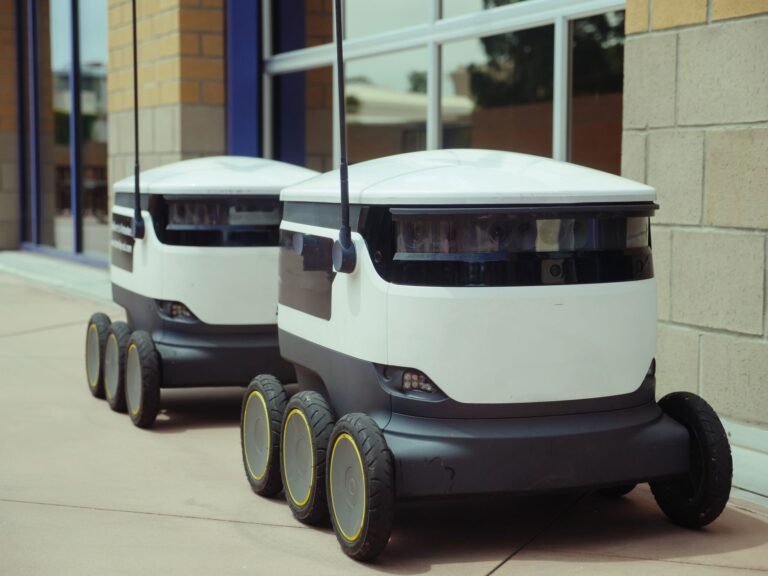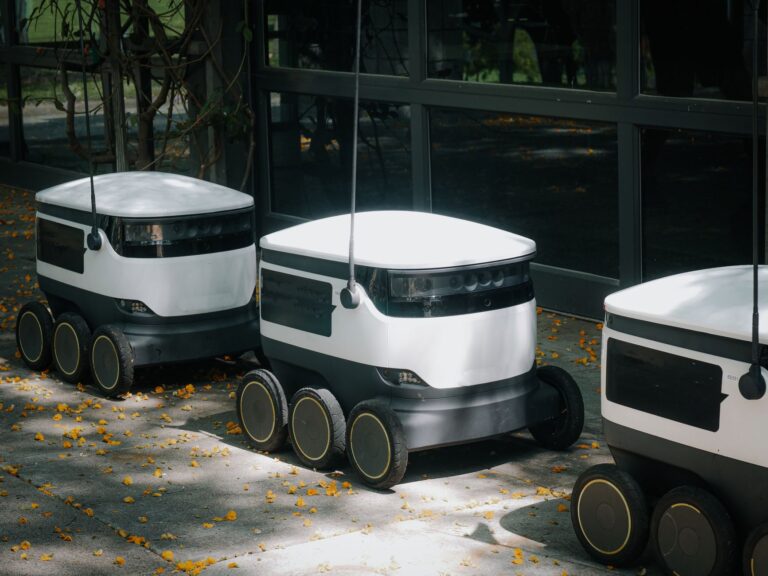

Autonomous vehicles are reshaping how goods and people move by removing human drivers from the equation, promising safer roads and more efficient transportation systems. Yet this transformation has simultaneously created a gap between the technology’s potential and the regulatory frameworks designed to govern it—a tension that will define the next decade of transportation policy and automotive engineering. Waymo’s driverless taxi service in Phoenix, for instance, operates with city-specific approval rather than uniform federal standards, illustrating how unevenly this transition is unfolding across different jurisdictions.
The core challenge is not whether autonomous vehicles will transform transportation—the shift is already underway—but rather whether safety validation and regulatory clarity can keep pace with deployment. Companies are testing fully driverless vehicles in multiple cities while regulators are still debating what constitutes safe-enough performance, how liability should be assigned in crashes, and whether current road infrastructure needs modification. This asymmetry between technological readiness and legal readiness creates uncertainty for manufacturers, operators, consumers, and policymakers alike.
Table of Contents
- What Changes When Drivers Are Removed From the Equation
- Safety Claims and the Measurement Problem
- Who Is Responsible When Something Goes Wrong?
- Infrastructure and Operational Constraints
- The Sensor Degradation Problem
- Mapping Dependency and the Update Problem
- Testing, Validation, and Regulatory Pathways
- Frequently Asked Questions
What Changes When Drivers Are Removed From the Equation
autonomous vehicles eliminate the variability introduced by human fatigue, distraction, and impaired judgment, which contribute to the vast majority of traffic accidents today. This potential improvement in safety is the strongest argument for widespread adoption. However, the removal of human drivers also means that crash responsibility shifts from an individual driver to a manufacturer, a software company, or an operator—and the legal systems handling liability have not yet adapted to this reality.
Real-world testing has already revealed unexpected scenarios that are difficult to address purely through sensor improvements and training data. A driverless shuttle in Las Vegas detected a crash because of another vehicle’s actions but had no liability framework in place; the responding police and insurance systems had no established protocol for determining fault. When autonomous vehicles encounter edge cases—pedestrians in unpredictable locations, unusual road construction, or weather-induced sensor degradation—the decision-making must happen in milliseconds, but the ethical and legal frameworks governing those decisions remain contested.
Safety Claims and the Measurement Problem
Autonomous vehicle advocates often cite statistics suggesting that self-driving technology is safer than human drivers, but this comparison contains a hidden limitation: most safety data comes from controlled testing environments or limited geographic deployments, not from the chaotic conditions that human drivers navigate daily. Comparing a fleet of 1,000 autonomous vehicles operating on selected routes to billions of human drivers operating on all roads in all weather conditions produces misleading statistics. The sample sizes, road conditions, and use cases are fundamentally different, making direct safety comparisons premature.
The regulatory burden created by this measurement problem is substantial. Regulators cannot confidently certify an autonomous vehicle as safe without either decades of real-world data or a fundamental rethinking of how safety is defined and tested. Some proposals suggest using simulation and synthetic testing to accelerate validation, but simulations cannot capture the full range of real-world variability. This creates a catch-22: manufacturers cannot deploy widely without safety approval, but approval is difficult without widespread deployment data.
Who Is Responsible When Something Goes Wrong?
Current liability frameworks assume an identifiable, attentive human operator who made decisions in real time. Autonomous vehicles require assigning responsibility to multiple parties—the vehicle manufacturer, the software developer, the fleet operator, the local government that approved the deployment, and potentially the infrastructure provider. A crash involving a driverless vehicle could theoretically implicate all of these parties, and no legal precedent yet clarifies how liability will be apportioned.
This regulatory vacuum has led some jurisdictions to exempt autonomous vehicle testing from certain liability requirements, creating a carve-out that does not exist for human drivers. The city of Phoenix, for example, allowed Waymo to operate under different safety and insurance frameworks than would apply to traditional taxis. These exemptions accelerate development but create a two-tier transportation system where autonomous and human-operated vehicles follow different rules. The long-term legal cost of resolving liability disputes in early crashes could reshape which companies survive and which fold, regardless of technological merit.
Infrastructure and Operational Constraints
Autonomous vehicles perform differently depending on road conditions, weather, and infrastructure design. High-definition maps must be constantly updated to reflect road changes, new construction, or altered traffic patterns. GPS, radar, and vision systems all have known degradation modes—heavy rain reduces sensor effectiveness, GPS accuracy varies by latitude and local geography, and reflective road markings can confuse computer vision systems. Unlike human drivers who can read a detour sign or react to a police officer waving traffic in a new direction, autonomous systems require pre-planned routes and explicit sensor inputs.
This operational constraint means that autonomous vehicles cannot simply replace human drivers on existing infrastructure without modification. Roads must meet minimum quality standards, signage must be machine-readable in some cases, and areas lacking cellular or GPS coverage become operational dead zones. Smaller cities and rural areas lack the high-definition mapping infrastructure that autonomous vehicles require, creating a transportation divide where driverless services are available only in well-mapped urban centers. The cost and timeline for retrofitting all roads to autonomous-vehicle-ready standards is substantial and rarely mentioned in deployment timelines.
The Sensor Degradation Problem
Autonomous vehicles rely on redundant sensors—cameras, lidar, radar—but all have failure modes that can occur simultaneously in specific conditions. Heavy rain or fog degrades both camera and lidar performance. Ice on roads affects traction control but not directly visible to sensors; the vehicle must infer road conditions from wheel slip. Sensor failure or temporary malfunction must be detectable by the vehicle, but detection itself depends on having a working sensor to report that another sensor has failed.
No autonomous vehicle system has perfect sensor redundancy; all have scenarios where sensor degradation occurs faster than the system can detect and respond. This limitation means that autonomous vehicles cannot operate safely in all weather conditions without human fallback or reduced speeds and routes. Phoenix, where Waymo operates, has relatively predictable weather; deployment in regions with heavy snow, ice, or persistent fog creates additional complexity. The regulatory question becomes: is it acceptable to restrict autonomous vehicle operation to certain seasons or weather conditions? If so, what liability applies when an unexpected weather event occurs? If not, how can regulators certify safety? This technical limitation has no political solution, only engineering constraints.
Mapping Dependency and the Update Problem
Autonomous vehicles depend on high-definition maps that are more detailed than maps used for human navigation. These maps must include curb characteristics, lane markings, road grade, and infrastructure details that change frequently. A single pothole, road widening, or new traffic signal renders portions of the map temporarily unreliable. Smaller mapping companies and startups cannot afford the constant update cycle required to keep these maps current; this creates consolidation pressure where only well-funded companies can maintain the necessary infrastructure.
The dependency on proprietary maps also creates a potential bottleneck. If a single company controls the primary mapping infrastructure for autonomous vehicles, that company effectively controls which routes are safe to drive and which are not. Regulatory frameworks have not yet addressed how to prevent mapping monopolies or ensure that emerging competitors have access to map data at reasonable cost. A vehicle manufacturer could theoretically be locked into using a single mapping vendor, creating supply chain risks.
Testing, Validation, and Regulatory Pathways
The absence of uniform federal standards for autonomous vehicle testing means that each manufacturer essentially sets its own safety benchmarks, subject only to whatever requirements the local city or state imposes. This creates incentives to test in permissive jurisdictions first, gather positive data, and then use that data to lobby for approval elsewhere. The regulatory pathway is shaped by where companies choose to deploy, not by a comprehensive safety framework. Arizona and California have become testing grounds not because they have uniquely thorough regulatory processes, but because they have relatively permissive approval procedures.
Validation of autonomous vehicle safety will require either massive real-world datasets collected over years or a fundamental shift toward simulation-based certification. Some regulators and researchers propose that 10 to 20 billion miles of simulated or real-world testing should be required before deployment, but no consensus exists on this number or on what testing should measure. The National Highway Traffic Safety Administration has issued guidance but lacks enforcement authority over most autonomous vehicle testing. Without federal authority and minimal state coordination, regulatory approval remains a patchwork, and early-deploying companies gain competitive advantage not because they have superior technology, but because they deployed where regulations were least stringent.
Frequently Asked Questions
Are autonomous vehicles safer than human drivers?
Comparison data is limited because testing occurs in controlled conditions rather than across all roads and weather. Current evidence suggests autonomous vehicles may be safer in specific scenarios, but this cannot yet be generalized to all driving conditions.
Who is liable if a driverless car causes a crash?
Liability is currently undefined and varies by jurisdiction. Existing legal frameworks assign fault to drivers, but autonomous vehicles implicate manufacturers, software developers, and operators. Courts have not yet established precedent for apportioning responsibility.
When will autonomous vehicles be available everywhere?
Deployment will remain geographically fragmented for the foreseeable future due to mapping requirements, regulatory variation, and sensor limitations. Urban centers with good infrastructure and clear weather will receive service first; rural and weather-challenged regions may never achieve wide availability.
Do roads need to be modified for autonomous vehicles to work?
Most autonomous vehicles can operate on existing roads, but performance degrades without high-definition maps, clear road markings, and reliable GPS and cellular coverage. Infrastructure modifications will be necessary for reliable service in many regions.
Why are different cities using different rules for autonomous vehicles?
Federal authority over autonomous vehicle regulation is limited, and states have primary jurisdiction. This creates a patchwork where Phoenix, San Francisco, and Las Vegas operate under different rules, incentivizing companies to deploy where regulations are most permissive rather than where safety requirements are most rigorous.