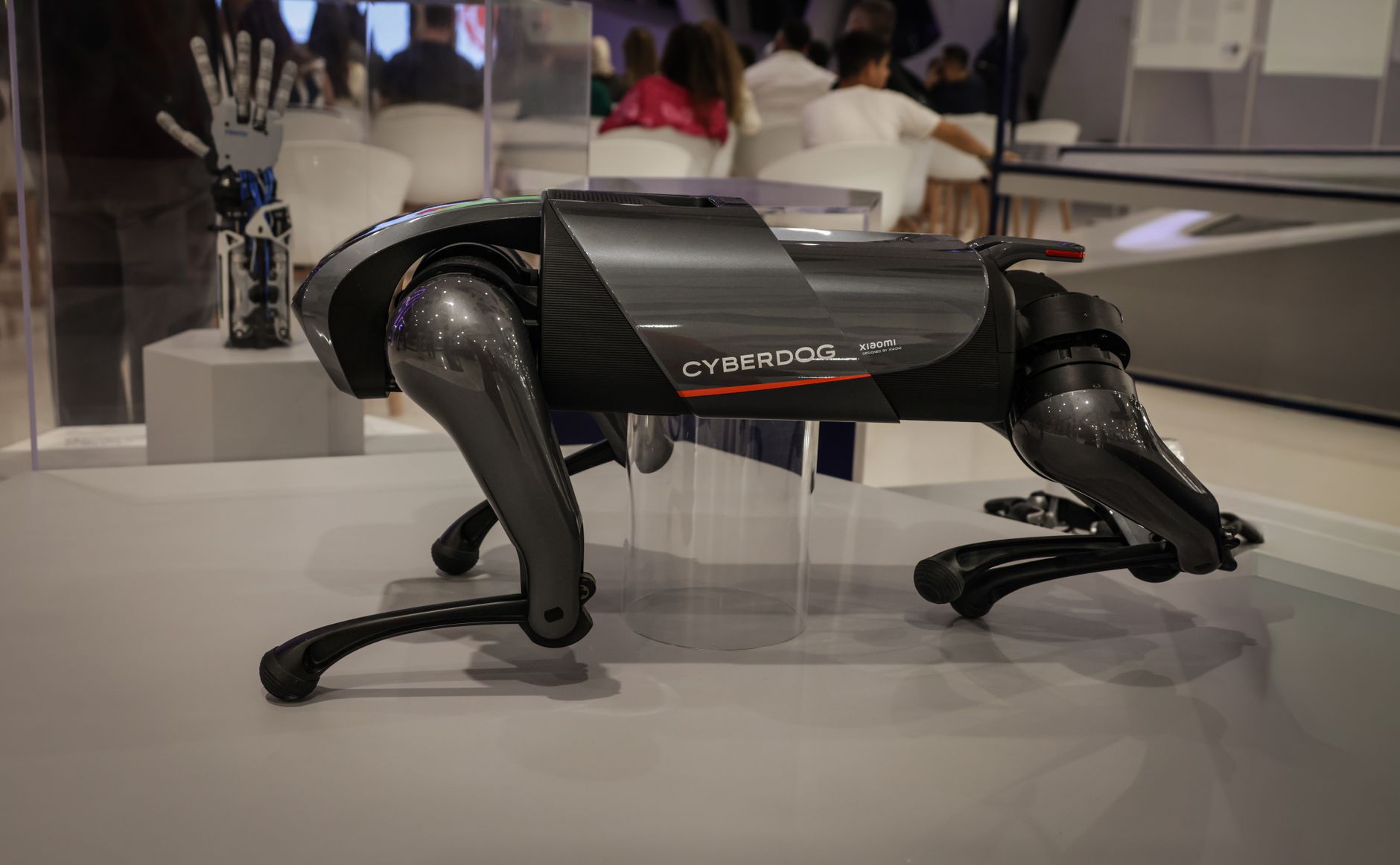

Robot dogs—four-legged autonomous platforms equipped with cameras, sensors, and specialized inspection tools—are being deployed by utility companies to navigate difficult and dangerous infrastructure locations that would be costly or risky for human technicians. These machines can traverse steep terrain, confined spaces, and hazardous environments to inspect pipelines, electrical systems, and structural assets, delivering real-time data that informs maintenance decisions. By combining mobility with sensory capabilities, robot dogs address a core challenge in utility operations: accessing critical infrastructure efficiently while reducing the risk to workers.
The appeal extends beyond novelty. Utility companies manage thousands of miles of aging infrastructure, from underground gas lines to power transmission corridors, often without current visibility into condition. Traditional inspection methods—sending crews to sites, using drones limited to outdoor areas, or relying on fixed cameras—are slow and expensive. Robot dogs fill a middle ground, offering mobility that drones lack, footprints smaller than human crews, and the ability to operate in environments where humans face genuine safety concerns.
Table of Contents
- Why Utilities Are Turning to Quadruped Robots for Inspection
- The Technical and Environmental Limits of Robot Dogs in Field Conditions
- Real-World Deployment in Utility Operations
- Comparing Robot Inspection to Alternatives: Drones, Helicopters, and Crews
- Safety Considerations and Robot-Related Risks
- Sensor Technology and Data Integration
- Scalability and the Path Forward in Utility Deployment
Why Utilities Are Turning to Quadruped Robots for Inspection
The utility sector faces persistent infrastructure visibility challenges. Substations, tunnels, and processing facilities contain assets that degrade invisibly. A crack in a buried water main might go undetected for months. A failing bearing in a pump house is discovered only when performance drops. robot dogs armed with thermal cameras, acoustic sensors, and optical inspection payloads can baseline assets and flag anomalies, shifting utilities from reactive to preventive maintenance. Compared to traditional inspection methods, robot dogs offer distinct practical advantages. Aerial drones excel over open ground but fail indoors, in dense vegetation, or near structures where flight restrictions apply.
Human crews are versatile but slow—moving safety equipment, coordinating access, and managing hazard zones adds hours to each site visit. A robot dog operated remotely can reach a confined substation basement, record video and thermal data, and return in less time than a crew can suit up. For a utility managing hundreds of inspection tasks annually, the cumulative time savings compounds. Cost tradeoffs remain steep. A capable inspection robot costs tens of thousands of dollars upfront, and operations require training, software infrastructure, and data management systems. For small utilities, or for infrequent inspections, the capital outlay may not justify the return. But for large regional utilities conducting frequent inspections across dispersed assets, the per-inspection cost decreases rapidly as deployment volume increases.
The Technical and Environmental Limits of Robot Dogs in Field Conditions
Robot dogs are rugged by design, but utility infrastructure presents specific challenges that expose their boundaries. A robot rated for outdoors and light rain may struggle with torrential water, mud slicks that clog joints, or salt spray in coastal substations. Battery life—typically 30 to 60 minutes of active deployment—can vanish quickly if the terrain demands constant climbing or if cold weather reduces electrochemical efficiency. A planned 90-minute inspection that encounters unexpected obstacles can exhaust the battery before critical areas are reached. Payload constraints also matter. The sensor package a robot can carry is heavier than its own weight; adding thermal cameras, lidar, and acoustic monitors degrades mobility.
A heavily instrumented robot that works flawlessly in a lab can become sluggish or unstable when deployed on debris-strewn pipelines or tilted floors. One early utility trial found that a robot capable of inspecting a small confined chamber could barely move once equipped with all required sensors, forcing operators to choose between data richness and operational flexibility. Operator dependence introduces further friction. Unlike a human technician who can improvise when encountering an obstacle, a remote operator sees only what the robot’s cameras show, which is often a narrow forward view. Recognizing that a cable is overhead, or that a gap is too wide to cross, requires training and experience. Operators unfamiliar with the site may make cautious decisions that slow progress, or risky ones that damage the robot. Utilities deploying robots have learned that talent acquisition—finding people who are both technically competent and comfortable operating in real-time through a camera—is harder than equipment procurement.
Real-World Deployment in Utility Operations
Several large utilities have moved beyond pilot phases into operational deployment. A major regional utility in North America began using quadruped robots to inspect water distribution networks, specifically targeting buried mains in high-traffic areas where excavation for manual inspection is disruptive and costly. The robot, equipped with a camera and software that logs GPS and video metadata, can traverse a section of pipe in an afternoon, returning visual data that technicians use to assess corrosion and structural integrity without digging. Water and wastewater utilities have found particular value in confined space entry inspection. Crawling into a 10-foot-deep valve chamber, even with safety equipment, exposes workers to atmospheric hazards and physical strain.
Sending a robot first to video-inspect the chamber, verify air quality is safe, and identify hazards reduces both risk and the time humans spend in the space. One municipal utility reported that robot-first inspections cut confined-space crew time by roughly 40 percent and eliminated two near-miss incidents where atmospheric conditions had degraded. For electrical utilities, robot dogs equipped with thermal and optical sensors are inspecting transformer stations and switchyards. Thermal imaging detects failing capacitors, loose connections, and overheating components before they trip circuits or arc. Because the robot can move between multiple units in a single deployment, thermal mapping of an entire station now takes hours instead of days, and all data is timestamped and archived for trending analysis.
Comparing Robot Inspection to Alternatives: Drones, Helicopters, and Crews
Each inspection method has a performance profile. Helicopter-based thermal imaging of transmission lines covers long distances quickly but is extremely expensive—a single flight can cost $5,000 to $15,000. The method is reserved for priority circuits or emergency response. Drones are cheaper per flight but restricted to outdoor, unobstructed airspace; they cannot enter buildings, tunnels, or areas with overhead lines and structures. Human crews are still necessary for detailed hands-on diagnostics and for repairs, but for initial asset surveys and condition monitoring, crews are slow and costly. Robot dogs fit between these tools. Their deployment cost per site is higher than a drone flight but lower than helicopter mobilization.
They access environments drones cannot, but they do not replace human expertise. A utility might use a drone to scan outdoor corridors, a robot dog to inspect buildings and confined chambers, and human crews for detailed assessment and remediation. The hybrid workflow often reduces overall cost and speeds decision-making because data flows from multiple sources in real time. The operational tradeoff is complexity. Managing three different inspection technologies—drones, robots, and crew schedules—requires coordination that utilities with less mature operations find burdensome. Smaller utilities often conclude that sticking with crews and occasional contractor helicopters remains simpler than adding a new tool. The decision hinges on inspection volume, geographic footprint, and tolerance for operational complexity.
Safety Considerations and Robot-Related Risks
Remote operation of robots in dangerous environments brings its own hazards. A robot deployed in a confined substation might become trapped if terrain shifts or a door is accidentally closed. Recovery then requires human entry into the same confined space to extract equipment, potentially creating the very hazard the robot was meant to avoid. Operators unfamiliar with rescue protocols have faced situations where a stuck robot compromised a site, forcing evacuation and delaying inspection work. Cybersecurity is an emerging concern. Early robot deployments often connected to site networks or remote operations centers with minimal authentication.
A compromised operator account or intercepted video feed could expose utility infrastructure details to malicious actors. Utilities rolling out fleet deployments now enforce cybersecurity baselines—encrypted comms, isolated networks, multi-factor authentication for operator logins—but implementation lags in many organizations. Equipment reliability also carries operational risk. A robot failure during inspection can strand the device, requiring manual recovery that defeats the purpose of using remote inspection. Utilities have addressed this by maintaining redundant robots, keeping spare parts on hand, and limiting deployments to zones where human rescue is feasible. These extra precautions add cost, which enters the economic equation against traditional crews.
Sensor Technology and Data Integration
The sensors mounted on inspection robots determine what information is extracted. Thermal cameras detect equipment overheating and electrical faults. Optical cameras—including high-resolution and wide-angle variants—capture structural cracks, corrosion, and wear patterns. Lidar creates 3D maps of confined spaces, useful for planning repairs or confirming dimensions.
Acoustic sensors detect bearing wear, fluid leaks, and arcing in electrical equipment. Integrating this data into utility operations is a systems problem. A raw video file of a pipe inspection is not actionable; utilities need software that time-syncs the video with GPS location, flags anomalies detected by computer vision, and feeds results into work-order systems. Vendors have built specialized platforms, but integration with legacy utility systems is often custom work. One utility reported spending more on data pipeline software than on the robots themselves, a cost that surprised executives accustomed to thinking of the robot as the primary investment.
Scalability and the Path Forward in Utility Deployment
Utilities deploying at scale have learned to treat robot inspection as a process, not a product. Successful programs define clear procedures: which sites are inspected, at what frequency, using which sensors, and how data becomes actionable decisions. This systematization allows operators to become efficient and allows data to accumulate, enabling trend analysis over years rather than single snapshots. For utilities managing thousands of assets, partial automation becomes realistic. Inspection priorities shift: high-risk assets and aging infrastructure get robot surveys first. As data accumulates, algorithms can predict where failures are likely, focusing resources on sites where intervention has highest return.
One large utility is now using historical inspection data from its robot program to forecast which valve stations will require replacement in the next three years, allowing budget planning to become data-driven rather than reactive. Human operators remain central to the process. As robots become more available, the bottleneck has shifted from equipment to skilled labor. Training a technician to operate a robot safely, interpret sensor data, and respond to real-time anomalies takes months. Utilities competing for this talent are investing in training pipelines and retaining experienced operators with higher wages. The trend suggests that robot adoption will continue, but its pace will be limited by workforce availability and training capacity as much as by equipment costs.