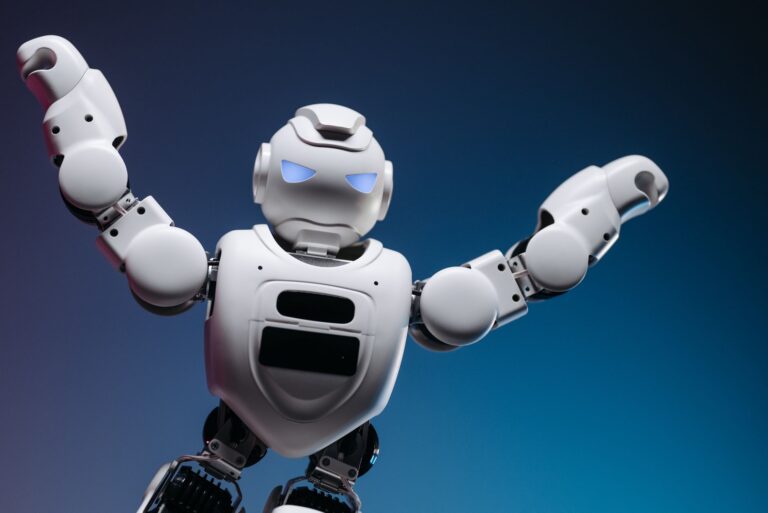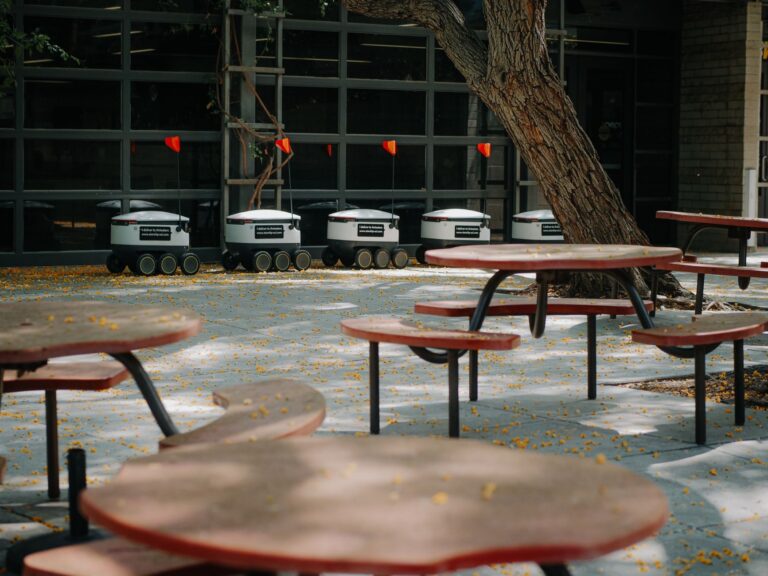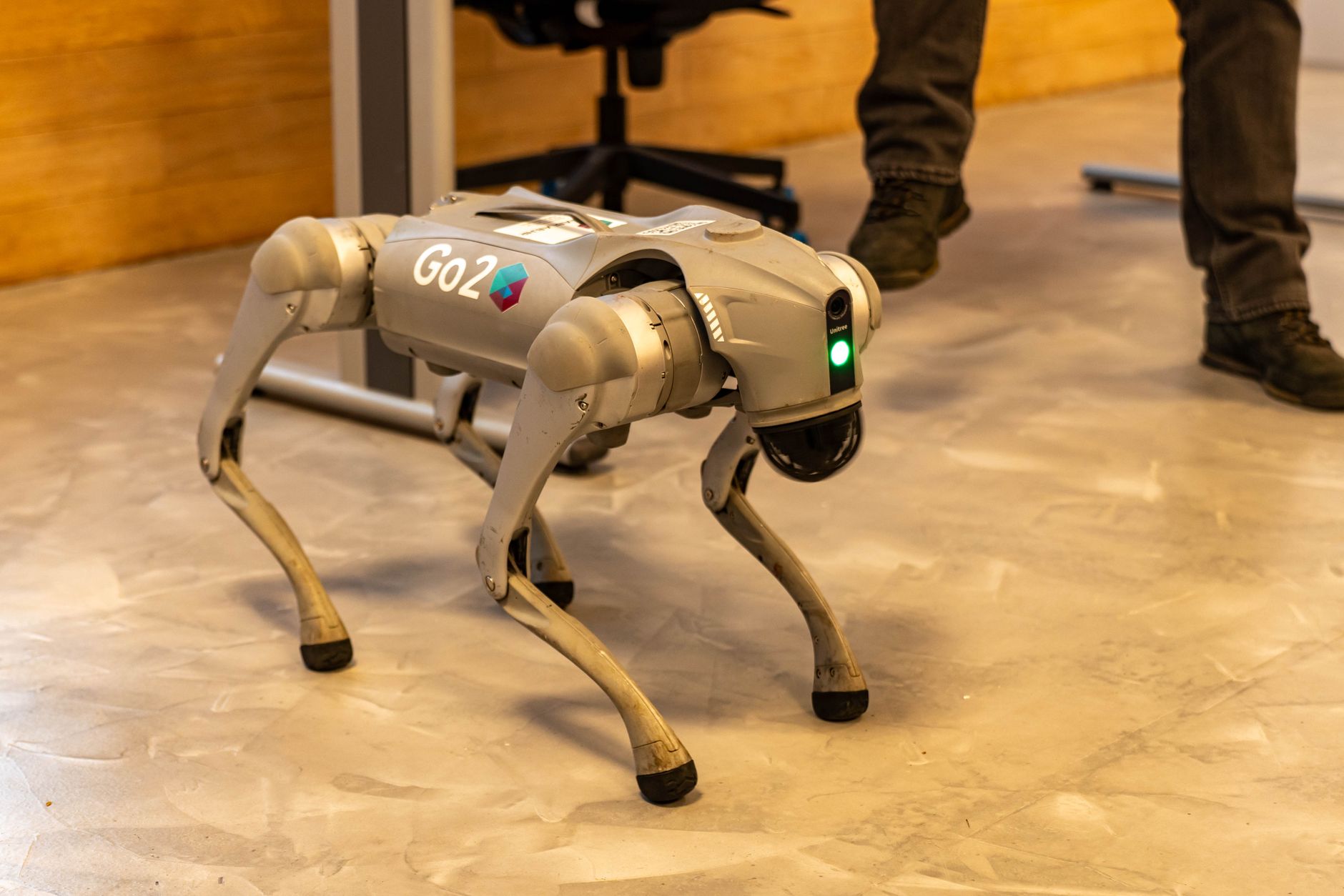

Major corporations are increasingly prioritizing robotics solutions over broad-based artificial intelligence investments, not because they’ve abandoned AI, but because robots deliver measurable, tangible results in production environments. When a manufacturing company automates a warehouse with robotic arms and conveyor systems, it knows exactly what output to expect, what the costs are, and when the investment will pay back. By contrast, AI projects often promise transformation while requiring years of data collection, model training, and integration work with no guarantee of success. Companies like Amazon and Tesla have built competitive advantages through physical robotics automation that performs specific, well-defined tasks—pick-and-place operations, material handling, quality inspection—rather than attempting to replace human intelligence wholesale with machine learning systems. The distinction matters because robots and AI represent fundamentally different problem-solving approaches.
A robot executing the same task thousands of times doesn’t need intelligence; it needs precision, speed, and reliability. An AI system trying to do something intelligently must learn from massive datasets, handle edge cases, and continuously improve. For operations that are repetitive and rule-based—the bread and butter of industrial automation—robots consistently outperform AI on speed, cost, and predictability. The question isn’t whether AI has value; it’s whether AI is the right tool for a specific problem. In most production environments, it isn’t.
Table of Contents
- Why Robots Deliver Certainty When AI Offers Possibility
- The Data Problem That AI Cannot Ignore
- The Cost Structure Favors Physical Automation
- Reliability and Predictability in High-Stakes Environments
- Integration Complexity and Organizational Disruption
- Where Robots Are Demonstrating Superior Results
- How Enterprise Decision-Making Favors Robotics Over AI
- Frequently Asked Questions
Why Robots Deliver Certainty When AI Offers Possibility
robots excel at tasks with clear specifications: move item from point A to point B, sort packages by weight, assemble component X to component Y. These tasks have defined success criteria that either succeed or fail with minimal ambiguity. A manufacturing robot’s performance can be measured in parts-per-hour and uptime percentage; its ROI can be calculated within weeks. In contrast, AI projects struggle with measurement. How do you quantify the value of improved customer sentiment from a recommendation algorithm? How long does it take to see returns on investment in a machine learning model? The uncertainty surrounding AI implementation leads companies to demand proof of concept phases that can stretch for months, while robotics implementations often run on established timelines with proven vendor histories.
The integration burden is also fundamentally different. When a company installs a robotic arm on a factory floor, the robot connects to existing conveyor systems, material handling processes, and production schedules. The robot doesn’t need to understand the broader context of manufacturing; it just needs to execute its programmed movements. An AI system designed to optimize production requires integration with data pipelines, quality management systems, inventory tracking, and supply chain coordination. Each integration point is an opportunity for failure, misalignment, or cost overrun. Companies have learned through expensive experience that AI projects tend to accumulate these integration challenges, turning six-month timelines into eighteen-month ordeals.
The Data Problem That AI Cannot Ignore
Artificial intelligence requires training data, and good training data is expensive and time-consuming to acquire. A company implementing a machine learning system for predictive maintenance on industrial equipment must first collect months or years of sensor readings, equipment failure events, and maintenance records. The data must be cleaned, labeled, and validated before a model can even begin learning. By contrast, robots can start working immediately after installation and calibration, delivering value on day one. If a company doesn’t have the data infrastructure in place, the path to AI-driven automation becomes significantly more expensive and complex.
This data requirement creates a vulnerability for companies: competitive advantage from AI erodes as the industry standardizes on the same training datasets and algorithms. A robot performing a specialized task remains proprietary and difficult to replicate. A machine learning model, once deployed, faces constant pressure from competing models trained on similar or better data. The warning here is that companies investing heavily in AI-based advantages may be constructing a temporary moat rather than a lasting one. Robots, by contrast, often leverage proprietary engineering and process optimization that competitors cannot easily copy, even if the underlying automation principles are well-known.
The Cost Structure Favors Physical Automation
When a company buys a $500,000 robotic arm, the cost is relatively straightforward: equipment purchase, installation, training for operators, and ongoing maintenance. These expenses are tangible, line-item matters that accounting departments understand. When the same company invests $500,000 in AI capability, the money goes toward consultants, software licenses, cloud computing infrastructure, staff training, and “digital transformation” initiatives that are harder to track and justify. An AI implementation might cost more and take longer than initially projected because the problem definition itself was unclear.
Manufacturing and logistics companies have learned to trust the cost structure of robots. Kuka, ABB, and other industrial robotics vendors have built predictable business models where customers know what they’re buying, how long installation takes, and what maintenance costs will be. Companies budgeting for automation can therefore allocate capital confidently. AI vendors, by contrast, often rely on consulting models where final costs depend on implementation complexity—a fact that creates budget uncertainty and organizational friction. For large corporations with capital planning processes that span multiple years, the clarity of robotics investment wins out over the uncertainty of AI transformation.
Reliability and Predictability in High-Stakes Environments
In a pharmaceutical manufacturing facility, an error can cost millions of dollars and compromise patient safety. A robot programmed to perform quality control inspections will reliably inspect every item according to its specifications. If something goes wrong, the failure is traceable: mechanical breakdown, sensor malfunction, or programming error. An AI system trained to recognize defects might have a 99.5% accuracy rate, but nobody can fully explain why it occasionally fails on a particular product variant. For companies operating in regulated industries—pharmaceuticals, automotive, food processing—the unpredictability of AI is a liability.
Robots operate deterministically: given the same input, they produce the same output consistently. AI systems are probabilistic and can behave unpredictably on novel inputs. This difference matters enormously in production environments where a single error cascades into waste, rework, or safety incidents. A robot failure is usually obvious and mechanical; an AI failure can be subtle and hidden, potentially passing through multiple quality gates before becoming apparent. Companies handling high-stakes manufacturing have therefore gravitated toward robots for critical processes, reserving AI experimentation for lower-risk, non-production applications.
Integration Complexity and Organizational Disruption
Bringing AI capability into an existing enterprise requires organizational change beyond the technical challenges. Teams must retrain on new tools, develop data literacy, establish governance around model deployment, and update IT infrastructure. Many AI initiatives fail not because the technology is immature, but because organizations underestimate the human and procedural disruption required to make AI work effectively. Robotics implementations, by contrast, tend to be isolated interventions: install the robot, train the operators, and let it work. The disruption is localized and time-bound.
The warning here is that AI-driven transformation requires a level of organizational readiness and sustained commitment that many companies lack. Robotics automation requires fewer organizational prerequisites. A plant manager can oversee a robotics project with existing staff and vendors. An AI transformation requires cross-functional alignment between IT, operations, data science, and business units—a complexity that often derails projects. Companies that have attempted both types of automation have found that robotics projects have higher success rates, faster payback periods, and fewer unintended consequences on existing business processes.
Where Robots Are Demonstrating Superior Results
Warehouse and logistics operations represent perhaps the clearest example of robots outperforming AI-first strategies. Automated guided vehicles (AGVs) and articulated robots moving inventory through warehouses have delivered measurable productivity gains for over a decade. These systems use relatively simple automation logic—move along this path, lift this weight, place it in this location—combined with physical engineering that solves real logistical challenges. Companies implementing AGVs see warehouse throughput improvements of 20-40% within the first year of deployment.
By contrast, companies attempting to “optimize” warehouse operations through machine learning, without the underlying physical automation, have achieved modest efficiency gains that pale in comparison to the impact of the robots themselves. The lesson that logistics companies have learned is that sometimes the bottleneck is not intelligence but throughput. A human manually sorting packages through a warehouse is slow not because decisions are unintelligent but because the physical process of movement is time-intensive. A robot that moves faster and never gets tired solves this problem more effectively than an algorithm that makes marginally better sorting decisions.
How Enterprise Decision-Making Favors Robotics Over AI
When a company’s capital planning committee evaluates automation options, robots score better on several concrete dimensions. First, there are established robotics vendors with long track records—ABB, Kuka, Fanuc, Boston Dynamics—that offer reliable equipment, maintenance support, and financing options. Second, the regulatory environment for physical robots is well-established; companies understand the safety certifications and insurance requirements. Third, robotics projects have reference customers within the same industry, allowing for peer learning and risk reduction.
AI vendors are newer, the regulatory environment for AI is still forming, and most companies attempting enterprise AI transformation are learning as they go. The practical reality is that companies optimize for certainty and measurable returns, and robotics currently delivers more certainty than AI. A plant manager making a $1 million investment decision will choose the option with historical precedent, established vendor support, and predictable timelines over the option with higher theoretical upside but lower probability of on-time, on-budget execution. This dynamic is unlikely to shift until AI implementation becomes as predictable and turnkey as robotics deployment. Until then, companies will continue to bet on robots for the problems robots can solve, and they will approach AI projects with appropriate caution regarding timeline, cost, and organizational disruption.
Frequently Asked Questions
Doesn’t AI make robots more capable?
AI can enhance certain robotic functions, like computer vision for inspection. But many successful robotics deployments don’t require AI at all—they use traditional programming and sensors. Companies often deploy robots for immediate value, then add AI capabilities later only if the business case justifies the additional complexity and cost.
Are companies really rejecting AI, or just prioritizing robots first?
Most large companies are pursuing both, but with different resource allocation. They’re investing in robots for production bottlenecks and measurable automation needs, while experimenting with AI in lower-stakes environments. The shift is about where companies direct their largest capital investments and highest confidence initiatives.
What if AI gets better at handling the tasks companies use robots for today?
That’s possible, but it would require solving the data collection, training, and integration challenges that currently make AI deployment slower and more expensive than robotics. Historical data shows new technologies rarely displace existing solutions as quickly as advocates predict. Robots have decades of refinement and capital investment behind them; establishing equivalent confidence in AI automation will require time.
Are there industries where AI is outpacing robots?
Yes—customer service, data analysis, content moderation, and diagnostic assistance are areas where AI has found strong footing. But these are knowledge work domains, not physical automation. For industrial and logistics automation, robots remain dominant because they solve tangible, physical problems more efficiently than intelligence-based approaches.
Will robotics become obsolete as AI advances?
Unlikely. Robots and AI are addressing different problems. AI excels at interpretation, prediction, and learning from data. Robots excel at physical execution, precision, and reliability. The long-term future probably involves robots that incorporate some AI capabilities, not robots being replaced by AI systems.