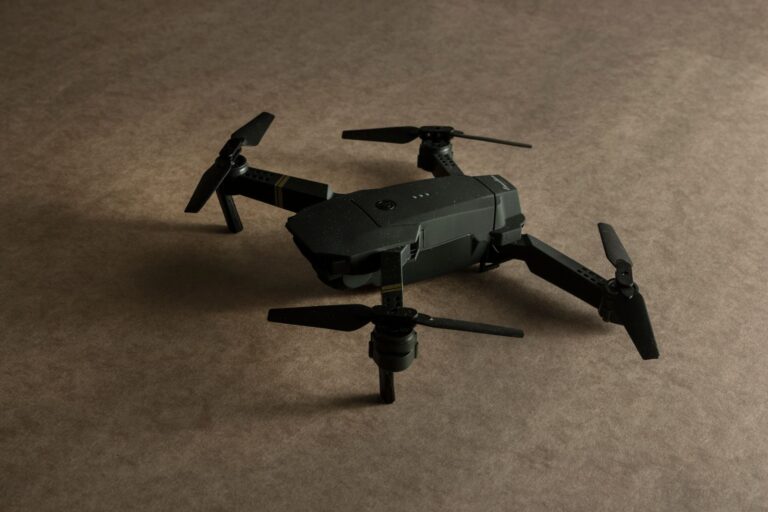

Defense Secretary Pete Hegseth has established a powerful new centralized drone office that represents a significant shift in how the U.S. military manages unmanned systems. Announced on July 2, 2026, this restructuring consolidates control over drone acquisition, technical standards, budgeting, logistics, and commercial engagement under a single leadership position reporting directly to the Deputy Secretary of War.
The move signals that the Pentagon sees unmanned and autonomous systems as central enough to military operations that they warrant dedicated, unified command authority rather than scattered oversight across individual service branches. This reorganization coincides with expanded operational guidance that gives military commanders significantly more flexibility in how they can respond to drone threats. Rather than being restricted to defending the immediate perimeter of Department of Defense installations—the previous “fence line” approach—commanders now have authority to engage threats at greater distances when unauthorized surveillance of designated facilities occurs. Together, these changes represent a deliberate consolidation of power over the drone portfolio and a loosening of constraints on when and where that portfolio can be deployed.
Table of Contents
- What Powers Does the New Centralized Drone Command Hold?
- How Does the Expanded Operational Authority Change Engagement Rules?
- What Does “Directing All Activities” for Unmanned Systems Actually Mean?
- How Does Centralized Authority Affect Defense Contractors?
- What Safeguards Exist Against Misuse of Expanded Threat Authority?
- How Was the Interagency Counter-Drone Framework Expanded?
- Why Does This Restructuring Matter for the Future of Autonomous Warfare?
What Powers Does the New Centralized Drone Command Hold?
The new drone office functions as what the Pentagon calls the “milestone decision authority” for all unmanned and autonomous systems programs, giving it veto power over whether new systems can proceed to development, production, or field deployment. Beyond this gating function, the drone boss can serve as the top buying official on contracts and has explicit authority to order service branches to shift funding between programs. This consolidation pulls significant authority away from individual military departments—the Army, Navy, Air Force, and Space Force—that previously made autonomous systems decisions independently.
To understand the practical implications, consider a scenario where the Army wants to develop a particular drone system while the Navy prioritizes a different unmanned platform. Under the previous structure, these services would compete through the normal budget process. Now, the centralized drone office can redirect resources from the Army’s program to the Navy’s if leadership determines that aligns better with overall strategy. The office also retains the authority to prevent any unmanned or autonomous system from being fielded if it determines the system does not meet Pentagon standards, does not fit strategic priorities, or creates redundancy with existing capabilities.
How Does the Expanded Operational Authority Change Engagement Rules?
The Pentagon’s previous counter-drone guidance restricted military responses to threats at the immediate boundary of Department of defense installations—the “fence line.” Under new guidance issued earlier in 2026, military commanders now have authority to expand the range at which they can engage drone threats significantly beyond this restriction. The shift grants commanders substantially more operational flexibility in responding to unauthorized surveillance and potential threats. The new framework introduces a specific threat definition: unauthorized surveillance of designated facilities now qualifies as a threat that can trigger engagement authority.
However, this expansion comes with a critical limitation. Service secretaries—not the Pentagon’s new drone office—retain authority to designate which facilities receive special protection under these expanded guidelines. This means that decisions about which installations warrant extended protective coverage depend on individual service leadership rather than uniform Pentagon-wide criteria. A facility that one service deems worthy of extended counter-drone protection might not receive the same designation from another service, potentially creating inconsistent security postures across the military infrastructure.
What Does “Directing All Activities” for Unmanned Systems Actually Mean?
The new drone boss’s mandate is sweeping: to “direct all activities to develop, procure, field, sustain, and operationalize unmanned and autonomous systems across all domains.” This language covers the entire lifecycle of drone and autonomous systems—from initial research and development through procurement, fielding, ongoing sustainment (maintenance and upgrade), and operational deployment. The “across all domains” qualifier means the authority extends to air, maritime, ground, cyber, and space domains rather than limiting focus to any single operational environment. In practical terms, this means the new office functions as a single throat to choke for all unmanned systems development across the Pentagon.
If a service branch wants to initiate research on a new autonomous capability, the drone office will influence that decision. If manufacturers want to sell unmanned systems to the military, they will negotiate with this centralized office. If the Pentagon wants to shift strategic focus from one type of unmanned capability to another—say, from large surveillance drones to smaller tactical systems or from air-based platforms to ground-based autonomous vehicles—this office becomes the primary vehicle for executing that shift. The concentration of authority reflects a judgment that unmanned and autonomous systems are too strategically important and too potentially duplicative across services to remain decentralized.
How Does Centralized Authority Affect Defense Contractors?
Defense contractors that have traditionally worked with individual military services now face a new consolidated buying authority. Previously, a company might pitch a drone system to the Air Force, the Navy, and the Army separately, with each service making its own procurement decisions. The new structure means those same contractors must coordinate with the centralized drone office as the “top buying official” on contracts, creating a single decision point rather than multiple service-based opportunities. This consolidation offers both advantages and disadvantages for the defense industrial base.
On one hand, it potentially accelerates acquisition by eliminating duplicative vetting across services and ensures technology standards across platforms. A single authority can mandate that all military drones use compatible communications systems, for example, rather than having individual services adopt incompatible standards. On the other hand, it concentrates power in a way that could slow innovation if the centralized office becomes risk-averse or if it misjudges which technologies will prove valuable in future conflicts. A service branch that believed a particular unmanned system had tremendous strategic potential could previously push hard for its development; now it must convince the centralized authority rather than making its own case.
What Safeguards Exist Against Misuse of Expanded Threat Authority?
The expansion of counter-drone authority beyond the fence line includes an important check: the threat definition itself. Military commanders cannot engage drones anywhere at any time; they can only expand engagement authority against threats to designated facilities engaged in unauthorized surveillance. This means the framework still requires both a facility designation and evidence of actual unauthorized surveillance rather than giving commanders blanket authority to shoot down drones over broad geographic areas. The practical limitation, however, is that “unauthorized surveillance” is not universally defined in the guidance.
What constitutes unauthorized versus authorized surveillance depends on context and may be subject to interpretation in real-world situations. A commercial drone operator flying near a military base for legitimate purposes might not realize they are approaching a facility that has been designated for extended counter-drone protection. The guidance does not appear to establish clear warning systems or communication protocols to inform civilian drone operators that they are entering areas where military engagement authority has been expanded. This creates a risk that civilian operators could inadvertently trigger defensive responses without understanding the boundaries of the protected airspace.
How Was the Interagency Counter-Drone Framework Expanded?
The Pentagon expanded Joint Interagency Task Force 401 (JIATF-401) to counter unmanned threats across all operational domains, broadening its scope beyond its previous mission limitations. Previously, JIATF-401 operated with more restricted authority; the expansion represents a deliberate effort to create a dedicated, multi-agency counter-unmanned capability that coordinates across the Department of Defense, Department of Homeland Security, and other relevant agencies.
JIATF-401’s expanded mandate addresses the reality that drone threats cross traditional military boundaries. A hostile unmanned system might be operated by a foreign military, a terrorist organization, a state-sponsored non-military entity, or even a criminal operation. By expanding JIATF-401 across all domains and coordinating across agencies, the Pentagon can address these varied threat types through a single coherent framework rather than having different military commands and civilian agencies develop separate responses.
Why Does This Restructuring Matter for the Future of Autonomous Warfare?
The consolidation of drone authority under a single Pentagon office reflects a strategic judgment that unmanned and autonomous systems will define future military capability in ways comparable to how aviation or nuclear weapons did in previous eras. By creating a unified command structure now, the Pentagon positions itself to make coherent decisions about autonomous systems development as the technology matures and becomes more central to operational planning. The new structure also signals that the Pentagon intends to make faster decisions about drone capabilities.
When authority was distributed across services, disagreements about standards, funding priorities, and operational employment could stretch acquisition timelines and create inefficiencies. A centralized authority can move faster—for better or worse. Historical precedent suggests that military organizations that consolidate authority over transformative technologies during their early development phase gain advantages in shaping how those technologies are eventually employed. The level of power granted to the new drone office—including the ability to block systems from the field—suggests that Pentagon leadership views this consolidation as critical enough to justify concentrating decision-making authority in a way that removes options from individual services.
- —