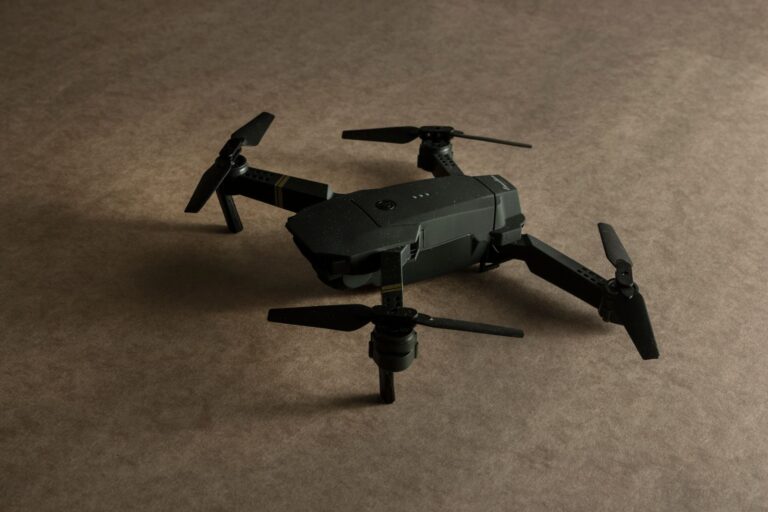

Autonomous combat drones equipped with artificial intelligence have now demonstrated the capability to autonomously detect, track, and fire advanced air-to-air missiles during recent testing. This milestone represents a significant evolution in unmanned weapons systems, moving beyond remote pilot operations toward genuine autonomous decision-making in aerial combat scenarios. The test validates that AI systems can process complex sensor data, identify aerial targets, and execute firing sequences without requiring continuous human control or intervention—a threshold many defense analysts considered years away from practical demonstration.
The development of AI-driven drone autonomy raises fundamental questions about how aerial warfare may evolve. When an unmanned system can independently identify and engage airborne threats, it operates in a decision cycle measured in milliseconds, far faster than human operators can reasonably respond. This capability opens possibilities for defending airspace without continuous satellite uplinks or human operators, while simultaneously introducing new risks around target identification accuracy and the potential for unintended escalation in contested airspace.
Table of Contents
- How Do AI-Powered Combat Drones Achieve Autonomous Target Engagement?
- The Technical Challenge of Autonomous Air-to-Air Engagement
- What This Means for Future Air Defense Systems
- Autonomous Engagement Versus Remote Pilot Operations
- Verification and Confirmation Challenges in Autonomous Targeting
- Sensor Reliability Under Stress
- Operational Implications for Airspace Management
How Do AI-Powered Combat Drones Achieve Autonomous Target Engagement?
autonomous combat drones operate through layered sensor fusion—combining radar, optical cameras, infrared sensors, and sometimes electronic warfare receivers into a unified threat picture. The AI system processes this multi-source data in parallel, identifying aircraft characteristics, flight patterns, and behavior signatures that distinguish hostile platforms from neutral traffic. Rather than following a simple binary check, modern algorithms evaluate dozens of parameters simultaneously: radar cross-section, transponder codes, flight altitude, velocity vectors, and deviation from expected flight corridors for civilian air traffic. The missile firing decision itself represents perhaps the most critical automation point.
Rather than a single AI algorithm making a yes-or-no choice, robust systems implement decision trees with multiple confirmation layers. One layer might confirm target classification; another verifies that firing solutions are geometrically valid; a third checks whether the target is outside designated no-fire zones. Even in autonomous mode, most operational systems retain a final human authorization checkpoint, though this window compresses to seconds rather than minutes. The tradeoff is fundamental: faster autonomous response increases defensive capability but reduces human oversight of individual firing decisions.
The Technical Challenge of Autonomous Air-to-Air Engagement
Air-to-air missile firing introduces complexities absent in ground-based applications. The target is moving at high speed in three dimensions; the drone itself is maneuvering; and the missile requires precise guidance data during its flight. The AI must compute not only whether to fire now, but whether the firing solution will remain valid as the missile flies toward an evading target. This requires continuous prediction of target motion—essentially modeling the behavior of a human pilot making evasive maneuvers, something current AI systems approximate but rarely predict with certainty.
A significant limitation emerges in contested electronic warfare environments. If an adversary jams the drone’s radar, or spoofs its optical sensors with decoys or false targets, autonomous systems can be confused into either engaging the wrong target or failing to engage a valid threat. Testing typically occurs in controlled airspace with cooperative targets; real-world conditions introduce far greater ambiguity. The test likely employed known, non-maneuvering targets or predictable flight paths, conditions that don’t reflect actual air combat scenarios where pilots actively defeat detection and engage in tactical maneuvering to avoid missile launch.
What This Means for Future Air Defense Systems
Military air defense has historically relied on human operators making split-second decisions based on radar displays and radio communication. AI-enabled autonomous engagement could fundamentally reshape this model. Imagine an air defense platform that continuously monitors incoming aircraft, maintains situational awareness across multiple engagement zones simultaneously, and initiates defensive actions without human operators becoming a limiting factor. This approach offers substantial advantages in scenarios where defending territory against multiple simultaneous airborne threats, or where communication links to human operators become unreliable.
The integration of autonomous drone systems with air defense networks could create persistent protective coverage over critical infrastructure, military installations, or geographic regions. Unlike human operators who require rest, attention management, and can monitor only one or two display screens, AI systems operate continuously across multiple sensor streams. However, this advantage comes with a significant operational risk: autonomous systems cannot exercise judgment or discretion in the way humans can. An AI system cannot decide to hold fire because civilians are present, or choose not to engage because the tactical situation has changed. These limitations demand carefully designed rules of engagement and geographic boundaries that are themselves subject to error or exploitation.
Autonomous Engagement Versus Remote Pilot Operations
Today’s military drones are primarily remotely piloted vehicles—operators at a control station, sometimes thousands of miles away, make targeting and firing decisions. This model offers clear human accountability; each engagement decision passes through a human decision-maker. The tradeoff is latency and cognitive load: operators juggle multiple displays, manage communications, and make decisions under pressure. In peer-conflict scenarios with advanced air defense systems, this latency becomes a liability. An adversary’s AI-driven defense might engage before human-piloted drone operators finish communicating their targeting decision up the chain of command. Autonomous systems compress this decision cycle.
The AI evaluates threats, computes firing solutions, and executes engagement without waiting for radio communication or operator input. This speed advantage is substantial—milliseconds matter when missiles are flying at supersonic speeds. However, autonomous operation introduces accountability challenges that remote piloting avoids. When a human operator presses a firing button, responsibility is clear. When an AI algorithm makes that decision, responsibility becomes distributed among programmers, commanders, operators, and the decision-tree logic itself. This diffusion of responsibility remains an unresolved policy question, particularly in operations where civilian presence cannot be completely ruled out.
Verification and Confirmation Challenges in Autonomous Targeting
One of the most serious limitations of autonomous targeting is the possibility of misidentification. Modern aircraft share certain features—radar signature profiles, size, and speed profiles—across multiple types, and distinguishing a civilian transport aircraft from a military transport becomes easier said than done at long range. The test that successfully fired an air-to-air missile almost certainly used known target aircraft with clear identification markers, controlled approach vectors, and no electronic countermeasures designed to confuse the AI system.
Real-world engagement introduces the specter of friendly-fire incidents and misidentification in complex airspace. If an AI system mistakes a civilian airliner’s radar signature for a military aircraft, or fails to recognize that a friendly nation’s fighter jet is operating in the zone, the consequences could be catastrophic. This is why most operational autonomous systems, even after achieving technical capability for independent firing, retain human authorization checkpoints. The challenge is that as the speed of air combat increases, these human checkpoints become narrower—operators have seconds to make life-or-death decisions based on the AI’s recommendation, which is barely better than letting the AI decide alone.
Sensor Reliability Under Stress
Autonomous air-to-air engagement depends entirely on the reliability of sensor systems under operational stress. In testing, sensors operate in optimal environmental conditions—clear weather, no electromagnetic interference, and known target characteristics. Combat environments introduce fog, rain, electronic countermeasures, chaff dispensing, and deliberate spoofing designed to fool AI-based detection. A radar-guided missile cannot launch if the drone’s radar is jammed; an infrared-guided missile fails if the target deploys flares.
The AI must rapidly switch between sensor modalities and firing modes as conditions change—a task that remains challenging even for well-trained human pilots. The performance margin between testing and real-world operations is historically substantial. Weapons systems tested under ideal conditions often reveal significant limitations when deployed. Air-to-air missiles themselves, despite decades of development, still experience engagement failures in realistic conditions due to target maneuvers, environmental factors, or decoy effectiveness. Adding AI-based autonomous targeting adds another layer of potential failure points, even if each individual component—detection, tracking, classification, firing—works correctly in isolation.
Operational Implications for Airspace Management
The existence of autonomous combat drones capable of independent air-to-air engagement has implications that extend far beyond military doctrine. Shared airspace—the environment where civilian aircraft, military traffic, and unmanned systems must coexist—becomes more complex when autonomous platforms can make firing decisions without human intervention. Current airspace management relies on strict separation standards, continuous radio communication, and transponder requirements that ensure human operators maintain awareness of all significant traffic. Autonomous systems must integrate into this framework without creating unpredictable hazards.
Integration challenges are not merely technical but operational and legal. An autonomous combat drone operating in international airspace must distinguish between military aircraft from allied nations, neutral nations, and hostile nations—distinctions that are not always obvious from radar data or optical sensors. Current international law and military protocols for air engagement assume human decision-makers who can evaluate geopolitical context and rules of engagement in real time. Autonomous systems cannot replicate this contextual reasoning. The successful test of autonomous air-to-air firing represents a technical milestone, but deployable operational systems must solve the far harder problem of reliable performance within contested, uncertain, and politically complex environments.