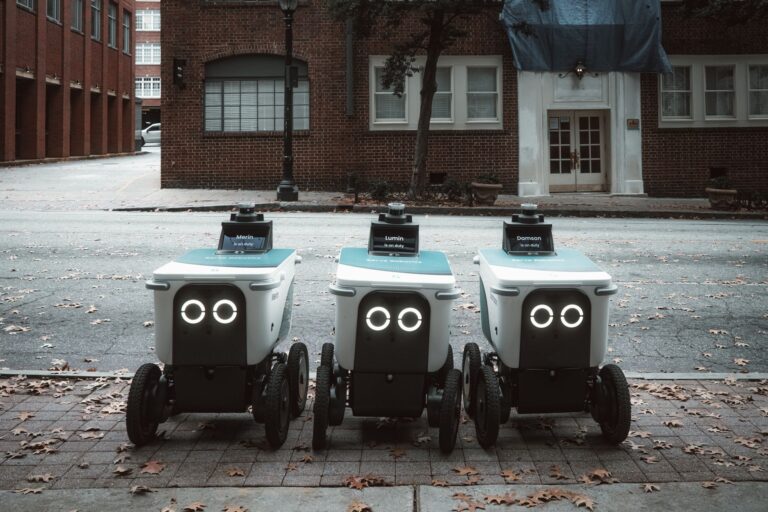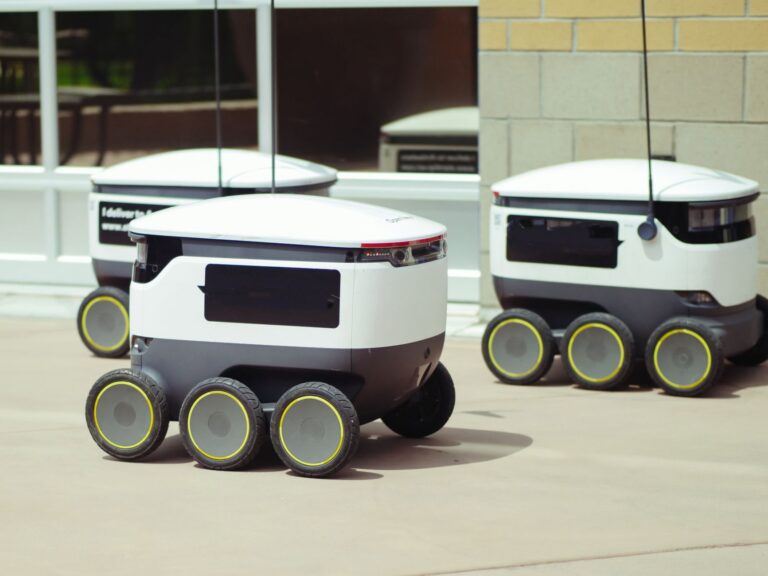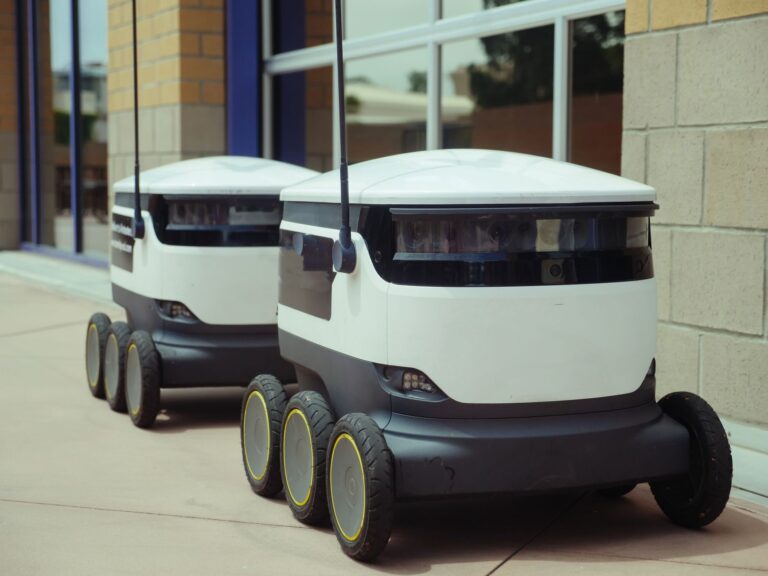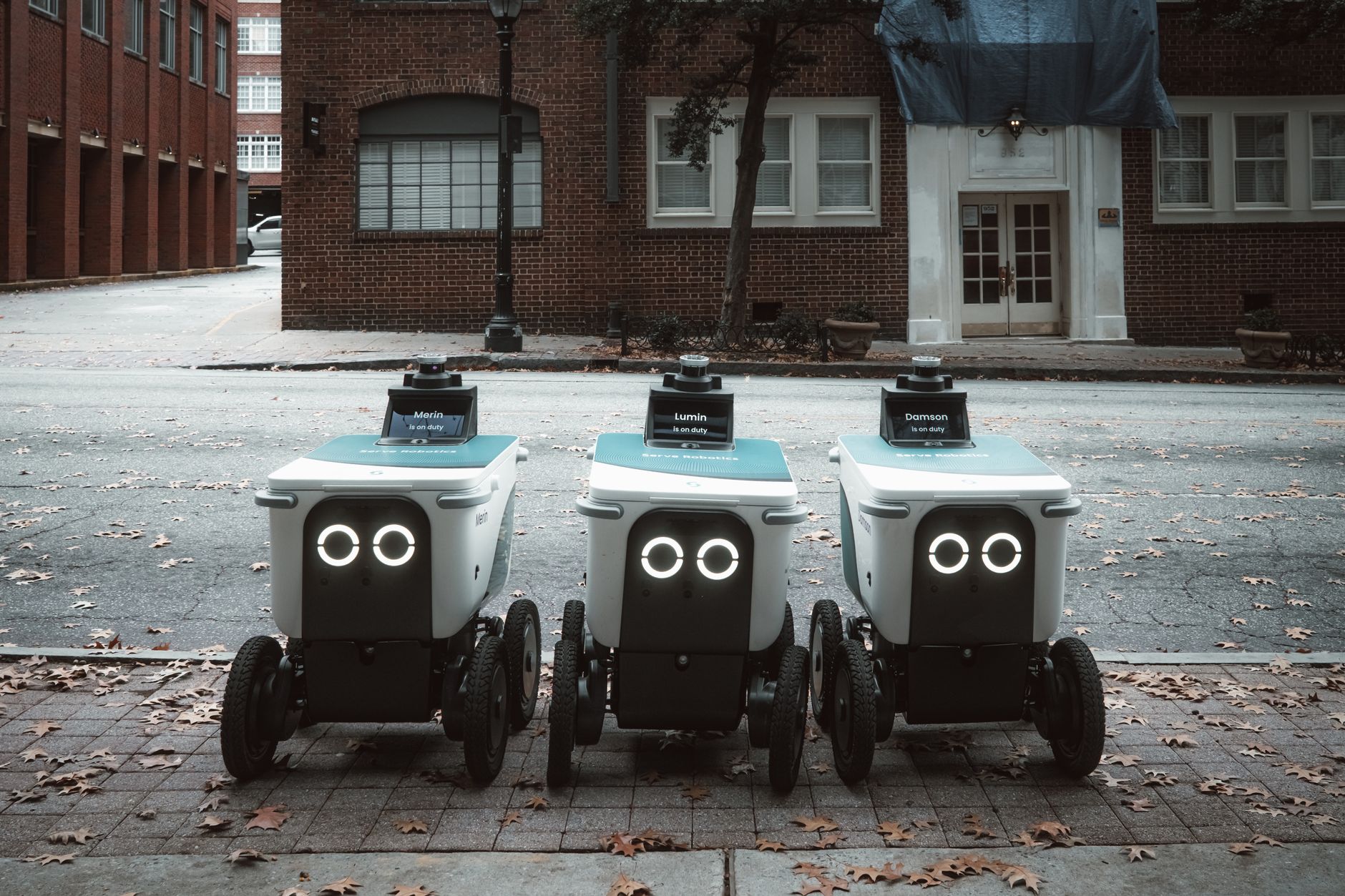

This guide explains how to choose, safeguard, and deploy mobile robots in 2026. A mobile robot is a driverless platform that moves goods or gathers data while sensing its surroundings. Industrial buyers face three decisions: capability type, safety duty, and site readiness. Public-facing deployers face a fourth: proof the robot suits shared space.
Table of Contents
- AGV or AMR: what fits your floor?
- Which industrial safety standard applies?
- What does the U.S. require?
- What changes in Europe in 2027?
- Which questions belong on your checklist?
AGV or AMR: what fits your floor?
An automated guided vehicle follows a fixed path. An autonomous mobile robot reroutes around people and pallets in a changing warehouse. Industry market reporting says modern AMRs work without wires or magnetic strips. They use LiDAR, vision, onboard intelligence, and collision detection for navigation.
Ask vendors about mapping time, fleet size, and charging needs. Those answers set throughput more than top speed does. NIST research supporting ASTM Committee F45 offers firmer proof. It tests navigation in defined areas, docking accuracy, obstacle measurement, and bumper force. Demand that performance data instead of brochure speeds.
Which industrial safety standard applies?
The Association for Advancing Automation completed its mobile-robot safety trilogy with ANSI/A3 R15.08-3-2026. The group says Part 3 tells users how to deploy, operate, and maintain applications at acceptable risk, described in the Association's Part 3 announcement. Responsibility splits across three parts.
ANSI reporting says Part 1 covers the robot itself, Part 2 covers integration, and Part 3 covers the user, with Part 1 reaffirmed as ANSI/A3 R15.08-1-2020/R2026, noted in ANSI's summary of the reaffirmation. For driverless trucks, use ISO 3691-4:2023. ANSI reporting describes international safety and verification rules for driverless trucks and their systems, including emergency stop per ISO 13850. It is harmonized to support CE marking in Europe.
What does the U.S. require?
OSHA has no dedicated robotics standard. OSHA guidance summarized in Oct. 2026 says enforcement uses General Duty Clause Sec. 5(a)(1) and 29 CFR 1910.212. That guidance treats ANSI/RIA R15.06 and ISO 10218 as recognized practice. It lists serious penalties up to about $16,550 per violation.
Public-facing robots have a clearer certification path. OSHA added UL 3300 for service, communication, information, education, and entertainment robots to its NRTL list on Dec. 31, 2025. That step enables third-party certification. UL Solutions granted its first UL 3300 certification to Simbe's Tally inventory AMR and dock in March 2026 after third-party testing, reported in the UL Solutions certification announcement. Grocery and retail deployers gain a tested example. Certification covers the tested configuration, not every store layout.
What changes in Europe in 2027?
EU Regulation 2023/1230 replaces Machinery Directive 2006/42/EC. It applies mandatorily from Jan. 20, 2027. The EU Commission summary from Mar.
2026 says the regulation directly covers software, autonomous and AI-enabled machinery. It also adds cybersecurity documentation and digital instructions, explained in the EU Commission summary. Buyers should align purchase terms now. Ask who supplies risk assessment, software version records, cybersecurity documents, and digital instructions for the 2027 regime.
Which questions belong on your checklist?
Use vendor meetings to fix duties and site limits. Bring operations, safety, and IT staff to the same walkthrough.
Record answers in the purchase order. Replace brochure speed with measured task time in your aisles.
- What mapping, fleet size, and charging plan fits peak volume?
- What navigation, docking, obstacle, and bumper-force test data supports the claim?
- Who owns integration risk, and who owns daily operation and maintenance?
- Does our layout match a certified configuration, or need new assessment?
- For Europe, what CE, software, cybersecurity, and instruction files ship with the machine?