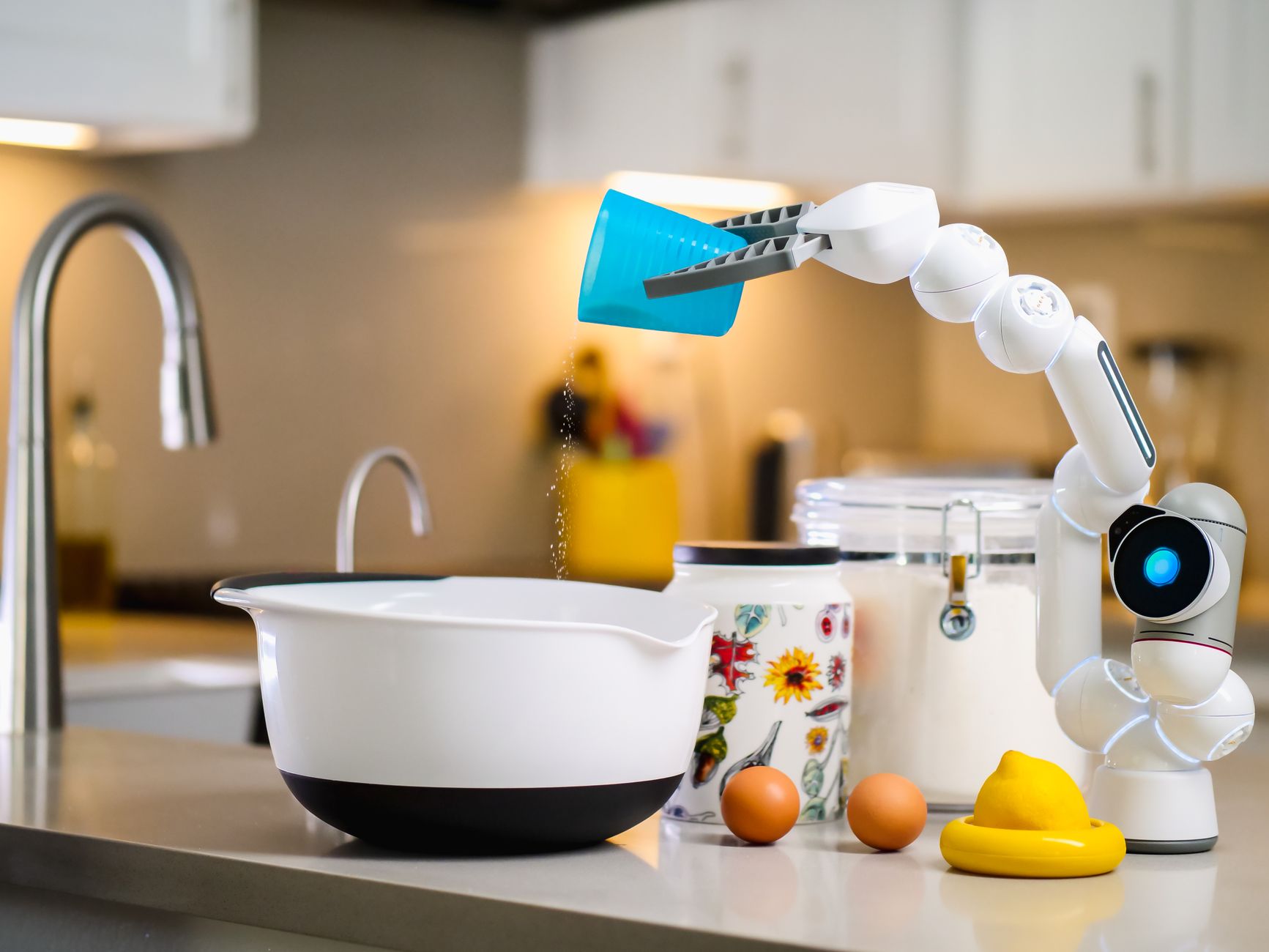

This FAQ answers common October 2026 questions about food and beverage robotics with source-checked facts. Food and beverage robotics means machines that cook, hold, assemble, or dispense food in restaurants and food plants. Use it to judge fit, safety duties, and likely payoff before you buy or deploy. Each answer states the rule or result, who it affects, and its limits.
Table of Contents
- What food-safety rules apply to robotic cooking and holding?
- What materials must commercial food robots use?
- How do you protect workers around food robots?
- Where is restaurant automation proving out?
- Why automate narrow stations first in 2026?
What food-safety rules apply to robotic cooking and holding?
The U.S. Food and Drug Administration states in the Food Code 2022 download that automated equipment must meet time-temperature controls. Hot holding requires continuous 135°F or above. Vending machines need automatic shutoff when they cannot hold safe temperatures.
The same duties extend to robotic cooking and holding stations. Owners of registered food facilities must set risk-based preventive controls under FSMA, according to the U.S. FDA. That means validated process, allergen, and sanitation controls at critical control points, plus monitoring and corrective-action plans. Practical buyers can act on this now:.
- Ask the vendor for validated time-temperature parameters for each menu item
- Confirm continuous monitoring, alarms, and shutoff behavior
- Write who checks logs, cleans food-contact parts, and corrects deviations
What materials must commercial food robots use?
The American National Standards Institute blog explains in the NSF/ANSI 51-2025 summary that commercial units need food-safe, cleanable construction. NSF/ANSI 51-2025 covers food-equipment materials. Related equipment standards such as NSF/ANSI 2, 4, and 8 address smooth surfaces, corrosion resistance, and food-zone formulation.
That matters during cleaning, inspection, and approval. Rough welds, porous joints, and non-food-grade plastics trap soil and fail review. Ask for the listed standard, food-zone materials statement, and cleaning method in writing.
How do you protect workers around food robots?
The University of Georgia CAES Field Report citing OSHA in 2026 reports that OSHA has no robot-specific standard. Enforcement uses general machine-guarding, electrical, and General Duty Clause requirements. Installations generally reference ANSI/RIA R15.06 and ISO 10218-1 and -2, plus ISO/TS 15066 for collaborative operation. A Worcester Polytechnic Institute archive review adds an important limit.
Researchers conclude that no comprehensive technical standard covers all agrifood-robotics safety aspects, including meat-plant automation. Operators must therefore apply a minimizing-hazards approach that combines ISO 10218 with food-safety and machinery standards. Treat guarding, lockout, sanitation, and food safety as one design task. Map reach zones, pinch points, hot surfaces, and washdown exposure before production starts.
Where is restaurant automation proving out?
Fast Casual reported in the March 2026 fry-station report that Miso Robotics Flippy Fry Station exceeded 5 million fried baskets in live restaurants. Operators reported $6,400 or more in new monthly profit per site. The gain came from automating the fry bottleneck at about twice manual throughput. Bowl assembly shows a similar narrow-task pattern.
Omega Technology Solutions Group reports that Sweetgreen used Infinite Kitchen automation in 35 of 287 restaurants by mid-2026. The company sold its Spyce robotics unit to Wonder for $186.4 million in December 2025 while licensing the technology back. Reuters reports that Chipotle's Vebu-built Autocado cuts, cores, and peels avocados in 26 seconds. Start with one repeatable station with steady volume. Fry, bowl assembly, and avocado prep fit because tasks, tools, and times stay consistent.
Why automate narrow stations first in 2026?
The National Restaurant Association projected in the 2026 industry outlook $1.55 trillion in U.S. restaurant sales with more than 100,000 added jobs. Yet 32% of operators in April 2026 still lacked staff for demand.
That gap makes broad kitchen automation hard and narrow stations tractable. A fry robot, bowl line, or avocado unit has fewer variants and clearer checks. Managers can staff around it, measure throughput, and hold food-safety limits. Test labor savings after food-temperature compliance, cleaning time, and service calls.