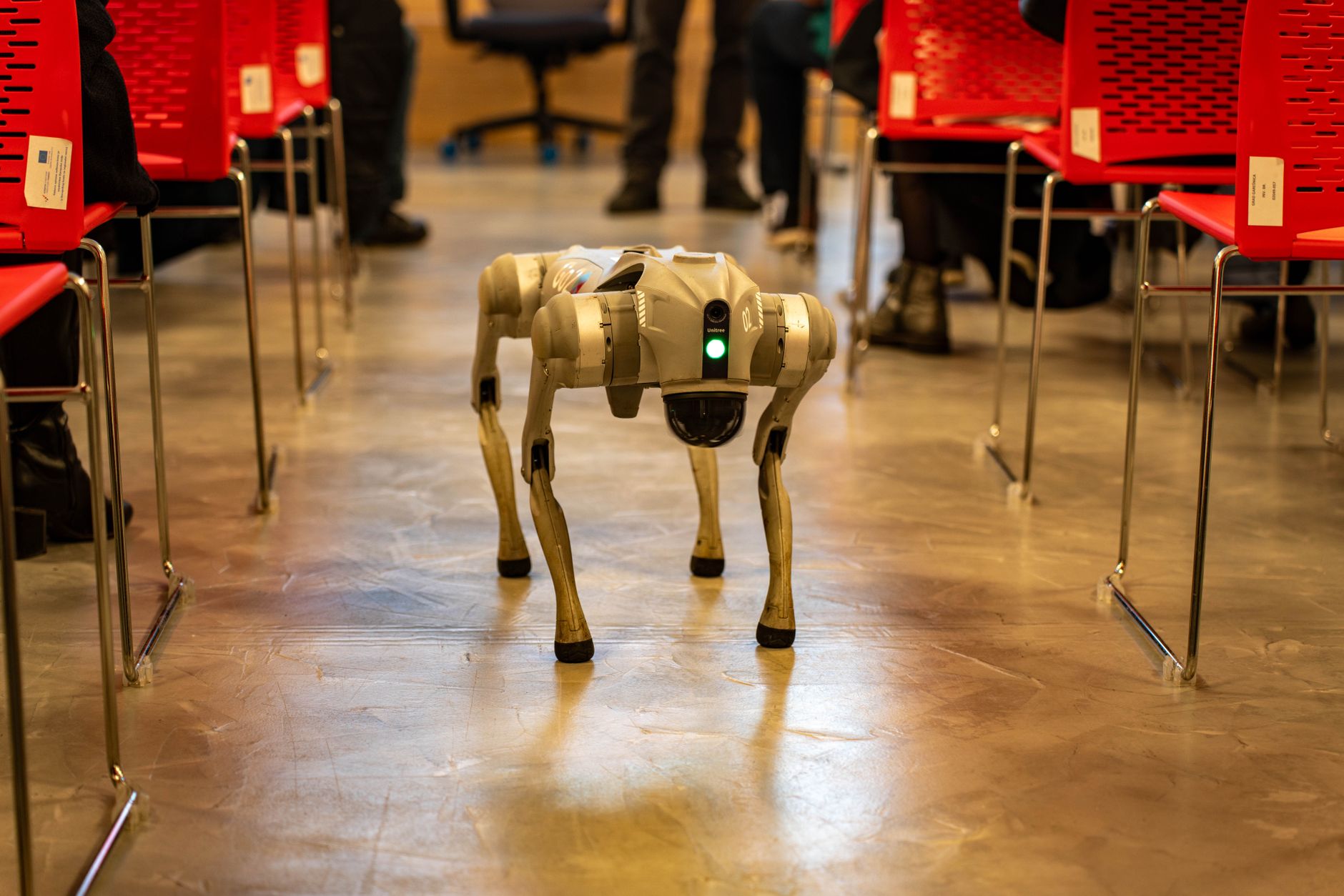

Four-legged border robots are quadruped machines that walk on jointed legs and patrol with cameras, thermal sensors and radios. They extend a human patrol by moving ahead over rough ground and sending back live observations.
A quadruped means a four-legged robot, with each leg driven by motors and guided by balance software. Border configurations add weather sealing, night sensing and secure communications. The practical question for automation readers is which exposed or repetitive patrol tasks they handle best.
Table of Contents
- How do they move on rough ground?
- What do they detect on patrol?
- Who steers them?
- What cuts patrol time short?
- Where do they fit beside people and fixed sensors?
How do they move on rough ground?
Each leg has hip and knee joints that bend, lift and place the foot in turn. Control software shifts weight and adjusts stride to keep the body level. The usual gaits walk, trot or crawl, trading speed for stability. On broken terrain the robot feels slip, slope and contact force through joint and inertial sensors.
It shortens steps on loose rock, widens stance on side slopes and climbs low steps one foot at a time. Deep mud, high snow, steep scree and fast water still stop it. If it trips, many designs brace, fold and push back upright without operator help. Feet use rubber pads or claws for grip, and operators can set a low crouch for wind or a high stance for visibility.
What do they detect on patrol?
A patrol quadruped is mainly a moving sensor post. Daylight and thermal cameras spot people, animals and vehicles by shape and heat. LiDAR or depth cameras map ditches, walls and trails for navigation and measurement.
Typical patrol payloads include: Software links these feeds into one track, so a heat spot can cue the daylight camera. It does not identify intent. A human still decides whether movement is routine, suspicious or a false alarm from livestock and wind-blown brush.
- daylight camera for identification and recording
- thermal camera for night and brush-penetrating detection
- LiDAR or depth sensor for mapping and obstacle avoidance
- microphone, speaker and radio for challenge and relay
Who steers them?
Most border work uses supervised control, not full autonomy. An operator sets waypoints, a fenced route or a watch position, and the robot walks there while avoiding obstacles. The operator can pause, reroute or take direct joystick control at any time. Video, position and health data travel over a secure radio or cellular link, often relayed through a vehicle or mast.
When the link drops, the robot is set to stop, sit or retrace its path rather than wander. That behavior keeps a lost robot recoverable and avoids uncontrolled movement near fences and roads. Autonomy handles footing and local avoidance. People handle judgment, rules of engagement and contact with civilians. This split matters on a border, where terrain is harsh and a wrong move carries risk.
What cuts patrol time short?
Energy is the first limit. Legged motion uses more power than wheels, so patrol range depends on batteries, pace and payload. Cold, climbing and constant video streaming drain charge faster, and field charging needs a vehicle, generator or base station. Weather and dust are the second limit. Rain blinds lenses, dust clogs joints and ice changes grip.
Operators clean optics, dry connectors and check legs and feet after each sortie. A neglected seal or loose cable ends a patrol sooner than any software fault. Communications form the third limit. Ridges, buildings and dense vegetation block video and control. Teams place relays, keep line-of-sight legs short and plan return points before entering dead zones.
Where do they fit beside people and fixed sensors?
Quadrupeds suit dull, dirty or exposed jobs between fixed towers. They can check a fence alarm, look behind a ridge, carry a radio relay or stand watch on a trail while people stay sheltered. They pair well with fixed cameras for cueing and with drones for overhead views.
They do not replace tracking, questioning or community contact. Dogs still scent better, people still interpret better, and fixed masts still watch longer on one charge. The gain is practical: fewer foot patrols into risky spots, faster first looks at alarms, and continuous sensing in places that tire people and wheels.