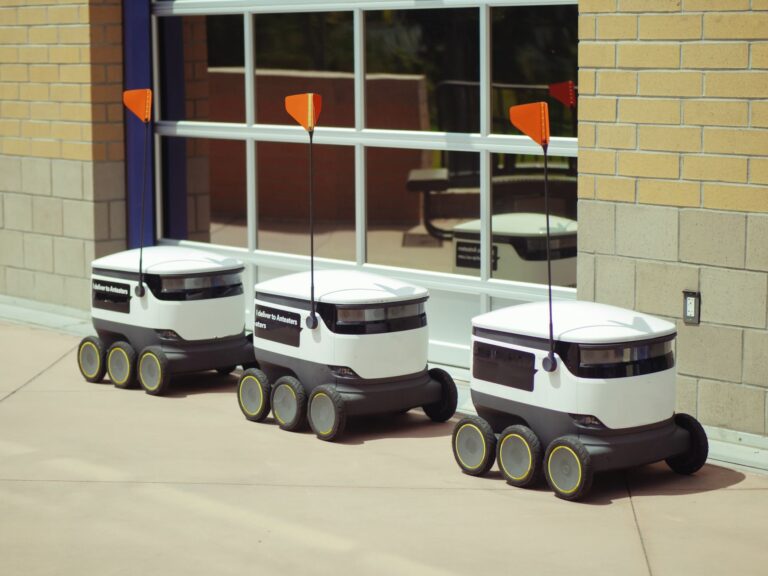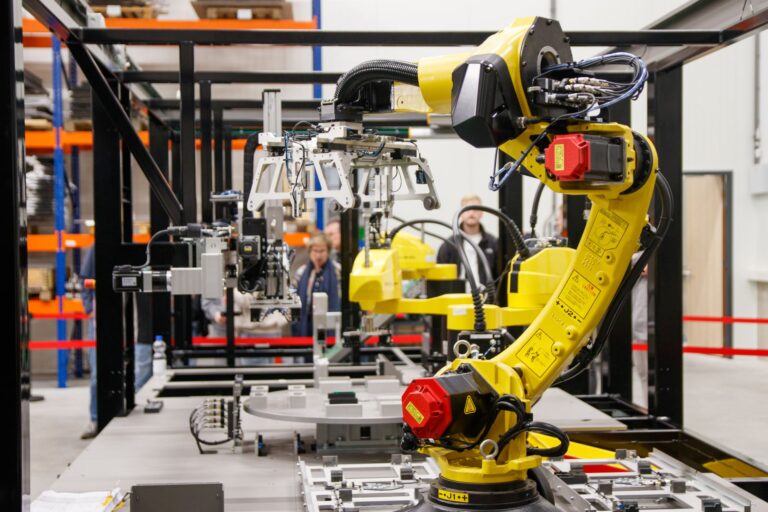

Construction robotics in 2026 means task-specific machines that print layout, move earth, and install foundations under human supervision. It affects field crews, VDC staff, general contractors, and solar builders, with jobsite use more than doubling and practical ways to adopt now.
BuiltWorlds via Building Design + Construction reports adoption rising from 29% of contractors in 2025, with overall use up 45% year over year in its annual equipment and robotics benchmark. That growth lands during a labor gap. Associated Builders and Contractors, via Engineering News-Record, estimates the industry must attract about 349,000 net new workers in 2026, mostly to replace retirees, in its construction labor demand analysis.
Table of Contents
- Why adoption jumped this year
- Who feels the change first
- What machines are actually doing
- Where the limits sit
- What to do next
Why adoption jumped this year
Labor pressure explains much of the shift. Replacement hiring dominates demand, and the need is projected to rise to 456,000 in 2027. Robots do not replace crews, but they let smaller teams complete layout and repetitive machine work faster.
Pilot activity also expanded sharply. Pilot-only use nearly tripled, which suggests contractors are testing one task before buying. That pattern fits layout, excavation, and pile driving, where results are easy to measure in feet per day, rework avoided, or yards moved.
Who feels the change first
VDC teams and layout crews feel it first. Dusty Robotics reports its FieldPrinter robots have printed over 225 million square feet of BIM-derived floor layout for contractors including DPR, Mortenson, McCarthy and Skanska, as described in its BIM-to-field workflow report. One operator can cover large areas per day, so a two-person layout crew changes roles.
Earthwork and solar superintendents feel it next. Supervised-autonomy excavators now handle repeated dig and load cycles, while autonomous pile drivers handle repeated solar foundations. Foremen still sequence work, check grades, manage trucks, and stop the system when conditions change.
What machines are actually doing
Mass excavation offers the clearest field proof. Bedrock Robotics and Sundt Construction completed supervised-autonomy excavation on a 130-acre manufacturing site, moving over 65,000 cubic yards with autonomous excavators loading human-driven trucks. The split matters: autonomy dug and loaded, people hauled, spotted, and managed safety. Solar work shows the same task focus. Contractor Blattner plans to use dozens of Built Robotics autonomous pile drivers to install solar-array foundations on U.S.
projects, according to Engineering News-Record. Repetitive piles across flat ground suit autonomy because the task varies little from pile to pile. Layout shows scale through repetition. Floor-printing robots transfer digital models directly to concrete decks, cutting chalk lines, tape measures, and manual re-entry. Errors drop because the printed lines come from the coordinated model rather than hand transfer.
Where the limits sit
Safety rules now give clearer guardrails. The U.S. adopted revised robot safety standard ANSI/A3 R15.06-2025, nationally adopting ISO 10218-1:2025 and ISO 10218-2:2025, with added collaborative-robot, end-effector, and load and unload guidance, according to the Association for Advancing Automation via the ANSI blog.
Contractors still need fences, zones, lockout steps, and trained spotters. Humanoids are not field assets yet. A 2025 study in Scientific Reports/Nature finds current humanoid construction robots remain research prototypes because of low payload-to-mass ratios, short battery life, and limited endurance in harsh weather. Buy layout, excavation, or pile-driving autonomy for production work, and treat humanoids as lab watching.
What to do next
Start with one measurable task. Pick layout for a large concrete deck, repetitive excavation, or a solar pile run. Assign an owner, set a baseline for speed and rework, and run a short pilot with daily checks.
Build in-house skill so the pilot can scale. Dusty Robotics launched its Certified Partner Program in April 2026, described in its partner certification announcement, which certifies VDC staff and contractors to operate the FieldPrint platform independently without Dusty personnel onsite. A VDC lead can nominate two staff for certification and schedule a first independent layout week.
- certify two VDC staff on the selected platform
- run one project without vendor operators onsite
- review safety zones, model handoff, and print QA after week one
You Might Also Like
- Tutorials and DIY Robotics Explained for 2026: Who It Affects, Key Evidence, and What to Do Next
- Simulation Digital Twins Robotics Explained for 2026: Who It Affects, Key Evidence, and What to Do Next
- Sensors and Perception Robotics Explained for 2026: Who It Affects, Key Evidence, and What to Do Next