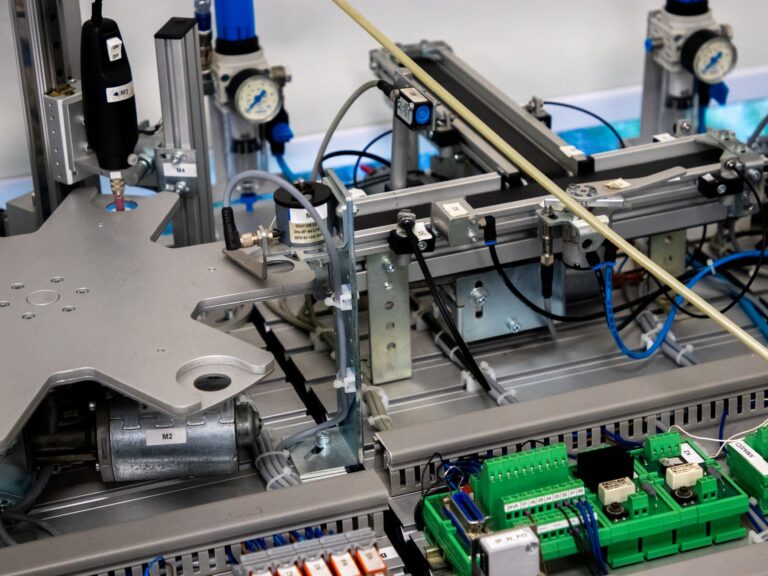

Sensors and perception robotics in 2026 means sensor fusion, combining cameras, LiDAR, radar, ultrasonics, IMU and encoders into one position estimate. It affects riders, factory workers, suppliers, integrators, and early home users, with evidence from road fleets, humanoids, and new safety standards. Robot perception is how a machine builds a live model of its surroundings. If fog blinds cameras, radar still tracks speed while LiDAR supplies shape and distance.
Table of Contents
- How robots see and stay oriented
- Why robotaxis and humanoids pick different sensors
- What safety rules apply now
- What to check before working near people
How robots see and stay oriented
Modern systems fuse many sensors because no single sensor works in all conditions. Cameras read signs, lane marks, and hands. LiDAR maps geometry, radar measures velocity in rain and fog, and ultrasonics cover close range. Inertial units and wheel or joint encoders track motion between external fixes.
According to Frontiers in Mechanical Engineering, the 2026 direction pairs detectors such as YOLOv12 with scene-aware vision-LiDAR fusion, described in the 2026 study on YOLOv12 plus vision-LiDAR fusion. That mix keeps tracking alive when one channel degrades. The practical result is redundancy. A delivery robot can lose texture in glare yet hold objects with LiDAR. A mobile arm can lose GPS indoors yet hold pose with IMU and encoders.
Why robotaxis and humanoids pick different sensors
Commercial robotaxis show the cost split. Waymo uses multi-sensor fleets for driverless rides in U.S. cities. Tesla pursues cheaper vision-only driving that still needs supervision. Humanoids add touch to vision for grasping.
According to the Vicon blog, Figure 03 uses six RGB cameras, including palm cameras, plus fingertip sensors sensing about three grams, as detailed in the 2026 state-of-humanoids roundup. Units worked at BMW Spartanburg and entered home alpha tests in 2025. Tesla Optimus Gen 2 and Gen 3 take the opposite path. They use about eight monocular RGB cameras and no LiDAR or radar. Sensing effort moves to joint torque and fingertip touch, which suits indoor handling but weakens low-light driving or navigation.
What safety rules apply now
Industrial robot safety changed with ISO 10218-1:2025 and ISO 10218-2:2025. They cover robot arms, integration, and cells. According to Drives & Controls, the revised standard is expected to support CE marking under the EU Machinery Regulation for new installations from January 2027, explained in the report on the new industrial robot safety standard. No final humanoid-specific safety standard exists yet. ISO 25785-1 stayed a working draft in early 2026 after an October 2025 meeting in Barcelona.
A Draft International Standard is expected during 2026, with publication in late 2026 or 2027. U.S. road rules still handle perception limits through exemptions. NHTSA caps Part 555 non-compliant automated-vehicle exemptions at 2,500 vehicles per maker per year. In 2025 it granted Zoox a demonstration exemption while simplifying review.
What to check before working near people
Perception latency decides collaborative safety. It is the time from sensing a person to slowing to an ISO/TS 15066-compliant speed.
Short, measured latency matters more than a sensor count on a datasheet. Buyers and integrators should demand proof before deployment near people: Treat low light, reflective metal, dust, rain, and crowded aisles as test cases. If a vendor cannot show performance in those cases, limit speed, add guarding, or delay shared operation.
- measured reaction time from detection to safe speed
- redundant sensing so one blinded sensor does not cause failure
- documented risk assessment for the actual cell, route, and lighting