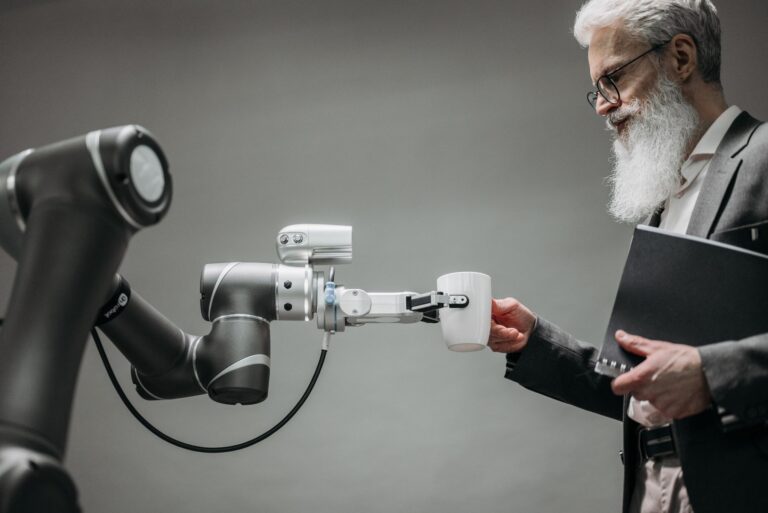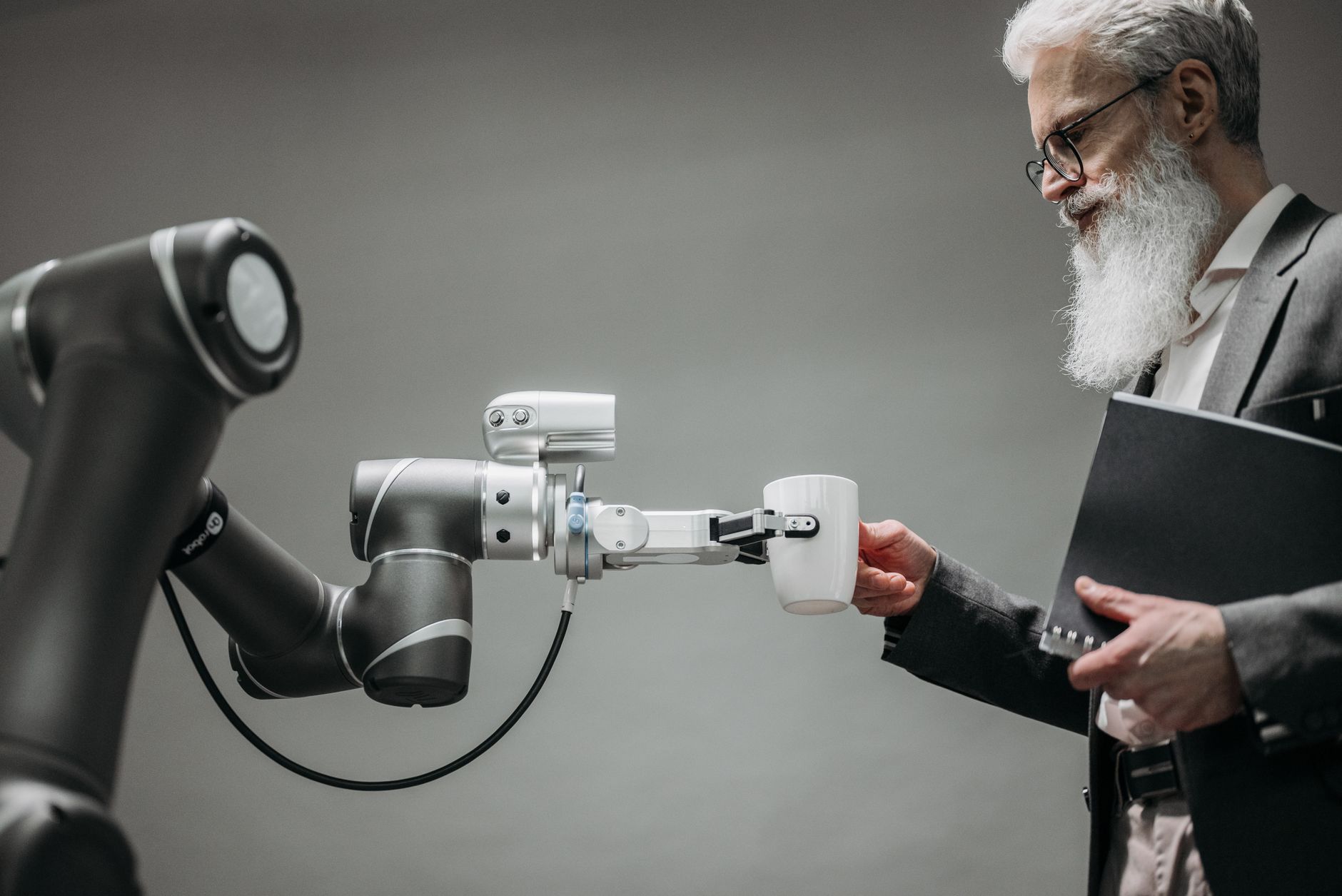

Ethics and policy robotics means designing robots that respect human values and meet legal duties. In 2026 it affects developers, deployers, integrators and buyers of workplace, industrial and AI-enabled robots, who must combine EU rules with safety standards and documented risk checks. Industrial arms, mobile manipulators, hiring and education robots, machinery and medical robots all sit in scope. Voluntary frameworks help teams show what they decided, why it is safe, and who remains responsible.
Table of Contents
- Which European duties apply now?
- What changes for language-controlled robots?
- Where do safety and ethics standards fit?
- What should robot teams do next?
Which European duties apply now?
According to the European Commission's regulatory framework page, the EU AI Act, Regulation 2024/1689, is the first comprehensive AI legal framework worldwide and places risk-based duties on developers and deployers to foster trustworthy AI in Europe. The European Commission's July-August 2025 package states that general-purpose AI duties applied from 2 August 2025.
They cover technical documentation, downstream information, copyright policy and a public training-data summary, with extra evaluation and incident reporting for systemic-risk models above 10^25 FLOP. The European Commission's framework page updated 3 August 2026 states that the Digital Omnibus on AI, in force 27 July 2026, deferred high-risk duties. Annex III standalone systems move to 2 December 2027 and Annex I product-embedded AI moves to 2 August 2028, affecting hiring, education, machinery and medical robotics.
What changes for language-controlled robots?
NIST's Generative AI Profile AI 600-1, published 26 July 2024, adds 12 generative-AI risks. They include confabulation, prompt injection, data leakage and information integrity. That matters for language-controlled and vision-language robots.
A pick instruction, safety summary or customer answer can sound confident while wrong, leak data, or follow injected text in labels, manuals or web content. Teams should test prompts, retrieval sources, stop conditions and human review separately. Log failures by cause so fixes target the model, the tools, or the workflow.
Where do safety and ethics standards fit?
ISO lists both parts in its industrial robot safety catalogue. ISO 10218-1:2025 and ISO 10218-2:2025, published February 2025, set safety requirements for industrial robots and for robot applications and cells, requiring manufacturers and integrators to combine them in one safety case. IEEE's 2021 standard IEEE 7000-2021 gives a practical ethics-by-design workflow.
It translates stakeholder values and ethical concerns into system requirements, design practices and validation. UNESCO's Recommendation on the Ethics of AI, adopted November 2021 by all 193 member states, keeps ultimate responsibility with humans and denies legal personality to AI. The Recommendation is non-binding, so national robotics rules vary widely.
What should robot teams do next?
NIST describes the approach in its AI Risk Management Framework resource. NIST's voluntary AI Risk Management Framework 1.0, published January 2023, organizes action around Govern, Map, Measure and Manage, helping robot teams document risks, oversight and monitoring for procurement and EU Article 9 alignment. Use one shared record for each deployment: File that record where procurement, safety review and operations can all find it before the robot touches workers or the public.
- map users, bystanders, tasks, operating limits and foreseeable misuse
- measure safety, accuracy, bias, security and human-oversight controls
- assign an owner for monitoring, incident review and updates
- keep technical notes, downstream instructions and data summaries together