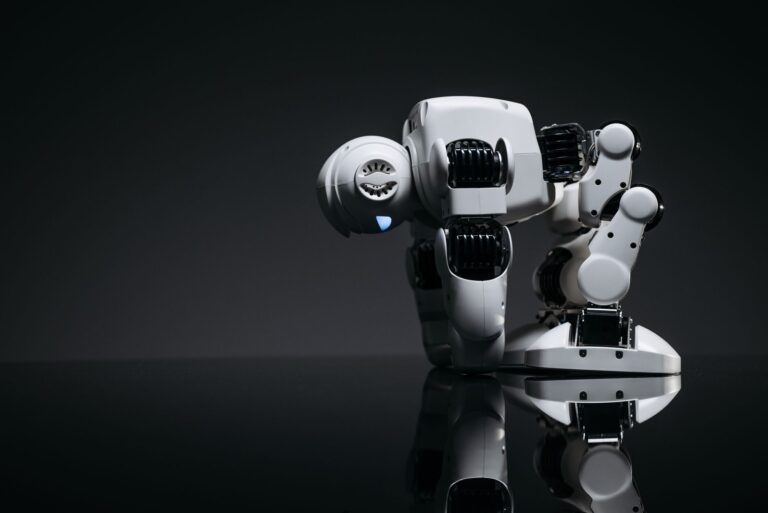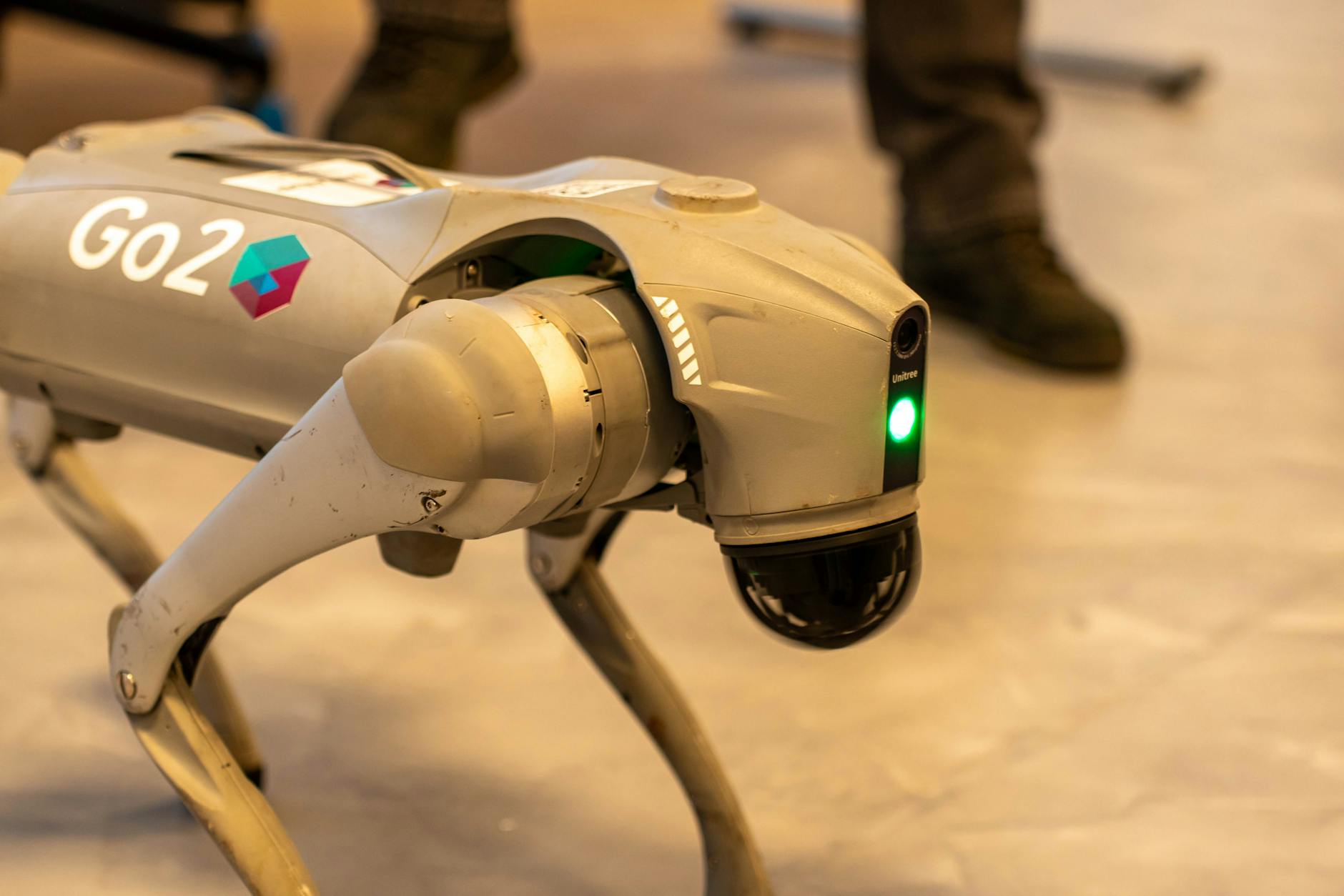

GRRR The Speculative Robotics Rollup represents a financial consolidation strategy where multiple smaller robotics and automation companies are acquired and merged into a single, larger entity, typically driven by investor speculation rather than fundamental operational synergies. The term reflects both the aggressive nature of such acquisitions and the considerable skepticism around their long-term viability.
Recent examples include various special purpose acquisition company (SPAC) mergers in the robotics sector, where pre-revenue or early-stage automation firms were combined with blank-check companies expecting exponential growth that never materialized. The core appeal of a robotics rollup is straightforward on paper: aggregate fragmented market share, reduce redundant operations, and create an ostensibly more attractive investment target. In practice, however, the speculative nature means many of these consolidations rely on optimistic revenue projections, unproven technology integration, and the assumption that throwing capital and management overhead at disparate teams will somehow produce greater value than operating them separately.
Table of Contents
- What Drives Speculative Rollups in Robotics?
- The Valuation Problem and Hidden Risks
- Customer Concentration and Market Reality
- Integration Timelines and Practical Tradeoffs
- Technology Integration and Hidden Costs
- Market Timing and Sector Maturity
- Future Outlook and Lessons Learned
- Conclusion
What Drives Speculative Rollups in Robotics?
The robotics sector has attracted intense speculative capital over the past decade, particularly as artificial intelligence and automation gained mainstream attention. Venture capital, SPACs, and institutional investors have been eager to gain exposure to what they believe will be transformative technologies. A rollup strategy allows investors to compress years of organic growth into a single acquisition, creating a larger revenue base that can command a higher valuation multiple than the sum of its parts.
The mechanics are simple: a financial sponsor or SPAC acquires five to ten smaller robotics or automation companies over 12-24 months, presents the combined entity as an industry powerhouse, and takes it public or to a liquidity event. Consider the warehouse automation space, where companies focused on picking, sorting, and conveyor systems were rolled up under various investment banners between 2018 and 2022. On paper, combining complementary product lines seemed logical. In reality, incompatible software architectures, conflicting customer relationships, and duplicative sales teams created friction rather than efficiency.

The Valuation Problem and Hidden Risks
Speculative rollups often stumble on valuation reality. The combined entity typically trades at a premium multiple justified by growth projections that assume zero customer churn, seamless integration, and immediate cross-selling success. None of these assumptions reliably hold. When integration challenges arise—and they consistently do—revenue targets slip, margins compress, and the valuation multiple contracts sharply.
A concrete warning: several robotics rollups completed in 2019-2021 traded at 15-20x revenue multiples based on 50%+ annual growth forecasts. Those same companies, by 2024, were struggling to achieve mid-single-digit growth while carrying significant debt. The gap between speculative enthusiasm and operational reality is where shareholder capital evaporates. Additionally, integrating disparate sensor systems, software stacks, and customer-facing products across multiple acquired companies is substantially harder and more expensive than pre-acquisition due diligence typically assumes.
Customer Concentration and Market Reality
One underestimated challenge in robotics rollups is customer concentration risk. Each acquired company usually brings a handful of large customers representing 40-60% of its revenue. When you combine five companies with five major customers each, you’ve created a customer base of overlapping large accounts who suddenly find themselves dealing with the same sales and support organization. These customers often leverage the consolidation to demand price reductions, extended payment terms, or to shift volumes to competing platforms that offer better leverage.
Consider a real scenario: a logistics automation rollup acquired a company with significant revenue from Amazon. Post-acquisition, Amazon used the consolidated structure as an opportunity to demand better pricing and exclusive features, effectively threatening to develop competing solutions in-house unless terms improved. The rollup’s margin profile suffered, and the growth narrative collapsed. Smaller customers, meanwhile, sometimes felt deprioritized as the larger combined entity focused on retention of whale accounts, leading to unexpected churn in the mid-market.

Integration Timelines and Practical Tradeoffs
Executives involved in robotics rollups consistently underestimate integration timelines. The assumption that two companies can operate “independently” while sharing back-office functions rarely works in practice. Product engineering teams that should be collaborating instead operate in silos. Sales conflicts emerge over which product to position to which customer segment.
Customer support gets tangled trying to serve products built on entirely different software foundations. The tradeoff is brutal: execute a tight, quick integration (12-18 months) and destroy customer relationships through disruption, or take 3-4 years and burn cash on duplicative overhead while teams lose momentum and key talent departs. Many rollups attempted the fast integration approach, learning too late that robotics customers—particularly industrial manufacturers—require stable, predictable support relationships. Fast transitions often triggered customer departures that offset any operational savings.
Technology Integration and Hidden Costs
Underneath the business challenges lies a technical problem that’s rarely discussed pre-acquisition: software incompatibility. Most acquired robotics companies built proprietary systems reflecting different design philosophies, programming languages, and data formats. Unifying these into a single platform is exponentially more difficult than managing multiple products under one corporate umbrella.
A concrete limitation: one major robotics rollup spent over $40 million attempting to migrate three acquired companies’ control software to a unified architecture. Two years into the effort, they realized the migration would take longer than originally planned, and it became clear that the “unified” platform wouldn’t match the feature depth or performance of the best-of-breed solutions from the original companies. The result was a partial rollback, acceptance of multiple software stacks, and a significantly delayed return to growth. Investors should also watch for hidden data quality issues—acquired companies often have inconsistent customer data, incomplete implementation records, and undocumented customizations that complicate integration.

Market Timing and Sector Maturity
Speculative robotics rollups often mistime market adoption. The strategy works better in mature markets where standardization already exists; in emerging robotics segments, standardization is still being worked out. Betting on fast consolidation in a market that’s still defining basic technical standards is fundamentally speculative and often ends poorly.
The collaborative robot (cobot) market provides a case study. Early rollup attempts in collaborative automation assumed rapid market consolidation around a single dominant platform. Instead, the market fragmented further, with specialized cobots for different applications and integrators building solutions on multiple platforms simultaneously. Rollups that bet on market consolidation ended up over-leveraged in a market that continued to reward specialization.
Future Outlook and Lessons Learned
The speculative robotics rollup era of 2018-2023 has given way to more disciplined capital allocation. Investors now demand evidence of genuine operational synergies rather than abstract financial engineering. Successful robotics consolidations going forward will likely focus on companies with complementary (not overlapping) customer bases, compatible technology stacks, and realistic integration timelines measured in years, not quarters.
Looking ahead, the robots that survive market scrutiny will be those built by focused operators with sustainable unit economics, not those born from speculative financial engineering. The lesson for investors and founders is clear: a larger combined entity is only valuable if the sum genuinely exceeds the parts. In robotics, where integration challenges are steep and customer relationships are fragile, that threshold is higher than most speculators recognize.
Conclusion
GRRR The Speculative Robotics Rollup reflects a common pattern in technology finance: enthusiasm for emerging sectors outpaces operational discipline, leading to consolidations driven more by valuation ambitions than strategic coherence. These rollups consistently underestimate integration complexity, customer concentration risks, and the technical challenges of unifying disparate platforms. When they fail, the damage extends beyond investor returns to include customer confusion, key talent departures, and setbacks to entire robotics verticals that lose focus and resources during failed integration efforts.
If you’re evaluating robotics consolidations—as an investor, customer, or potential employee—look beyond headline valuations and growth projections. Scrutinize the integration plan for technical and customer-facing risks, ask why these companies generate more value together than separately, and be skeptical of timelines that don’t account for real-world friction. The robotics sector will consolidate eventually, but the winners will be the combinations built on operational necessity, not speculative enthusiasm.