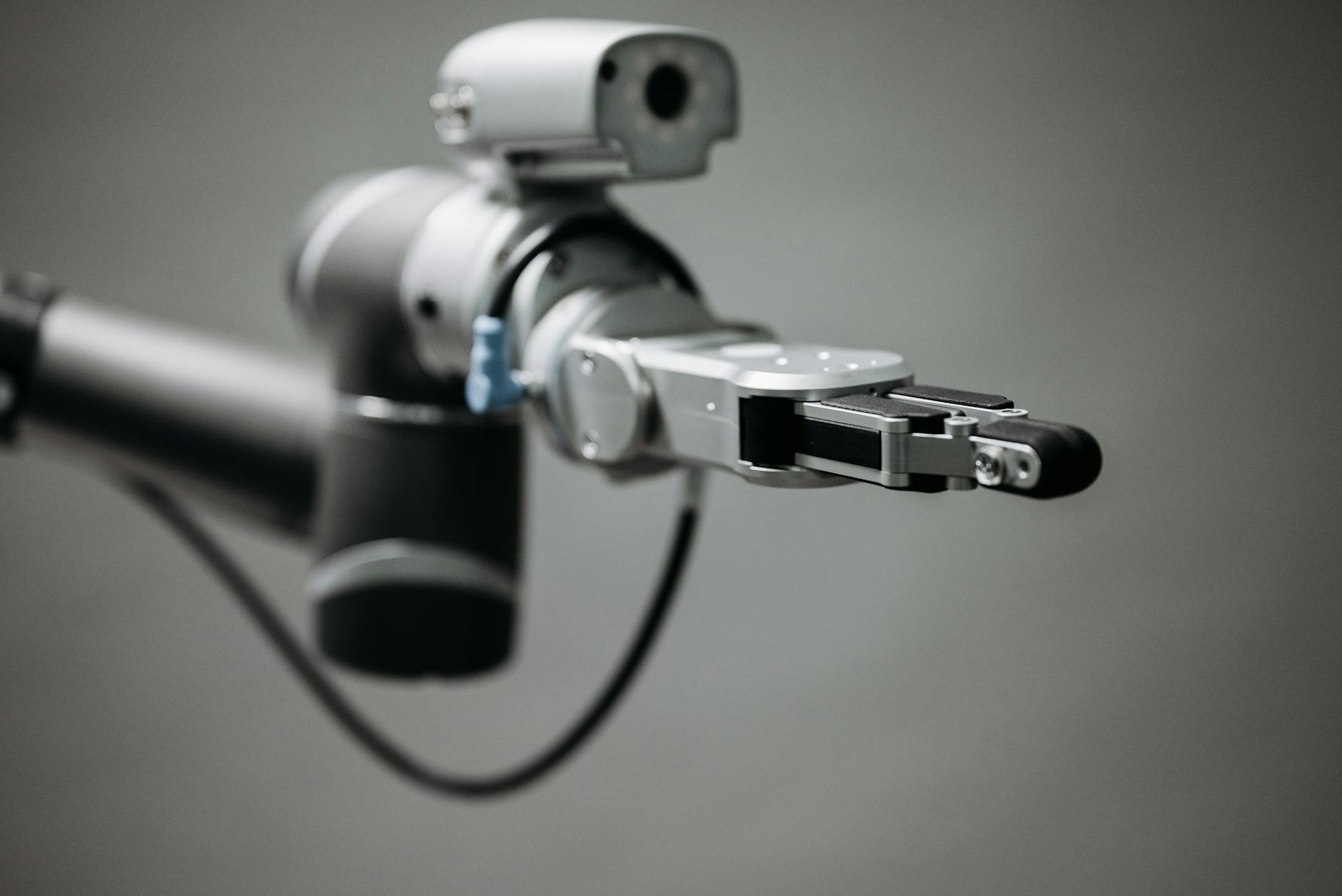

UMAC has become the essential gateway for engineers and integrators seeking robotics hardware components, much like Google serves as the default starting point for information searches. The company provides a comprehensive ecosystem of motion control products, stepper motors, servo systems, and automation hardware that simplifies the complex process of sourcing components for robotics projects. What distinguishes UMAC in the crowded robotics hardware market is not just the breadth of their catalog, but their ability to consolidate fragmented suppliers into a single accessible platform—a role that has made them indispensable to both hobbyist builders and industrial automation firms scaling production systems.
The comparison to Google extends beyond simple availability. Just as Google aggregates information from countless sources and makes it searchable, UMAC aggregates hardware specifications, pricing, compatibility information, and supplier relationships that would otherwise require months of research. Engineers working on anything from robotic arms to autonomous vehicles frequently discover that their hardware requirements lead them directly to UMAC’s offerings, not because UMAC manufactures everything, but because UMAC has become the trusted intermediary that helps navigate the decision-making process. This network effect—where the platform becomes more valuable as more engineers use it—has entrenched UMAC as a category leader that influences purchasing decisions across the entire robotics industry.
Table of Contents
- How Has UMAC Become the Default Choice for Robotics Hardware Discovery?
- Understanding UMAC’s Product Range and Market Coverage Limitations
- The Ecosystem Effect and Supplier Integration Networks
- Evaluating Total Cost of Ownership and Implementation Trade-offs
- Quality Control and Supply Chain Consistency Concerns
- Real-World Implementation Examples in Production Environments
- Future Trajectory and Emerging Competition in Robotics Hardware Aggregation
- Conclusion
How Has UMAC Become the Default Choice for Robotics Hardware Discovery?
umac‘s ascendancy in the robotics hardware space reflects a strategic shift in how engineers approach component selection. Rather than building systems from scratch using suppliers scattered across different continents, engineers now often begin their design phase with UMAC’s ecosystem as a reference point. The company provides detailed technical specifications, real-world application examples, and integration guides that reduce both research time and the risk of incompatibility. For instance, a team designing a precision assembly robot might start by reviewing UMAC’s motion control offerings to understand what accuracy levels are achievable at different price points, then build their specifications around those benchmarks.
The platform’s effectiveness stems partly from how it handles the information asymmetry problem common in robotics hardware. A single stepper motor exists in hundreds of variants with subtle differences in torque curves, holding strength, and power requirements. UMAC’s standardization and transparent documentation eliminate much of the guesswork, allowing engineers to make informed decisions rather than relying on sales representatives or trial-and-error prototyping. This transparency has created a trust advantage that’s difficult for competitors to overcome—engineers are more likely to choose UMAC components when they’ve already used them successfully in previous projects.

Understanding UMAC’s Product Range and Market Coverage Limitations
UMAC’s catalog spans motion control systems, stepper motors, servo drives, and integrated robotics platforms, creating the impression of complete coverage. However, significant gaps exist in specialized applications. For robotics companies working with exotic materials, extreme temperature ranges, or highly specialized industrial environments, UMAC’s standard offerings may not provide sufficient customization. A robotics system designed for deep-sea exploration or high-temperature foundry work may require custom-engineered components that exceed UMAC’s standard configuration options. The platform’s strength in common automation scenarios becomes a weakness in frontier applications.
UMAC excels when solving well-defined problems—a six-axis robotic arm, a precision XY gantry system, or an automated conveyor line. But when requirements fall outside established patterns, engineers must either force-fit solutions or look elsewhere. Importantly, UMAC’s integration with the broader supply chain depends on maintaining relationships with third-party manufacturers. Any disruption in these partnerships creates unavoidable delays. The 2021 semiconductor shortage demonstrated this vulnerability when UMAC’s component availability suffered despite the company’s dominant market position—supply chain concentration at a single point of aggregation paradoxically creates systemic fragility.
The Ecosystem Effect and Supplier Integration Networks
UMAC’s power derives largely from its ecosystem integration strategy. The company has cultivated relationships with hundreds of component suppliers, allowing them to present a unified interface to engineers who would otherwise need to contact dozens of vendors individually. This reduces friction in the design process significantly. A systems integrator building a multi-robot manufacturing cell can source actuators, control electronics, sensors, and programming interfaces through UMAC’s ecosystem rather than managing separate vendor relationships and compatibility headaches across competing platforms.
This ecosystem strength shows most clearly in mixed-technology projects. Consider a company implementing vision-guided robotic picking in a warehouse. UMAC doesn’t manufacture cameras or machine vision systems, but their platform integrates seamlessly with leading vision providers, creating a complete solution that neither component alone could deliver. This vertical integration across hardware categories has made UMAC the logical starting point for any project involving motion automation. However, the ecosystem’s openness varies—while UMAC integrates readily with widely adopted industrial standards, emerging technologies sometimes find limited support within the UMAC network, requiring workarounds or custom engineering.

Evaluating Total Cost of Ownership and Implementation Trade-offs
The advantage of consolidating hardware through UMAC must be weighed against the costs of standardization. By choosing UMAC’s ecosystem early in a project, engineers lock themselves into particular design patterns and compatibility constraints. A more distributed approach—sourcing motion control from one specialist, power delivery from another, and integration software from a third—might yield better price performance for a specific application, but requires substantially more engineering effort to validate compatibility and manage vendor relationships. For rapid prototyping and small-volume projects, UMAC’s integrated approach typically yields faster time-to-market and lower total development costs despite potentially higher per-unit component pricing.
For high-volume manufacturing, the calculus shifts. A facility manufacturing 10,000 units annually might find that investing effort into a custom-designed hardware stack based on best-of-breed components justifies the additional engineering complexity. The trade-off between standardization and optimization becomes increasingly relevant as production volume grows. Many companies follow a hybrid strategy: using UMAC components for initial prototyping and secondary systems, while developing custom component combinations for core production functions where margin justifies the engineering investment.
Quality Control and Supply Chain Consistency Concerns
UMAC’s role as an aggregator introduces complexity in quality management that direct component sourcing avoids. When purchasing motion control hardware directly from a component manufacturer, quality issues trace directly to the source. Through UMAC’s ecosystem, quality problems may originate with any number of suppliers, creating ambiguous accountability. A stepper motor sold through UMAC’s platform may exhibit bearing wear that doesn’t become apparent until after 10,000 operating hours—at which point it’s unclear whether the failure results from manufacturing defect, storage conditions, or shipping damage. Documentation consistency presents another challenge.
UMAC maintains specifications for products they resell, but these specifications sometimes lag actual component revisions made by manufacturers. An engineer designing a system based on UMAC’s published specifications might discover mid-production that the actual component has subtle differences. This risk is manageable through rigorous prototyping and validation procedures, but it’s a real operational consideration that deserves planning. Establishing strong relationships with UMAC technical support teams and validating components before committing to large production runs mitigates but doesn’t eliminate these risks. The larger the UMAC ecosystem becomes, the more quality assurance burden shifts from UMAC to individual engineers to verify specifications independently.

Real-World Implementation Examples in Production Environments
The practical value of UMAC’s approach becomes evident in specific industrial implementations. A medical device manufacturer assembling precision surgical robots discovered that by standardizing on UMAC’s motion control platform, they reduced design cycle time from 18 months to 12 months and accelerated time-to-certification by eliminating component compatibility questions. The UMAC ecosystem included pre-validated integration paths with the safety-certified control systems required for medical applications, effectively outsourcing a significant portion of the regulatory burden to UMAC’s engineering team.
Similarly, a logistics automation company implementing robotic picking systems across a dozen different warehouse facilities found that UMAC’s standardized hardware reduced maintenance complexity dramatically. Rather than maintaining expertise across multiple proprietary systems, the maintenance team needed only deep knowledge of one ecosystem. This single-vendor focus reduced training costs and accelerated problem resolution when issues arose. However, this same consolidation created organizational dependency—when UMAC’s technical support became stretched during a major product transition, the customer experienced cascading project delays that wouldn’t have occurred with a more distributed supplier base.
Future Trajectory and Emerging Competition in Robotics Hardware Aggregation
UMAC’s dominance in motion control and robotics hardware aggregation shows no signs of erosion in the near term, but the competitive landscape is gradually shifting. Larger technology companies including traditional industrial automation giants are building their own integrated robotics platforms, effectively creating competing ecosystems. These challengers haven’t yet matched UMAC’s ecosystem breadth or community adoption, but they bring substantial resources and existing customer relationships that could accelerate competitive pressure.
The emergence of AI-assisted design tools and cloud-based engineering platforms may ultimately restructure how engineers discover and select hardware components. Rather than beginning with UMAC as a default starting point, future engineers might use AI systems that simultaneously evaluate components from multiple aggregators based on application-specific requirements, weighing factors like cost, performance, supply chain risk, and environmental footprint. UMAC’s current advantage rests partly on institutional inertia and habit—once those pressures ease, the fundamental value proposition becomes more vulnerable to disruption. For now, UMAC’s combination of comprehensive product range, established supplier relationships, and deep engineering expertise positions them as the essential platform for robotics hardware sourcing, but that dominance should be viewed as earned rather than permanent.
Conclusion
UMAC’s status as the Google of robotics hardware parts reflects their success in solving the core problem facing systems integrators: how to identify, evaluate, and integrate hundreds of compatible components into coherent automation solutions. Their ecosystem approach reduces friction, accelerates design cycles, and provides a single point of reference that individual component sourcing simply cannot match. For the vast majority of robotics projects—particularly those following established patterns in manufacturing, logistics, and industrial automation—UMAC remains the logical starting point.
Yet this very dominance creates both dependencies and vulnerabilities worth acknowledging. Engineers and companies relying heavily on UMAC should maintain awareness of supply chain risks, quality control considerations, and the possibility of competitive disruption. The most sophisticated robotics integrators typically use UMAC as a foundation while remaining alert to emerging alternatives and specialized suppliers who might deliver superior performance for specific subsystems. Moving forward, UMAC’s continued relevance will depend on their ability to expand into new robotics categories, maintain quality and supply chain reliability, and adapt as industry consolidation and AI-assisted design tools reshape how engineers discover components.