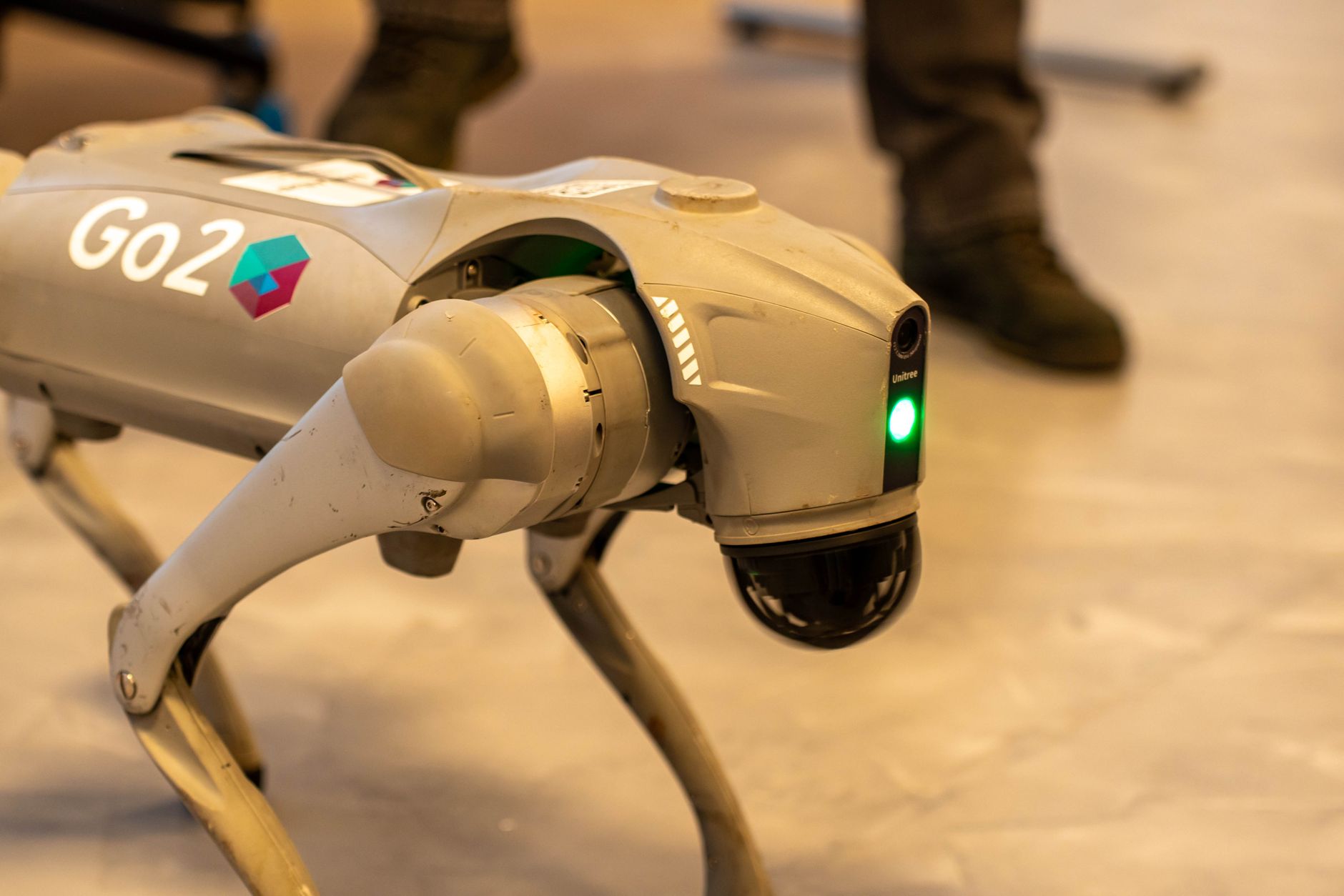

ICE will use Boston Dynamics Spot robots for remote inspection, situational awareness and hazard assessment in dangerous, confined or unstable areas. Spot is Boston Dynamics' four-legged mobile robot, and ICE plans to send it into smuggling tunnels and high-risk indoor operations before officers enter. The plan covers four deployable robots for Homeland Security Investigations, equipped for chemical, biological, radiological, nuclear and explosive detection. For robotics readers, the important point is autonomy and sensing, not force: the robots scout, sense and relay.
Table of Contents
What did ICE buy?
Project Salt Box reports that ICE signed a $1,304,296 sole-source purchase order on Sept. 25, 2026 with RADeCO Inc. for four Spot packages, described in the Project Salt Box purchase report.
The same report says ICE rejected GovTRobotics as not meeting specifications and not an authorized reseller. Each base package cost $110,200, plus four robotic arms, four thermal zoom cameras, four radio kits, oxygen sensors and training. Project Salt Box reports the total equals about $326,000 per deployable robot. That configuration points to hazardous-materials reconnaissance rather than a basic camera platform.
Why tunnels come first
ICE justified the purchase for inspection of southwest-border smuggling tunnels and testing tunnel air before officers enter. The cited authorities are the Subterranean Border Defense Act and the Executive Order "Protecting the American People Against Invasion." That tunnel role fits earlier federal testing.
The DHS Science and Technology Directorate tested quadruped surveillance vehicles with Customs and Border Protection beginning in 2022 to multiply border presence and reduce human exposure to hazards. Spot extends that pattern: walk ahead, sample air, map voids, hold communications underground.
How will teams use Spot indoors?
ICE documents say the robots will support Special Response Teams in dark and night-vision operations, according to the WFTS Tampa Bay 28 records reporting. The planned uses are close-quarters sensing and communication, not entry by force. For operators, the practical effect is standoff: see the room layout, hear movement, speak to occupants, then decide how people enter.
- Microphones listen for subject movement and alert operators.
- A 5.5-foot arm raises cameras above closets, bunk beds and crawl spaces.
- Thermal zoom cameras work in darkness and low visibility.
- Two-way audio allows commands, warnings and de-escalation talk.
What limits apply?
A senior DHS official said the robots will not be used to make arrests, and Boston Dynamics said Spot is sold to keep people out of harm's way. FedScoop reports those statements alongside Boston Dynamics' terms prohibiting weaponization or use to harm or intimidate people, described in the FedScoop acquisition reporting.
Privacy advocates warn the camera-equipped, door-opening robots expand ICE surveillance for immigrant communities, protesters and observers. They urge Congress to restrict funding, which is a practical limit on broad deployment without legal challenge. Robotics teams should therefore track policy controls as closely as payload specs: where Spot may record, retain and transmit will shape lawful use.