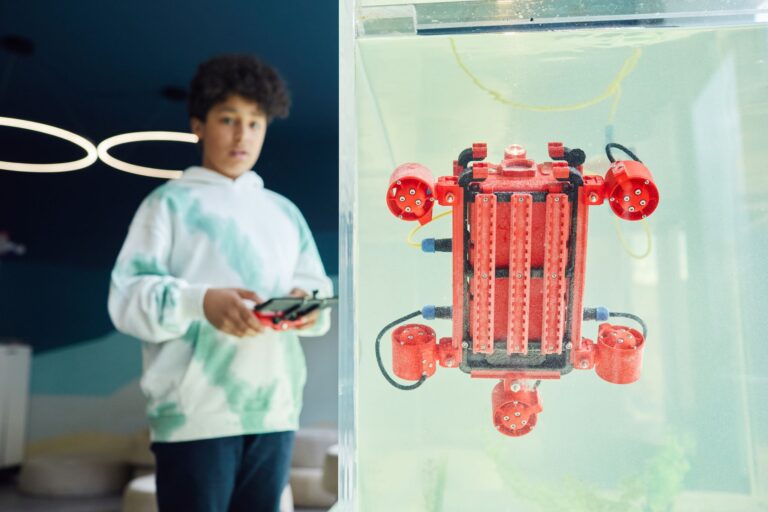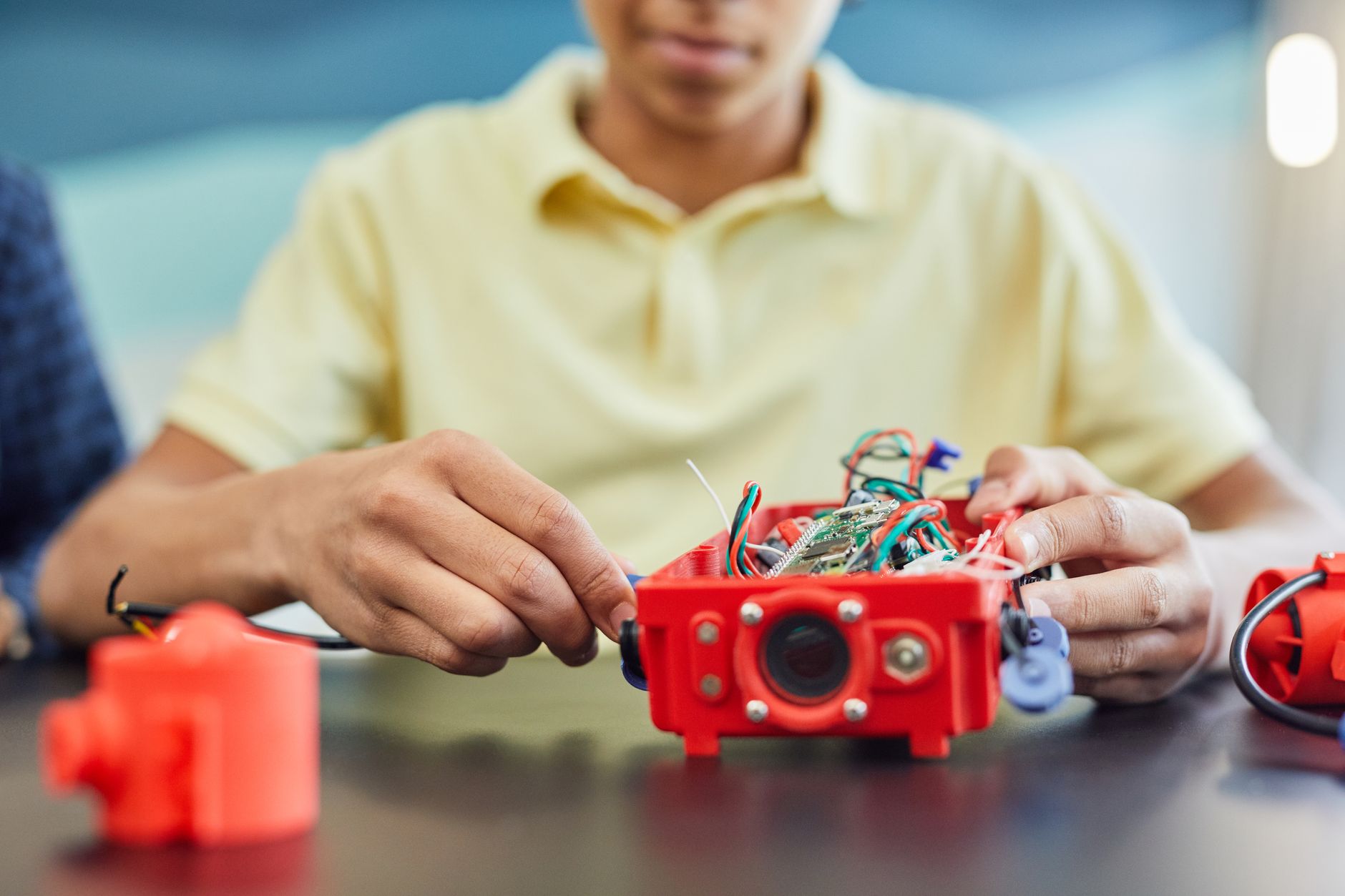

Crab-inspired robots could aid seabed explosives searches by walking slowly across sediment while carrying sensors close to buried or half-buried objects. Crab-inspired robots are machines that copy a crab's low body and jointed walking legs for balance and grip on uneven ground. Seabed explosives searches look for old bombs, shells, and mines that threaten construction, fishing, and dive teams. Those objects often sit in murky water, shifting sand, and strong currents where divers and towed gear work slowly.
Table of Contents
- Why swimming and rolling struggle on the seabed
- What the crab shape adds to search work
- How a walking robot would carry out a survey
- Where the limits remain
Why swimming and rolling struggle on the seabed
Propeller vehicles must hover above the bottom to avoid hitting it. Their wash can stir silt and cloud cameras and optical sensors. Wheeled or tracked vehicles can sink, slip, or snag in soft mud and shell beds.
Walking spreads weight across several feet and keeps the body low. That stance helps a robot stay in place while surge pushes from the side. It also lets the machine step over rocks, debris, and small ridges.
What the crab shape adds to search work
A wide, flat body lowers drag in cross-currents. Splayed legs give several points of contact, so loss of one foothold does not tip the robot. Short steps reduce disturbance of the sediment being inspected.
That stability matters because detection needs steady motion and fixed pauses. A sensor held a set height above the bottom reads more cleanly. A robot that can freeze, adjust footing, then continue gives operators cleaner survey lines.
How a walking robot would carry out a survey
A practical payload pairs cameras with a detection sensor such as a magnetometer, electromagnetic sensor, or imaging sonar. Cameras record shape and context.
The detection sensor flags metal or buried anomalies for closer checks. A slow survey might follow this pattern: Operators still decide what each contact means. The robot extends reach and time on the bottom; it does not classify or handle explosives by itself.
- move along planned lanes at walking pace
- pause at each alert to hold the sensor steady
- record position, depth, heading, and sensor data
- mark the contact for review by disposal specialists
Where the limits remain
Legged machines move slower than towed arrays and cover less ground per day. Batteries, tethers, acoustic links, and pressure housings all limit range, data rate, and time in strong tides. Seaweed, nets, lines, and steep rubble can trap legs.
Safety rules add another boundary. Only trained explosive-ordnance teams can confirm, move, or destroy a suspect item. A crab-like robot is best used as a careful survey helper that finds candidate targets and keeps people farther from them.