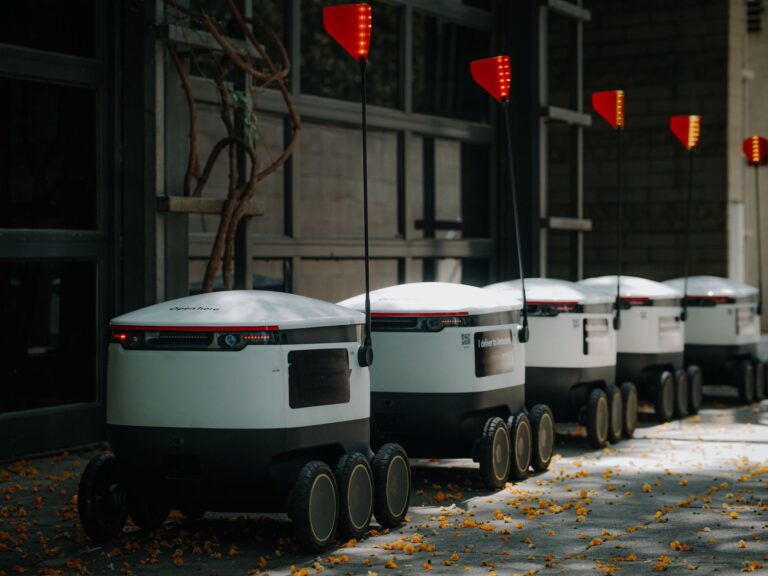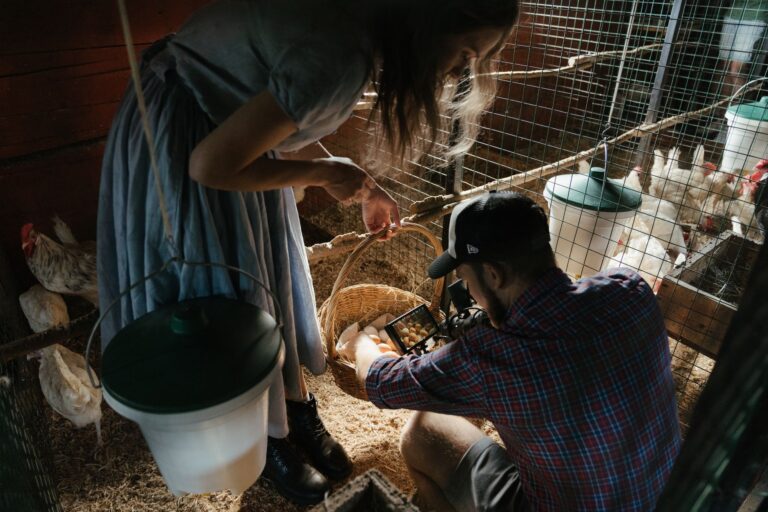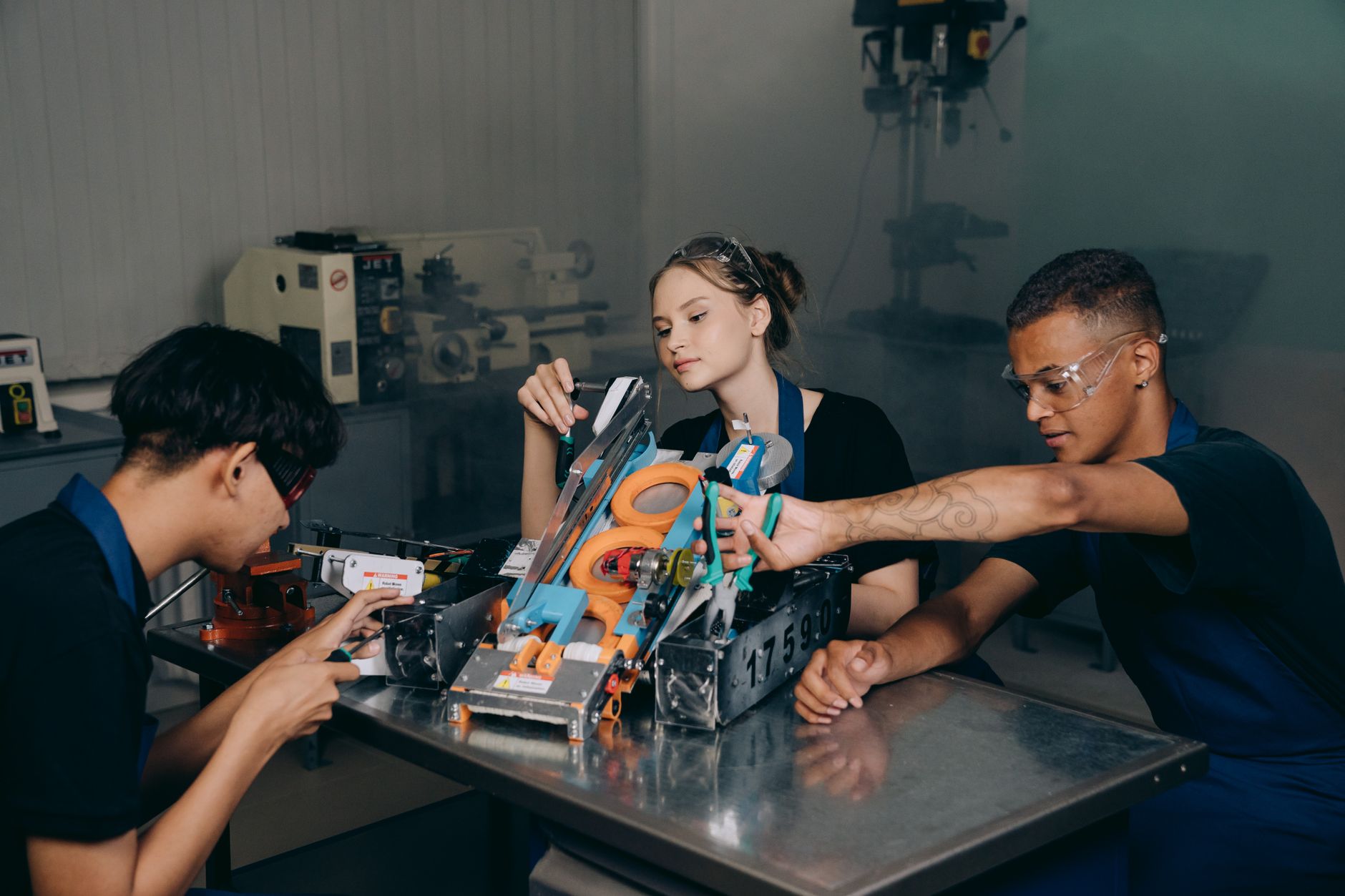

STMicroelectronics' VB1943, a 5.1-megapixel RGB-IR image sensor, helps robot vision by combining blur-free motion capture with detailed still imaging in one chip. Robots use its global shutter for tracking and navigation while moving, and its rolling shutter for low-noise inspection when still.
RGB-IR means one imager records visible color and near-infrared light. STMicroelectronics introduced the VB1943 on Oct. 20, 2025 as one of four 5MP ST BrightSense sensors for industrial automation, according to the STMicroelectronics launch announcement.
Table of Contents
- Why two shutters in one sensor?
- What does RGB-IR add for robots?
- Can it keep up with motion and bad light?
- How do you build with it?
Why two shutters in one sensor?
Global shutter exposes all pixels at the same time. Rolling shutter reads row by row. STMicroelectronics designed the VB1943 to offer both, so one camera can freeze motion without skew and then take cleaner detailed stills.
It reaches up to 100 frames per second at full resolution in global-shutter mode and 50 fps in rolling-shutter mode, according to the STMicroelectronics eStore listing. That speed supports tracking and navigation on moving robots. Designers can run fast for motion, then drop rate for detail.
- Global shutter: motion-artifact-free capture of moving scenes
- Rolling shutter: low-noise, high-detail stills
What does RGB-IR add for robots?
The sensor records visible color plus near-infrared in one frame. It supports 5MP RGB-IR, 5MP Bayer, or 1.27MP IR output, according to the STMicroelectronics data brief. Computer-vision designs can switch to global shutter with an NIR light source for dark scenes. The imager offers 2560×1984 resolution with 2.25-micron pixels.
STMicroelectronics sells it as the packaged VB1943, while VD1943 is the bare-die version. That choice lets teams pick a ready sensor or integrate the die in a custom module. A picking arm can use color for labels in bright light, then IR for shape in a dark tote. A mobile robot can keep lane marks in daylight and switch to IR under racks.
Can it keep up with motion and bad light?
The sensor outputs over MIPI CSI-2 with 2 or 4 lanes at up to 1.5 Gbps per lane. It supports 18-bit HDR compressed to 12 or 10 bits, according to the STMicroelectronics datasheet via RS Online. That combination helps robots hold vision in challenging light without choking the link.
High frame rate cuts motion blur and updates maps faster. HDR keeps highlights and shadows readable at dock doors, windows, and dim aisles. Together they reduce lost tracks during turns and lighting jumps.
How do you build with it?
STMicroelectronics offered the family for evaluation and sampling in late 2025, with mass production scheduled for February 2026. Robot makers had to prototype before volume supply.
Plan camera bring-up around that gap. Start with the use case, then lock the optics and light. Small choices decide whether IR and HDR pay off.
- use global shutter plus NIR illuminator for night navigation
- use rolling shutter for barcode, label, and defect stills
- wire MIPI CSI-2 for 4 lanes where full-rate HDR must run
- prototype on sample stock before February 2026 volume