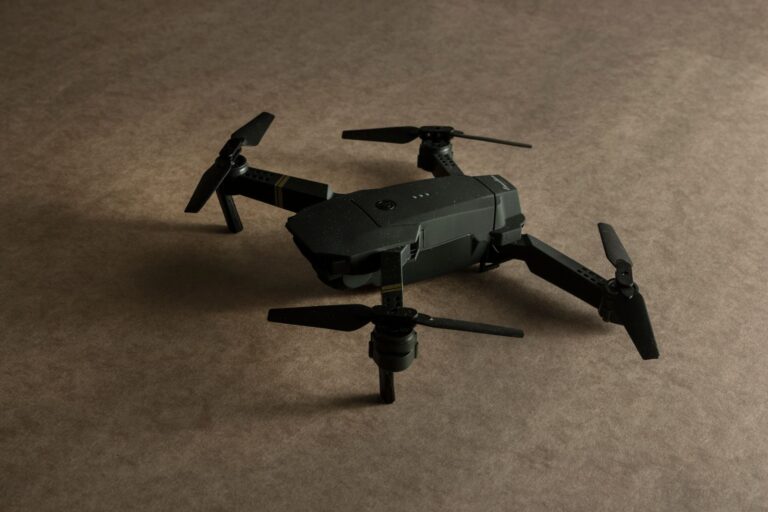

The U.S. military is conducting field testing of Anduril’s Ghost-X autonomous reconnaissance drone, a tandem-rotor aircraft designed to gather intelligence on contested battlefields. The British Army’s 3rd Battalion, The Rifles tested the system in June 2026 during Exercise Northern Star in Finland, operating the drone approximately 43 miles from the Russian border to evaluate its reconnaissance and targeting capabilities in a high-threat environment. These tests represent the first operational validation of technology backed by a $20 billion, 10-year procurement commitment the U.S.
Army awarded Anduril in March 2026. The Ghost-X drone testing signals a broader military pivot toward integrated autonomous systems for battlefield surveillance. Rather than traditional reconnaissance platforms, the military is evaluating how Anduril’s drones can function as sensor nodes within a larger network—feeding targeting data to loitering munitions like the Bolt-M and providing persistent surveillance across areas too dangerous for manned operations. The tests in Finland specifically explored Ghost-X’s role in guiding strike systems to designated targets, demonstrating the integration chain from reconnaissance to kinetic engagement.
Table of Contents
- What Capabilities Does Ghost-X Bring to Battlefield Surveillance?
- Technical Specifications and Integration with Targeting Systems
- Massive Military Procurement Consolidates Drone Strategy
- Lattice AI Platform as the Battlefield Integration Layer
- Manufacturing Scale and Production Timelines
- International Adoption and Threat Proliferation
- Operational Constraints and Real-World Deployment Challenges
What Capabilities Does Ghost-X Bring to Battlefield Surveillance?
Ghost-X operates with an 80-minute cruise endurance and an effective range of 15.5 miles, making it suitable for tactical-level reconnaissance missions where persistent surveillance is critical but persistent loiter time cannot be unlimited. The drone carries both electro-optical cameras and infrared sensors, allowing operators to conduct surveillance across diverse lighting conditions and weather states. The tandem-rotor design provides stability in high winds and challenging terrain, a practical advantage over traditional quadrotor designs that can become unstable when operating near terrain features or in maritime environments.
The platform’s endurance limitation—approximately 80 minutes—means military units cannot maintain continuous coverage of a given area with a single aircraft. Multiple Ghost-X systems would need to rotate through surveillance zones or operate in coordinated swarms to achieve persistent surveillance. This constraint shapes how units plan deployment, requiring advance knowledge of target areas and expected threat duration rather than true persistent monitoring that can react to unexpected events.
Technical Specifications and Integration with Targeting Systems
The Ghost-X’s tandem-rotor architecture distinguishes it from the single-rotor or quadrotor designs that dominate commercial and military drone markets. Tandem rotors provide redundancy—if one rotor system fails, the aircraft can still maintain flight and return to base, a critical safety feature when operating in denied or contested airspace where recovery of a downed aircraft may be impossible. However, this design also increases mechanical complexity compared to simpler quadrotor configurations, potentially raising maintenance burdens for field units unfamiliar with dual-rotor systems. The 15.5-mile operational range creates a vulnerability in network-dependent operations. If communications are jammed or if the control station is destroyed or moved, the drone reverts to pre-programmed flight plans or loses guidance.
During the Finland testing, the British Army demonstrated Ghost-X feeding targeting coordinates to Bolt-M loitering munitions, but this relay chain is only as robust as its weakest communications link. A single electromagnetic warfare asset could potentially disrupt the entire reconnaissance-to-strike sequence. The infrared sensor suite enables night operations and target identification in poor visibility, but infrared imaging itself has known limitations. Thermal signatures can be obscured by heat sources unrelated to military targets, leading to false positives. Conversely, targets with signatures similar to civilian infrastructure may be missed entirely, creating a targeting blind spot that depends heavily on operator training and interpretation.
Massive Military Procurement Consolidates Drone Strategy
The $20 billion U.S. Army contract consolidates over 120 separate procurement actions into a single framework agreement, representing a significant consolidation of military drone acquisition under a single vendor. The contract ceiling—$20 billion over 10 years—dwarfs the $16.8 million Ghost-X contract and the $1.98 billion counter-drone system sale to Kuwait, suggesting the Army intends to deploy Anduril systems across multiple formations and roles beyond reconnaissance.
This procurement strategy contrasts sharply with earlier military practice of diversifying drone purchases across multiple vendors. The UK followed with a £62 million war contract with Anduril, indicating allied confidence in the Ghost-X platform and likely pointing toward standardization across NATO forces. Such standardization simplifies logistics and interoperability but also concentrates risk—if a systemic vulnerability is discovered in Ghost-X after mass deployment, the entire allied intelligence and strike apparatus could be affected simultaneously.
Lattice AI Platform as the Battlefield Integration Layer
Anduril’s Lattice AI platform was selected by the U.S. Space Force for surveillance networks and is now being deployed to integrate Army battlefield systems. Lattice functions as a middleware layer that fuses data from multiple sensors—drones, ground radar, manned aircraft, and other sources—into a unified intelligence picture.
The platform aims to reduce the cognitive load on operators who would otherwise manually integrate intelligence from dozens of separate feeds. The Lattice integration with Ghost-X means surveillance data flows automatically into command systems without manual transcription or interpretation delays. However, this integration introduces a single point of failure: if Lattice is compromised or degraded, all downstream commands and intelligence sharing degrade simultaneously. The system’s reliance on cloud connectivity or centralized processing also creates vulnerability windows during network transitions or during shift changes when Lattice may be temporarily offline for updates.
Manufacturing Scale and Production Timelines
Anduril announced a $1 billion manufacturing facility in Pickaway County, Ohio designed to produce aerial and maritime drones using Lattice software integration. The facility represents a significant capital commitment to mass production, but it also signals a multi-year ramp to full capacity. Large manufacturing facilities typically require 18-36 months to reach full production throughput after initial operations begin, meaning current testing likely uses hand-built prototypes or limited-production batches.
Production of the Fury high-speed combat drone began in March 2026 at Arsenal-1, suggesting Anduril has the foundational manufacturing capability but is scaling incrementally across multiple platforms. This parallel production of Ghost-X, Fury, and maritime variants stretches manufacturing resources. If supply chain disruptions affect specialized components—custom rotor blades, flight control electronics, or sensor packages—production across all platforms could slow simultaneously, delaying fulfillment of the $20 billion Army contract.
International Adoption and Threat Proliferation
Kuwait’s $1.98 billion procurement of Anduril’s counter-drone system indicates U.S. confidence in exporting the technology to key Middle Eastern allies. Counter-drone systems must detect and track small, fast-moving aircraft in environments with significant clutter from civilian aviation, birds, and terrain features. Kuwait’s threat environment—drone swarm attacks from Iran-backed forces—represents a specific operational challenge that Anduril’s system is being validated against.
The exports also establish Anduril as a primary defense contractor globally, accelerating the standardization of its architecture across allied forces. However, export control regimes may limit the most advanced features of Ghost-X or Lattice when delivered to allied nations, creating capability gaps between U.S. Army systems and the systems fielded by partners. The UK’s £62 million contract and Finland testing suggest UK and NATO systems will have parity with U.S. Ghost-X, but restrictions on autonomous decision-making or sensor integration may still apply.
Operational Constraints and Real-World Deployment Challenges
The June 2026 testing in Finland occurred under controlled exercise conditions with known terrain, friendly forces positioned as expected, and communication lines secure. Real combat environments present degraded communications, terrain not available in pre-mission planning, and adversary electronic warfare assets actively targeting drone operations. Ghost-X’s 80-minute endurance also means units cannot sustain 24/7 surveillance over high-priority areas without rotating multiple aircraft through the same airspace—a pattern that becomes predictable and vulnerable to interception by adversary air defense systems.
The tandem-rotor design, while offering redundancy advantages, also increases the visible radar cross-section and acoustic signature compared to smaller quadrotor platforms. A quiet, small drone is harder to detect and intercept; a larger dual-rotor aircraft presents a more trackable target for both radar-guided and infrared-guided air defense systems. The choice to use Ghost-X in European theater testing—where adversaries possess sophisticated air defense—suggests the military believes the reconnaissance capability justifies the increased vulnerability to detection and engagement.