
This FAQ gives source-checked answers to common questions about mobile robots for October 2026. Mobile robots are machines that navigate and perform tasks without fixed tracks, from warehouse carriers to sidewalk delivery units. Warehouse and factory operators are scaling automation, food-delivery customers see more curbside robots, and buyers face clearer safety duties. The sections below explain what is deploying, where it matters, and what to check before buying.
Table of Contents
- How fast is warehouse automation growing?
- What are large logistics operators deploying now?
- Where can customers get sidewalk robot delivery?
- Which safety standards cover indoor mobile robots?
- What must buyers do beyond buying a certified robot?
How fast is warehouse automation growing?
Professional service-robot shipments grew 24% to almost 250,000 units in 2025, led by 117,000 transport and logistics robots, according to the International Federation of Robotics IFR shipment report. That mix shows where spending concentrates: moving cases, pallets, and goods inside warehouses and factories.
Amazon reported its one-millionth warehouse robot across 300-plus facilities in mid-2025. The company also says its DeepFleet coordinator cuts fleet travel time by 10%. For operators, the lesson is to plan traffic flow and charging before adding units.
What are large logistics operators deploying now?
DHL Group signed an agreement to deploy more than 1,000 additional Stretch case-handling robots from Boston Dynamics globally. Boston Dynamics reports pilots reached up to 700 boxes per hour unloading DHL deployment announcement.
Stretch targets truck unloading and case handling, a common bottleneck. If your dock has varied box sizes and tight schedules, test rate claims with your own freight mix.
Where can customers get sidewalk robot delivery?
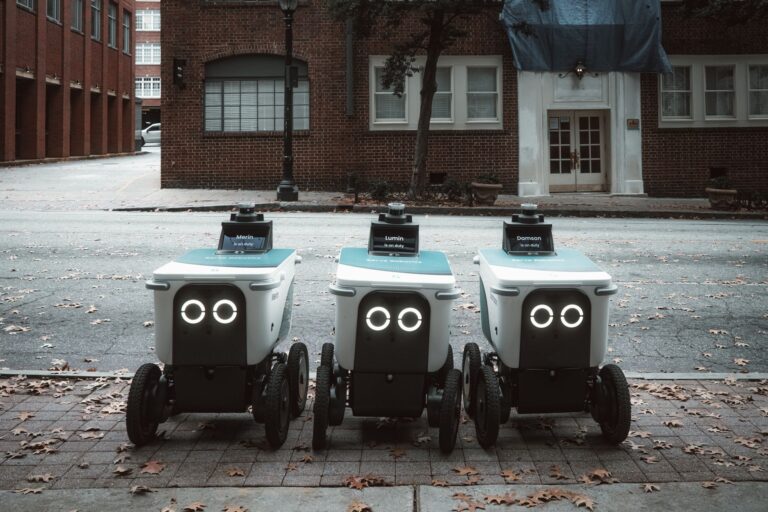
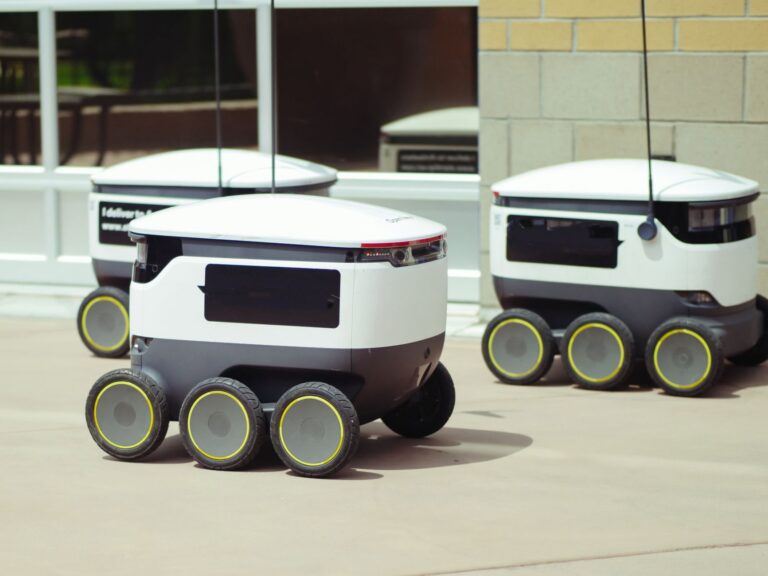
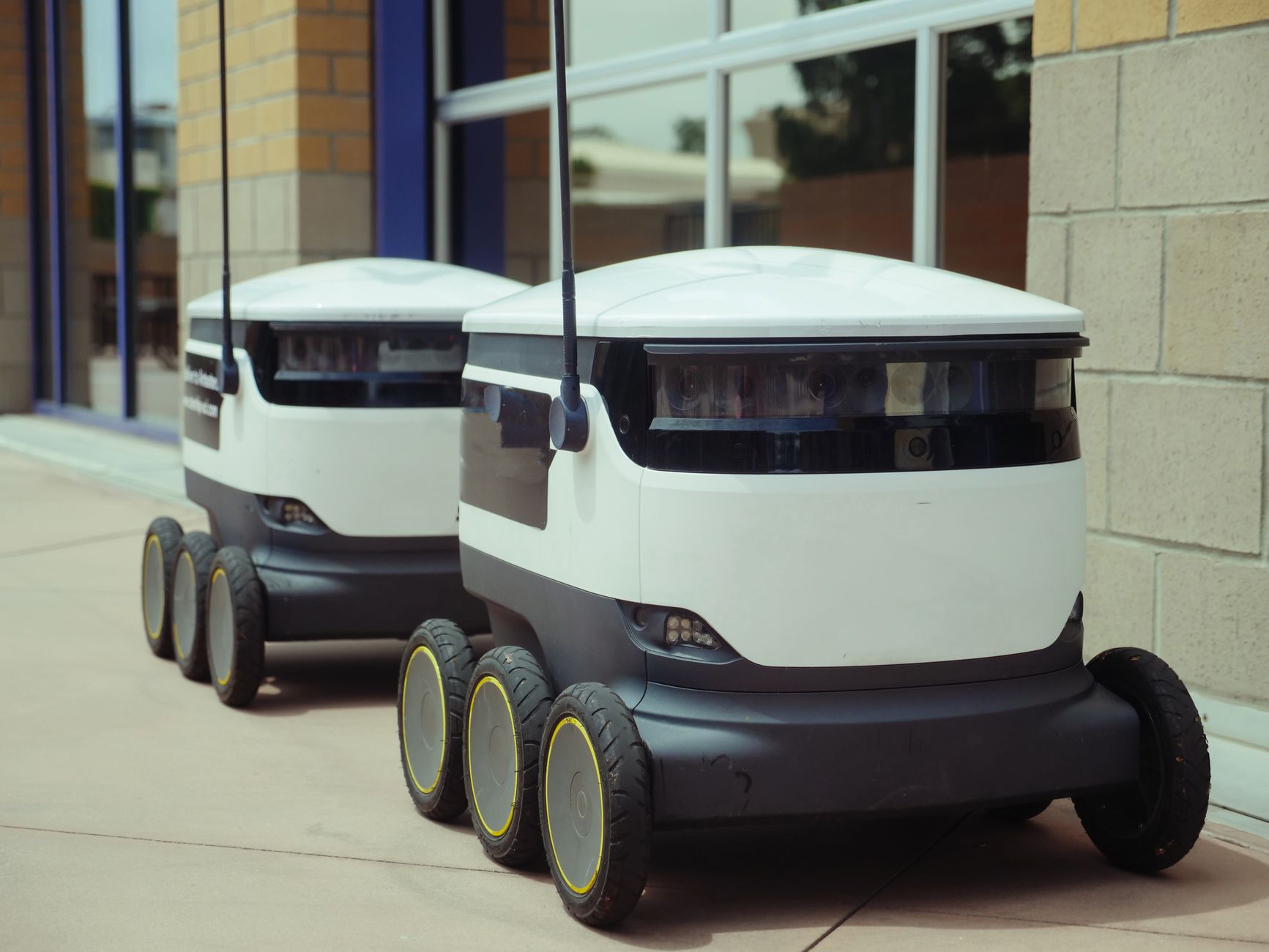
Serve Robotics operated more than 2,000 sidewalk delivery robots across major U.S. metros by late 2025, according to The Robot Report. Its cities included Los Angeles, Atlanta, Dallas-Fort Worth, Miami, Chicago, and Fort Lauderdale.
Serve Robotics and Grubhub launched sidewalk delivery on August 17, 2026, starting in Chicago, Los Angeles, and Alexandria, Virginia, according to Serve Robotics via GlobeNewswire Grubhub launch notice. The launch listed more than 100 merchants in Chicago and nearly 200 in Los Angeles. Check the app for your address, because coverage varies by neighborhood.
Which safety standards cover indoor mobile robots?
Industrial indoor mobile robots fall under ISO 3691-4:2023 for driverless trucks and systems. The Estonian Centre for Standardisation lists the edition as covering automated guided vehicles, autonomous mobile robots, carts, and tuggers, including safety requirements and verification.
In the United States, integrators also use ANSI/A3 R15.08-2-2023 for system-level safety. The American National Standards Institute describes it as covering Type A autonomous mobile robots, Type B mobile manipulators, and Type C tractors. Ask vendors which vehicle type and system scope their assessment used.
What must buyers do beyond buying a certified robot?
The Association for Advancing Automation completed the series with ANSI/A3 R15.08-3-2026 on September 30, 2026 for users, via Business Wire new user safety standard announcement. It covers deployment, operation, risk assessment, and change management. That means buyers must budget for site work and ongoing review, not only hardware:.
- run a site survey for aisles, floors, pedestrians, and interfaces
- record a risk assessment for each task and route
- control changes to layout, loads, software, and traffic rules
- schedule reassessment after incidents or facility changes