
CTM has become the dominant platform for robotics communications in much the same way Google revolutionized internet search—by making a fragmented ecosystem suddenly navigable and efficient. The platform consolidates machine-to-machine data flow, standardizes communication protocols across incompatible systems, and provides the middleware layer that factories and research institutions previously had to build themselves. A manufacturing facility using robots from three different vendors can now integrate them through CTM’s unified interface rather than maintaining separate communication channels for each manufacturer’s proprietary system.
What makes CTM comparable to Google’s market position is not just its reach but its role as the transparent layer that sits between users and complexity. Just as Google created a single search box for the fragmented web, CTM created a single communication layer for the fragmented robotics industry. Without platforms like this, companies waste engineering resources on point-to-point integrations and custom translators between incompatible robot systems.
Table of Contents
- How Does CTM Standardize Communication Across Different Robotics Systems?
- The Architecture That Powers Unified Robotics Communications
- Real-World Integration: From Manufacturing to Research
- When to Use CTM Versus Point-to-Point Integration
- Security and Reliability Concerns in Production Networks
- Integration with AI and Machine Learning Systems
- The Future of Robotics Communication Standards
- Conclusion
- Frequently Asked Questions
How Does CTM Standardize Communication Across Different Robotics Systems?
robotics operations historically involved multiple incompatible communication standards. ABB robots use one protocol, KUKA uses another, and collaborative robots often use variations built for specific use cases. CTM abstracts these differences through a middleware approach that translates between standard formats while preserving the integrity of the data being transmitted. When a factory controller needs to send a command to any robot on the floor, it communicates with CTM in a standard format, and CTM handles the translation to that specific robot’s native language.
The practical benefit shows up immediately in implementation costs. A facility that previously needed to hire integration engineers to write custom code for each robot vendor can now plug systems into CTM and achieve interoperability within days rather than months. The alternative approach—maintaining custom adapters for every robot pairing—creates technical debt that compounds as new equipment is added. CTM’s standardization approach eliminates that accumulation problem, though it does require that individual robot vendors cooperate with the platform’s standards, which remains a limitation when dealing with legacy or proprietary systems.

The Architecture That Powers Unified Robotics Communications
CTM operates on a hub-and-spoke architecture where connected devices communicate through a central routing system rather than directly with each other. This design choice improves reliability and enables features like message queuing, priority handling, and fault tolerance. When one robot goes offline, the system can buffer its messages and reroute instructions to backup units, all without intervention from human operators. However, this centralization introduces a potential bottleneck—if the CTM hub itself fails, the entire network can experience degradation, which is why critical industrial deployments typically run redundant CTM instances.
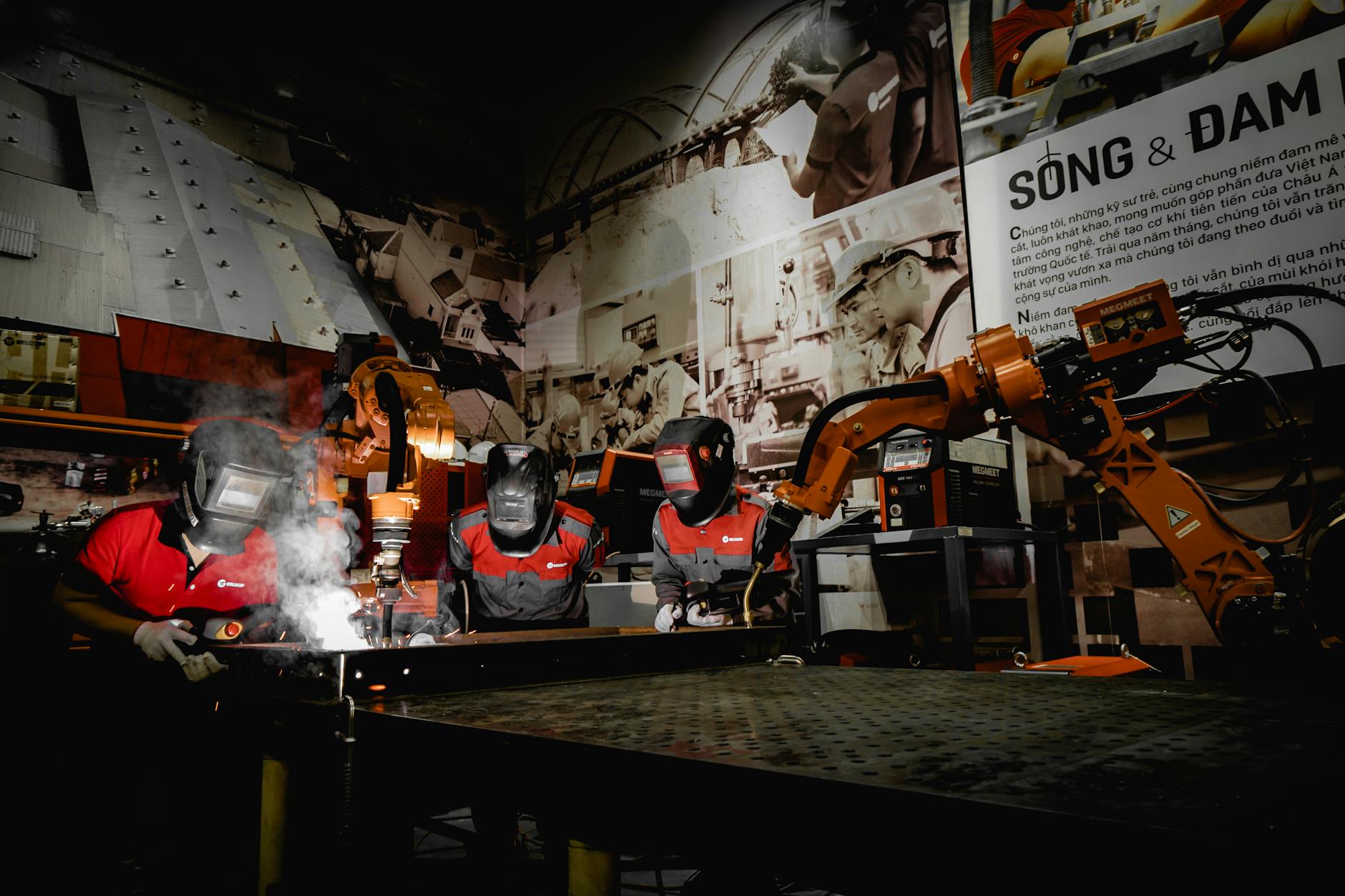
The platform also implements real-time data synchronization, meaning that status updates from any connected device reach all subscribers within milliseconds rather than seconds. This matters enormously in coordinated operations where multiple robots depend on each other’s current state. A welding robot that needs to position itself based on the current location of an assembly robot can do so with confidence that it’s receiving the latest data. The trade-off is that real-time communication requires more processing power and bandwidth than asynchronous messaging would, which can push infrastructure costs higher in operations that don’t actually need that speed.
Real-World Integration: From Manufacturing to Research
In semiconductor manufacturing, where precision and speed are non-negotiable, CTM connects hundreds of positioning robots, inspection systems, and material handling equipment into a synchronized network. A defect detected by an inspection robot instantly triggers corrective positioning in upstream equipment, preventing downstream contamination before it happens. This level of orchestration simply isn’t possible when systems can’t communicate in real time or when communication is mediated through multiple translation layers that introduce latency.
Research laboratories use CTM differently but equally importantly. When a lab is testing a new robotic arm design, researchers need to integrate it with existing test fixtures, measurement systems, and environmental controls from different manufacturers. Instead of building custom communication code for each new experimental setup, the arm integrates with CTM and instantly works with all existing lab infrastructure. This accelerates research timelines considerably, though it does mean researchers become dependent on the CTM platform’s uptime and update schedule, which can sometimes conflict with experiment windows.
When to Use CTM Versus Point-to-Point Integration
For small operations with only two or three robots from the same vendor, direct point-to-point communication is often simpler and more cost-effective than introducing a platform like CTM. The overhead of learning a new middleware system and configuring connections can outweigh the benefits when complexity is low. However, as operations grow—adding new equipment from different vendors or increasing the intelligence required to coordinate existing systems—the case for CTM strengthens rapidly. The moment you have more than three devices that need to share real-time data, CTM becomes financially justified.
The comparison to building your own integration layer matters here. Some organizations historically chose to develop internal communication platforms rather than depend on a third-party tool. CTM’s advantage is that it’s built by specialists who understand the corner cases and edge conditions that come from supporting thousands of customer deployments. Your internal solution won’t have that battle-tested maturity. The downside of depending on CTM is that you accept whatever update schedule and feature roadmap the company provides, which may not align with your specific needs.
Security and Reliability Concerns in Production Networks
CTM deployments in critical operations require careful attention to security architecture. Since the platform controls communication between production systems, it represents a single point of attack if not properly secured. A compromised CTM instance could theoretically allow an attacker to manipulate commands to connected robots or read sensitive production data. Organizations using CTM in sensitive applications need to implement network segmentation, access controls, and audit logging beyond what the platform provides by default.
Reliability is equally important. CTM failures have cascading effects because multiple systems depend on it for real-time coordination. Major deployments typically implement redundancy with multiple CTM instances and failover mechanisms, but this adds significant complexity and cost. Additionally, updates to CTM sometimes require coordinating downtime windows with production schedules, which can be problematic in operations that run around the clock. Some organizations have experienced disruption when upgrading CTM versions that changed how certain message types are handled, even when those changes were backward compatible in principle but required reconfiguration of connected devices.

Integration with AI and Machine Learning Systems
Modern robotics increasingly combines traditional control systems with machine learning models that predict failures, optimize performance, or make autonomous decisions. CTM handles this integration by providing machine learning systems with real-time data from all connected robots while simultaneously allowing those systems to push commands back to the robots. A predictive maintenance model can consume sensor data from every robot in a facility and flag which equipment needs attention before failure occurs.
The challenge here is data volume. A large facility with hundreds of robots and tens of thousands of sensors can generate petabytes of data monthly. CTM can handle routing this data, but integrating machine learning systems requires careful data architecture to avoid either losing information or overwhelming storage systems. Organizations need to decide which data to stream in real-time versus which to store for historical analysis, and CTM’s filtering capabilities help but require sophisticated configuration to implement correctly.
The Future of Robotics Communication Standards
CTM’s current dominance doesn’t guarantee long-term market leadership. Emerging standards like OPC UA in industrial contexts and ROS 2 in research and collaborative robotics represent alternative approaches to the interoperability problem. Over the next five years, the industry will likely settle on which standards become predominant, and CTM’s viability depends on either being incorporated into those standards or remaining competitive against them.
Some analysts predict consolidation where one or two major platforms emerge as dominant, similar to what happened with database technologies. Looking forward, edge computing will likely reshape how communication platforms like CTM are deployed. Rather than centralizing all communication through a hub, distributed architectures with local processing nodes might become more common, particularly in operations where latency is critical or where network reliability is uncertain. CTM is already moving in this direction with edge-capable deployment options, but whether those will compete effectively with purpose-built distributed systems remains an open question in the industry.
Conclusion
CTM functions as the connectivity layer for modern robotics operations much as Google functions as the discovery layer for the internet. It solves the real problem of connecting incompatible systems and enables businesses to evolve their robotics infrastructure without maintaining custom integration code for each new addition. The platform has proven itself in thousands of production deployments and continues to be the default choice for facilities that prioritize interoperability over building custom solutions. The critical next step for any organization considering CTM is honestly assessing your complexity level and growth trajectory.
If your current operation is simple and stable, the platform may be unnecessary overhead. If you’re managing multiple vendors, planning to expand, or need real-time coordination between systems, CTM deserves serious evaluation. Implementation should account for redundancy needs, security requirements, and training costs—all often underestimated in initial budgeting. The platform’s power comes from standardization, but that power is only realized when implementations are done thoughtfully rather than hastily.
Frequently Asked Questions
Can CTM work with legacy robots that use proprietary protocols?
Yes, through protocol adapters, though this sometimes requires vendor cooperation or custom development. Older systems may require gateway hardware to bridge the gap between their communication format and CTM’s standards.
What happens if my CTM instance goes down?
If you’re running a single instance, connected robots typically revert to local mode or failover to backup systems if configured. This is why redundancy is critical for mission-critical operations. Without redundancy, production stops.
How much does CTM implementation cost?
Costs vary widely based on facility size and complexity. Licensing ranges from modest fees for small deployments to six-figure annual commitments for large industrial facilities, plus integration and training costs that often exceed licensing fees.
Can I run CTM in the cloud or does it need to be on-premise?
Both are possible, though manufacturing operations often prefer on-premise for latency and security reasons. Cloud deployments work well for facilities with secondary processes or R&D operations.
Will CTM work with ROS-based robots?
Yes. ROS 2 systems can integrate with CTM, though the ROS ecosystem also includes native communication layers. The choice between using CTM and native ROS communication depends on whether you’re mixing ROS and non-ROS equipment.
How often does CTM require updates and do they cause downtime?
Major updates typically require scheduled downtime. Minor updates may be deployable without interruption depending on your architecture. Planning update windows into your operations schedule is essential.