
Sidus Space has positioned itself as an infrastructure-focused player in the orbital automation market, drawing comparisons to how Nvidia transformed AI computing. The comparison hinges on a specific observation: just as Nvidia didn’t build the end applications but provided the foundational computing backbone, Sidus Space (NASDAQ: SIDU) manufactures the satellite platforms and orbital infrastructure that other companies will build upon. Founded in 2012 and headquartered in Merritt Island, Florida, the company has shifted its focus from traditional satellite manufacturing to become a hardware and data infrastructure provider for space-based artificial intelligence systems.
However, the Nvidia comparison—while strategically appealing—comes with significant caveats about execution, profitability, and market timing. The comparison becomes more concrete when examining Sidus Space’s actual business: they’re building the satellites and orbital platforms where AI-driven data processing happens at source, rather than waiting for data to return to Earth. This is fundamentally different from traditional satellite operators. Yet unlike Nvidia’s rapid ascent to profitability and market dominance, Sidus Space remains in a burn phase, with a net loss of $29.5 million in 2025 against only $3.4 million in revenue—a metric that separates hype from reality in the space infrastructure sector.
Table of Contents
- What Makes SIDU an Orbital Automation Play?
- StarVault: The Inflection Point for Orbital Data Storage
- Hardware Manufacturing and the 3D Printing Revolution
- The $151 Billion Contract and Scale Ambition
- The Cash Burn Reality and Financial Fragility
- Partnerships and the Ecosystem Play
- The Orbital Automation Future and Timeline Reality
- Conclusion
What Makes SIDU an Orbital Automation Play?
Sidus Space’s entry into orbital automation differs markedly from competitors who focus on launch services, communications, or Earth observation alone. The company operates at the intersection of three critical technologies: satellite manufacturing, AI-enabled processing, and distributed computing infrastructure. Their LizzieSat platform—named after a company founder’s cat—serves as the test bed for integrating 3D-printed components, hybrid bus systems, and onboard AI processing. This modular approach to spacecraft manufacturing, using advanced materials and rapid production techniques, is where the “automation” component becomes tangible.
Rather than building custom satellites for each customer, Sidus Space aims to produce standardized, AI-ready platforms that can be rapidly configured and deployed. The practical significance became visible with LizzieSat-3, which successfully demonstrated bus-level commissioning of hybrid 3D-printed, AI-enhanced systems in 2025. This wasn’t merely a satellite launch; it was a proof that mass-production techniques from terrestrial manufacturing could transfer to space hardware. Each LizzieSat variant becomes a node in what the company envisions as a distributed intelligence network in orbit. The comparison to nvidia gains weight here because both companies are betting that future value will accrue to whoever controls the processing layer—whether on Earth or increasingly in space itself.

StarVault: The Inflection Point for Orbital Data Storage
The most concrete validation of Sidus Space’s automation thesis arrived through the expanded Lonestar Data Holdings agreement, valued at $120 million for StarVault orbital data storage payloads. StarVault represents a specific, commercially validated use case: companies need to store massive volumes of data in orbit without the latency and expense of downlinking everything to ground stations. By deploying storage and processing infrastructure in space, Lonestar and its customers avoid the bottleneck of Earth-bound data centers. This is automation not in the sense of robots building things, but in the sense of autonomous, distributed computing—exactly where Nvidia’s market power stems from in AI infrastructure. However, this contract reveals a critical limitation: Sidus Space isn’t generating revenue yet from StarVault.
The first orbital payload is scheduled for launch in October 2026 aboard LizzieSat-4, with a second targeted for 2027. A $120 million contract sounds substantial until you recognize that it’s spread across multiple deployments over years, not quarters. The company’s 2025 revenue of $3.4 million demonstrates that despite holding this contract, commercial traction remains months away. This is a warning sign for investors comparing Sidus Space to Nvidia: Nvidia had explosive revenue growth almost immediately after reaching scale. Sidus Space is still building the production capacity to serve its own contracts.
Hardware Manufacturing and the 3D Printing Revolution
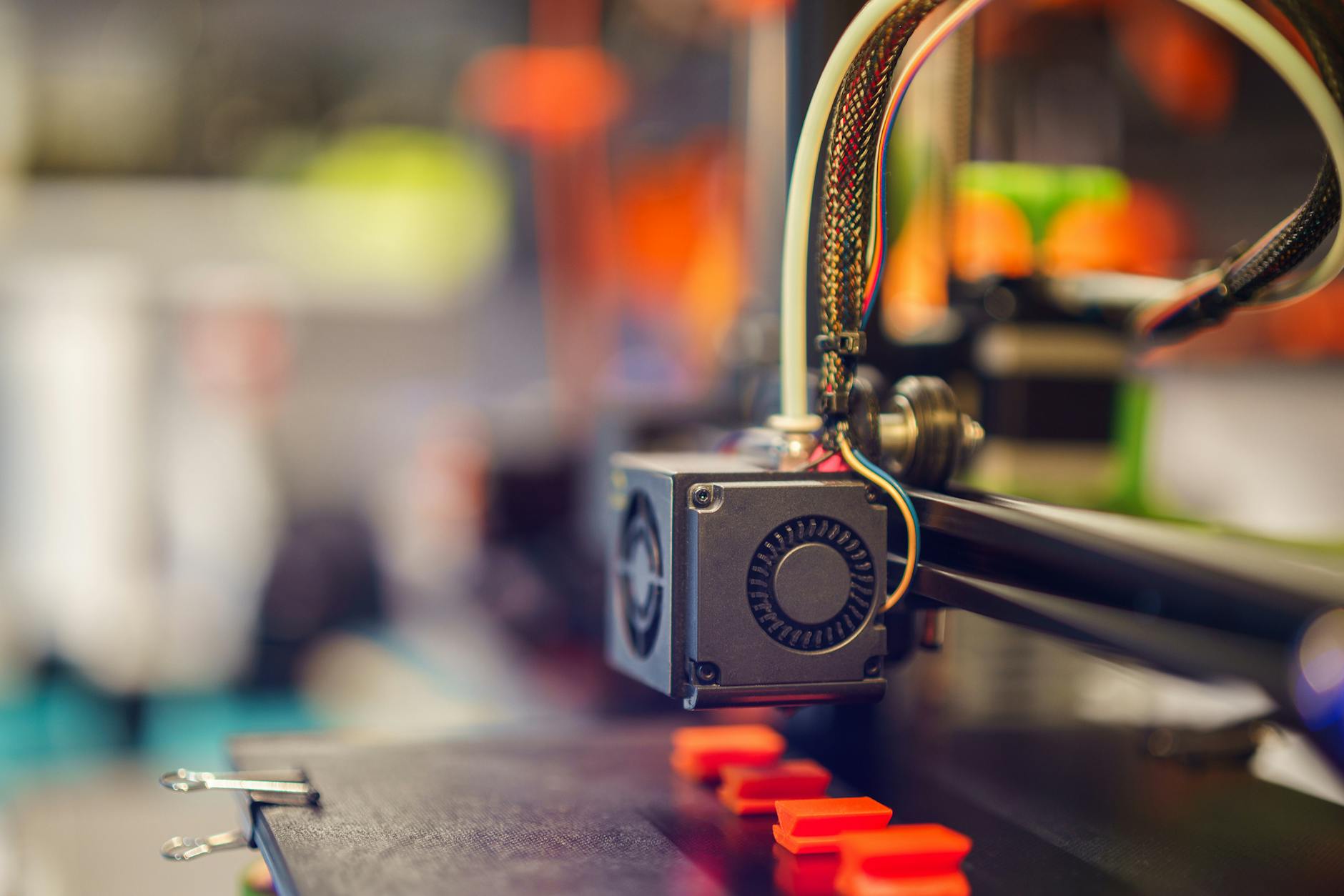
Sidus Space’s manufacturing approach relies heavily on additive manufacturing—3D printing and hybrid production techniques—to reduce cost and accelerate production timelines. This is genuinely innovative in the space sector, where traditional satellite manufacturing follows a one-off, handcrafted model. By automating component production and using modular designs, Sidus Space aims to lower the barrier to entry for orbital missions. A startup or government agency that once needed 18-24 months to commission a custom satellite could theoretically use a LizzieSat platform ready in months, configured for their specific sensors or applications. The limitation here is manufacturing maturity.
Cost of revenue in 2025 totaled $9.1 million against only $3.4 million in actual revenue—a sign that production is still ramping and inefficiencies remain. Nvidia achieved gross margins above 60 percent within years of going public. Sidus Space is currently operating at negative gross margins, meaning each satellite sold costs more to build than the selling price. This isn’t unusual for hardware startups at scale-up phase, but it underscores that the “automation” isn’t yet delivering the unit economics that make the Nvidia comparison compelling. The company will need to dramatically increase volume and reduce per-unit production costs before the manufacturing narrative becomes a financial reality.
The $151 Billion Contract and Scale Ambition
The long-term vision for Sidus Space crystallizes in the 10-year MDA SHIELD IDIQ contract carrying a $151 billion ceiling. IDIQ stands for “Indefinite Delivery, Indefinite Quantity”—a federal contracting mechanism that provides purchasing authority without committed volumes. This contract doesn’t guarantee $151 billion in orders; it establishes that Sidus Space is approved to deliver space systems and services to the U.S. Department of Defense and other government agencies up to that ceiling. For context, this is comparable to how SpaceX operates with NASA and DoD contracts—the contracting authority creates a framework for ongoing work rather than a single-shot procurement.
The strategic value of this contract lies in validation and optionality. Government agencies now view Sidus Space as a qualified vendor for orbital infrastructure, opening pathways to orders that might otherwise go to established contractors like Lockheed Martin or Northrop Grumman. The tradeoff is timing: government contracting moves slowly. A $151 billion ceiling means little if only $10-20 million actually gets allocated and spent in the next two years. Sidus Space needs nearer-term commercial revenue to survive the long tail of federal procurement cycles. The partnership with Simera Sense for AI-enabled hyperspectral imaging with onboard processing points toward dual-use applications that could accelerate this revenue pathway, but it’s still largely prospective.
The Cash Burn Reality and Financial Fragility
Understanding why the Nvidia comparison has limits requires confronting Sidus Space’s current financial condition head-on. The company reported a net loss of $29.5 million in 2025, funded by a cash position of $43.2 million following recent equity raises. At this burn rate, the company has roughly 18 months of runway before needing additional capital. Nvidia, by contrast, achieved profitability within years of IPO and has never required multiple capital raises to sustain operations.
This distinction matters profoundly for investors and for the long-term credibility of the orbital automation thesis. The warning this presents is straightforward: Sidus Space must achieve material revenue from either commercial contracts (StarVault payloads, customer-specific LizzieSat configurations) or government orders before 2027 to avoid further dilution. The $3.4 million in 2025 revenue actually represented a 28 percent decline year-over-year, suggesting revenue is currently contracting even as operational costs remain high. The company is in a critical phase where contract validation (which it has) must translate rapidly into cash flow (which it hasn’t yet). The comparison to Nvidia works as strategic positioning; it’s significantly weaker as a financial forecast.
Partnerships and the Ecosystem Play
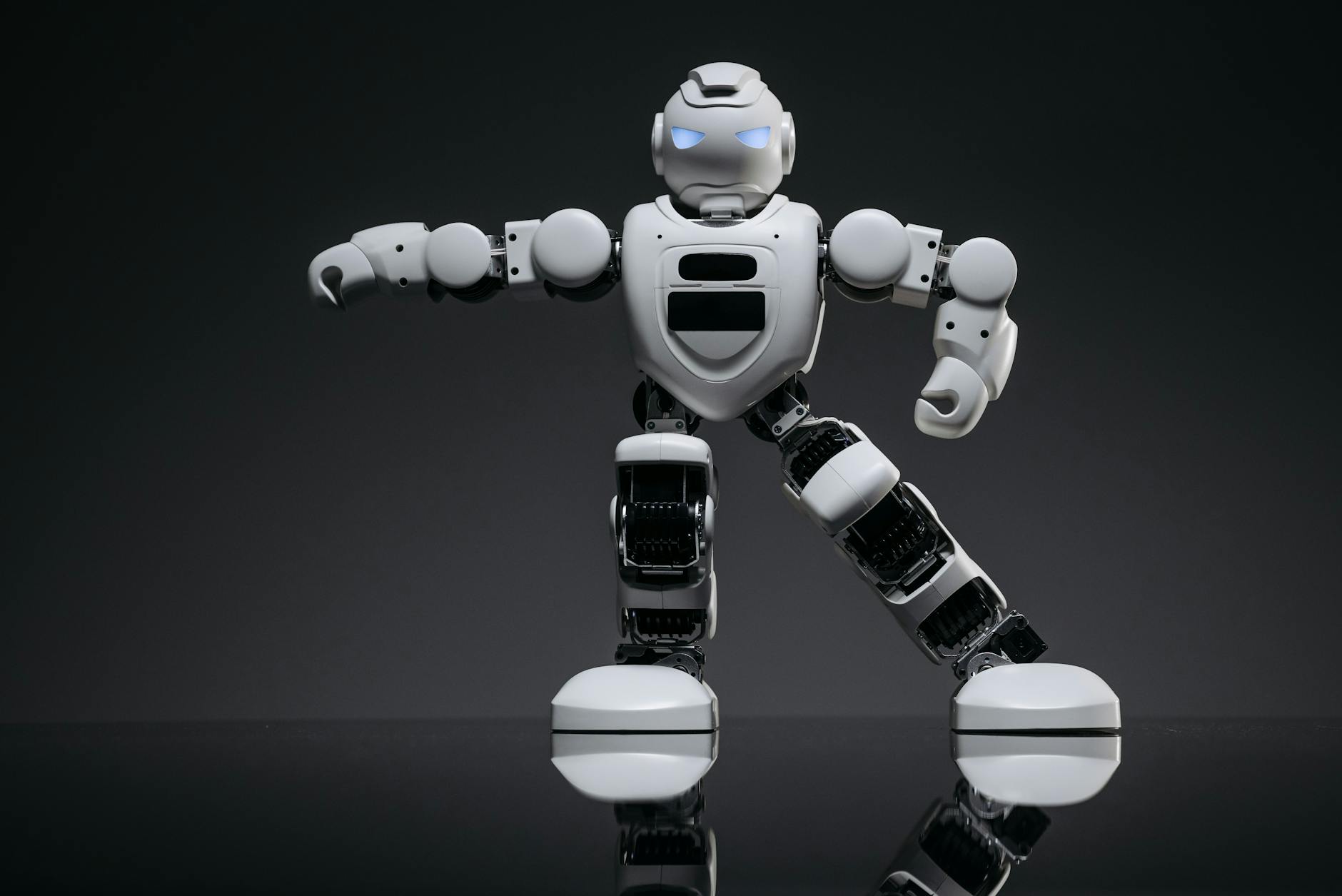
Sidus Space’s strategy increasingly centers on becoming an infrastructure provider that other companies build upon—a deliberate echo of the Nvidia playbook. The Lonestar Data Holdings partnership represents one model: a customer with their own market opportunity (orbital data storage) uses Sidus Space’s satellite platform and launch services to reach orbit. The Simera Sense partnership (AI-enabled hyperspectral imaging) represents another: a sensor company provides the payload; Sidus Space provides the platform and onboard processing capability. These partnerships validate the ecosystem concept, but they also reveal a dependency: Sidus Space needs partners to have successful applications, or their platforms become expensive infrastructure with no takers.
The strength of this approach is that it aligns incentives: Lonestar has commercial pressure to make StarVault profitable, so they’ll iterate and improve the service rapidly. Simera Sense has motivation to perfect hyperspectral imaging in space. Sidus Space focuses on manufacturing, launch integration, and orbital operations. The weakness is that if these partners fail to achieve their commercial goals, Sidus Space’s platforms become stranded assets in orbit. It’s a higher-risk model than Nvidia’s, where customers are highly incentivized to buy their chips because GPUs are already proven in the market.
The Orbital Automation Future and Timeline Reality
The orbital automation market itself is real and growing. Space-based AI and distributed computing in orbit represent genuine technological shifts. Companies and governments increasingly recognize that processing data at source—rather than downlinking terabytes to Earth—changes economics, latency, and operational possibilities. Sidus Space has positioned itself as a key provider of the underlying infrastructure for this shift. Their success would indeed vindicate the comparison to Nvidia: a company that didn’t build the killer application but provided the foundational platform on which others built billion-dollar markets.
However, the timeline matters immensely. Nvidia’s dominance in GPU computing became apparent within five years of their IPO in 1999. Sidus Space is approaching the equivalent inflection point, but with significantly less financial cushion and more competitive pressure from established aerospace contractors who are also moving into AI-enabled orbital systems. The October 2026 StarVault launch will be a critical test: does Lonestar’s service work as envisioned? Does it attract customers? Does it generate sufficient revenue to visibly move Sidus Space’s financial needle? If yes, the Nvidia comparison gains credibility. If the launch slips, the service underperforms, or commercial adoption stalls, the comparison becomes a historical curiosity rather than a strategic roadmap.
Conclusion
Sidus Space’s positioning as “the Nvidia of orbital automation” captures a real strategic insight: the company is building foundational infrastructure—manufacturing, platforms, and launch services—that other companies will use to create commercial value in space. This is fundamentally different from traditional satellite operators and more ambitious in scope than launch-only companies. The validation is visible in concrete forms: the $120 million Lonestar agreement, the $151 billion MDA SHIELD IDIQ contract, successful satellite commissioning, and strategic partnerships with companies developing orbital AI applications. Yet the comparison breaks down when examined financially.
Sidus Space burns nearly $30 million annually against $3.4 million in revenue, a trajectory that cannot persist without dramatic acceleration in commercial traction. The company has 18-24 months to prove that its contracts and partnerships translate into revenue and eventual profitability. The orbital automation market opportunity is real and substantial, but Sidus Space’s execution—not the market—will determine whether it becomes the infrastructure backbone of that market or simply another well-intentioned space startup that burned through capital without achieving scale. The October 2026 StarVault launch will matter far more to that outcome than any comparison to Nvidia ever could.