
The next dominant player in robotics may not be a semiconductor company at all—it could be an integrated automation hardware manufacturer that controls both the silicon and the systems that run on it. While NVIDIA has established itself as the essential compute layer for robotics through partnerships with ten-plus major robotics leaders including ABB Robotics, FANUC, KUKA, Universal Robots, and Yaskawa, the real value creation is increasingly shifting toward companies that bundle compute, control systems, and mechanical integration into cohesive platforms. The industry is moving from an era where robotics companies merely integrated third-party chips into their designs toward a model where automation hardware manufacturers create vertically integrated solutions that can be reprogrammed and adapted without expensive redesigns.
This shift mirrors how NVIDIA itself captured dominance in AI by bundling silicon with software ecosystems, developer tools, and optimized libraries. The automation hardware companies that replicate this playbook—offering integrated platforms where the compute, control logic, and mechanical design work as a unified system—will be the ones capturing the outsized margins and market share. Consider Universal Robots’ recent UR15 cobot, which pairs NVIDIA’s Jetson AGX Orin with custom-built control architecture and mechanical optimization specifically designed for collaborative task execution. This integration model creates switching costs and deeper customer lock-in than any chip supplier alone can achieve.
Table of Contents
- Why Integrated Automation Hardware Could Dominate the Robotics Value Chain
- The Emerging Competitive Threat to Pure Chip Suppliers
- Real-World Examples of Hardware-Software Integration Shifting Market Dynamics
- How Software-Defined Robotics Changes the Competitive Game
- The Critical Challenge: Staying Current on Both Hardware and Software
- The Rise of Specialized Automation Platforms for Specific Industries
- What’s Next for Automation Hardware in the AI Era
- Conclusion
Why Integrated Automation Hardware Could Dominate the Robotics Value Chain
The semiconductor industry has historically captured value through raw compute performance and architectural innovation, but robotics is different because the full value stack requires mechanical engineering, real-time control systems, safety certification, and application-specific software. A chip is only useful if it integrates into a system that can actually perform work, which is why vertical integration matters. Automation hardware manufacturers that control the full stack—from compute to controls to mechanical design—can optimize for specific industrial use cases in ways that chip suppliers cannot. nvidia can design the fastest inference engine, but it cannot optimize that engine for the precise motion control requirements of a collaborative welding robot or the real-time decision-making needed for adaptive material handling.
this creates a structural advantage for integrated manufacturers. When Vention launched its MachineMotion AI automation controller, it didn’t just drop a Jetson module into an off-the-shelf housing. The company engineered the entire platform around NVIDIA’s Isaac CUDA libraries, building custom firmware, safety systems, and application programming interfaces that make the hardware and software feel like a single product. That level of integration is extremely difficult for a pure hardware supplier to match. The barrier to entry is no longer just the capital required to design silicon—it’s the end-to-end systems engineering expertise needed to create a cohesive platform that customers prefer over piecing together separate components.

The Emerging Competitive Threat to Pure Chip Suppliers
The risk for chip-focused companies is commoditization at the integration layer. If every major robotics company can build a control system around NVIDIA’s Jetson platform, then what was once a proprietary advantage becomes a standard component that no single company controls. This is already visible in the market: Skild AI announced partnerships with ABB Robotics, Universal Robots, and Foxconn for physical AI deployment, and none of these partnerships are exclusive to NVIDIA or any single silicon provider. Multiple companies can license the same compute architecture and differentiate on the application layer instead.
However, the limitation for automation hardware companies is that they must maintain expertise in two fundamentally different domains simultaneously. A company like ABB Robotics needs to stay competitive in mechanical design, motor control, and application software while also keeping pace with the rapidly evolving AI and compute landscape. If they fall behind on the software side, they risk obsolescence. This is why the actual trend is toward partnership and specialization rather than pure vertical integration: NVIDIA provides the compute foundation, and automation companies build specialized systems on top. The danger for hardware-focused companies is overestimating their ability to compete on the software innovation side without diluting their core mechanical and control expertise.
Real-World Examples of Hardware-Software Integration Shifting Market Dynamics
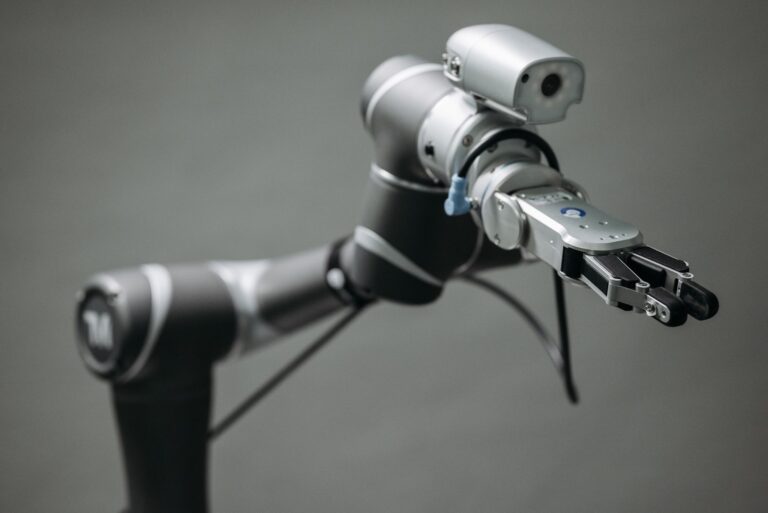
Universal Robots’ UR15, unveiled in 2025–2026, is the clearest example of how integrated hardware can challenge traditional competitive dynamics. The UR15 is marketed as the fastest collaborative robot on the market, but that speed comes from optimized mechanical design, custom control algorithms tuned to the Jetson AGX Orin’s performance characteristics, and integrated safety systems that know exactly how the hardware behaves under load. A competitor using the same Jetson chip but without the same mechanical and firmware integration would likely produce an inferior product. Universal Robots’ advantage isn’t that they have access to better silicon—it’s that they’ve engineered the entire system to maximize the potential of that silicon.
Similarly, Vention’s MachineMotion AI controller represents a lower-cost entry point into industrial automation that combines NVIDIA Jetson hardware with simplified programming interfaces and pre-built motion templates. Rather than competing on raw compute horsepower, Vention is creating value through ease of use and reduced time-to-deployment. This appeals to small and medium-sized manufacturers that might otherwise stick with older, fixed-automation systems because setting up a modern system felt too technically complex. The integration here includes not just hardware and software, but also the educational and support infrastructure that makes the platform accessible.
How Software-Defined Robotics Changes the Competitive Game
The industry-wide shift toward software-defined, reprogrammable robots fundamentally changes what companies need to compete. In fixed automation, you design a system for one specific task and it runs that task for years. In software-defined automation, the same hardware should theoretically handle dozens of different tasks through software updates alone. This requires extremely tight hardware-software co-design because you cannot tolerate the latency, jitter, or inconsistency that comes from loose coupling between layers.
This trend favors companies that can control both the hardware specification and the software stack because they can make radical optimization decisions that would be impossible across company boundaries. For example, if an automation hardware company decides that a specific processor architecture or memory layout would enable faster motion planning, they can redesign the hardware around that constraint. A pure chip supplier cannot make that same decision without breaking compatibility with dozens of existing platforms. The tradeoff is that this tight integration locks customers into a specific vendor more effectively than any contract could. Once a customer’s entire application suite is written for a particular hardware-software integration, switching to a competitor’s platform requires substantial rework.
The Critical Challenge: Staying Current on Both Hardware and Software
One often-overlooked limitation in the automation hardware space is that maintaining world-class expertise in both mechanical engineering and advanced software is extremely difficult. Companies that have historically been strong in mechanical design—like many traditional industrial automation suppliers—often struggle to compete on the software side. Conversely, software-first companies often underestimate the complexity and cost of manufacturing, servicing, and supporting industrial-grade hardware. The graveyard of failed robotics startups is full of companies that solved one problem brilliantly but could not maintain pace on the other dimension.
This is also where NVIDIA’s partnership strategy becomes valuable for the hardware companies themselves. By working closely with NVIDIA’s robotics team, companies like ABB and Yaskawa get early access to new compute platforms, optimization advice, and software libraries that accelerate their development cycles. However, this dependency creates a different risk: if NVIDIA’s robotics strategy shifts—for example, if they decide to move upmarket toward fully integrated solutions rather than just providing compute—then their hardware partners could find themselves competing against their own technology providers. The warning here is that partnerships in robotics are not neutral; they create both opportunities and dependencies that can quickly become liabilities.

The Rise of Specialized Automation Platforms for Specific Industries
One of the clearest ways integrated hardware is capturing value is through industry-specific platforms. Rather than building a general-purpose robot that works okay for many tasks, companies are building specialized systems optimized for specific verticals: collaborative assembly, logistics, material handling, or inspection. Each of these domains has different control requirements, safety constraints, and throughput targets. A platform optimized for one domain often performs poorly in another.
Skild AI’s partnerships with ABB Robotics, Universal Robots, and Foxconn for physical AI deployment are noteworthy because they represent companies that are doubling down on their respective domain expertise rather than trying to be everything to everyone. This allows them to ship products with features and performance characteristics that a generalist competitor simply cannot match. For example, a material handling specialist can optimize for high-speed, repetitive motion under tight tolerances, while a collaborative assembly specialist must prioritize force feedback and safety certification. These are fundamentally different engineering problems, and companies that have deep experience in one domain will consistently outcompete generalists.
What’s Next for Automation Hardware in the AI Era
Looking forward, the robotics industry will likely see a consolidation around integrated platforms that couple leading-edge AI compute with specialized mechanical and control systems. NVIDIA’s Cosmos 3.0 world foundation model for robotics, released in early 2026, is a meaningful step toward a universal foundation layer that reduces the moat for specialized software. However, Cosmos will be most valuable to companies that can customize it for their specific hardware and use cases.
A generic foundation model applied without hardware-specific optimization will produce worse results than a specialized model built by a company that knows exactly how its hardware behaves. The most likely outcome is not a single “next NVIDIA” but rather a fragmented landscape where multiple integrated hardware companies maintain strong positions in their respective verticals, all building on top of standardized compute platforms like NVIDIA’s Jetson line. The value will continue shifting from pure silicon to systems integration, but that doesn’t mean chip suppliers are losing power—it means they’re evolving from being the primary value creators to being critical enablers that shape what’s possible at the systems level.
Conclusion
The robotics industry’s next major player will probably not be a chip company but rather an integrated automation hardware manufacturer that has mastered the difficult task of keeping pace on both the mechanical and software innovation fronts simultaneously. Companies like Universal Robots with the UR15, Vention with MachineMotion AI, and specialized providers like Skild AI are demonstrating that the real defensible advantage in robotics comes from end-to-end integration—not from monopolizing a single layer of the stack. NVIDIA remains essential as a compute foundation, but the companies capturing outsized value are those that embed that compute into tightly integrated systems optimized for specific industrial problems.
For the industry and for investors, this means paying close attention to automation hardware companies that are actively expanding their software capabilities, especially those investing heavily in AI and control systems. The next dominant player will be the company that can make rapid, informed decisions across the hardware-software boundary—the one that can see a software limitation and quickly modify the hardware to support it, or identify a mechanical constraint and abstract it away in firmware. Those companies exist today; they’re just not yet recognized as the dominant players in the same way NVIDIA is. That recognition will likely come when customers realize that switching costs and system-level optimization advantages matter more than raw compute performance.