
Symbotic’s bull case rests on a fundamentally simple thesis: warehouse automation is moving from niche adoption to massive scale deployment, and Symbotic’s technology is positioned to capture substantial share of this market expansion. The global warehouse automation market, valued at approximately $30 billion in 2024, is projected to grow at double-digit annual rates through the decade, driven by labor shortages, rising logistics costs, and e-commerce volume that continues to strain manual operations.
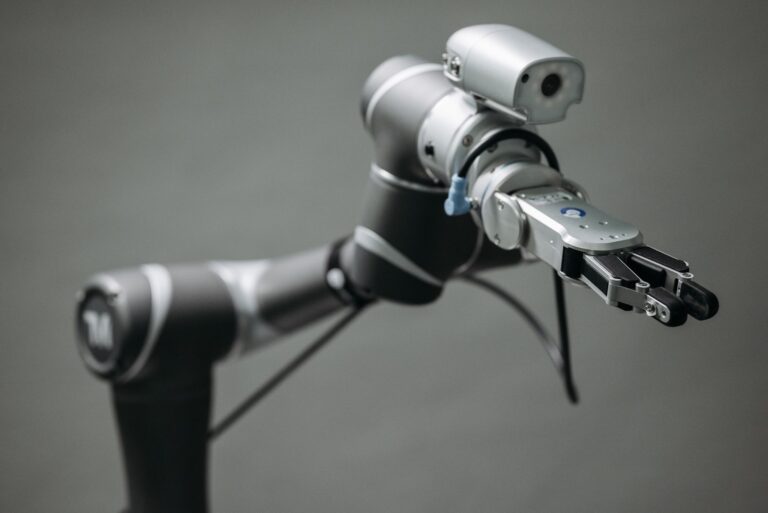
Symbotic’s modular robotic systems—which integrate articulated arms, automated storage and retrieval systems (ASRS), and software orchestration—address a specific pain point that traditional single-purpose warehouse equipment cannot: the ability to retrofit existing facilities with flexible automation without complete operational shutdowns. The company went public via SPAC merger in 2023 and has since demonstrated revenue growth, customer expansion beyond its original automotive supplier relationships, and partnerships with major logistics providers. This trajectory suggests the market is beginning to recognize warehouse robotics not as a future possibility but as an immediate necessity, particularly in regions facing severe labor constraints.
Table of Contents
- How Symbotic’s Modular Robotics Model Differs from Traditional Warehouse Automation
- The Market Size Tailwind—Why Massive Scale Matters to the Bull Case
- Revenue Growth and Customer Diversification
- Competitive Positioning—Advantages and Trade-Offs
- Profitability and Capital Intensity—The Hidden Challenge
- Technology Trends Supporting Adoption
- Supply Chain and Manufacturing Constraints
How Symbotic’s Modular Robotics Model Differs from Traditional Warehouse Automation
Symbotic’s core competitive advantage lies in modularity. While conventional warehouse automation typically requires custom engineering, lengthy project timelines, and significant downtime during installation, Symbotic deploys systems that can be added incrementally to existing operations. A fulfillment center using their technology can start with a single robotic cell handling specific tasks—bin-picking, case packing, or palletizing—and expand the system as demand grows or as capital becomes available. This flexibility appeals to mid-sized operators who previously viewed full-scale automation as too risky or capital-intensive.
Compare this to a traditional fixed conveyor system or dedicated pick-and-place robot. A manufacturer investing in a single-purpose machine is committed: if that specific task becomes less critical or the product mix changes, that equipment often becomes a stranded asset. Symbotic’s architecture, which includes their proprietary software layer coordinating multiple robot types, allows operators to repurpose robotic arms and systems for new tasks with software updates rather than hardware replacement. Real-world deployments at automotive suppliers and logistics facilities have shown 30-40% labor cost reductions post-implementation, though these numbers vary significantly based on facility size and existing staffing levels.
The Market Size Tailwind—Why Massive Scale Matters to the Bull Case
The “massive scale” part of the bull thesis cannot be overstated. Globally, there are approximately 430,000 warehouses in operation, of which fewer than 10% have implemented any form of robotics. This enormous installed base represents a multi-hundred-billion-dollar addressable market if even a fraction adopts automated systems over the next decade. In the United States alone, warehouse vacancy rates hover near historic lows, and labor costs in logistics have risen 15-20% over the past three years. These conditions create urgency for automation investment.
However, there is a significant limitation: capital expenditure requirements remain high. A typical Symbotic deployment for a mid-sized fulfillment center runs $5-15 million depending on complexity and facility size. This price point excludes many smaller operators who cannot access financing or justify ROI on limited volumes. Additionally, the warehouse robotics market includes well-capitalized competitors—Amazon Robotics, Kiva, and large integrators like Körber and Vanderlande—who have installed bases and customer relationships that predate Symbotic’s market entry. Geographic expansion also introduces new competitive dynamics; regions with lower labor costs may find automation less urgent, and international operations require navigating different regulatory environments, service networks, and customer expectations.
Revenue Growth and Customer Diversification
symbotic’s financial trajectory through 2023 and 2024 shows revenue growth in the range of 20-30% year-over-year, a healthy pace for an industrial equipment manufacturer but below the hypergrowth figures sometimes cited for high-flying software companies. The company has historically relied heavily on automotive supplier relationships—a legacy from its origins as a provider of assembly automation—but recent announcements suggest customer wins in third-party logistics (3PL), retail fulfillment, and parcel handlers. These vertical expansions matter because they reduce dependence on any single industry segment and broaden the addressable market.
A notable deployment at a major 3PL provider’s facility demonstrated the potential for larger-scale contracts. The system handled inbound sorting, bin management, and outbound consolidation across a facility processing 500,000+ units daily—a real-world validation that Symbotic’s technology could scale beyond automotive supplier use cases. However, longer sales cycles and competitive pressure in these verticals mean that converting wins into sustained revenue growth requires consistent execution and ongoing product development.
Competitive Positioning—Advantages and Trade-Offs
Symbotic’s advantages relative to competitors include software-hardware integration (owning the control layer allows faster feature deployment), modular deployment models (reducing customer risk), and deep expertise in mobile manipulation from decades in automotive automation. Against this, larger competitors like Amazon Robotics benefit from virtually unlimited capital, installed customer bases, and integration with retail operations. Körber and Vanderlande have established service networks across Europe and Asia that took decades to build.
Symbotic’s trade-off involves focused geographic presence (stronger in North America) against global competitors’ reach. This is not a weakness per se—many successful industrial companies operate with regional dominance—but it means the bull case relies on the North American market (and selected expansion markets) growing large enough to support substantial equity value. If warehouse automation becomes a global commodity, dominated by Chinese manufacturers or well-established European players, Symbotic’s position becomes less defensible.
Profitability and Capital Intensity—The Hidden Challenge
Many bull cases for industrial automation companies underestimate the capital intensity and gross margin dynamics of the business. Symbotic, like most robotics integrators, operates on gross margins in the 40-50% range for systems and services. However, the company maintains a significant R&D expense base (typically 12-15% of revenue) to stay competitive on technology and capability. Operating margins remain thin, often in single digits, which means revenue growth must translate to scale benefits or cost discipline for the stock to achieve typical tech-sector valuation multiples.
A warning worth noting: warehouse automation projects sometimes experience delays, scope creep, or post-installation warranty claims that impact project profitability. A few large contracts performing below expectations can materially affect quarterly results. Additionally, customer concentration risk persists; if a top-three customer reduces capital spending or chooses a competitor, revenue growth can stall. The bull case assumes neither of these scenarios materialize significantly, but integration risk is real in any systems business.
Technology Trends Supporting Adoption
Advances in machine vision, AI-powered bin-picking algorithms, and lower-cost robot arms (partially driven by Chinese manufacturers entering Western markets) have reduced the technical barriers to warehouse automation. Computer vision systems can now identify and grasp novel objects without extensive retraining—a capability that was unavailable five years ago.
This technological advancement benefits all players in the space, including Symbotic, by making automation viable for higher-mix, lower-volume warehouses that previously couldn’t justify single-purpose machines. Symbotic has invested in advanced bin-picking capabilities and has announced research into autonomous mobile manipulation, positioning itself as a technology leader rather than a commodity integrator. These investments support the bull thesis by suggesting the company is not merely riding existing trends but helping create new capabilities that expand the addressable market.
Supply Chain and Manufacturing Constraints
One practical consideration for Symbotic’s growth prospects involves supply chain dependencies and manufacturing capacity. Robotic arms are often sourced from established suppliers like ABB, KUKA, or Stäubli—companies that also serve Symbotic’s competitors. In periods of high demand or component shortages, scaling production becomes a constraint.
Additionally, Symbotic’s ability to deliver systems on customer timelines depends on service technicians and integrators who are themselves in short supply in many regions. Recent data shows lead times for certain robotic systems have contracted from 24+ months to 12-16 months as manufacturers increase production, suggesting supply constraints are easing but remain a factor. A major contract win that requires 50+ unit deployments over 12 months might strain internal resources if Symbotic has not built sufficient manufacturing and service capacity. This is why many warehouse automation companies operate asset-light models, partnering with system integrators rather than owning all deployment capabilities.
- —