

CTM represents a “picks and shovels” connectivity play in the robotics and automation sector, meaning it provides essential infrastructure and connectivity solutions that enable other companies to build and deploy robotic and automated systems. Rather than competing directly with robotics manufacturers, CTM profits from supplying the fundamental connectivity tools and platforms that make modern automation ecosystems work. The company’s strategy mirrors the historical gold rush metaphor: while most competitors chase the glamorous application layer, CTM positions itself as the critical enabler of connectivity for industrial automation, IoT devices, and autonomous systems across manufacturing, logistics, and enterprise environments.
The connectivity play matters because modern robotics cannot function in isolation. Robots need real-time data transmission, low-latency communication protocols, secure network management, and integration frameworks to operate effectively within larger automated systems. CTM addresses these infrastructure gaps by providing edge computing solutions, network connectivity platforms, and integration middleware that allow robotic systems to communicate, coordinate, and respond to dynamic conditions.
Table of Contents
- How Does CTM Enable the Robotics and Automation Ecosystem?
- The Infrastructure Layer as a Sustainable Business Model
- Real-World Applications in Manufacturing and Logistics
- Comparing CTM’s Approach to Vertical Integration
- Technical Challenges and Network Edge Cases
- Revenue Models and Competitive Positioning
- Future Outlook and Emerging Opportunities
- Conclusion
How Does CTM Enable the Robotics and Automation Ecosystem?
ctm‘s connectivity infrastructure solves a fundamental problem in industrial automation: the last-mile connectivity gap. When a manufacturing facility implements a fleet of collaborative robots, autonomous guided vehicles, and sensor networks, these devices must communicate reliably and securely. CTM provides the platforms and protocols that enable this communication without requiring customers to build custom solutions. This approach reduces deployment time and complexity for integrators and manufacturers.
The company’s value comes from understanding that connectivity is not a commodity. A manufacturing plant running critical production lines cannot afford dropped connections, latency spikes, or security breaches. CTM differentiates by offering managed connectivity services, redundancy protocols, and application-specific optimization that generic network providers cannot match. For example, a logistics company deploying autonomous warehouse robots needs deterministic communication—CTM’s solutions provide this through dedicated network slicing and priority traffic management rather than best-effort connectivity.

The Infrastructure Layer as a Sustainable Business Model
Building the picks-and-shovels layer creates a more defensible business than competing in the robotics application space directly. While robot manufacturers face intense competition on features, price, and performance, CTM operates in a less crowded market where switching costs are high. Once a customer integrates their automation systems with CTM’s connectivity platform, replacing that infrastructure becomes expensive and disruptive. This creates recurring revenue from existing customers rather than requiring constant new product innovation to capture new market segments.
However, this approach comes with a significant limitation: CTM’s growth is tethered to the adoption of robotics and automation across industries. If a particular vertical (like automotive or warehousing) experiences a slowdown, CTM’s connectivity revenues decline proportionally. The company must also continuously upgrade its infrastructure to match evolving connectivity standards, from 5G integration to emerging protocols for autonomous systems. A manufacturing customer might switch platforms if a competitor offers lower latency or better integration with a new class of robots they’re adopting.
Real-World Applications in Manufacturing and Logistics
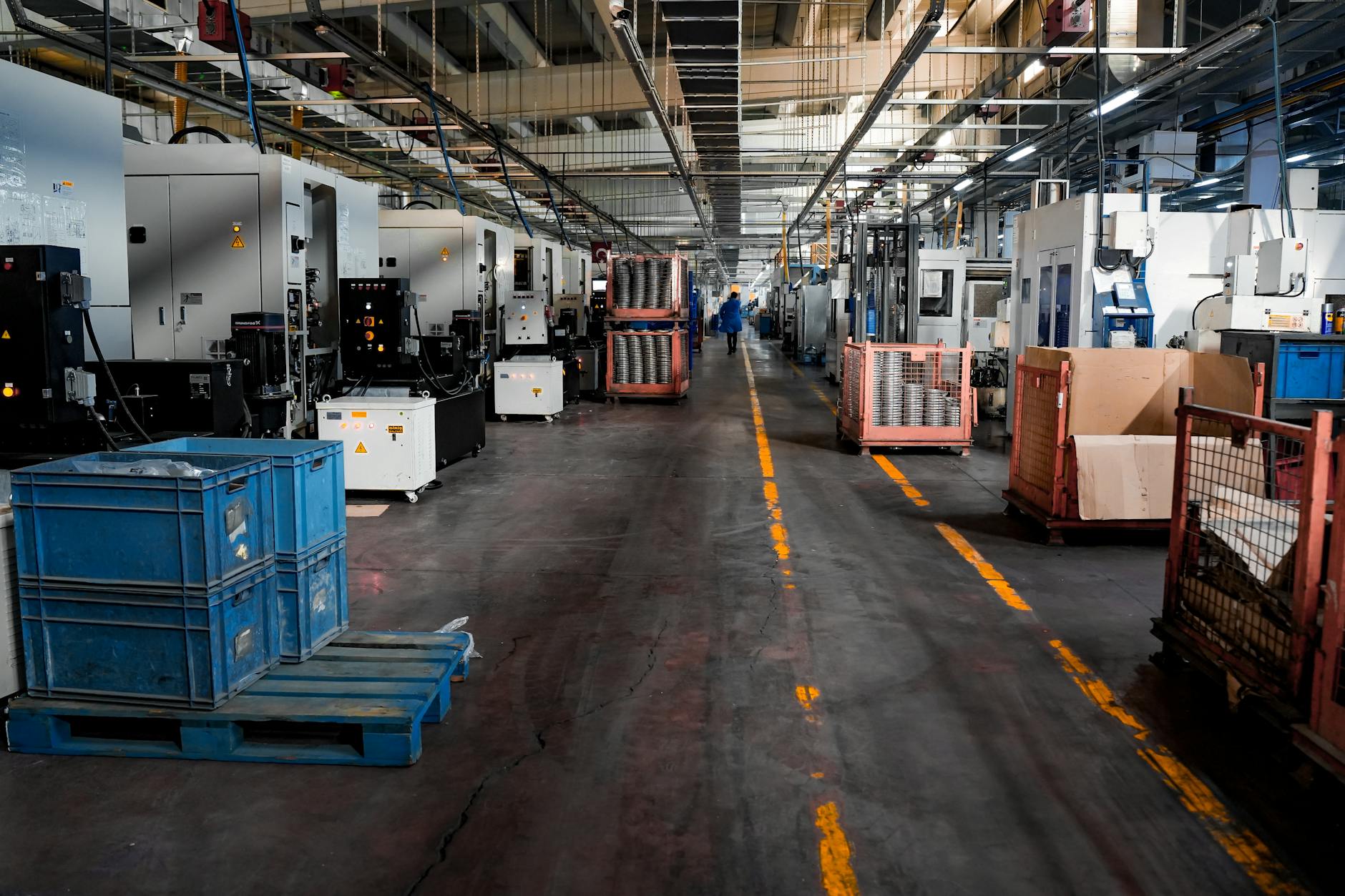
Consider a tier-one automotive supplier managing a production facility with 300 collaborative robots, dozens of AGVs moving parts between stations, and thousands of IoT sensors monitoring equipment health. Without dedicated connectivity infrastructure, this facility would experience communication bottlenecks, inability to quickly adapt production schedules, and difficulty implementing predictive maintenance. CTM’s platform provides the real-time data backbone that makes adaptive manufacturing possible. When a robot detects an anomaly, the system transmits data instantly to the central control system, which can reroute production tasks to other cells and trigger a maintenance alert before failure occurs.
In warehousing, companies like Amazon and DHL have invested heavily in autonomous systems. CTM’s connectivity solutions enable these companies to orchestrate thousands of robots operating in the same space. Each robot needs to report its location, receive navigation updates, and coordinate pickups with other robots. The connectivity layer must handle thousands of messages per second across multiple frequency bands and maintain sub-100-millisecond latency to prevent collisions and optimize pick rates. CTM provides this infrastructure, making the massive robot swarms viable.
Comparing CTM’s Approach to Vertical Integration
Some robotics leaders like ABB and Siemens have attempted to control connectivity themselves through vertical integration, building proprietary networks and communication protocols alongside their robots. This approach offers advantages: the company controls the full stack and can optimize each layer for their specific products. The disadvantage is significant: proprietary networks lock in customers but reduce addressable market. A company that only provides connectivity for its own robots cannot scale beyond its own product adoption.
CTM’s horizontal platform approach opens the market wider. The company’s connectivity infrastructure works with robots from any manufacturer—whether from Boston Dynamics, ABB, Fanuc, or smaller specialized builders. This creates an opportunity to capture more revenue streams and serve customers with heterogeneous robot fleets. The tradeoff is that CTM must maintain compatibility across many different systems and cannot optimize as deeply for any single product line. Additionally, this universality attracts more competitors who see a growing market for connectivity solutions.
Technical Challenges and Network Edge Cases
Deploying reliable connectivity in harsh industrial environments presents technical challenges that pure software companies rarely face. Manufacturing facilities expose networks to electromagnetic interference from welding equipment, radio signals that create noise, and environmental conditions ranging from freezing cold to intense heat. CTM must design hardware-level solutions that maintain connection quality in these conditions. Edge cases emerge constantly: what happens when a factory loses main power and reverts to backup generators? How does the network behave when a robot moves between different coverage zones? Another limitation: as automation systems grow more complex, the connectivity demands become more sophisticated.
Real-time applications like collaborative robot motion control demand sub-millisecond latency, while video feeds from inspection robots might tolerate occasional delays. CTM’s platform must intelligently partition bandwidth and prioritize traffic types. Misconfiguration can degrade performance for mission-critical operations. The company must invest heavily in ongoing optimization and customer support to ensure systems continue performing as automation deployments scale.

Revenue Models and Competitive Positioning
CTM generates revenue through multiple models: upfront licensing fees for platform software, recurring subscription fees for managed connectivity services, and usage-based pricing for data transmission. This diversification creates revenue predictability while scaling with customer success. As a logistics company automates more of its operations and deploys more robots, CTM’s usage-based fees increase proportionally. The company benefits from the customer’s growth trajectory rather than requiring new customer acquisition to drive revenue.
Competitive positioning remains challenging because major cloud and network providers have begun building connectivity solutions for industrial automation. Amazon Web Services offers IoT connectivity through AWS IoT Greengrass, while Microsoft provides Azure IoT Edge. These incumbent players have massive resources, existing customer relationships, and can bundle connectivity with broader cloud services. CTM must differentiate through deep domain expertise in robotics-specific requirements and delivering superior performance in latency-sensitive applications where cloud-based solutions fall short.
Future Outlook and Emerging Opportunities
The connectivity play will likely become more valuable as robotics deployments accelerate across new verticals. Today, most robots operate in controlled manufacturing and logistics environments. Emerging applications include autonomous vehicle fleets managing their own connectivity, remote operation of robots across geographic distances, and autonomous systems running sophisticated AI models at the edge. Each of these trends requires more sophisticated connectivity infrastructure rather than less, creating expanding markets for players like CTM.
Looking forward, CTM’s position benefits from a structural shift: companies are decoupling connectivity from compute and robotics hardware. Rather than each robot manufacturer building proprietary networks, the industry is moving toward open, interoperable connectivity standards. This commoditizes some connectivity functions but elevates the value of companies that provide integrated platforms, security, and optimization. CTM’s success depends on evolving from pure connectivity provider to a more comprehensive infrastructure partner that handles edge computing, security, data management, and system orchestration alongside connectivity.
Conclusion
CTM’s picks-and-shovels connectivity strategy offers a sustainable competitive position in the robotics and automation sector. By providing essential infrastructure rather than competing in the crowded robotics application layer, the company captures value from the underlying buildout of automation systems.
The recurring revenue model, high switching costs, and broad addressable market create strong economics for investors and customers seeking reliable connectivity. However, success requires continuous technical innovation, competitive differentiation against well-funded incumbents, and deep domain expertise in robotics-specific requirements. Companies evaluating connectivity partners should assess not just current performance but the provider’s ability to evolve with emerging automation trends and maintain the performance standards that mission-critical robotic systems demand.