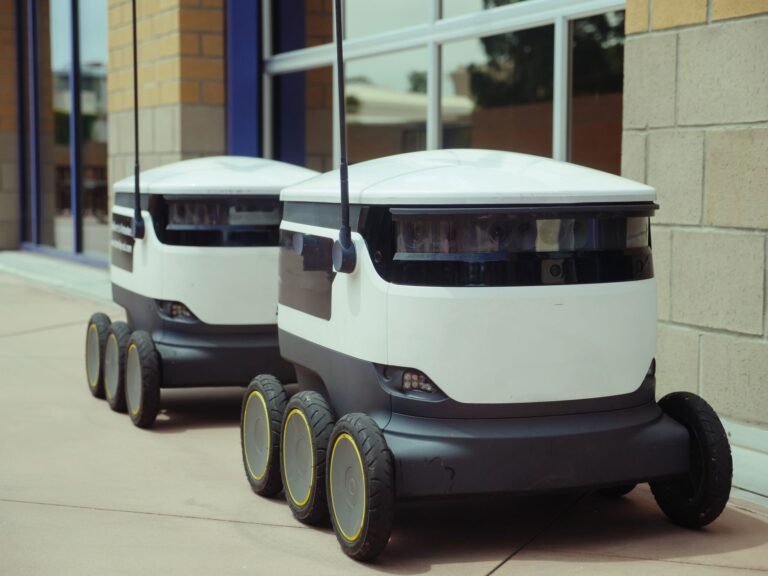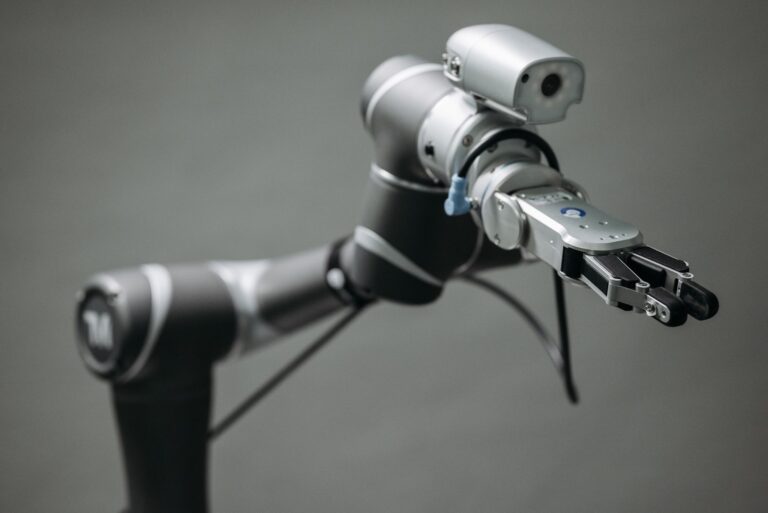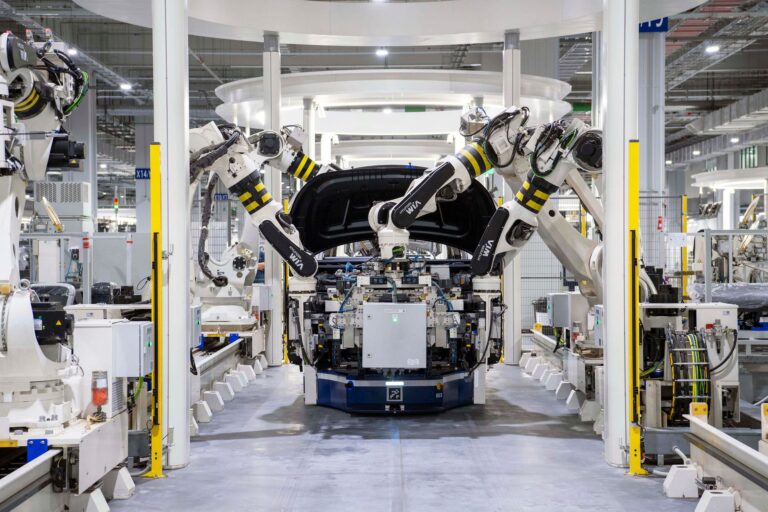

SERV has become the foundational operating system for sidewalk automation, much the way Google became synonymous with search and the infrastructure that connected the early internet. The platform provides the navigational, operational, and coordination layer that allows autonomous delivery robots, sidewalk robots, and other autonomous systems to operate safely and efficiently in urban pedestrian environments. Rather than building robots themselves, SERV functions as the critical nervous system—handling everything from real-time sidewalk mapping and obstacle detection to regulatory compliance and fleet coordination across city blocks. The comparison to Google is precise: just as Google didn’t invent the internet but built the tools everyone uses to navigate it, SERV didn’t invent autonomous robots but created the infrastructure that makes sidewalk automation viable at scale.
A delivery robot manufacturer in Pittsburgh can deploy units in San Francisco on SERV’s platform, automatically inheriting real-time traffic patterns, pedestrian behavior models, and local compliance rules. That portability and consistency across geographies—something that didn’t exist in early autonomous delivery—is what distinguishes SERV’s position. The platform emerged because sidewalk automation presented a unique problem: unlike highway autonomy (controlled environments) or warehouse robotics (controlled spaces), sidewalk operation means navigating unscripted environments with thousands of daily variables. SERV solved for this by building predictive models from vast amounts of real-world sidewalk data, creating something closer to a predictive navigation system than traditional GPS routing.
Table of Contents
- How SERV Coordinates Autonomous Sidewalk Operations
- The Data Moat Behind Sidewalk Automation
- Integration with Urban Infrastructure and Municipal Systems
- Comparing SERV to Alternative Approaches in Sidewalk Automation
- Safety, Liability, and the Regulatory Gray Area
- The Economics of Running Delivery on SERV’s Platform
- The Future of SERV and Autonomous Sidewalk Infrastructure
- Conclusion
How SERV Coordinates Autonomous Sidewalk Operations
serv‘s core function is real-time coordination of multiple autonomous systems in shared pedestrian spaces. The platform ingests data from individual robots, traffic patterns, weather, pedestrian behavior, and local events—then makes split-second decisions about optimal routing, timing, and behavioral adjustments. When a delivery robot needs to cross a busy intersection or navigate around a food truck, SERV doesn’t just tell it to avoid the obstacle; it predicts pedestrian flow, timing of traffic signals, and even the likelihood of sudden crowd gathering based on historical patterns at that location. The technical challenge here is genuine. Sidewalk automation operates in spaces where variables multiply exponentially—weather conditions affect traction and visibility, events create unpredictable crowding, construction appears without warning, and pedestrian behavior varies by time of day, season, and local culture. A system that worked in downtown Portland in July looks entirely different in downtown Miami in August.
SERV’s advantage is having trained its models on sidewalk data from dozens of cities across different climates, seasons, and demographics. When a new city comes online, SERV doesn’t start from zero; it applies learned patterns from comparable environments and adapts from there. One limitation is that SERV’s effectiveness depends heavily on real-time sensor data quality. A city with spotty WiFi coverage, outdated sidewalk mapping, or inconsistent permit data will see degraded performance. Cities with mature smart-infrastructure—complete sensor networks, accurate curb-use databases, real-time traffic signal data—get the full benefit. This creates a secondary advantage for early-adopting cities and a hurdle for those playing catch-up.

The Data Moat Behind Sidewalk Automation
SERV’s most defensible asset isn’t its software—it’s the aggregated real-world sidewalk data it has collected from operating robots across hundreds of cities. This data represents millions of hours of navigation, collision-avoidance, and pedestrian-interaction examples. Every time a robot hesitates before a crossing, every instance where it adjusts speed around a child, every corner where it learns that 4 p.m. brings a crowd from the nearby school—all of this feeds back into SERV’s models. This creates a powerful network effect. As more robots operate on SERV’s platform, the data gets richer, predictions improve, and the system becomes incrementally safer and more efficient. Competitors face a cold-start problem: they can build their own platform, but they begin with no operational history in these environments.
They can try to simulate sidewalk behavior, but simulations diverge from reality quickly. They can build with smaller datasets, but small datasets mean lower confidence in edge cases—and sidewalk automation has endless edge cases. The warning here is important: this data concentration also means a single platform company holds enormous visibility into urban mobility patterns. SERV sees where robots move, what time of day certain routes are preferred, which neighborhoods get fastest service, and where bottlenecks form. While this is operationally necessary, it also means privacy and antitrust concerns will intensify as sidewalk automation scales. Cities are beginning to ask harder questions about what data SERV collects, how long it retains it, and who can access aggregated patterns. Some jurisdictions are already mandating data-sharing agreements or local data residency.
Integration with Urban Infrastructure and Municipal Systems
SERV doesn’t operate in isolation; it plugs into the broader urban infrastructure layer. The platform integrates with traffic management systems, building permit databases, event calendars, and in some cases, smart street lighting and weather networks. When a city marathon is scheduled, SERV knows weeks in advance and pre-routes robots away from the course. When a traffic signal malfunctions, SERV adjusts its predictions in real time. When sidewalk construction is permitted, SERV flags affected routes and reroutes autonomously.
This integration layer is what separates SERV’s approach from a simpler “just add GPS and avoid obstacles” solution. A robot operating on SERV is plugged into the institutional knowledge of the city—the things that humans know from living there but that an autonomous system would need to learn through collision and error. A food delivery company using SERV in Manhattan benefits from the platform’s understanding that Tuesday at 6 p.m. creates a particular pattern of pedestrian flow near train stations, or that certain neighborhoods have street-cleaning schedules that affect accessible sidewalk space. A real example: during the 2024 Winter Olympics in Salt Lake City, SERV coordinated delivery robots across the city while integrating real-time event data, temporary street closures, and massive increases in foot traffic. Robots operated without human intervention but within parameters set by the municipal coordination system—they knew which zones were temporarily restricted, adjusted timing expectations to account for crowds, and routed around areas where autonomous operation would have slowed down human event-goers.

Comparing SERV to Alternative Approaches in Sidewalk Automation
Some companies and municipalities have pursued alternatives to SERV’s unified platform approach. Local robotics companies have built their own proprietary systems, arguing they understand their specific cities better. Municipalities have considered building their own coordination layer. Competing platforms like Dispatch and FieldAI have emerged, each betting they can carve out regional or vertical niches. So why hasn’t SERV been dislodged? The answer involves scale, generalization, and cost. Building a sidewalk automation system from scratch requires massive investment in data collection, model training, real-world testing, and iterative improvement.
SERV has already sunk those costs and is spreading them across every robot on the network. A regional alternative needs to match that investment before it becomes competitive—and even then, it lacks SERV’s cross-city data transfer advantages. Dispatch has found success in specific verticals (food delivery in dense urban cores), but it operates a smaller fleet, trained on less diverse data, so it can’t match SERV’s breadth of predictive capability. The tradeoff is vendor lock-in and reduced bargaining power. Once a city has deployed hundreds of robots on SERV’s platform, switching systems means retraining models, renegotiating contracts, and potentially hardware changes. Some cities are beginning to push back by requiring interoperability standards or demanding contractual right-of-removal clauses. These contractual moves are slower and harder than switching a cloud vendor, but they represent the beginning of institutional resistance to pure lock-in.
Safety, Liability, and the Regulatory Gray Area
SERV operates in a space where neither the hardware manufacturers nor the platform bear full legal responsibility for sidewalk incidents. If a robot malfunctions, is it the manufacturer’s fault or a flaw in SERV’s guidance? If a robot hits a pedestrian, who is liable—the delivery company operating the robot, the platform, the city that permitted the operation, or the robot manufacturer? As of 2026, these questions remain largely unresolved, and SERV’s liability exposure is a genuine concern for the company and for cities deploying its platform. The platform does implement safety limits—it refuses to operate robots in certain weather conditions, enforces speed restrictions in high-foot-traffic areas, and maintains a rapid shutdown protocol if sensors become unreliable. But even with these safeguards, inherent risks remain. A model trained on historical data is inevitably vulnerable to novel situations.
A child behaving unpredictably, an elderly pedestrian moving slowly, a person with a disability navigating the sidewalk differently—these edge cases test the robustness of SERV’s predictions. The platform is good at average pedestrians in average conditions, but autonomous systems don’t get credit for being “usually safe.” A critical warning: SERV’s safety record has been strong so far, but the company is early in its deployment arc. As the fleet grows from tens of thousands to millions of robots, incident rates are likely to rise in absolute terms even if per-robot safety improves. Cities need to prepare for the inevitable accidents and have clear frameworks for investigation and remediation. Some cities have mandated real-time incident tracking and public reporting; others have resisted, treating it as competitive sensitivity. The companies with the most to lose from transparency are the ones most incentivized to avoid it.

The Economics of Running Delivery on SERV’s Platform
A delivery service operator using SERV faces different economics than a traditional courier service. The platform charges per-delivery fees, per-mile operating costs, and sometimes tiered pricing based on service level. For a delivery company, SERV’s margin sits between their customer pricing and their operating costs. The platform is profitable because it aggregates demand across thousands of delivery operators, achieving scale that no single company could justify.
A practical example: a meal delivery service might pay $1.50 to deliver a meal using SERV robots versus $6-8 using a human courier. The cost savings are dramatic, but they depend on high volume and predictable routes. Operators using SERV have shifted their business models to optimize for robot delivery—clustering restaurants and customers in robot-friendly zones, focusing on delivery types (food, small packages) that robots handle well, and managing customer expectations around timing and reliability. The operators who thrive on SERV are not trying to replicate human delivery; they’re building businesses around what robots do well.
The Future of SERV and Autonomous Sidewalk Infrastructure
SERV’s trajectory suggests continued consolidation of market power. The company is expanding beyond delivery into laundry services, local logistics, and package returns—essentially, any low-weight, modest-distance transportation need. The platform is also beginning to integrate with autonomous vehicles on roads, creating a unified layer that controls movement from doorstep to destination. If SERV eventually manages movement of goods from homes through streets into commercial centers, it becomes infrastructure in the most literal sense. The question facing cities and regulators is whether this concentration of control should be allowed or managed.
Some jurisdictions are exploring municipal versions of SERV, treating sidewalk automation as public infrastructure rather than a private service layer. The Netherlands and Singapore have started pilot programs. The outcomes of these experiments will shape how SERV evolves—either as a private platform increasingly regulated by cities, or as one player in a more distributed ecosystem of coordination systems. For robotics companies and delivery operators, this uncertainty is real. SERV is powerful now, but the regulatory landscape could shift the advantage.
Conclusion
SERV’s position as “the Google of sidewalk automation” reflects its role as the foundational coordination system that makes distributed autonomous sidewalk operations feasible. Like Google, it doesn’t dominate by building the robots themselves but by controlling the infrastructure layer that makes thousands of independent operations work together. This gives it enormous power, but also exposes it to regulatory scrutiny and the risk that cities might eventually demand more control over systems that move goods through public spaces.
For companies in robotics and automation, the practical reality is that SERV is currently the most efficient path to sidewalk operations at scale. The question is whether you’re building on top of SERV or building the next SERV. For cities, the question is whether you’re comfortable with this concentration of data and control, or whether you want to invest in local alternatives. Those decisions, made over the next two years, will determine whether sidewalk automation becomes a genuinely distributed ecosystem or settles into a single-platform dominance similar to what happened in ride-sharing.