
YASKY, the ticker symbol for Yaskawa Electric Corporation, has earned its reputation as the servo motor industry’s dominant force—the company that essentially defined the category when it developed the world’s first prototype servo motor, the Minertia motor, in 1958. Today, Yaskawa holds the global No. 1 market share in AC servo motors with cumulative shipments exceeding 20 million units, commanding the automation landscape with the same technical depth and market positioning that NVIDIA brought to graphics processors.
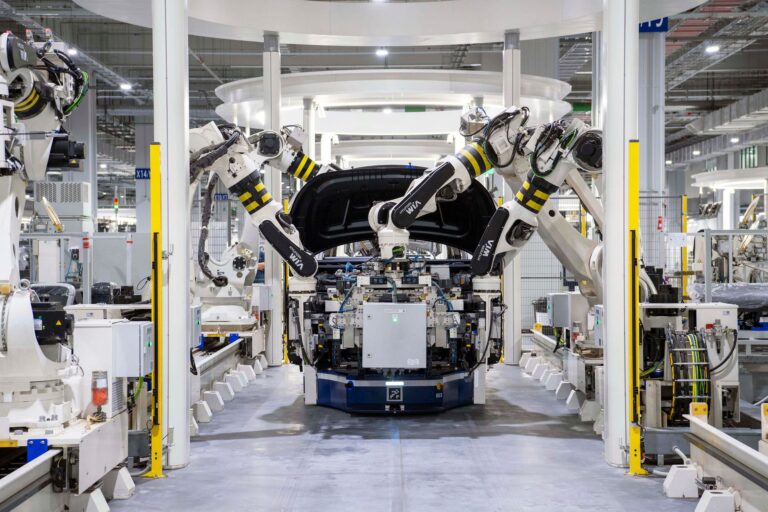
The comparison isn’t mere marketing positioning: just as NVIDIA became synonymous with computational acceleration, Yaskawa became synonymous with precision motion control, establishing the foundational technology that powers everything from semiconductor manufacturing equipment to industrial robotic arms in 29 countries across 12 production bases worldwide. What makes YASKY the servo motor equivalent of NVIDIA is not just historical dominance but continuous innovation and strategic partnerships that keep the company at the forefront of emerging technologies. The recent December 2025 collaboration between Yaskawa and SoftBank on “Physical AI” robots demonstrates how the company is transitioning from being a pure motion control supplier to a systems integrator capable of leveraging NVIDIA and Fujitsu AI technologies for real-time factory floor optimization. This positioning allows Yaskawa to capture value not just in the servo motor itself, but in the intelligence layer that controls it—a critical distinction as automation moves beyond simple repetitive tasks into adaptive, AI-driven manufacturing environments.
Table of Contents
- Why YASKY Dominates Servo Motor and Motion Control Markets
- The Strategic Shift Toward Physical AI and Integrated Robotics
- Manufacturing Expansion and U.S. Production Localization
- NVIDIA Integration and the AI Acceleration Parallel
- Supply Chain and Competitive Vulnerabilities
- The 20 Million Unit Milestone and Legacy Competence
- Future Outlook and the Physical AI Inflection
- Conclusion
Why YASKY Dominates Servo Motor and Motion Control Markets
Yaskawa’s dominance stems from nearly seven decades of technical specialization and vertical integration that few competitors can match. The company didn’t just manufacture servo motors; it built the entire ecosystem around them—from drive electronics and motion controllers to integrated industrial robots and manufacturing execution systems. This vertically integrated approach means that when a factory operator encounters a motion control problem, Yaskawa can often solve it with solutions from its own portfolio, creating customer stickiness that price-based competitors cannot easily disrupt. The company’s ability to maintain No.
1 global market share in AC servo motors across industries ranging from automotive to food processing demonstrates that this strategy works across vastly different customer segments. The financial results for fiscal year 2026 (ended February 28, 2026) show consolidated revenue of 542.1 billion yen with operating profit of 47.3 billion yen, reflecting the company’s substantial scale even as global manufacturing faced headwinds. More tellingly, Yaskawa’s confidence in future growth is evidenced by an increased annual dividend from 68 yen to 72 yen per share, and the company’s FY2027 guidance projects revenue of 580 billion yen with operating profit of 60 billion yen—a 26.8% increase in operating profit that suggests Yaskawa expects demand for its core servo motor and automation products to accelerate. This forecast growth contrasts sharply with the cautious outlook from many industrial automation competitors, indicating that Yaskawa’s market position remains structurally sound.

The Strategic Shift Toward Physical AI and Integrated Robotics
The most significant recent development isn’t the continued success of Yaskawa’s traditional servo motor business, but rather the company’s pivot toward Physical AI—an emerging category that combines servo motors with real-time AI decision-making. In December 2025, Yaskawa unveiled Physical AI robot applications at iREX 2025 (the International Robot Exhibition held December 3-6, 2025) in partnership with SoftBank, utilizing AI-RAN technology that integrates sensor data for real-time optimization of robotic tasks. This represents a fundamental shift in how Yaskawa positions itself: no longer simply a motion component supplier, but rather a provider of complete adaptive robotic systems that learn and optimize their own performance.
However, this transition carries risks that investors and customers should acknowledge. Adding AI capabilities to robotic systems increases complexity, introduces new failure modes, and creates dependency on software platforms that may require continuous updates and maintenance—a departure from the historical simplicity and reliability of servo motors as mechanical-electrical components. Furthermore, Yaskawa’s ability to execute on Physical AI depends on successful integration of technologies from partner companies like nvidia and Fujitsu, creating potential supply chain and compatibility risks if those partnerships falter. The company’s track record in software-intensive products is less extensive than its mechanical engineering reputation, and this strategic transition will ultimately be judged by whether the Physical AI products deliver on performance and reliability claims.
Manufacturing Expansion and U.S. Production Localization
In July 2025, Yaskawa announced a major expansion that signals significant confidence in long-term demand for industrial robots in North America: a new state-of-the-art robotics manufacturing facility in Franklin, Wisconsin. This is a landmark move because it represents the first Yaskawa facility to manufacture high-volume industrial robots on U.S. soil, marking a shift from the company’s historical reliance on Japanese and overseas manufacturing. The facility addresses a critical strategic concern for American manufacturers: supply chain resilience and shorter lead times for industrial robots, which have become essential infrastructure for competitive manufacturing.
The Wisconsin investment also reflects a pragmatic response to the evolving geopolitical landscape around advanced manufacturing and automation technology. By establishing U.S.-based production capacity, Yaskawa positions itself to benefit from potential domestic sourcing preferences, trade policy incentives, and reduced tariff exposure for customers supplying U.S. markets. The facility represents a significant capital commitment—and therefore a management vote of confidence in sustained demand for industrial automation in North America. For customers evaluating servo motor and robotics suppliers, this expansion signals that Yaskawa intends to be a stable, long-term partner with secure supply lines, rather than a company dependent on overseas manufacturing that might be disrupted by tariffs or geopolitical tensions.

NVIDIA Integration and the AI Acceleration Parallel
The comparison between YASKY and NVIDIA becomes most concrete when examining Yaskawa’s integration of NVIDIA’s AI computing technologies into factory automation systems. Just as NVIDIA became essential infrastructure for AI workloads by providing the GPU computing platform, Yaskawa is positioning itself as essential infrastructure for Physical AI manufacturing by combining NVIDIA’s computational capabilities with Fujitsu’s edge processing and its own motion control expertise. Manufacturing systems that incorporate Yaskawa servo motors, controllers, and NVIDIA AI engines can perform tasks like adaptive trajectory optimization, predictive maintenance, and real-time quality control—capabilities that pure mechanical systems cannot match. The tradeoff, however, is significant: AI-powered automation systems are far more expensive than traditional servo motor implementations, require specialized technical expertise to configure and maintain, and depend on continuous data streaming and processing infrastructure.
A traditional Yaskawa servo motor system might cost $10,000 to $50,000 and operate reliably for 15+ years with minimal software updates. An AI-enabled Physical AI robotic system from Yaskawa might cost $250,000 to $500,000 or more, with ongoing computational and software licensing costs, plus the need for skilled technicians who understand both robotics and AI systems. This higher barrier to entry limits Physical AI adoption primarily to large manufacturers and tier-one companies, rather than the small and mid-market manufacturers who have traditionally benefited from servo motor automation. Yaskawa’s challenge will be whether it can also develop cost-effective, simplified Physical AI products that bring these benefits to a broader market.
Supply Chain and Competitive Vulnerabilities
Despite its dominant market position, Yaskawa faces specific vulnerabilities that are worth monitoring. The company operates production bases in 12 countries, which provides geographic diversity but also creates complexity in managing quality, labor costs, and supply chain coordination. Recent profitability headwinds—profit attributable to owners declined 38.2% year-on-year in FY2026—suggest that the company has faced cost pressures or demand fluctuations that impacted margins, even as overall revenue remained relatively stable.
This indicates that Yaskawa’s position as the low-cost producer is not guaranteed, and emerging competitors from Korea (Hyundai’s robotics division), China, and new entrants with AI-native approaches could potentially undercut Yaskawa on specific segments or geographies. Additionally, the company’s growing dependence on partnerships with NVIDIA and Fujitsu creates a critical vulnerability: if either partner faces supply constraints, changes licensing terms, or makes incompatible technological choices, Yaskawa’s Physical AI roadmap could be disrupted. History shows that component suppliers or platform partners don’t always align long-term with integrators, and Yaskawa’s ability to maintain favorable terms with NVIDIA and Fujitsu is not guaranteed. The company should monitor whether its own software and edge processing capabilities are developing sufficiently to reduce this dependency, or whether it risks becoming a systems integrator dependent on other companies’ core technologies—a less favorable position than being the company that manufactures the indispensable motion component.
The 20 Million Unit Milestone and Legacy Competence
Yaskawa’s achievement of cumulative shipments exceeding 20 million servo motors globally is not merely a marketing statistic—it represents an extraordinary depth of customer relationships, field experience, and troubleshooting knowledge that newer competitors cannot easily replicate. A factory operator who has deployed 50 Yaskawa servo motors over 20 years has likely developed in-house expertise, maintenance protocols, and spare parts inventory specifically around Yaskawa products. Switching to a competitor’s servo motors would mean retraining staff, validating new products in their specific environment, and potentially redesigning systems.
This customer switching cost is a powerful competitive moat that protects Yaskawa’s market share and pricing power. This legacy also means that Yaskawa has field data from millions of installed units, giving the company unmatched insight into real-world failure modes, performance variations, and optimization opportunities. As the company moves into Physical AI, this data advantage becomes even more valuable—Yaskawa can train AI models on actual robotic system performance across thousands of factories and applications, creating AI systems that are validated against real-world conditions rather than theoretical benchmarks. Competitors starting from scratch lack this foundation and would need to deploy thousands of systems before accumulating comparable training data.
Future Outlook and the Physical AI Inflection
Yaskawa’s trajectory suggests that the company is at an inflection point similar to NVIDIA’s transition from graphics processors to AI accelerators—a shift from a mature, stable business serving traditional automation needs to a growth business serving emerging Physical AI and adaptive manufacturing systems. The FY2027 guidance showing 26.8% operating profit growth indicates that management expects this transition to yield meaningful top-line expansion and margin improvement. However, the success of this strategy depends on execution of the Physical AI roadmap, successful integration of NVIDIA and Fujitsu technologies, and customer adoption of AI-driven robotics systems at scale.
Looking forward, the Wisconsin manufacturing facility and the December 2025 Physical AI announcements position Yaskawa to capture significant value as manufacturing automation evolves from static, programmed routines to dynamic, adaptive systems. The company that controls the motion layer of Physical AI manufacturing systems will likely enjoy the same position of competitive advantage that NVIDIA enjoys in AI computing—not because it invented AI, but because it manufactures the essential infrastructure on which AI systems operate. Yaskawa’s willingness to invest in new manufacturing capacity, partnerships with technology leaders, and product innovation suggests management confidence that this vision is achievable. Investors and customers betting on Yaskawa are betting on management’s ability to navigate this transition while maintaining the operational excellence that made YASKY the world’s leading servo motor manufacturer.
Conclusion
YASKY (Yaskawa Electric Corporation) has earned the comparison to NVIDIA not through marketing claims but through consistent execution: dominance in a core technology (servo motors), investment in emerging applications (Physical AI), strategic partnerships with leading technology companies (NVIDIA and Fujitsu), and geographic expansion to secure supply chains (Wisconsin facility). The company’s market position, financial scale with 542.1 billion yen in annual revenue, and willingness to invest in next-generation robotics make it a structurally important company in industrial automation infrastructure. For manufacturers, systems integrators, and technology partners, Yaskawa remains the standard against which other motion control and robotics suppliers are measured.
The real test of whether YASKY truly deserves the “Nvidia of servo motors” designation will come over the next 3-5 years as Physical AI manufacturing systems move from pilot deployments at iREX 2025 to widespread commercial adoption. If Yaskawa can successfully integrate NVIDIA’s AI capabilities, scale manufacturing across multiple continents, and deliver reliable Physical AI systems that improve factory productivity, the comparison will prove prescient. If execution falters or competitors leapfrog the company with superior AI-native approaches, the legacy business will remain profitable but the growth opportunity will be lost. For now, Yaskawa’s combination of dominant market share, technical depth, manufacturing scale, and strategic partnerships makes it the leading provider of the infrastructure on which the next generation of manufacturing automation will be built.