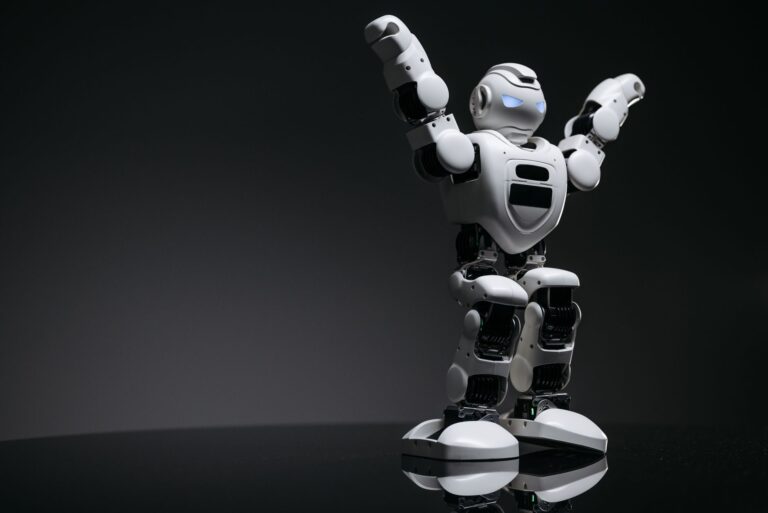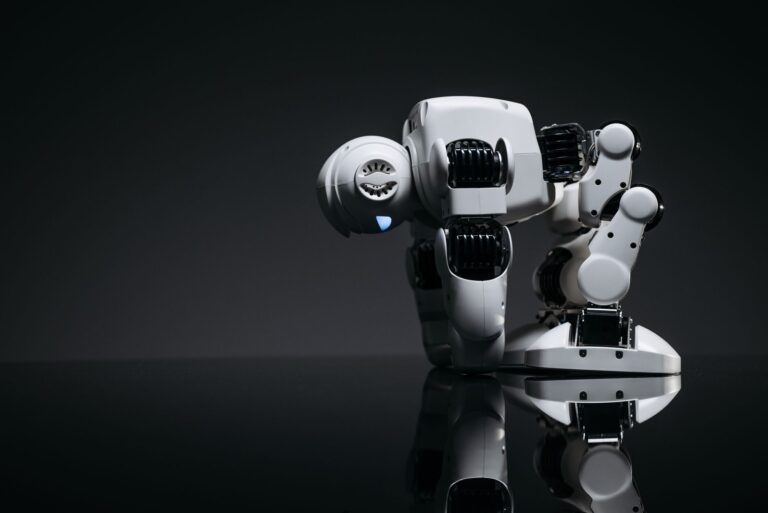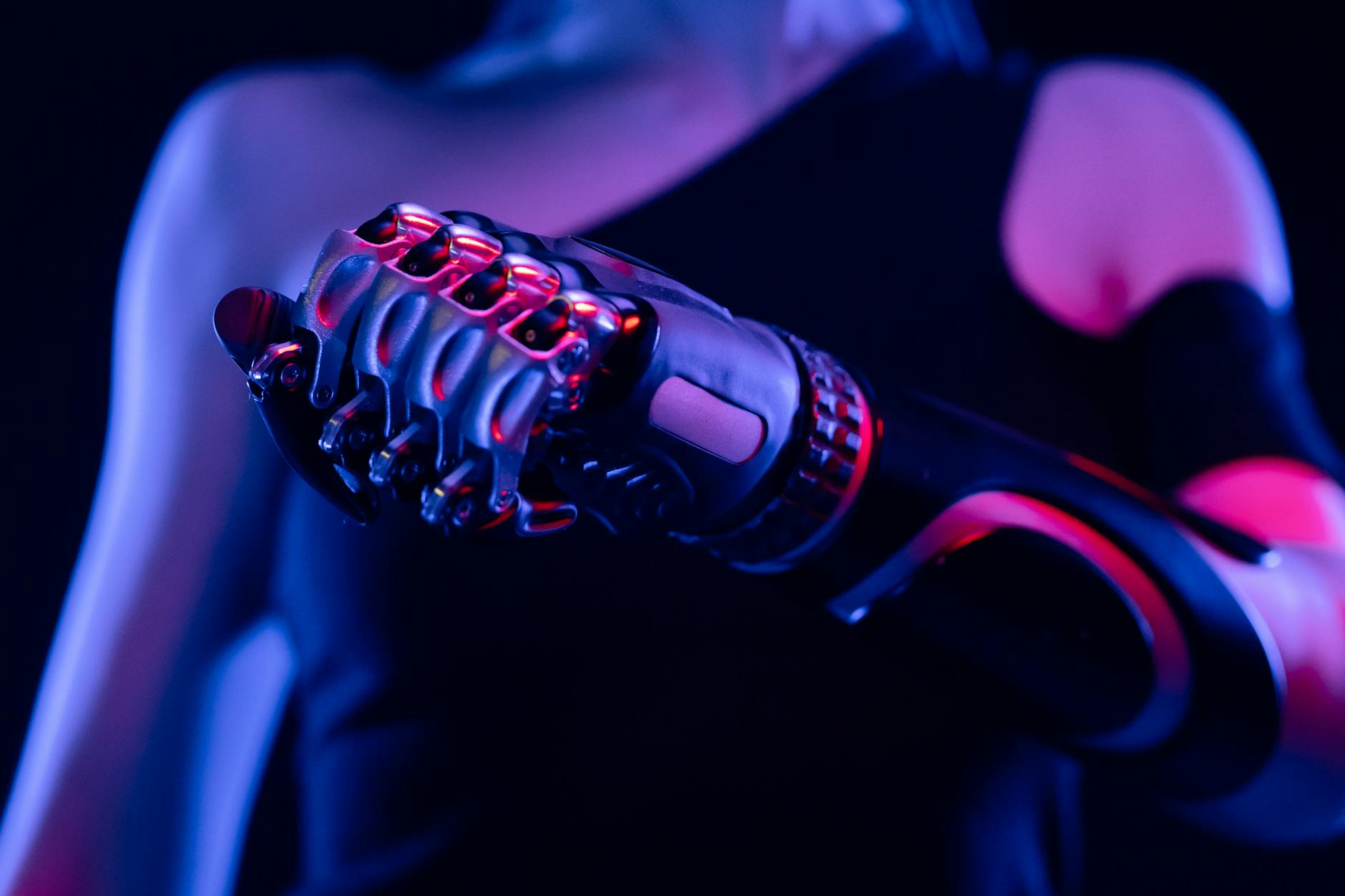

The next dominant force in robotics won’t emerge from incremental improvements to existing robots—it will come from companies that build on mission-critical technology infrastructure. The closest parallel is NVIDIA’s rise in AI: the company succeeded not by creating the algorithms themselves, but by building the foundation that made advanced AI possible. Today, that same pattern is repeating in robotics, where companies like WIRobotics are leveraging proven, mission-critical technology stacks to accelerate humanoid robotics development. WIRobotics’ recent $68 million Series B funding round, announced in May 2026, signals this shift.
The company is developing ALLEX, a humanoid robotics platform built on partnerships with NVIDIA’s physical AI technology and Amazon Web Services infrastructure—not starting from scratch, but standing on proven mission-critical systems. The robotics market has reached $16.7 billion in global industrial robot installations, yet most competitors are still building isolated systems. The companies that will dominate the next decade are those that recognize mission-critical technology—proven, hardened systems designed for reliability in high-stakes environments—as the foundation for robotics breakthroughs. This isn’t about creating new robotics concepts. It’s about understanding that mission-critical infrastructure, whether that’s cloud computing, AI accelerators, or autonomous driving platforms, is the prerequisite for scaled robotics adoption.
Table of Contents
- What Makes Mission-Critical Technology the Foundation for Robotics Dominance
- The Mission-Critical Tech Stack Behind the Next Wave of Robotics
- Surgical Robotics and Mission-Critical Healthcare Technology as a Case Study
- Why NVIDIA’s Physical AI Partnership is the Kodak Moment for Competitors
- The Market Size Reality and Why Mission-Critical Infrastructure Matters More Than Hype
- The Role of Cloud Infrastructure in Scaling Robotics Deployment
- What Comes Next for Mission-Critical Robotics
- Conclusion
- Frequently Asked Questions
What Makes Mission-Critical Technology the Foundation for Robotics Dominance
Mission-critical systems are designed to operate with extreme reliability in environments where failure is not an option. In healthcare, finance, and transportation, these systems have been hardened over decades. When robotics companies build on top of mission-critical technology rather than reinventing it, they inherit that reliability while accelerating their own development. Kodiak AI demonstrates this principle clearly: instead of developing autonomous driving systems from scratch, the company scaled its platform using NVIDIA’s Drive Hyperion system, which relies on the Blackwell architecture GPUs—technology already proven in data center and industrial applications.
This allowed Kodiak to focus on the robotics layer—autonomous trucking—rather than diverting resources to build foundational computing infrastructure. The advantage is not just speed, but credibility. Mission-critical systems come with decades of operational telemetry, failure analysis, and hardening against edge cases. A robotics company that builds on NVIDIA’s established AI infrastructure or AWS’s proven cloud reliability inherits both the performance and the institutional knowledge about failure modes. This reduces the time to market for new robotics applications and, more importantly, reduces the risk profile for enterprises considering adoption.
The Mission-Critical Tech Stack Behind the Next Wave of Robotics
The robotics companies gaining traction in 2026 are those that assemble proven components into new configurations rather than building vertically integrated systems. WIRobotics’ ALLEX platform, for example, is built on NVIDIA’s physical AI with AWS partnerships—a combination of generative AI capabilities, GPU acceleration, and cloud scalability. this is different from the robotics startups of five years ago that tried to develop their own AI models, their own accelerator chips, and their own cloud infrastructure. The lesson learned was expensive: those companies either ran out of capital or built inferior systems compared to companies that specialized.
A critical limitation to understand: not all mission-critical technology applies to all robotics use cases. Surgical robotics platforms used by companies like Intuitive Surgical, Medtronic, and Stryker have built mission-critical requirements around data integrity, real-time responsiveness, and biocompatibility—very different from the mission-critical requirements of autonomous trucking or warehouse automation. WIRobotics had to choose which mission-critical technologies would be relevant to humanoid robotics and then build partnerships around them. The wrong choice could mean building on technology stacks that don’t scale to their specific application.
Surgical Robotics and Mission-Critical Healthcare Technology as a Case Study
The surgical robotics market offers a clear example of how mission-critical technology drives robotics adoption. Companies like Intuitive Surgical (which pioneered robotic surgery), Medtronic, and Stryker have succeeded by building on mission-critical healthcare infrastructure: FDA-grade reliability, integration with hospital information systems, real-time data capture for surgical outcomes, and cybersecurity protocols that meet healthcare regulations. These aren’t luxuries—they’re the foundation upon which hospitals will adopt robotics.
A surgical robot that crashes during a procedure isn’t just a liability; it’s a malpractice lawsuit waiting to happen. These companies have demonstrated that robotics adoption accelerates when the technology is built on proven mission-critical systems rather than experimental platforms. The investment in surgical robotics has validated a principle: enterprises will pay premium prices for robotics that can be certified, audited, and integrated into existing mission-critical workflows. This same principle is now extending beyond healthcare into autonomous logistics (Kodiak AI), warehouse automation, and humanoid robotics.

Why NVIDIA’s Physical AI Partnership is the Kodak Moment for Competitors
NVIDIA’s dominance in AI accelerators came not from inventing deep learning, but from being the infrastructure layer that deep learning required. The company’s Blackwell architecture GPUs, now powering both Kodiak AI’s autonomous driving platform and WIRobotics’ physical AI initiatives, represent the same pattern: NVIDIA isn’t building the robots, but it’s building the silicon and software stack that makes advanced robotics possible at scale.
The tradeoff is real: robotics companies that choose to build on NVIDIA’s stack gain speed and credibility, but they also create dependency. If NVIDIA’s physical AI architecture doesn’t evolve as fast as a robotics company needs, or if NVIDIA’s roadmap doesn’t align with that company’s requirements, the robotics company has a constraint it didn’t have if it had invested in developing its own AI infrastructure. WIRobotics and Kodiak AI have made a calculated bet that NVIDIA’s investment in robotics will outpace any individual company’s ability to compete in specialized AI infrastructure—and so far, that bet appears sound.
The Market Size Reality and Why Mission-Critical Infrastructure Matters More Than Hype
The global industrial robotics market at $16.7 billion annually might sound large, but it’s spread across thousands of use cases and applications. For a robotics company to scale from $68 million in funding to a $10 billion enterprise value, it needs to serve markets where reliability is non-negotiable. Mission-critical applications—autonomous trucking, surgical robotics, critical infrastructure automation—are those markets because enterprises will pay for systems they can trust.
A warning: the robotics companies that fail in the next five years will likely be those that chased consumer or semi-critical applications where “good enough” was acceptable. The companies that succeed, like WIRobotics and Kodiak AI, are targeting mission-critical applications where a robotics system has to work reliably in high-stakes environments. This means the next Nvidia in robotics will emerge from unsexy, B2B applications—autonomous trucking fleets, surgical suites, factory floors—rather than from consumer-facing robotics that capture headlines.
The Role of Cloud Infrastructure in Scaling Robotics Deployment
AWS’s partnership with WIRobotics in their $68 million Series B isn’t just about cloud computing—it’s about making robotics deployable at scale. A humanoid robot in a warehouse generates enormous amounts of data: sensor readings, vision data, motion planning computations, and outcome feedback. Processing that data in real-time requires cloud infrastructure with ultra-low latency and extreme reliability.
AWS’s proven track record in mission-critical infrastructure (from banking to healthcare to government) made it a natural partner for a robotics platform that needs to scale. This also explains why robotics funding rounds in 2026 increasingly involve cloud providers as partners or investors. The infrastructure layer has become as important to robotics deployment as the physical hardware.
What Comes Next for Mission-Critical Robotics
The robotics market in 2026 is at an inflection point similar to where AI was five years ago. The foundation layers—GPU acceleration, cloud infrastructure, physical AI models—are commoditizing. The next wave of value creation will go to companies that assemble these components into specialized, mission-critical robotics applications.
WIRobotics, Kodiak AI, and the surgical robotics companies have shown the template: identify a mission-critical application, build on proven infrastructure partners, and execute relentlessly. The lesson for robotics investors and entrepreneurs is clear: betting on a robotics company that’s building its own AI infrastructure and its own cloud platform, when proven alternatives exist, is no longer a differentiation strategy—it’s a capital inefficiency. The next Nvidia in robotics will be built by standing on the shoulders of proven mission-critical technology.
Conclusion
The next dominant company in robotics won’t be the one that invents new robotics concepts or creates proprietary hardware. It will be the company that understands mission-critical technology as a foundation and builds robotics applications on top of it. WIRobotics’ $68 million Series B, powered by partnerships with NVIDIA and AWS, represents this evolution.
The company is competing on application-layer innovation while leveraging proven, hardened infrastructure that has already been validated in mission-critical environments. For enterprises considering robotics adoption—whether in autonomous logistics, healthcare, or manufacturing—the companies worth backing are those that choose reliability and integration over reinvention. The companies disappearing quietly in the next three to five years will be the ones trying to build robotics systems without mission-critical infrastructure as a foundation. The path to the next Nvidia in robotics runs through mission-critical technology, not around it.
Frequently Asked Questions
What does “mission-critical technology” mean in the context of robotics?
Mission-critical technology refers to systems designed for extreme reliability in environments where failure has serious consequences. In robotics, this includes proven GPU acceleration (NVIDIA Blackwell), cloud infrastructure (AWS), and AI systems that have been hardened and validated at scale. These technologies are proven in banking, healthcare, and logistics—industries where downtime costs millions per hour.
Why did WIRobotics choose NVIDIA and AWS instead of building proprietary systems?
Building proprietary AI acceleration and cloud infrastructure would require years of development and billions in capital. By leveraging NVIDIA’s physical AI and AWS’s proven cloud reliability, WIRobotics can focus resources on humanoid robotics application development—the area where it can create differentiation. This is the same strategy that allowed Kodiak AI to scale autonomous trucking rapidly.
Could a robotics company succeed without mission-critical technology partnerships?
Theoretically yes, but the capital and timeline requirements become prohibitive. Companies attempting to build robotics systems without proven infrastructure partnerships would need to solve GPU acceleration, cloud scalability, and AI model development simultaneously—tasks that took NVIDIA and AWS decades and billions to perfect. Most robotics startups lack the capital for this approach.
Which robotics companies are most likely to be “the next Nvidia”?
Based on current funding and market positioning, companies like WIRobotics (humanoid robotics on NVIDIA/AWS), Kodiak AI (autonomous trucking on NVIDIA), and possibly the next generation of surgical robotics integrators are candidates. All share the pattern of building specialized applications on mission-critical infrastructure rather than trying to build that infrastructure themselves.
How does the $16.7 billion industrial robotics market size relate to robotics funding rounds?
A $68 million Series B represents less than 0.5% of the annual market value, but it signals investor confidence in a specific application or approach. The market size is large enough to support multiple billion-dollar companies if they capture specific segments (autonomous trucking, surgical robotics, warehouse automation), which is why companies are specializing rather than trying to serve the entire market.