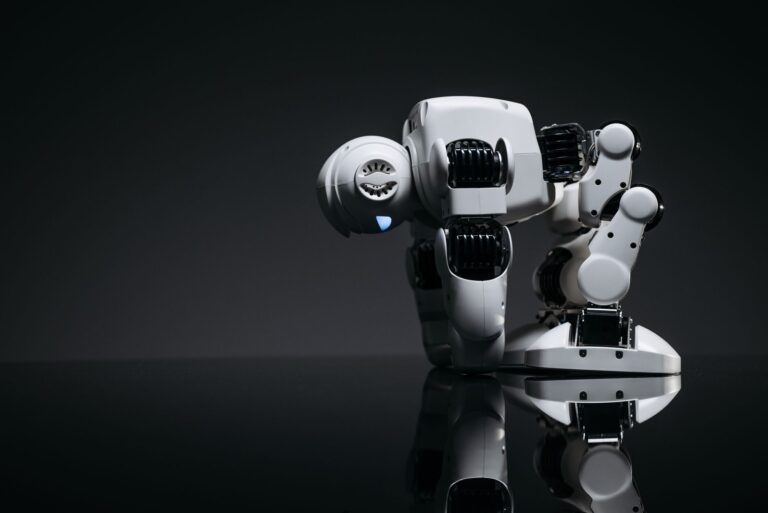

Yes, a robotics analytics company could become the next Nvidia—not because it will build the robots themselves, but because it will control the data infrastructure that enables all robots to improve. Just as Nvidia became dominant by providing the computing layer that powers AI development across industries, robotics analytics companies are positioned to become foundational infrastructure providers by solving the data problem that currently constrains robot development at scale. Roboto AI and Config Intelligence are already demonstrating this pattern, building platforms that manage, augment, and optimize the training data that robot developers desperately need to move from prototypes to reliable production systems.
The insight is straightforward: robot development is fundamentally a data problem. A robot learns to pick objects, navigate spaces, or perform bimanual tasks through training on massive datasets of real-world interaction data—data that is currently fragmented, expensive to generate, and difficult to standardize across different manufacturers and use cases. The company that becomes the trusted intermediary for managing, analyzing, and distributing this data—the way Nvidia manages compute for AI—will capture enormous value without needing to manufacture a single robot. As NVIDIA itself has recognized with the announcement of its Physical AI Data Factory Blueprint, the data layer is now the critical chokepoint in scaling physical AI systems.
Table of Contents
- Why Data Analytics Is the New Semiconductor Layer in Robotics
- The Physical AI Data Factory Blueprint and Why Infrastructure Matters
- Roboto AI and Config Intelligence: The Proof of Concept
- The Financial Opportunity and NVIDIA’s Physical AI Bet
- The Data Moat vs. The Hardware Moat—Why Robotics Analytics Could Dominate
- How Robotics Analytics Differs from Robotics Hardware
- The Future of Physical AI and the Role of Data Infrastructure
- Conclusion
- Frequently Asked Questions
Why Data Analytics Is the New Semiconductor Layer in Robotics
In the history of computing, dominance has consistently gone to companies that controlled essential infrastructure layers—not necessarily the end products. Intel controlled the processor layer, nvidia captured the GPU layer, and both extracted disproportionate value across entire industries. The robotics industry is experiencing a similar inflection point, but the constraint is not compute or chips; it is data. A robot learning to perform a complex manipulation task requires thousands or millions of labeled, annotated examples of that task in varied real-world conditions. Generating this data is expensive, time-consuming, and often proprietary to specific manufacturers or research labs, meaning knowledge cannot flow efficiently across the industry. Roboto AI recognized this gap and built a platform specifically to become the data intermediary for robot developers. Rather than selling robots, Roboto AI manages and analyzes robotics data, helping teams generate, label, and curate the datasets that power their training pipelines.
Config Intelligence took a similar approach for a specific problem: general-purpose bimanual manipulation, where robots must coordinate two arms in real-time. The company built data infrastructure to make this capability reliable and accessible to many manufacturers, not just those with unlimited R&D budgets. Both companies are capturing value at the layer below the robot, much like how semiconductor makers captured value below PC manufacturers. The comparison to semiconductors is apt but incomplete. Nvidia’s moat came partly from controlling manufacturing and partly from controlling the software ecosystem (CUDA). Robotics analytics companies are building something potentially more powerful: a data moat. Data networks benefit from increasing returns—the more customers who use Roboto AI’s platform, the more data flows through it, the better its tools become at predicting, augmenting, and optimizing training. This creates a natural monopoly-like dynamic, where the winning analytics platform becomes indispensable to the entire ecosystem, just as Nvidia is now indispensable to AI development.

The Physical AI Data Factory Blueprint and Why Infrastructure Matters
NVIDIA’s announcement of the Physical AI Data Factory Blueprint in 2026 was not a minor technical release—it was an admission that data infrastructure is now the critical bottleneck in scaling physical AI. The blueprint provides an open reference architecture for how to “generate, augment, and evaluate” training data across robotics, autonomous vehicles, and vision AI systems. this is essentially NVIDIA saying: the hardware (GPUs) and software (CUDA) we provide are necessary but not sufficient; you also need a systematic approach to managing and optimizing data pipelines. This matters because current robotics development is inefficient. A team working on bimanual manipulation might spend months collecting and labeling real-world data, only to discover that their dataset has blind spots in specific scenarios. Another team, working on a similar problem at a different company, independently collects similar data. The knowledge does not transfer.
Each organization reinvents the data wheel. Analytics companies like Roboto AI and Config Intelligence are explicitly building tools to prevent this waste—platforms that let teams share best practices around data generation, apply transfer learning from other teams’ robots, and avoid duplicating expensive data collection efforts. The risk here is that data quality and curation are extremely difficult to get right. A robotics dataset that works perfectly for training in simulation might fail dramatically when applied to real robots because of distribution shift—the gap between simulated data and real-world conditions. Config Intelligence’s focus on real-world bimanual data is a direct response to this problem, but it also reveals the limitation: collecting real data at scale is expensive. The company must solve not just the technical problem of data infrastructure, but the economic problem of actually collecting and curating high-quality data faster and cheaper than customers could do it themselves. This is where network effects become critical—as more robot manufacturers use the platform, the cost of adding new data types and scenarios decreases, creating a defensible moat.
Roboto AI and Config Intelligence: The Proof of Concept
Roboto AI’s platform works by connecting robot development teams to a shared data infrastructure. Instead of each team building and maintaining its own data pipelines, they contribute to and draw from a common reservoir of robotics data. The platform handles the unglamorous but essential work: standardizing data formats across different robots and sensors, automating the labeling process using semi-supervised learning, detecting and correcting data quality issues, and enabling teams to search for specific scenarios or conditions in the dataset. This is not the kind of work that makes headlines, but it is exactly the kind of work that creates enormous value by enabling faster development cycles and better-trained robots. Config Intelligence has taken this approach and specialized it for a specific problem: building data infrastructure that makes general-purpose bimanual manipulation reliable.
Two-armed robots are far harder to control than single-arm robots because of the coordination problem—the two arms must work in concert, compensating for each other’s movements and handling objects that require two hands. The data requirements for this task are more demanding than for single-arm work, and the real-world scenarios are more diverse. Config Intelligence’s platform abstracts away these complexities, allowing robotics teams to focus on training better models rather than wrestling with data infrastructure. Both companies are part of the AWS MassRobotics fellowship, which included nine companies in its 2026 cohort focused on data-driven robotics development. This is significant because it signals that the venture capital and cloud infrastructure providers have recognized the same pattern: data infrastructure companies are the next layer of essential technology for robotics. The companies chosen—Burro, Config Intelligence, Deltia, Haply Robotics, Luminous Robotics, Roboto AI, Telexistence, Terra Robotics, and WiRobotics—represent a mix of hardware startups and pure-play infrastructure companies, but the inclusion of Roboto AI and Config Intelligence underscores the importance of the analytics and data layer.

The Financial Opportunity and NVIDIA’s Physical AI Bet
NVIDIA reported $6 billion in Physical AI revenue for Fiscal 2026, which represents the hardware sold into robotics, autonomous vehicles, and related applications. That is a substantial number, but it is just one company’s hardware revenue for one year. The total addressable market for robotics is estimated at over $100 billion by 2030, with data infrastructure companies capturing a portion of the value generated by the entire ecosystem. This is where the “next Nvidia” comparison becomes concrete: if a data analytics company can capture even 5-10% of the value created in robotics development, the company would be worth hundreds of billions of dollars. NVIDIA itself has committed over $40 billion to AI equity investments in 2026, with the single largest bet being a $30 billion investment in OpenAI. This capital deployment reveals NVIDIA’s strategy: rather than developing everything internally, Nvidia is becoming an investor in the companies that will build the ecosystems around its hardware.
This creates an interesting dynamic for robotics analytics companies. They can either compete with NVIDIA by building proprietary closed systems, or they can become the de facto data infrastructure layer that sits on top of NVIDIA’s Physical AI architecture. Roboto AI and Config Intelligence are currently pursuing the latter strategy, positioning themselves as essential partners rather than competitors. The market opportunity is clear, but so is the challenge: these companies must achieve profitability and network effects before NVIDIA or another large tech company simply integrates their functionality into their own platform. This is the classic innovator’s dilemma for infrastructure companies. NVIDIA could, in theory, absorb Roboto AI or Config Intelligence’s capabilities and offer them as a free or subsidized feature bundled with its robotics development tools. The way to defend against this is to build such strong network effects—such a valuable community of users and data contributors—that integration becomes more costly than acquisition.
The Data Moat vs. The Hardware Moat—Why Robotics Analytics Could Dominate
There is an interesting paradox in the robotics industry: hardware companies like Boston Dynamics and Tesla can manufacture impressive robots, but they cannot easily leverage their hardware expertise into adjacent markets. A robot that excels at humanoid tasks does not automatically become good at industrial manipulation, and a self-driving car does not automatically enable agricultural robots. The diversity of physical tasks is simply too broad. By contrast, data analytics infrastructure applies across all these domains. A platform that helps standardize and share manipulation data benefits manufacturers in automotive, manufacturing, research, and service robotics equally. This is the core reason why a robotics analytics company could become more valuable than a hardware robotics company. Hardware excellence is domain-specific; data infrastructure excellence is domain-agnostic.
Roboto AI or Config Intelligence could serve Tesla, Boston Dynamics, ABB, KUKA, and dozens of smaller robotics startups simultaneously, improving all of them at once. The hardware companies, by contrast, compete directly with each other and must view their data as proprietary competitive advantages rather than as infrastructure to be shared. However, there is a major limitation to this advantage: hardware companies have strong incentives to build proprietary data systems. Tesla, for example, has invested billions in collecting real-world autonomous driving data, and it views that data as a core competitive advantage. It has little incentive to share its data with competitors through a neutral analytics platform. This means that in practice, the total data flowing through public analytics platforms like Roboto AI might be a fraction of the total data being generated in the industry. The winners might be constrained by the closed nature of major players, limiting the network effects that would otherwise make them dominant.

How Robotics Analytics Differs from Robotics Hardware
The fundamental difference is capital efficiency. A robotics hardware company must invest hundreds of millions of dollars in manufacturing, supply chain, and distribution to bring a robot to market. If the robot fails, that investment is largely sunk. A robotics analytics company, by contrast, invests in software and platform development, which scales efficiently across multiple customers. Roboto AI does not need to manufacture anything; it simply needs to maintain and improve its data infrastructure and tools.
This capital-light model is much closer to software companies like Nvidia’s CUDA platform or AWS than to traditional robotics manufacturers. This difference has profound implications for valuation and growth. A hardware company might achieve $1 billion in annual revenue and be worth $10 billion, because of capital requirements and hardware margins. An analytics company achieving $1 billion in revenue might be worth $50 billion or more, because of software margins and the capital-light scaling model. This is why the “next Nvidia” comparison resonates: Nvidia is not valuable because it invests the most money into R&D, but because it provides a platform that others build on. Robotics analytics companies are following the same playbook.
The Future of Physical AI and the Role of Data Infrastructure
As robotics capabilities improve in 2026 and beyond, the industry will increasingly face the same transition that AI faced a decade ago. In the early days of deep learning, each research team trained its own models from scratch, often on small, hand-curated datasets. As the field matured, shared datasets like ImageNet and training pipelines like PyTorch became critical infrastructure. The teams that controlled these infrastructure layers—Meta and Google—became increasingly dominant.
Robotics is on the same trajectory, and companies like Roboto AI and Config Intelligence are the equivalents of ImageNet and PyTorch in the physical AI context. Looking forward, the market will likely consolidate around a small number of dominant data infrastructure providers, much as the cloud market consolidated around AWS, Azure, and Google Cloud. The winners will be the platforms that achieve critical mass first, create strong network effects, and integrate deeply into the development workflows of major robotics manufacturers. NVIDIA’s Physical AI Data Factory Blueprint is a framework for how this integration might happen, but it is not predetermined that NVIDIA will own the data layer itself. An independent analytics company with better tools, stronger communities, and more flexible partnerships could capture that layer—and in doing so, become more valuable than any single robotics hardware manufacturer.
Conclusion
The thesis is compelling: the next Nvidia in robotics could indeed be a robotics analytics company, not because data is more important than hardware, but because data infrastructure companies can serve the entire industry at once while maintaining capital efficiency and extracting disproportionate value. Roboto AI, Config Intelligence, and other data-focused startups are in the early stages of building platforms that will become as essential to robotics development as Nvidia’s CUDA is to AI development. The $6 billion in physical AI revenue that NVIDIA reported in 2026, and the $40 billion in AI investments it deployed globally, suggest that the robotics industry is reaching an inflection point where infrastructure and data will become the bottlenecks, not hardware or compute.
The path to dominance for robotics analytics companies is clear but narrow. They must achieve network effects before being out-competed or acquired by larger players, they must solve the real-world data collection problem at scale, and they must remain neutral platforms rather than becoming capture by any single manufacturer. If they succeed, they will have built the essential infrastructure layer of the robotics industry—the layer that captures disproportionate value and enables everyone else to innovate faster. That is not just the next Nvidia; that is the foundation that the entire robotics industry will be built on.
Frequently Asked Questions
Why would a robot manufacturer use Roboto AI instead of collecting its own proprietary data?
Proprietary data collection is expensive and slow. By using a shared platform, manufacturers access datasets collected by the entire community, enabling faster training and reducing the time to market. The tradeoff is sharing some insights, but the speed advantage typically outweighs the competitive concern for non-core robot functions.
Could NVIDIA simply build its own data analytics platform and eliminate the need for startups like Roboto AI?
Theoretically yes, but in practice platform dominance comes from ecosystem participation and community trust. Teams are more likely to contribute data to a neutral platform (like Roboto AI) than to a hardware vendor’s proprietary system. Additionally, independent startups can move faster and specialize more deeply than large corporations can.
How do robotics analytics companies handle proprietary data concerns? Would a competitor’s robot manufacturer share data through a shared platform?
Most platforms use privacy-preserving techniques and allow manufacturers to keep proprietary data private while still benefiting from insights. Manufacturers typically share data for non-differentiating capabilities—object handling, navigation—while keeping proprietary data for unique skills or competitive advantages.
What happens if the robotics market contracts or growth slows?
Analytics platforms would face pressure, but the fundamental value—making robot development faster and cheaper—becomes even more important during downturns. Companies facing slower growth actually rely more heavily on efficient tools to reduce costs, which could benefit analytics providers.
Is there a risk that open-source alternatives could emerge to compete with Roboto AI and Config Intelligence?
Yes. Open-source robotics tooling like ROS has competed with proprietary solutions for years. However, open-source tools typically lack the curation, support, and integrated services that professional platforms offer. The opportunity exists, but winning requires managing both open-source participation and commercial differentiation.
How quickly can a robotics analytics company achieve the scale necessary to create network effects and become indispensable?
The AWS MassRobotics fellowship and NVIDIA’s platform announcements suggest that critical mass could be achieved within 2-4 years if the companies move quickly and secure early adopters at major robotics manufacturers. However, overestimating adoption speed is a common risk in infrastructure startups.