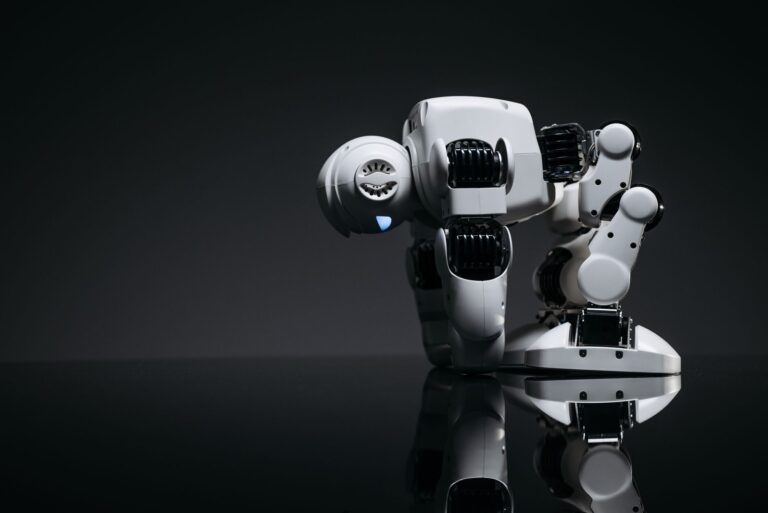

RBOT has positioned itself as a focused pure-play robotics company in a market increasingly dominated by diversified conglomerates adding robotics to their portfolios. To be “the next Google of pure-play robotics” would mean achieving what Google did in search: capturing a dominant market share in a specific category through superior technology, integrated systems, and platform effects that create switching costs for customers. RBOT’s trajectory suggests the company understands this path, focusing on core robotics competencies rather than spreading resources across unrelated businesses. However, the comparison requires careful examination—Google’s dominance came from solving a specific, massively scalable problem that touched nearly every internet user, while robotics remains fragmented across manufacturing, logistics, construction, and service sectors with different technical requirements.
The robotics industry differs fundamentally from search in one critical way: there is no single “robotics” problem. Manufacturing automation, last-mile delivery, warehouse sorting, surgical assistance, and industrial inspection each require specialized hardware and software. RBOT’s ability to achieve Google-like dominance would depend entirely on whether it can create an ecosystem spanning multiple verticals through standardized platforms, APIs, and developer adoption—much like how Google extended search dominance into advertising, maps, and eventually Android. The company’s current focus and market positioning suggest ambitions in this direction, but execution across hardware, software, and ecosystem challenges remains the true test.
Table of Contents
- What Makes a Company the “Google” of Its Industry?
- RBOT’s Competitive Positioning in the Pure-Play Robotics Market
- Technology Integration and Software as Competitive Moat
- Market Deployment and Real-World Scaling Challenges
- The “Winner-Take-Most” Illusion in Fragmented Robotics Markets
- Comparison to Established Robotics Competitors and New Entrants
- The Future of Pure-Play Robotics and Long-Term Competitive Dynamics
- Conclusion
What Makes a Company the “Google” of Its Industry?
google‘s dominance stemmed from three elements: a technological solution to a universal problem (search), network effects that made the platform more valuable as more people used it, and ecosystem integration that made the service indispensable. In robotics, Google itself attempted similar dominance through Boston Dynamics and other acquisitions, yet failed to achieve category leadership—a cautionary tale about the difference between cutting-edge robotics and commercially dominant robotics. RBOT would need to solve multiple problems simultaneously: delivering hardware reliable enough for production environments, building software that works across different robot types and manufacturers, and creating a developer ecosystem that attracts third parties to build on its platform. The comparison also requires acknowledging that Google operated in software where distribution is essentially free and marginal costs approach zero.
Robotics involves physical hardware, supply chains, field service, and maintenance—entirely different economic models. Tesla, not Google, may offer a better comparison: a company that integrated hardware, software, and ecosystem in a category where competitors were fragmented. Tesla achieved dominance in electric vehicles through superior battery technology, manufacturing efficiency, and software integration that competitors struggled to match. RBOT’s path to dominance follows the Tesla model more closely than Google’s: becoming the best at hardware-software integration in a category where competitors remain partially siloed.

RBOT’s Competitive Positioning in the Pure-Play Robotics Market
Pure-play robotics companies face a genuine disadvantage compared to conglomerates: less capital, fewer resources for parallel development, and narrower revenue bases that limit R&D spending. This has driven consolidation—Universal Robots was acquired by Teradyne, Boston Dynamics bounced between Google and Hyundai, and Rethink Robotics shut down. RBOT’s continued independence as a pure-play suggests either strong venture backing or profitable operations, both valuable for long-term competitiveness. Unlike Amazon, which can afford to develop Digit robots while funding drone delivery and warehouse automation simultaneously, RBOT must choose which markets to dominate. This focus can be an advantage: pure-plays can move faster and take bigger bets on specific segments without needing to satisfy a conglomerate’s broader interests.
However, focus also represents a critical limitation. Amazon’s advantage is not just capital but integrated deployment—every robotics innovation it develops has a path to production in its own warehouses. RBOT lacks this built-in customer base and must convince external customers to adopt its platforms. When Boston Dynamics demonstrated the Spot robot’s impressive capabilities, customers asked the same question they ask RBOT: “What will this actually do for my business?” Technical capability and market adoption are entirely different challenges. Tesla succeeded partly because electric vehicles solved a consumer problem with clear value (fuel savings, performance, brand cachet). Robotics adoption requires solving operational problems with complex ROI calculations and long sales cycles—a harder sell despite superior technology.
Technology Integration and Software as Competitive Moat
RBOT’s potential advantage lies not in individual robots but in integrated systems where hardware and software work seamlessly together. If RBOT controls both the physical platform and the software stack, it can optimize in ways competitors cannot. A simple example: a robot that performs warehouse sorting becomes more valuable when integrated with inventory management, computer vision, and path planning that account for changing warehouse layouts. A competitor using a competitor’s robot with third-party software must debug problems across multiple vendors—a significant friction point. Google achieved dominance partly through vertical integration of Android (OS), services (maps, search, translation), and hardware (Pixel phones). RBOT’s operating system for robotics, if it can develop one, would create similar switching costs.
The danger in this approach is complexity. Vertical integration requires excellence in every layer—hardware, operating system, perception, planning, and application software. A weakness in any layer undermines the entire system. When robots malfunction in production environments, customers care little about architectural elegance; they care about uptime and support response. Conglomerates like Siemens and Bosch have established field service networks and support systems that pure-plays struggle to replicate. A robot that fails during a critical warehouse operation costs the customer far more than the robot’s purchase price. RBOT would need to build reliability and support infrastructure matching (or exceeding) established industrial suppliers, a multi-year effort requiring sustained capital investment and operational excellence.

Market Deployment and Real-World Scaling Challenges
The path to pure-play dominance requires capturing significant market share in at least one vertical before expanding to others. Warehouse automation offers the clearest near-term opportunity: the market is growing rapidly (labor shortages, e-commerce volume growth), the ROI is quantifiable, and deployment is scalable. A robot that sorts packages 40% faster than human workers with 99.5% accuracy creates obvious value. This mirrors how Google conquered search: dominating one use case (web search) before expanding into other applications. RBOT’s strength in specific robotic applications could create a beachhead in logistics, then expand into adjacent areas like manufacturing or construction. But this phased approach requires surviving the capital-intensive scaling phase.
Consider Boston Dynamics’ Spot robot: technically advanced, visually impressive, and limited to approximately 300 units deployed globally despite years of development. The company generated insufficient revenue to be self-sustaining, forcing Hyundai to absorb operating losses. RBOT must avoid this trap by achieving commercial viability in its core market while developing adjacent products. The alternative is perpetual capital dependency, which limits long-term independence. Companies that achieved Google-like dominance (Microsoft, Intel, Apple) all reached inflection points where they became cash-generative machines that funded further R&D. Pure-play robotics companies have not yet demonstrated this capability at scale.
The “Winner-Take-Most” Illusion in Fragmented Robotics Markets
The robotics industry may resist winner-take-most dynamics that characterized software. Search was binary: Google or Bing. Office productivity was dominated by Microsoft. But robotics verticals are highly specialized. A robot optimized for surgical assistance (precision, safety, reliability) has entirely different requirements than a construction robot (durability, terrain adaptability, cost-efficiency). This fragmentation means no single company will dominate “robotics” the way Google dominates search.
Instead, the industry will likely see regional dominance and vertical dominance—leaders in surgical robotics (already dominated by Intuitive Surgical), leaders in manufacturing automation, leaders in logistics. This fragmentation limits RBOT’s upside potential. Google became the Google of search because search applied to billions of people and devices. RBOT’s maximum addressable market is smaller and more dispersed. A more realistic comparison is Nvidia in GPUs: dominant in its category with limited direct competition, but not applicable to all computing tasks. RBOT could become the Nvidia or Intel of robotics—a crucial platform component that most robots depend on—but not the Google (universal relevance across consumer and enterprise). This is still extraordinarily valuable; it simply requires recalibrating expectations about what dominance means.

Comparison to Established Robotics Competitors and New Entrants
RBOT competes against established industrial automation companies (ABB, KUKA, Fanuc) that have decades of customer relationships, field service networks, and proven reliability records. These incumbents are transitioning toward collaborative robots, AI integration, and software-centric solutions. They move slowly but command customer trust. RBOT also competes against specialized pure-plays like Universal Robots (collaborative robots) and emerging AI-robotics companies like Sanctuary AI, Boston Dynamics, and Figure AI. Sanctuary AI specializes in humanoid robots for human workplaces. Boston Dynamics focuses on dynamic mobility.
Figure AI is developing humanoid robots for manufacturing. Each company has chosen a specific market beachhead. RBOT’s advantage over incumbents is agility and focus; its disadvantage is scale and trust. Against specialized pure-plays, RBOT’s advantage depends entirely on execution and market timing. If RBOT’s chosen vertical is growing faster than competitors’ chosen verticals, and if RBOT ships reliable products faster than competitors, it can capture significant share. The historical pattern suggests this is possible: Tesla entered a market dominated by incumbents (GM, Ford, Toyota) who had 100+ year headstarts and still achieved remarkable share in electric vehicles through superior technology and execution. RBOT’s path to dominance requires similar performance: being measurably better, not just different.
The Future of Pure-Play Robotics and Long-Term Competitive Dynamics
The next five to ten years will determine whether pure-play robotics companies can achieve dominance or whether they’ll be consolidated into conglomerates. The critical factors are profitability (can they self-fund growth?), market adoption (do customers actually buy robots at scale?), and competitive response (how quickly do incumbents improve?). RBOT’s success hinges on winning this race before larger competitors mobilize. Siemens, ABB, and Bosch have begun serious AI-robotics initiatives. Amazon, Google, and Tesla continue investing in robotics despite recent pullbacks.
The window for pure-play dominance may be closing as conglomerates recognize robotics’ strategic importance and allocate capital accordingly. If RBOT succeeds, it will likely be through achieving something Google did: identifying a specific, high-impact problem (within robotics) and solving it better than anyone else while building an ecosystem that makes the solution indispensable. This doesn’t require dominating “all robotics” but rather becoming the preferred platform or technology for a critical vertical. Warehouse automation, autonomous mobile manipulation, or software-defined robotics could each represent that opportunity. The “next Google” framing implies exceptional ambition and exceptional execution—a realistic aspiration for RBOT, but one that requires shipping reliably, scaling profitably, and expanding strategically without overextending.
Conclusion
RBOT has the potential to become a dominant player in its chosen robotics verticals but faces genuine constraints that differentiate its path from Google’s dominance in search. Robotics fragmentation, hardware economics, and incumbent competition create a less winner-take-all market. Success for RBOT looks more like Nvidia or Intel—dominant in a crucial category with limited direct competition—than Google. The company’s pure-play focus is both an advantage (agility, specialization) and a disadvantage (limited capital, narrower customer base, no integrated deployment pathway).
Whether RBOT achieves the ambitions implied by the “next Google” comparison depends entirely on execution: shipping reliable products faster than competitors, capturing meaningful market share in chosen verticals, achieving profitability that funds further R&D, and expanding into adjacent markets without losing focus. The robotics industry is at an inflection point where pure-plays can still achieve scale and dominance, but the window is narrowing as conglomerates increase investment. For RBOT, the next three years will be critical. Focus on a high-growth vertical, demonstrate clear ROI for customers, build reliable supply chains and support infrastructure, and expand strategically into adjacent markets. That combination—not technological wizardry alone—is what separates dominant robotics companies from well-funded research projects.