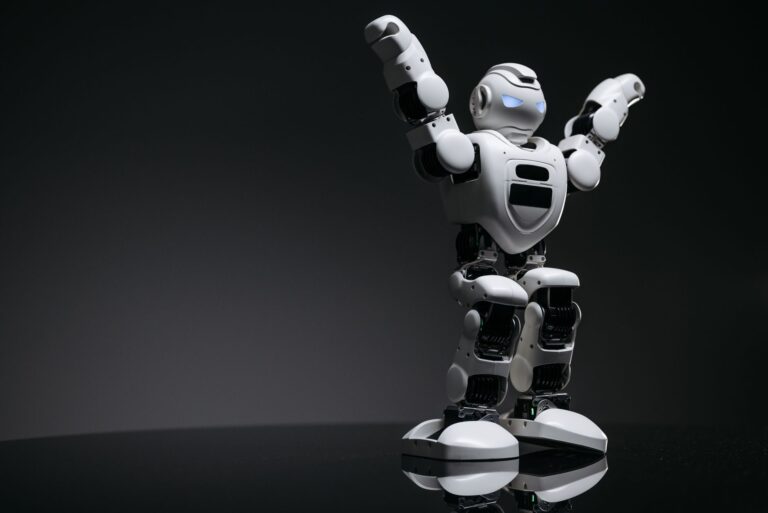

PATH has emerged as one of the most significant contenders in software robotics—a company that combines industrial-grade automation software with cross-platform accessibility in ways that challenge the traditional robotics hierarchy. Where Google achieved dominance by making search ubiquitous and its tools the default choice for billions, PATH is attempting something similar in robotics: building the foundational software layer that robots and automation systems naturally integrate with. Unlike traditional robotics companies that sell hardware first and software second, PATH has built from the opposite direction—software that works across different hardware platforms, reducing the friction that has historically fragmented the robotics industry.
The comparison goes deeper than market positioning. Google’s strength came from solving a core problem so well that adoption became inevitable. PATH is pursuing the same strategy in software robotics by focusing on orchestration, simulation, and task learning across heterogeneous systems. When a manufacturer needs to coordinate multiple robots from different vendors on the same production line, PATH’s platform provides the neutral ground where that integration happens, much like Google Search became the neutral interface for the web.
Table of Contents
- What Makes PATH’s Software-First Approach Different in Robotics?
- The Simulation and Digital Twin Capability—What Sets PATH Apart
- PATH’s Approach to Autonomous Learning and Task Adaptation
- Integration With Enterprise Systems—Where PATH Competes With Software Giants
- The Data Security and Operational Risk Questions
- Real-World Deployment Examples and Results
- The Competitive Landscape and PATH’s Path Forward
- Conclusion
- Frequently Asked Questions
What Makes PATH’s Software-First Approach Different in Robotics?
Traditional robotics companies built around specific hardware lines—a firm would design robots and then write the software to control them. PATH inverted this model by creating software that abstracts away hardware differences, allowing a single task framework to work whether robots come from ABB, FANUC, Yaskawa, or emerging cobotic manufacturers. This is similar to how operating systems abstracted away computer hardware differences in the 1980s, but applied to the robotics domain. A manufacturer testing different robot models no longer needs to rewrite control logic for each one; they write once in PATH’s framework and deploy across platforms. The practical implications are significant. A food processing facility installing a new production line can use PATH’s software to rapidly integrate robots from multiple vendors, shortening deployment time from months to weeks.
The company maintains a single codebase for tasks like pick-and-place, quality inspection, or packaging operations, then swaps hardware as business needs change or economics shift. This flexibility was nearly impossible before, which is why factories have historically been locked into single-vendor ecosystems once initial robotics deployment happened. However, this approach creates its own complications. PATH must maintain compatibility and performance across dozens of robot models with different communication protocols, processing speeds, and capability gaps. A feature that works flawlessly on a high-end industrial arm might behave unexpectedly on a lower-cost model with less precise positioning. This compatibility burden grows exponentially with each new hardware platform PATH attempts to support, which is why even with strong engineering, edge cases in specific hardware combinations will occasionally require workarounds rather than clean solutions.

The Simulation and Digital Twin Capability—What Sets PATH Apart
Where PATH has gained significant competitive ground is in simulation-before-deployment technology. The company has invested heavily in digital twin capabilities that let engineers design, test, and optimize robotic processes in a virtual environment before touching physical hardware. this matters because robot downtime is expensive—each hour an assembly line is down can cost tens of thousands of dollars depending on the operation. Being able to test a new process modification in simulation for two hours before deploying it to physical robots reduces risk and rework dramatically. PATH’s simulation environment includes physics-accurate modeling of robot kinematics, collision detection, cycle time prediction, and even environmental factors like lighting conditions for vision-based tasks.
When a warehouse automation team wants to redesign their picking workflow, they can model the change completely in simulation, adjust parameters, run performance projections, and only then implement on actual hardware. This capabilities set is compelling and has real ROI—but it also comes with a significant limitation: the accuracy of the digital model depends entirely on how precisely the real-world environment and hardware have been documented and calibrated. A company that hasn’t invested in proper sensor calibration or environmental mapping will find that their simulation produces wildly inaccurate predictions when confronted with the real world. Path’s simulation is a powerful tool, but it’s not a substitute for rigorous physical testing. Enterprises often make the mistake of assuming simulation accuracy is automatic, leading to deployments that fail because the real environment differs in ways that weren’t captured in the digital model—dust, temperature fluctuation, or mechanical wear not accounted for in the base simulation.
PATH’s Approach to Autonomous Learning and Task Adaptation
One area where PATH directly competes with the “next Google” narrative is in machine learning-driven task adaptation. PATH has developed systems that allow robots to learn new tasks more efficiently through demonstration learning and reinforcement feedback rather than purely manual programming. A technician can show a robot how to perform a new picking task by guiding its arm through the motion a few times, and the system extracts the essential steps and generalizes them for variation in object position, size, or orientation. This capability accelerates deployment for tasks that are too variable for hard-coded paths but don’t justify the engineering investment of custom vision systems. A logistics center could teach sorting robots new package categories without weeks of vision-system tuning.
A manufacturing environment could adapt assembly sequences when part specifications change slightly without reprogramming from scratch. Several large industrial companies have deployed PATH’s learning systems to reduce the time from new task conception to production deployment, with some reporting a reduction in setup time by 40-60 percent compared to traditional manual programming approaches. The limitation here is significant: learning systems work well within their training domain but tend to fail unpredictably outside it. A robot trained to handle cardboard boxes of various sizes may struggle when exposed to boxes with unusual shapes, soft materials, or contents that shift during handling. PATH’s systems are not truly generalizable across arbitrary task categories; they’re specialized learners that work best when the variation space is well-defined and the training examples are representative. Over-promising on learning capability and then experiencing failures during deployment is one of the more common disappointments in actual robotics installations using machine learning.

Integration With Enterprise Systems—Where PATH Competes With Software Giants
PATH’s strategic advantage extends beyond robot control into the broader manufacturing and supply chain ecosystem. The platform integrates with enterprise resource planning (ERP) systems, manufacturing execution systems (MES), and warehouse management systems (WMS) through standardized APIs and connectors. This integration layer is where PATH directly parallels Google’s approach—by sitting in the critical juncture between decision-making systems and physical execution, PATH becomes the indispensable middleware. A manufacturer using SAP or Oracle for planning can have PATH automatically adjust robot workflow priorities based on updated production schedules without manual intervention. A warehouse using Shopify or Amazon’s systems can have PATH orchestrate picking and packing robots in real time as orders arrive and shipping deadlines shift.
This eliminates the manual synchronization that normally happens through emails, spreadsheets, and phone calls. The efficiency gains are measurable—throughput increases, labor hours decrease, and mistakes from miscommunication drop significantly. However, tight integration with enterprise systems also means PATH inherits the complexity and potential brittleness of those systems. If your ERP system experiences an outage or data corruption, PATH may continue executing based on stale information. Integrations are version-dependent, and when you upgrade your ERP system, the integration layer sometimes breaks and requires rework. Companies often underestimate this ongoing maintenance cost, viewing PATH’s platform as a permanent solution when in reality it requires careful stewardship as both PATH and your enterprise systems evolve over time.
The Data Security and Operational Risk Questions
As PATH centralizes more of the robotics orchestration and data flow in a single platform, questions about data security and operational risk become more acute. PATH handles sensitive proprietary information about production processes, manufacturing methods, cycle times, and capacity utilization. A breach or exploitation of PATH’s systems could expose this information to competitors. Additionally, because PATH controls the execution layer, a security compromise could theoretically allow someone to disrupt production or cause physical safety issues. PATH has implemented security frameworks aligned with industrial standards—encryption, role-based access control, audit logging, and compliance with regulations like IEC 62443 for industrial cybersecurity. But industrial environments are notoriously difficult to secure fully.
Legacy equipment often lacks proper network segmentation, employees share credentials, and security updates are delayed due to fear of disrupting production. PATH’s software is as secure as the implementation allows, but many real-world deployments fall short of best practices. A facility that hasn’t properly isolated its production network from general corporate IT or that hasn’t established strong identity management will have vulnerabilities regardless of how well PATH’s software was engineered. There’s also operational risk in over-reliance on a single platform. If PATH experiences a critical bug, a major cloud outage (for facilities using PATH’s cloud-based services), or goes out of business, your entire robot fleet becomes much harder to manage. Prudent enterprises maintain fallback capabilities and avoid becoming so dependent on any single vendor that operational continuity depends on that vendor’s health. Yet the efficiency benefits of deep PATH integration often create exactly this dependency—it’s economically rational but carries real risk.

Real-World Deployment Examples and Results
Several companies have publicly discussed their PATH deployments. One automotive parts supplier reduced time-to-production for custom configurations from 8 weeks to 2 weeks by using PATH to dynamically route parts through different robotic workstations based on real-time production demands. A beverage company used PATH’s simulation and optimization tools to increase throughput on an existing packaging line by 22 percent without purchasing additional equipment—the robots and conveyors were the same; the coordination logic was simply better optimized.
A semiconductor equipment manufacturer integrated PATH to manage the handoff between different specialized robots, reducing defects attributed to miscoordination by over 60 percent. These aren’t small improvements at the margins. These are the kinds of gains that directly impact profitability and competitive position. When these successes accumulate across dozens of major deployments, they build the narrative that PATH is becoming genuinely essential—much like Google became essential through countless small moments of usefulness and reliability that compounded into dominance.
The Competitive Landscape and PATH’s Path Forward
PATH doesn’t operate in a vacuum. Larger industrial automation companies like Siemens and Rockwell Automation have significant resources and installed bases, though they’ve traditionally been slower to modernize their software approaches. Newer entrants like Boston Dynamics (now owned by Hyundai) are developing capable robots but haven’t yet achieved PATH’s breadth of software platform maturity. Open-source robotics frameworks like ROS 2 provide alternatives for companies willing to invest engineering effort, though they lack PATH’s commercial support and integration depth.
The question of whether PATH achieves “next Google” status depends partly on execution and partly on luck—if competitors catch up faster than PATH innovates, or if robotics adoption curves slower than anticipated, PATH’s trajectory changes significantly. PATH’s future direction suggests continued focus on autonomous decision-making, where robots not only execute tasks but help determine which tasks to prioritize and how to approach them. This moves beyond orchestration into strategic planning, which would deepen PATH’s role in manufacturing environments. If successful, this evolution would reinforce the comparison to Google—from essential utility to strategic advisor. The risk is equally real: if these advanced capabilities fail in real-world conditions or create unexpected liabilities, PATH’s reputation and momentum could shift quickly.
Conclusion
PATH has built something genuinely significant in software robotics—a platform that reduces fragmentation, accelerates deployment, and creates real operational improvements at scale. The comparison to Google captures something true about PATH’s strategic positioning: solving a fundamental coordination problem so effectively that adoption becomes nearly inevitable. The software-first approach, strong simulation capabilities, enterprise integration, and learning systems are meaningful advantages that justify PATH’s position as an industry leader. Yet the “next Google” narrative should be tempered by realistic assessment of limitations.
PATH faces ongoing challenges in compatibility across diverse hardware, security risks inherent in centralized orchestration, and the ever-present risk of customer over-reliance creating fragility. These aren’t fatal flaws—they’re the normal costs of operating sophisticated systems in complex environments. The question isn’t whether PATH is flawless; it’s whether the benefits clearly outweigh the drawbacks, and for many organizations, they do. As robotics continues its gradual but inexorable integration into manufacturing, supply chain, and logistics operations, PATH’s role will likely become more central. Whether that evolution matches Google’s dominance depends on how well PATH navigates the next five years of competition, technical challenges, and market adoption.
Frequently Asked Questions
Is PATH platform truly vendor-agnostic, or are there preferred robot partners?
PATH officially supports most major industrial robot manufacturers, but performance, feature completeness, and integration maturity vary. Newer robot models and less common platforms may have incomplete feature support or require custom development. The platform is more vendor-agnostic than traditional robotics software, but true agnosticism is impossible given hardware diversity.
What’s the learning curve for deploying PATH in an existing manufacturing environment?
Implementation timelines range from two to six months depending on facility complexity, existing system integration requirements, and technical staff capability. Organizations with well-documented processes and strong IT infrastructure deploy faster. Facilities with legacy systems, poor documentation, or limited technical resources should expect longer timelines and higher integration costs.
Can PATH work with non-traditional robots like drones, mobile manipulators, or humanoid robots?
PATH’s core strength is stationary and rail-mounted industrial robots. Support for mobile and emerging robot categories is expanding but remains less mature than traditional arm support. Organizations need emerging robotic capabilities should evaluate whether PATH’s current feature set meets their specific needs or if custom development will be necessary.
What happens if PATH’s cloud services go down—can the system operate locally?
PATH offers both cloud and on-premise deployment options, but capabilities and operational experience differ between models. On-premise deployments are less dependent on cloud availability but require more infrastructure investment. This is a critical architectural decision that should be made during planning, not discovered during an outage.
How does PATH pricing scale with facility size and complexity?
PATH uses a model based on the number of robots managed, transaction volume, and whether premium features are included. Pricing ranges significantly, but a reasonable estimate for a mid-size facility managing 10-15 robots across integrated systems ranges from $50,000 to $200,000+ annually depending on configuration. ROI calculations should account for implementation costs, which often exceed software licensing costs.
What’s the timeline for new capability releases, and how stable is the platform?
PATH releases major updates quarterly and maintains multiple version support lines. Stability has improved significantly over recent years, but early adopters should expect occasional issues in early-release features. Production environments should run stable release versions, not bleeding-edge features, and maintain staged deployment processes. —