
Richtech Robotics is positioning itself as a critical infrastructure player in service robotics—not through massive venture funding or acquisitions, but through systematic deployment at scale and strategic integration with NVIDIA’s hardware ecosystem. With over 300 robot deployments already in production across restaurants, hotels, and retail locations, and a partnership with NVIDIA that mirrors how Nvidia itself became essential to AI’s hardware foundation, RR is building the operational foundation that could make it the indispensable platform layer for service automation.
The company isn’t chasing hype; it’s building the unglamorous infrastructure that restaurants and hotels actually need to run. The comparison to NVIDIA is specific: just as Nvidia became essential to AI development not by building applications but by providing the irreplaceable hardware that applications depend on, Richtech is becoming essential to service robotics by deploying the robots, operating the platforms, and integrating with the infrastructure that venues need. When the Vegas Golden Knights deploy ADAM robots at the T-Mobile Arena, when a Times Square restaurant installs a beverage-serving robot, or when a hotel adopts an autonomous cart system, those deployments represent operational decisions by businesses betting on robotics—and on Richtech as the reliable partner to make them work.
Table of Contents
- What Makes Richtech’s Robot Strategy Different From Other Hardware Startups
- The NVIDIA Connection: More Than a Processor Partnership
- Deployment Reality: 300+ Robots Operating in Production
- From Single-Function Bots to Mobile Humanoids: The Dex Announcement
- The Scaling Challenge: From 300 Deployments to Industrial Scale
- Strategic Partnerships and the Broader Ecosystem
- The Infrastructure Bet and Industry Inflection Point
- Conclusion
What Makes Richtech’s Robot Strategy Different From Other Hardware Startups
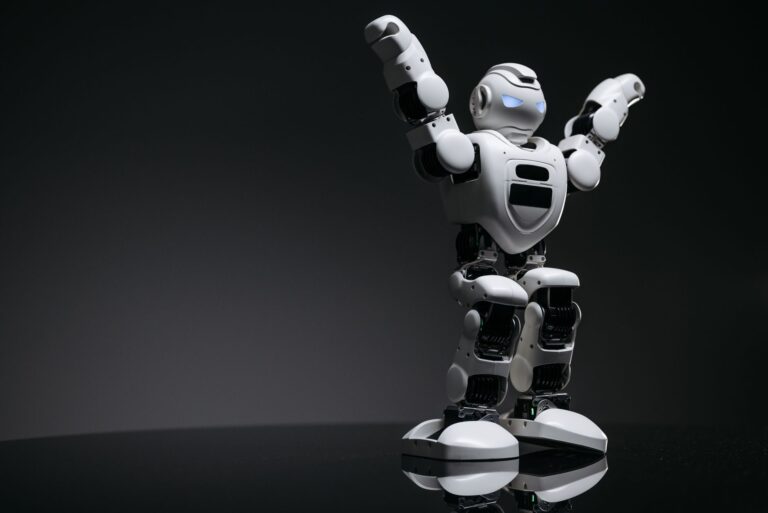
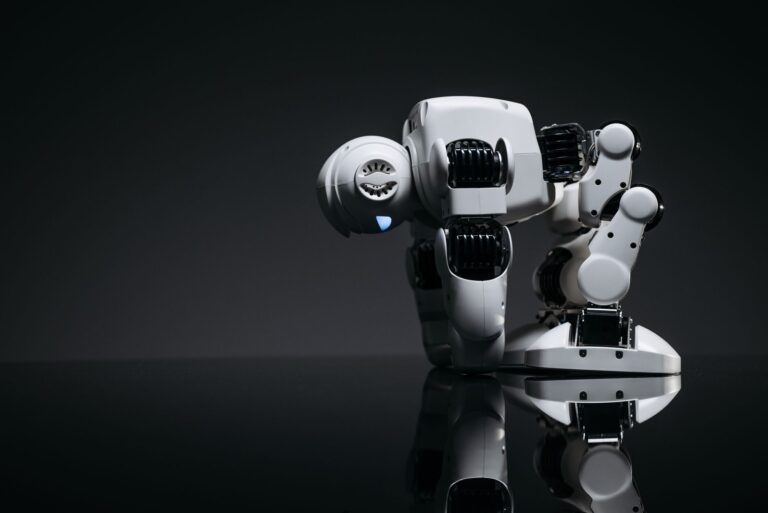
Richtech’s competitive position rests on a deliberate choice: focus on high-frequency, repeatable tasks in structured environments rather than attempting general-purpose humanoids or autonomous vehicles. ADAM (the dual-arm beverage and barista robot), Scorpion (single-arm beverage service), and the recently launched Dex mobile humanoid each address specific labor gaps—bartending, serving, and general mobility. This task-specific approach mirrors how nvidia didn’t try to build the entire AI stack; it built the processor that everyone needed regardless of their application layer. By solving beverage service, restaurant plating, and hospitality mobility, Richtech captures a beachhead market with clear ROI.
The NVIDIA Jetson Thor processor powers all flagship robots, which represents a critical architectural decision. This isn’t just a supply chain dependency; it’s a statement about Richtech’s position in the stack. Richtech is not competing with NVIDIA on chips. Instead, by standardizing on Thor and integrating deeply with NVIDIA’s Isaac Sim simulation framework, Richtech becomes the trusted systems integrator that NVIDIA recommends when venues ask, “Which robotics platform should we actually deploy?” This is the same role Canonical held with Ubuntu in enterprise Linux, or what Databricks became with Spark—a company that becomes essential not by owning the entire stack, but by being the most reliable integration layer on top of it.
The NVIDIA Connection: More Than a Processor Partnership
Richtech joined the NVIDIA Connect program in December 2024, an initiative that provides engineering support and early access to next-generation AI tools. this isn’t a promotional partnership; it signals deep technical collaboration. Richtech uses NVIDIA Isaac Sim—NVIDIA’s physics simulation framework—for training and validating robot behavior before deployment. This approach dramatically reduces the cost and risk of rolling out new capabilities. When ADAM gets a software update to improve beverage consistency or when Dex’s mobility system is refined, those changes have already been tested in simulation.
The alternative—deploying untested robots in revenue-generating venues—would be far more expensive and would destroy customer trust. The limitation here is real: Richtech’s product roadmap is now somewhat dependent on NVIDIA’s release cycles for Jetson processors and Isaac tools. If NVIDIA deprioritizes robotics—however unlikely—Richtech would face either a supplier problem or need to invest in alternative hardware qualification, which would be costly and time-consuming. Additionally, as NVIDIA is increasingly promoting its own robotics partnerships and pushing physical AI as a strategic initiative, there’s risk that NVIDIA could shift focus to competing with companies like Richtech rather than purely enabling them. The company is mitigating this by building deep, specialized robotics expertise that NVIDIA doesn’t possess internally, making Richtech more valuable as a partner than as a potential acquisition target.
Deployment Reality: 300+ Robots Operating in Production
The claim that Richtech has deployed over 300 robots across restaurants, hotels, retail, and healthcare facilities is the strongest evidence that this is not a vaporware play. These aren’t robots sitting in a showroom; they’re operating daily, serving beverages, engaging with customers, and generating revenue through the RaaS (Robots-as-a-Service) model. In Q1 FY2026, RaaS revenue hit $0.3M with 31% year-over-year growth. While $0.3M in quarterly revenue is not large in absolute terms, the growth rate suggests accelerating adoption and the operational flywheel is spinning: more deployments mean more data, more operational learning, and more refinement of the robots.
The Vegas Golden Knights partnership, which launched with ADAM robots at T-Mobile Arena in November 2025, demonstrates proof-of-concept in a high-visibility, high-traffic venue. A stadium environment is among the hardest deployment scenarios: thousands of people, unpredictable interactions, real-time service demands, and zero tolerance for catastrophic failures (imagine a robot failure during a high-stakes playoff game). That Richtech was named “Rookie of the Year” by the Vegas organization suggests the deployment met or exceeded operational expectations. The Times Square deployment at tm:rw adds another data point: a fast-paced, high-volume urban environment. These aren’t controlled pilots; they’re live, revenue-generating installations in demanding settings.
From Single-Function Bots to Mobile Humanoids: The Dex Announcement
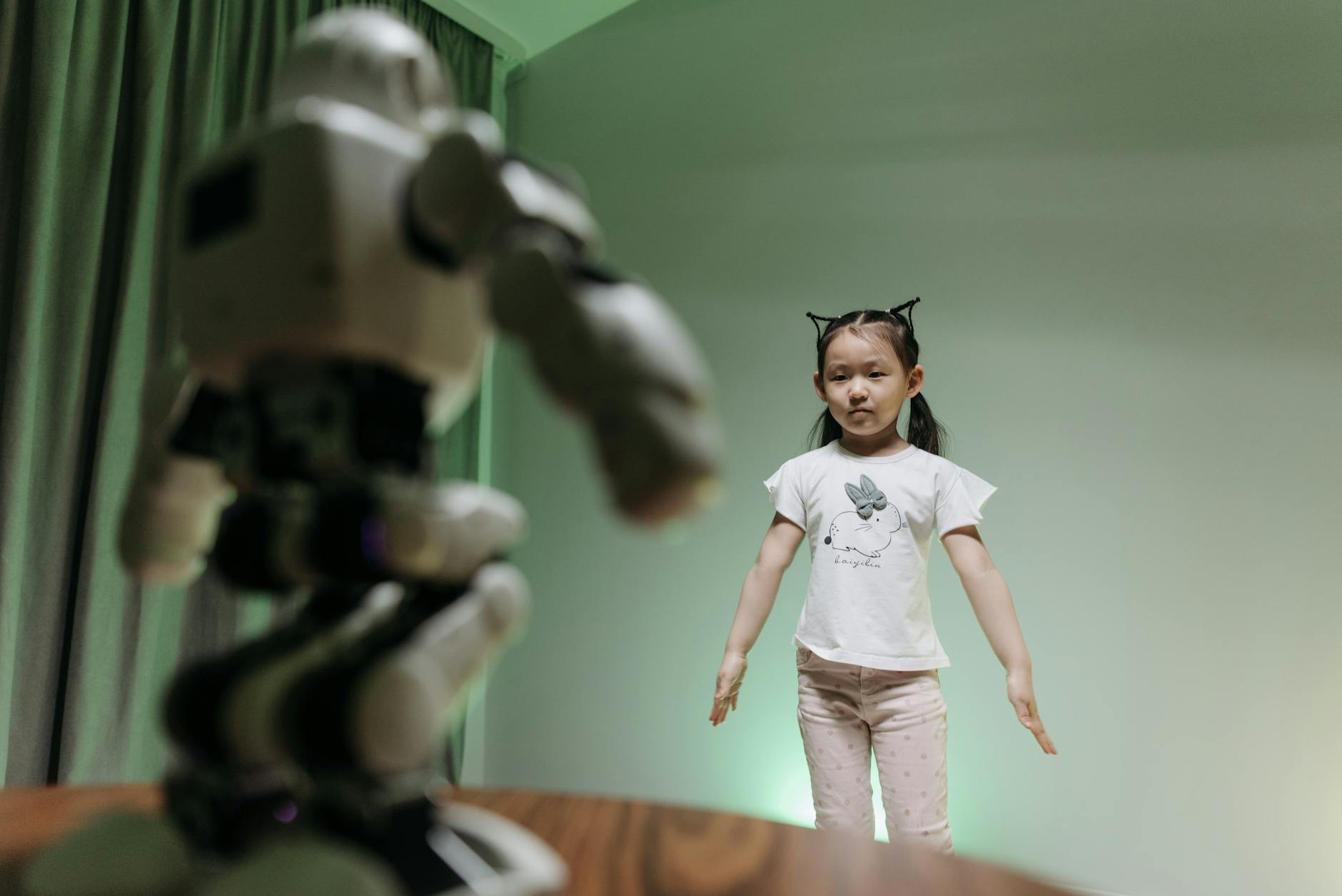
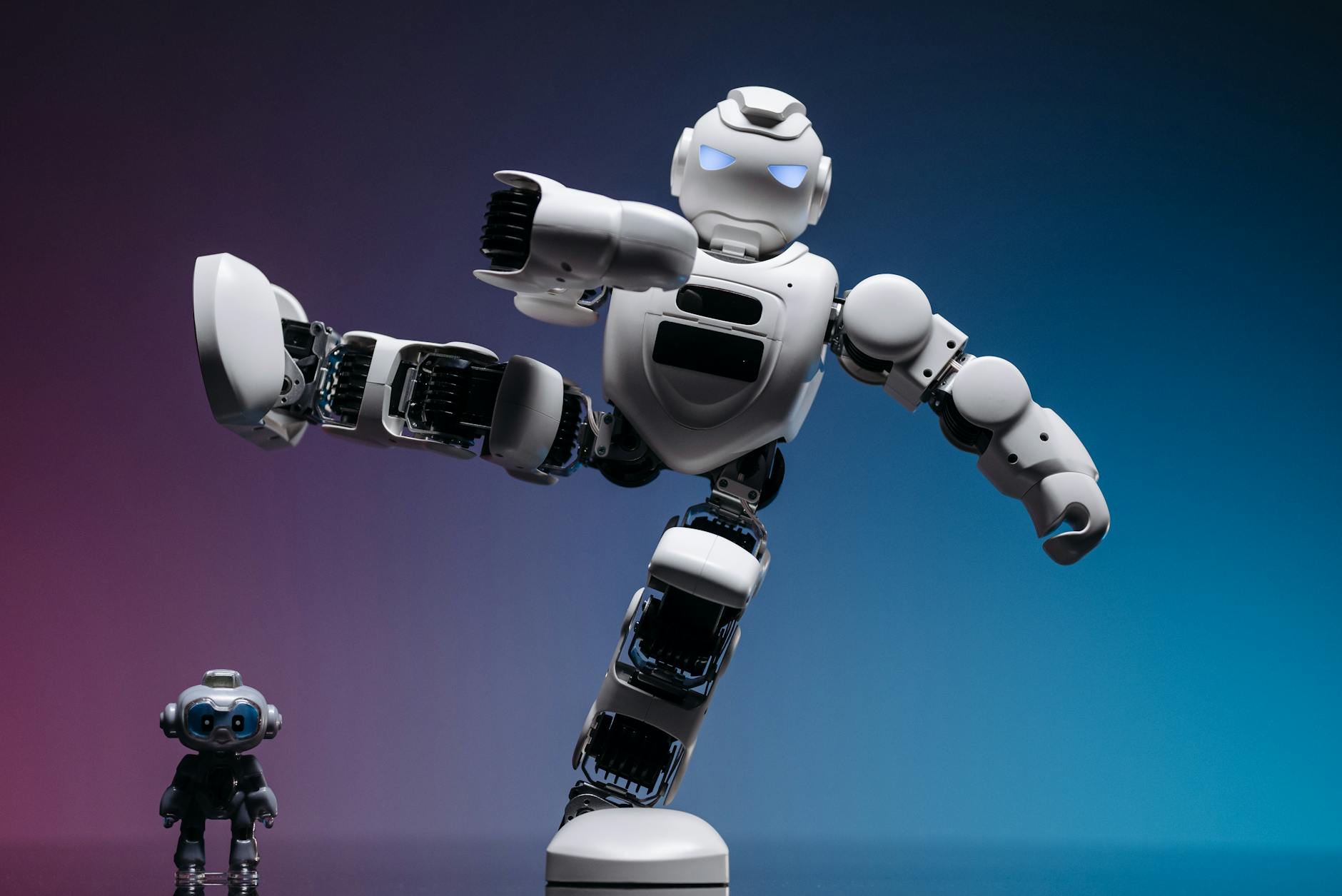
The CES 2026 debut of Dex marks a significant inflection in Richtech’s product evolution. Dex is a mobile humanoid robot—capable of moving through spaces autonomously and performing manipulation tasks with flexible arms. With a 4-hour single-charge operating time and expected Q2 FY2026 rollout, Dex represents a step up in capability from ADAM and Scorpion, which are typically stationary or semi-mobile units designed for specific service stations. Dex can navigate a restaurant floor, interact with customers, move to different service areas, and adapt to varying task demands within a single shift. The tradeoff is important to acknowledge: humanoid form factor means complexity.
Mobile platforms require robust navigation, obstacle avoidance, and real-time environment mapping. Humanoid arms add dexterity but require more advanced motion planning and control than ADAM’s specialized dual-arm system. This is precisely where NVIDIA’s Isaac Sim and the broader NVIDIA ecosystem become critical—training a humanoid robot’s navigation and manipulation in simulation before deployment dramatically reduces deployment risk. However, there’s a second tradeoff: Dex will be more expensive to deploy and operate than ADAM. Venues may adopt ADAM for specific, repeatable tasks while reserving Dex for more varied, flexible roles. Richtech’s product portfolio strategy seems to account for this: different robots for different problems, not one robot solving everything.
The Scaling Challenge: From 300 Deployments to Industrial Scale
While 300 deployments is significant for a robotics company, it’s still a rounding error compared to the total addressable market. Hundreds of thousands of restaurants, hotels, and retail locations exist globally. Scaling from hundreds of robots to tens of thousands while maintaining operational reliability, service quality, and profitability is a different order of magnitude of challenge. Boston Dynamics, Spot, and other high-profile robotics companies have struggled with this exact problem: building impressive robots is one thing; deploying them at scale and managing the logistics of remote support, maintenance, and replacement is another.
The RaaS model partially addresses this—customers pay a subscription rather than buying robots outright, and Richtech retains ownership, responsibility for maintenance, and the ability to upgrade robots remotely. However, this business model requires flawless operational execution. If ADAM robots in Vegas start failing mid-service, or if the Dex rollout encounters systematic reliability issues, customer churn would be swift and reputational damage would be severe. Additionally, RaaS economics require density; deploying one robot in a small town is unprofitable compared to clustering deployments in metropolitan areas. This geographic constraint limits addressable market in the short term and could create incentives for competitors to focus on underserved regions.
Strategic Partnerships and the Broader Ecosystem
Richtech’s partnership with SoundHound (signed as a non-binding letter of intent for voice AI integration) signals a move toward richer human-robot interaction. SoundHound’s agentic voice AI would allow robots to understand more nuanced customer requests, handle complex service queries, and interact more naturally. This partnership also reflects a broader truth: Richtech doesn’t build everything in-house. They integrate NVIDIA hardware, SoundHound AI, Microsoft cloud services (robots are on Azure Marketplace), and eventually will integrate other specialized tools.
This is the platform strategy—become the trusted orchestrator of third-party components. The European expansion agreement with NewConsultancy B.V. following ProWein 2025 represents geographic diversification and signals that Richtech’s playbook is replicable outside North America. European hospitality venues have different labor markets, different regulatory requirements, and different customer expectations than US venues. Successfully deploying in Europe—where labor regulations are often stricter and labor costs are high—would validate that Richtech’s approach works across markets, not just in specific geographies.
The Infrastructure Bet and Industry Inflection Point
If Richtech succeeds in becoming the trusted platform for service robotics, the company’s financial trajectory could resemble Nvidia’s own path: not explosive consumer brand recognition, but deep, structural indispensability to an emerging industry. Infrastructure companies often trade at higher multiples than consumer-facing companies because their revenue is more predictable, more defensible, and grows with industry expansion. Once venues deploy Richtech robots, switching costs rise—they’ve trained staff to interact with the robots, integrated them into service workflows, and developed operational procedures around them. The next critical phase is whether Richtech can raise capital, expand operations, and scale the manufacturing and logistics required to deploy thousands of robots in the next 3–5 years.
With $328.8M in liquidity as of Q1 FY2026, the company has the resources to invest in that expansion, but only if they deploy capital efficiently. The Q2 FY2026 launch of Dex, further Vegas rollout, and expansion of Times Square and other flagship locations will be closely watched metrics. If adoption accelerates and RaaS revenue grows above 50% year-over-year, Richtech enters a phase where it could genuinely become infrastructure for an industry. If growth stalls or deployments encounter systematic problems, the company faces investor pressure and the possibility of consolidation or pivots.
Conclusion
Richtech Robotics deserves comparison to NVIDIA not because it’s building general-purpose AI or shipping billions of chips, but because it’s playing a similar strategic game in a nascent market: becoming the irreplaceable integration layer on top of commodity hardware and third-party AI. With over 300 deployments, growing RaaS revenue, strong NVIDIA partnership integration, and a credible roadmap from single-function bots to mobile humanoids, the company has moved beyond the “interesting startup” category into the “infrastructure candidate” category. The Vegas partnership and CES debut of Dex are significant inflection points that suggest the market is moving from pilot phase to operational deployment.
The path forward is execution-focused and unglamorous: deploying more robots, managing operational reliability, scaling without compromising service quality, and absorbing the capital intensity required to manufacture and support thousands of units. If Richtech executes on that roadmap, it could genuinely become the foundational platform that venues rely on the way enterprises rely on Nvidia GPUs or Canonical Ubuntu. Conversely, if deployment challenges emerge or competitors build better solutions, the company’s advantage could erode quickly. The next 18 months—through the Dex rollout, expanded venue deployments, and full-year 2026 financial results—will clarify whether Richtech is building infrastructure or building inventory.