
Richtech Robotics has emerged as a compelling momentum play in the automation sector, driven by a combination of accelerating revenue growth, strategic AI partnerships, and a fortress balance sheet that positions it to scale rapidly without dilution. The stock price surge from $2.41 in mid-May 2026 to $3.26 by May 27—a 35% move over two weeks—reflects investor recognition that the company is transitioning from concept to commercial deployment. This momentum isn’t speculative hype; it’s grounded in demonstrable partnerships with major technology firms and live product demonstrations at industry events where enterprises make purchasing decisions.
The company’s early traction stems from convergence of three factors: accelerating quarterly revenue growth expected to exceed 70% year-over-year in Q2 FY2026 (approximately $2.0 million versus $1.17 million in the prior year quarter), a pivotal SoundHound AI partnership announced May 6, 2026, that integrates voice AI into Richtech’s beverage service robots, and Microsoft Azure Marketplace availability as of April 29, 2026. For investors seeking exposure to automation and robotics at an earlier stage than established players like ABB or KUKA, Richtech represents a company with visible revenue streams, existing customers, and no debt constraining its operational runway. The real test isn’t whether the stock moves higher on news—momentum stocks do that routinely. The question is whether Richtech’s operational trajectory justifies the valuation premium it commands relative to its current scale.
Table of Contents
- What’s Fueling Richtech’s Early-Stage Stock Acceleration?
- Revenue Trajectory and the Cash-to-Scale Story
- The Product Portfolio Taking Shape in Live Environments
- Strategic Partnerships Reshaping Commercialization
- Valuation and the Premium for Unproven Scale
- Hospitality and Food Service as the Immediate Market Opportunity
- From Partnership Announcements to Recurring Revenue
What’s Fueling Richtech’s Early-Stage Stock Acceleration?
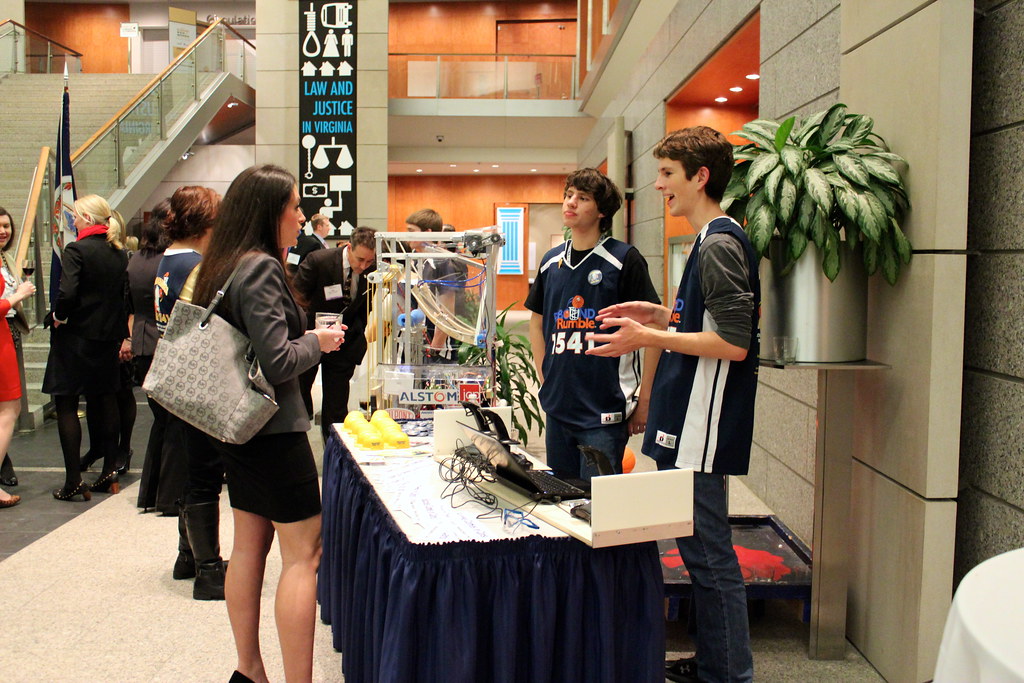
Richtech’s stock momentum reflects recognition of a narrowing execution timeline. In May 2026 alone, the company staged live robot demonstrations at the National restaurant Association Show in Chicago (May 16-19), showcased its dual-arm ADAM robot performing beverage service, and featured Matradee Plus autonomous delivery robots alongside SoundHound’s voice AI integration. These are not renders or promises—they are robots performing work at industry conferences where purchasing teams evaluate solutions. The stock’s 7.74% pre-market surge on recent strategic announcements underscores investor sensitivity to concrete deployment milestones rather than scientific breakthroughs. The comparison with traditional robotics adoption cycles illuminates why this matters.
Companies like Universal Robots grew their stock by demonstrating collaborative arm deployment in manufacturing facilities over 2010-2015 before scaling revenue dramatically. Richtech is following a similar pattern, but with voice-enabled service robots positioned for hospitality and food service—markets with more distributed customer bases and faster upgrade cycles than factory floors. The NRA Show demonstration of a noodle-making robot handles both the technical risk (does it work consistently?) and the market risk (will restaurants actually buy this?) simultaneously. However, the stock’s 35% two-week move also reflects thin trading volume and relatively small absolute share count, meaning modest institutional interest can move the price significantly. early investors should expect volatility alongside directional momentum.
Revenue Trajectory and the Cash-to-Scale Story
Richtech reported Q1 FY2026 revenue of $1.15 million and an expected 70%+ growth rate into Q2 FY2026, with consensus EPS estimates at -$0.04 for both quarters. This paints the picture of a company in the painful but predictable pre-profitability phase: growing revenue rapidly while operating losses persist. The latest quarterly report shows approximately $5.0 million in revenue across the reportable period, offset by -$8.1 million EBITDA—a 1.6x cash burn ratio relative to revenue that is typical for capital-intensive hardware companies still scaling manufacturing and distribution. The financial cushion, however, is substantial.
Richtech maintains approximately $272 million in cash with essentially no debt, a current ratio exceeding 30x, and a balance sheet structure that allows the company to fund multiple years of operations and sales expansion without raising capital at dilutive prices. This is the opposite of most venture-backed robotics startups, which burn through Series C or Series D funding rounds as they scale. Richtech’s ability to reinvest revenue back into manufacturing and sales capacity, rather than burning cash for sustenance, materially improves long-term shareholder value. The warning embedded in this financial profile is the company’s pre-revenue status relative to its cash position—approximately $272 million in cash against $5 million in annualized run rate suggests the company raised significant capital at much higher valuations in previous financing rounds. Current shareholders should understand that earlier investors are positioned ahead of them in liquidation preference, and if Richtech’s revenue growth stalls, management will have incentive to acquire or pursue alternative liquidity events rather than defend a depressed equity valuation.
The Product Portfolio Taking Shape in Live Environments
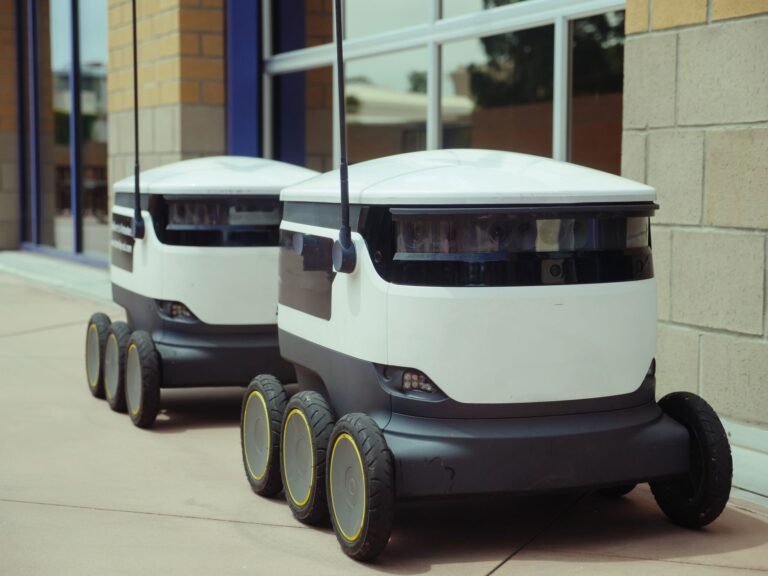
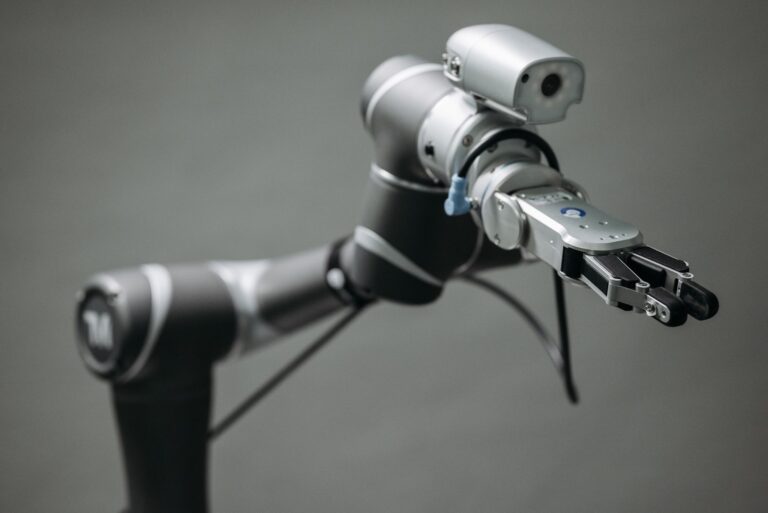
Richtech’s product lineup spans specific automation niches rather than attempting to compete across all robotics categories. ADAM is a dual-arm beverage service robot designed for bars, coffee shops, and restaurants—it can mix drinks, dispense beverages, and deliver prepared orders. Scorpion serves as an AI-powered variant optimized for similar hospitality use cases. Matradee Plus handles autonomous delivery and mobile manipulation across warehouses and restaurant operations. Titan operates in automotive, warehouse, and manufacturing environments with heavier payload and longer operational ranges. The NRA Show noodle-making demonstration paired Matradee Plus with a specialized arm and conveyor system, showing that these platforms are modular and can integrate with existing food service equipment.
The real-world significance of these demonstrations is underestimated by traders focused on stock price momentum. When a company demonstrates a robot preparing food and serving it to actual conference attendees—not in a controlled lab environment, but in a public venue with equipment failures possible and observers skeptical—it signals that the company has solved manufacturing consistency, software reliability, and customer support readiness simultaneously. Restaurants and food service operators are watching whether these robots can handle the chaos of their actual operations: spills, varied customer requests, equipment malfunctions, and the need for remote support when something breaks. The limitation worth noting: Richtech’s products are optimized for specific, repeatable tasks in hospitality and light logistics. The company is not attempting to build general-purpose humanoid robots or solve manufacturing assembly, which are vastly more complex markets. This focused approach reduces technical risk and accelerates revenue, but it also caps the addressable market compared to broader robotics platforms.
Strategic Partnerships Reshaping Commercialization
The SoundHound AI partnership announced May 6, 2026, represents a critical shift in Richtech’s product positioning. Rather than building proprietary voice AI, Richtech integrated SoundHound’s agentic voice system into ADAM and Scorpion robots, enabling natural language ordering—customers can speak requests to the robot, which understands context and executes service tasks. This partnership solves a persistent robotics problem: the user interface for robots in customer-facing environments. Without voice integration, robots are perceived as inflexible and intimidating by end users. With it, they feel almost natural. The Microsoft Azure Marketplace listing (effective April 29, 2026) addresses a parallel commercialization bottleneck: enterprise procurement.
Richtech’s robots now integrate with Microsoft’s customer relationship management and enterprise resource planning ecosystems, meaning large hospitality chains and logistics providers can evaluate and purchase Richtech solutions alongside existing Microsoft software commitments. This is a route-to-market advantage that accelerates large customer acquisition compared to direct sales alone. The tradeoff embedded in these partnerships is partner dependency and margin dilution. SoundHound receives licensing fees on voice-enabled orders. Microsoft takes a percentage of marketplace transactions. As Richtech scales, partnership economics may improve, but early revenue is distributed across multiple parties, reducing Richtech’s gross margin relative to proprietary solutions. For investors, the upside is customer adoption acceleration; the downside is eventual margin compression if partnerships mature.
Valuation and the Premium for Unproven Scale
Richtech’s price-to-sales ratio exceeds 170, a valuation multiple typically reserved for cloud software with recurring revenue and 50%+ gross margins. Richtech’s hardware-centric model, combined with negative EBITDA of -$8.1 million against $5 million quarterly revenue, means investors are pricing in a dramatic shift in the company’s financial profile over the next 2-3 years. This requires simultaneous execution on manufacturing scale (reducing unit costs), customer acquisition (growing revenue 10x to 15x), and gross margin expansion (as fixed costs amortize across larger revenue bases). The market is pricing this future scenario, not current performance.
A 170x P/S ratio implies either (a) the company achieves $50 million+ in annualized revenue at 25%+ net margins, or (b) the stock price returns to earth if revenue growth slows or manufacturing costs remain sticky. The June 9, 2026 Q2 earnings report will be a critical test: if Richtech guides to higher-than-expected revenue or profitability milestones, the multiple compresses and the stock likely rallies further. If management signals challenges in manufacturing, customer adoption, or margins, the stock faces the risk of multiple compression despite revenue growth. Investors with high risk tolerance should understand this volatility is built into any early-stage hardware company trading at these valuations. Margin of safety is minimal; execution must be flawless.
Hospitality and Food Service as the Immediate Market Opportunity
The National Restaurant Association Show (May 16-19, 2026) provided a window into Richtech’s immediate addressable market: restaurants, bars, and food service operators evaluating automation for beverage service, delivery, and food preparation. The ADAM robot’s ability to mix and serve beverages addresses a specific pain point—skilled bartenders are expensive and scarce in many markets—and the live noodle-making demo showcased a Matradee Plus robot handling complex food preparation in a real-time environment. This market is material but also capital-constrained.
A single ADAM robot likely costs between $50,000 and $150,000 per unit, which means restaurant operators require demonstrated ROI over 2-3 years to justify adoption. Early customers will be large chains or upscale establishments with high labor costs and capital budgets. The addressable market for premium hospitality automation in the United States is estimated at thousands of locations, not millions, which means Richtech’s revenue multiples assume international expansion and cross-vertical adoption beyond food service into logistics and light manufacturing.
From Partnership Announcements to Recurring Revenue
Richtech’s recent achievements—the SoundHound integration, Microsoft Azure listing, and NRA Show demonstrations—represent announcements of partnerships and promotional visibility, not guaranteed revenue conversion. The real test is whether these announcements translate into purchase orders and recurring deployments. A single large customer (e.g., a hospitality chain ordering 100+ units) could accelerate quarterly revenue significantly; conversely, delays in large customer procurement could cause the stock to correct sharply. The company’s reported Q1 FY2026 EPS of -$0.04 against $1.15 million revenue suggests minimal absolute earnings power on a per-share basis, despite positive gross margins on product sales.
As the company scales toward $10 million+ quarterly revenue (the inflection point where many hardware companies approach profitability), fixed costs in operations, support, and R&D will amortize across larger revenue bases. The cash balance of $272 million provides a multi-year runway to prove out this thesis without raising capital and diluting existing shareholders. The Microsoft Azure integration and SoundHound partnership expand distribution channels and product appeal; the NRA Show demonstrations provided concrete proof of functionality. Whether this translates to the 10x revenue growth required to justify current valuations is the open question the market is pricing in.
- —