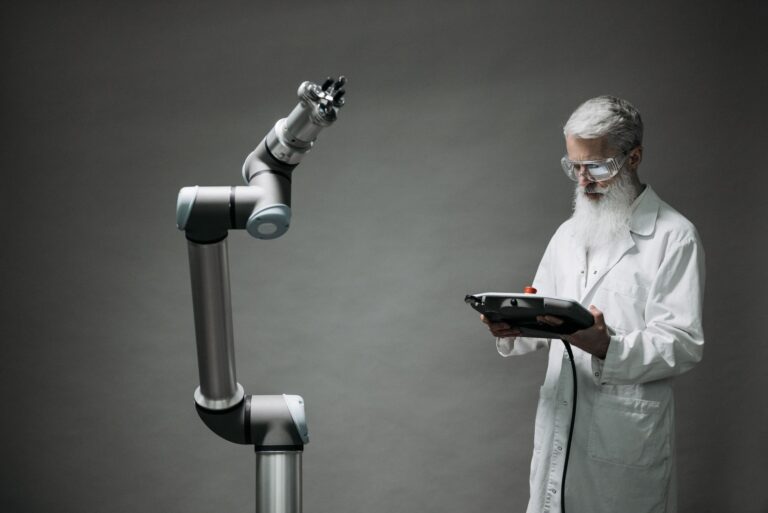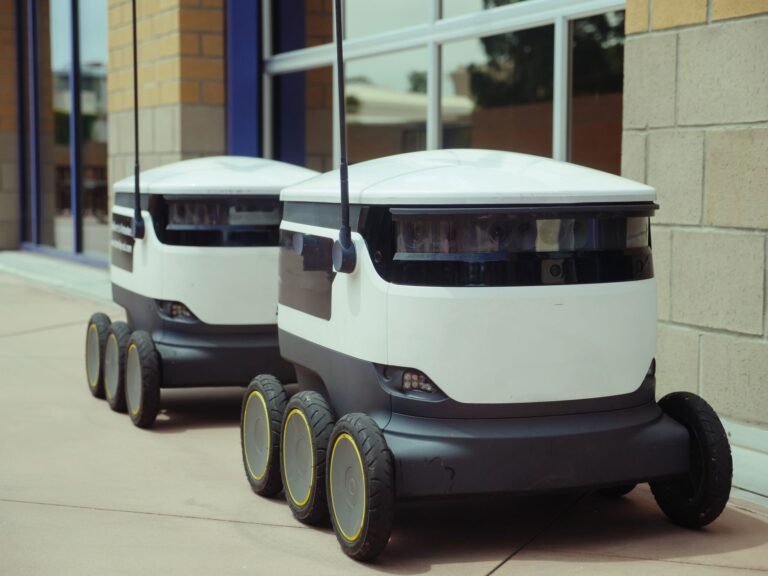

Venture capital funding in industrial automation has accelerated as manufacturers confront labor shortages, rising operational costs, and competitive pressures to digitize. Corporate restructurings—including major technology companies separating legacy divisions from growth-focused automation business units—reflect the market’s fundamental shift toward robotics, AI-driven monitoring systems, and software-controlled manufacturing. When a diversified industrial conglomerate splits, it typically signals that investors and leadership see more value in focused automation units than in bundled, legacy-heavy companies.
These divisions often represent the future revenue streams: software integration platforms, cloud-based factory management systems, and hardware-software combinations that allow manufacturers to retrofit existing production lines. A company spinning off or separating its automation-focused divisions can pursue aggressive investment in areas like machine learning for predictive maintenance, collaborative robots that work alongside humans, and real-time supply chain visibility—moves constrained by legacy organizational structures. Honeywell, like other industrial giants, has navigated this transition through strategic business separations, allowing focused units to compete with nimbler, venture-backed automation startups while maintaining their installed base relationships. This shift reflects genuine investor appetite for industrial tech that solves measurable manufacturing problems rather than speculative automation platforms.
Table of Contents
- Why Industrial Automation Attracts Venture Capital Now
- The Challenge of Legacy versus Innovation in Industrial Restructuring
- How Separated Automation Units Compete with Pure-Play Startups
- Venture Capital’s Specific Bets on Industrial Software and Automation
- The Challenge of Integration and Interoperability Standards
- Workforce Adaptation and the Practical Realities of Implementation
- The Investor Perspective on Industrial Automation Valuations
Why Industrial Automation Attracts Venture Capital Now
The industrial automation sector has historically been dominated by established engineering firms and equipment manufacturers, but venture capital’s recent surge reflects structural changes in how manufacturing works. Labor costs in developed economies continue rising, and demographic trends suggest further tightening in manufacturing employment. Simultaneously, depreciation cycles in factories mean that equipment installed in the 1990s and early 2000s—operating without digital controls or real-time diagnostics—represents a massive modernization opportunity. VC firms see automation investments as solving non-speculative problems. A manufacturer struggling with downtime on a critical production line will pay for predictive maintenance software; a supply chain disruption costs directly measurable dollars.
This differs sharply from software markets where willingness to pay is often assumed. For example, a food production company that reduces unplanned downtime by 15 percent across a facility processing millions of units per year captures concrete savings. Investors fund startups addressing these problems directly. Honeywell and competitors recognize that owning vertically integrated solutions—from hardware through analytics—creates defensibility against point-solution competitors. However, bureaucratic structures designed for selling legacy control systems sometimes slow deployment of new software stacks. Separating divisions allows automation-focused teams to move faster, adopt open standards where it matters, and partner with cloud providers or AI companies without internal approval delays.
The Challenge of Legacy versus Innovation in Industrial Restructuring
When large manufacturers split divisions, they face a critical tension: the legacy business—serving existing customers with mature products—generates reliable cash flow, while the automation-focused division requires reinvestment, operates on longer sales cycles, and faces competition from both startups and other diversified conglomerates. Investors push for separation partly because consolidated companies struggle to allocate capital efficiently across these two very different businesses. A major limitation is that legacy systems and new automation platforms often need to coexist. A manufacturer may have 30-year-old programmable logic controllers running core production processes, newer networked sensors installed over the past five years, and pressure to add AI-driven scheduling on top. The separated automation division must still support legacy equipment compatibility—it cannot ignore the installed base—while building modern software infrastructure.
This creates competing engineering priorities. A startup, unburdened by legacy products, can move faster, but a separated division of an industrial giant retains the advantage of customer relationships and domain expertise. Another warning: separating divisions creates the temptation to stop supporting the legacy business or to charge new customers more for migration services. Some manufacturers have damaged relationships by leaving behind customers with older equipment. Successful divisions balance innovation velocity with customer loyalty across the entire product range.
How Separated Automation Units Compete with Pure-Play Startups
Separated divisions inherit advantages and disadvantages relative to venture-backed automation startups. The inherited advantage is an existing customer base, field service networks, and proven solutions in specific vertical markets—a food processor or pharmaceutical manufacturer already using your control systems is a candidate for upgrading to cloud-connected analytics. A startup must build credibility from zero and often focuses on greenfield installations or specific niches to avoid head-to-head competition. A specific example: a pharmaceutical manufacturer with validation requirements under FDA regulations will be reluctant to abandon suppliers that have certified their systems and supported compliance documentation for years. A startup selling predictive maintenance software must either achieve equivalent validation credentials—expensive and slow—or target less-regulated industries first.
A separated division from a major supplier can leverage existing trust and compliance relationships to sell complementary software services. The disadvantage is that separated divisions still inherit organizational DNA from the parent company. Sales teams may face commission structures or incentive misalignment that favors selling high-margin hardware rather than recurring software revenue. Engineering teams may inherit technical debt or architectural decisions from legacy platforms. Startups can hire people explicitly for cloud-native development and sell software from day one; separated divisions often struggle to retrain salespeople or replace inherited engineering culture.
Venture Capital’s Specific Bets on Industrial Software and Automation
VC investment in industrial automation clusters around several concrete areas. Real-time monitoring and analytics—sensors and software that detect anomalies before equipment fails—attract significant funding. Supply chain visibility software that integrates with factory systems and logistics networks is another active area. Collaborative robotics software, including programming tools and safety systems that let robots work alongside humans, represents a third wave of investment. A comparison worth noting: traditional venture-backed robotics companies have often burned capital on hardware development and manufacturing.
Industrial software-focused automation startups generally achieve better unit economics because they can rely on existing hardware platforms and focus on software layers and integrations. This explains why VC has shifted somewhat away from funding new robot manufacturers and toward funding software platforms that work with existing robot fleets. Honeywell and competitors benefit from having both. They can sell their own hardware and software together, defending against best-of-breed startups that integrate Honeywell hardware with third-party software. However, this bundling sometimes moves slower than market demand for interoperability. A customer may prefer to pick the best monitoring software available and plug it into their existing equipment, rather than upgrading both hardware and software from a single vendor.
The Challenge of Integration and Interoperability Standards
A significant limitation facing separated automation divisions is industry fragmentation around standards and protocols. Decades of industrial automation produced incompatible data formats, communication standards, and vendor-specific programming languages. A factory with equipment from five different manufacturers faces a data integration nightmare. Software solutions that promise to unify all of this confront the reality that true interoperability requires cooperation from competitors or acceptance of costly custom integrations. Startups sometimes overcome this by focusing narrowly on one manufacturing sector or equipment type, learning that specific ecosystem deeply.
Separated divisions attempt broader solutions and often fall back on custom integration for major customers—expensive, non-scalable, and not a VC-friendly business model. Open standards initiatives are improving, but slow adoption in industrial environments means legacy proprietary protocols will persist for decades. A warning to investors and customers: automation vendors sometimes promise vendor-neutral platforms but then add proprietary extensions that create lock-in. Evaluate whether claimed interoperability is real or marketing language. A proposal to migrate a complex production environment to a new automation platform should include detailed technical review of integration specifics, not just vendor promises of compatibility.
Workforce Adaptation and the Practical Realities of Implementation
Industrial automation growth depends not just on technology but on workforce readiness. Manufacturing facilities require technicians who can troubleshoot networked sensors, interpret analytics dashboards, and understand when to intervene versus trust the automated system. Existing maintenance and operations staff trained on mechanical troubleshooting sometimes struggle with software-heavy systems. Companies investing in automation must budget for training, reskilling, and often hiring new personnel with different technical backgrounds.
A specific example: deploying a predictive maintenance platform that flags bearing degradation weeks in advance changes how a maintenance team works. Instead of responding to failures, they plan repairs in advance. This requires trusting the algorithm and managing parts inventory differently. Some facilities adapt well; others find the cultural shift difficult. Separated automation divisions that offer training and change management support often win contracts over cheaper pure-software competitors.
The Investor Perspective on Industrial Automation Valuations
VC firms value industrial automation companies differently than consumer software companies. Longer sales cycles, capital requirements for customer implementations, and lower churn rates mean that revenue multiples and growth expectations differ. A software company serving consumers might be valued on growth rate alone; an industrial automation software company is valued partly on the quality of its customer base and contract stickiness.
When Honeywell or similar companies separate automation-focused divisions, they often position those divisions for eventual separation or sale partly because pure-play industrial automation companies can command higher valuations than bundled conglomerates. Investors prefer focused businesses where revenue streams and unit economics are transparent. A separated automation division with predictable recurring revenue from software subscriptions and long-term service contracts becomes more attractive to growth investors than a diversified industrial company whose industrial automation segment competes for capital with unrelated businesses.