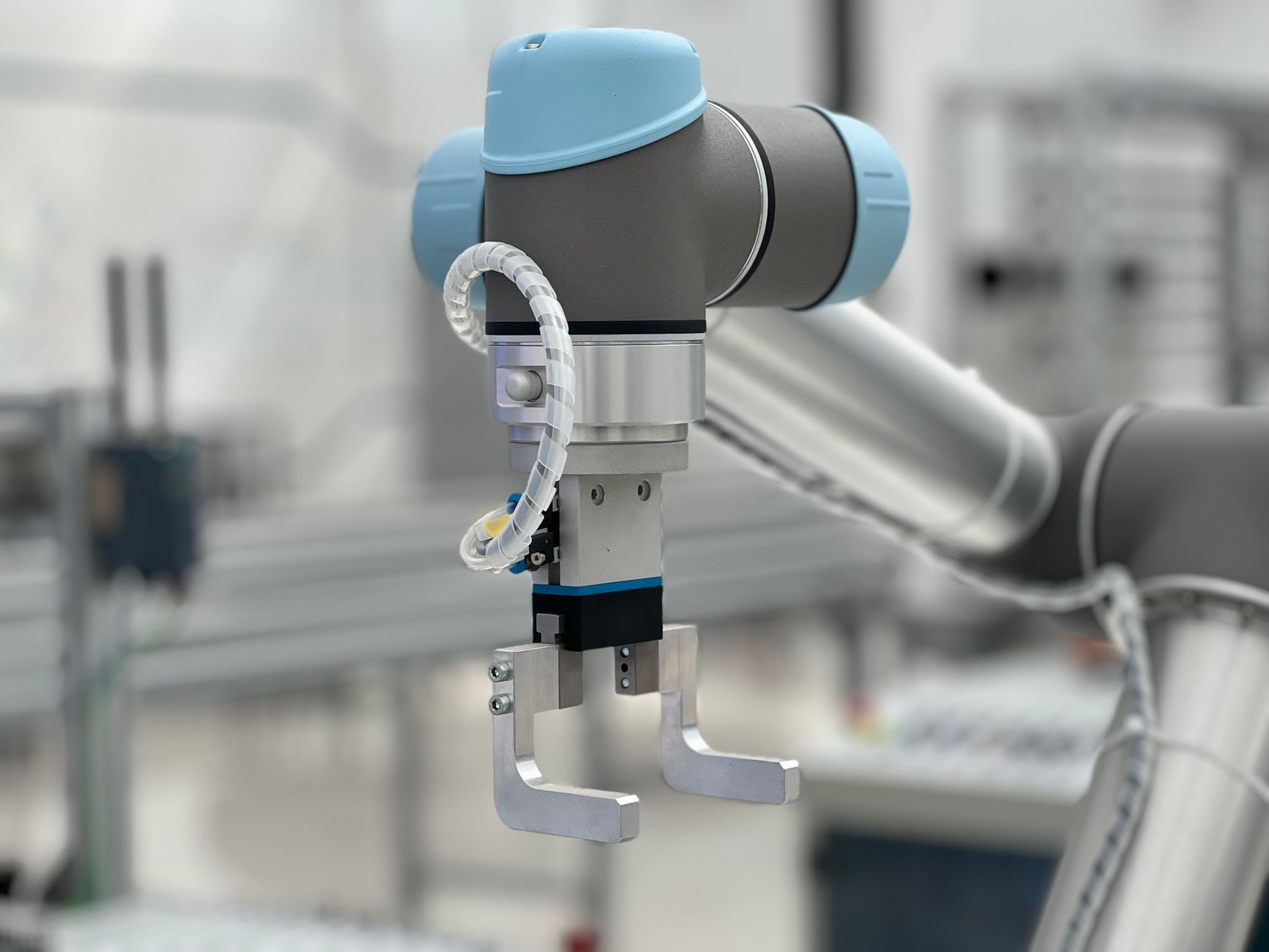

The manufacturing ecosystem is fundamentally reshaping robotics innovation and expansion through strategic investments, supply chain maturation, and accelerated adoption of intelligent systems. In 2026, the global robotics market reached USD 88.27 billion, representing a 34% year-over-year jump from USD 73.64 billion in 2025—the fastest growth rate in a decade. This expansion reflects not merely increased robot sales but a systemic transformation: manufacturers are embedding robots deeper into production lines, logistics networks, and specialized verticals while suppliers innovate at unprecedented speed to meet demand. North American companies alone ordered 36,766 robots valued at USD 2.25 billion in 2025, signaling sustained confidence in smart manufacturing as a competitive imperative. The driving force is a complete ecosystem maturing simultaneously.
Industrial robot installations alone reached USD 16.7 billion in market value, with industrial and logistics robots accounting for 60–65% of total market growth. This concentration reveals where manufacturing dollars flow: not toward experimental platforms, but toward proven automation that directly improves throughput, labor costs, and precision. Meanwhile, the cost to train robots through data collection has plummeted 60% versus 2024, thanks to teleoperation tooling and commodity-grade sensors. Lower training costs democratize adoption, meaning mid-sized manufacturers can now afford automation that previously required enterprise-scale capital. The ecosystem’s power lies in its interdependence—hardware suppliers, software developers, integrators, and manufacturers push and pull each other toward faster innovation and broader deployment.
Table of Contents
- How Market Scale and Investment Momentum Drive Robotics Advancement
- AI and Vision Systems as the Ecosystem’s Accelerant
- Humanoid Platforms and the Diversification of Robot Hardware
- Geographic Expansion and Regional Market Dynamics
- Application Verticals Breaking the 1,000-Unit Threshold
- Enterprise Adoption and the Employer Perspective
- The Cost Equation and Economic Viability
- Supply Chain Dependencies and Future Constraints
How Market Scale and Investment Momentum Drive Robotics Advancement
The robotics market’s explosive growth is not speculative. USD 88.27 billion in 2026 represents real orders, real installations, and real factory floors being reconfigured with automated arms, mobile robots, and vision-guided systems. Projections extend this momentum further: the global market is expected to reach USD 111 billion by 2030, growing at a 14% compound annual growth rate. From 2026 to 2036, forecasters anticipate an even steeper 18.1% CAGR, suggesting that the current wave is not a cyclical uptick but a structural shift in how manufacturing operates. This scale creates a virtuous cycle: larger markets attract capital investment, capital funds R&D, and R&D produces innovations that justify further investment.
Industrial and logistics robots dominate the expansion because they address manufacturing’s most acute pain point: labor scarcity. A food processing company automating palletizing with collaborative robots reduces turnover-related retraining by 40% and frees workers for higher-skill tasks. Yet this vertical concentration also carries risk. Over-reliance on industrial automation in one economic cycle can lead to overcapacity when demand softens, leaving manufacturers with stranded capital. North America’s 36,766-robot order volume in 2025 proves appetite, but it also signals that the easy wins—straightforward, high-ROI automation in factories—are being captured. Future growth must come from harder-to-automate processes: flexible job-shop manufacturing, custom assembly, and environments where product variance slows traditional robotics deployment.
AI and Vision Systems as the Ecosystem’s Accelerant
The integration of artificial intelligence into robotics has shifted from academic curiosity to production reality. Vision-Language-Action (VLA) models—which combine visual perception, language understanding, and decision-making—have tripled in adoption and now appear in 40% of all new robot deployments as of 2026. This represents a fundamental change: robots are becoming more autonomous and adaptable, capable of performing tasks outside their narrowly scripted training. Separately, interest in Large Language Models for robotics applications skyrocketed from 16% among practitioners in 2025 to 35% in 2026, indicating that manufacturers see language-based interfaces as a practical way to program and supervise robots without deep technical expertise. However, this AI acceleration reveals a hard constraint: data.
While data collection costs have dropped 60%, the underlying problem remains unchanged—robots must be trained on diverse, representative scenarios to perform reliably in production. A warehouse robot trained only on ideal-case scenarios will fail when cardboard boxes arrive slightly crushed or shelves are misaligned by a few centimeters. Teleoperation—where a human operator controls the robot remotely while the system records actions—has emerged as the primary cost-reduction mechanism, but it is not cost-free and requires skilled operators. Manufacturers must balance the speed of deploying AI-powered robots against the reality that incomplete training leads to failures, safety incidents, and lost confidence in automation projects. Early adopters are discovering that the first-generation VLA models work best for well-defined environments (e.g., picking uniform objects from a bin) and struggle with novelty.
Humanoid Platforms and the Diversification of Robot Hardware
In 2024, only three humanoid robot platforms existed as commercial products, and all were research-stage or limited-production systems. By 2026, this expanded to three or more platforms available for purchase or lease, signaling a transition from prototype to market. Companies like Tesla, Boston Dynamics, and others are moving humanoid systems toward production, betting that human-shaped robots can navigate human-designed factories and warehouses more efficiently than specialized industrial arms. This diversification matters because it signals confidence: manufacturers are willing to invest in form factors beyond the proven gantries and six-axis arms that have dominated for decades.
Yet humanoid robots remain expensive ($150,000–$1 million per unit) and unproven at scale. Their theoretical advantage—that they can use tools, stairs, and spaces designed for humans—remains largely theoretical in production settings. A Tesla factory using humanoid robots for battery assembly is a compelling pilot, but one facility does not prove viability across dozens of industrial verticals. The ecosystem’s momentum pulls investment toward humanoids, but the economic case remains incomplete. In contrast, collaborative robots (cobots) are showing the highest growth rate at 25.64% CAGR through 2031, suggesting that manufacturers still prefer proven, incremental improvements over revolutionary form factors.
Geographic Expansion and Regional Market Dynamics
The global robotics market is not evenly distributed. Japan and the United States together account for 58% of global robot deployments by unit volume, reflecting both advanced manufacturing bases and early adoption of automation. However, growth is far from concentrated there. Asia-Pacific commanded 37.72% of the global robotics market share in 2025, driven substantially by China, which leads the world in robot adoption with a 22.4% CAGR and over half a million installations annually. China’s manufacturing scale—its role as the world’s factory—means Chinese automation demand pulls the entire supply chain: sensor manufacturers, motion control makers, and software vendors all expand capacity to serve Chinese integrators and end-users.
The wildcard is the Middle East, which registered the fastest regional expansion at 21.31% CAGR from 2026 to 2031. This growth is driven by diversification strategies in Gulf states, where automation supports new industries (food processing, advanced manufacturing) beyond oil and gas. A manufacturer in the UAE automating date processing or aluminum fabrication may purchase from a German robot maker but hire local integrators, creating a new ecosystem even as the hardware remains Western-designed. This geographic fragmentation means that robotics suppliers must maintain multiple product lines, support systems, and partnerships—a burden that favors large companies and strains smaller startups. A Polish automation company that excels in European collaborative robot integration may struggle to penetrate Asia-Pacific without partners and local presence.
Application Verticals Breaking the 1,000-Unit Threshold
For the first time in 2026, three major verticals—healthcare, retail, and agricultural harvesting—each crossed 1,000 deployed units. This milestone matters because 1,000 units signals a market, not a novelty. Healthcare applications include surgical assistance, pharmacy automation, and patient mobility robots in hospitals; retail includes inventory management, cleaning, and checkout automation; agricultural harvesting spans strawberry picking, apple harvesting, and crop monitoring. Each vertical required specialized ecosystems: healthcare robots needed sterility certifications and medical-grade software, retail robots required real-time object detection for moving crowds, and agricultural robots needed weatherproofing and outdoor vision systems. The expansion into these verticals also reveals practical constraints.
Surgical robots cost $2 million to $3 million per system and require surgeon training; few hospitals can justify the investment for common procedures. Retail cleaning robots work well in controlled nighttime environments but struggle in busy daytime conditions with foot traffic. Agricultural harvest robots must contend with weather variability, crop inconsistency, and seasonal demand—meaning they sit idle nine months of the year unless repurposed. Each vertical’s success masks deeper economic questions about whether automation improves unit economics or merely shifts costs from labor to capital and maintenance. A strawberry farm that invests in harvest robots must also invest in infrastructure to handle the robot’s fragility, software updates, and the integration headaches when a new harvesting technique is needed.
Enterprise Adoption and the Employer Perspective
Eighty-six percent of employers view AI, machine vision, and collaborative robotics as primary levers for business transformation. This overwhelming consensus reflects genuine belief in automation’s potential but also competitive pressure: if 86% of your industry peers are investing in robotics, standing still means falling behind. Yet this statistic also masks the gap between intention and execution. Many manufacturers announce robotics initiatives without the integration expertise, capital discipline, or workforce planning to execute successfully. Pilot projects often succeed in controlled environments, then stall when deployed at scale.
The ecosystem serves this demand by expanding service categories: systems integrators, consulting firms, and software providers have emerged to help manufacturers navigate technology selection, installation, and operation. A company like Siemens or Daimler can build robots in-house and certify integrators to deploy them. Smaller manufacturers rely on specialized integrators who study their factories, recommend specific robot models, handle integration, and provide post-deployment support. The quality of this integration layer determines whether a manufacturer’s robotics investment succeeds or fails, yet integration services remain fragmented, costly, and difficult to compare. No industry standard certifies integrator competence the way aerospace requires AS9100 certification for manufacturing.
The Cost Equation and Economic Viability
Data collection cost reductions of 60% have cascading effects on the robotics economics. A task that required USD 200,000 in teleoperation labor to train now costs USD 80,000. This opens automation possibilities for smaller operations: a light assembly manufacturer with USD 500,000 annual labor costs for a specific task can now justify a USD 400,000 robot and integration expense because the payback period shrinks to under two years. Lower training costs also accelerate time-to-deployment. Where a robot might have taken six months to train and deploy, it can now be operational in two to three months, reducing the window during which a manufacturer operates without the expected productivity gains. However, the 60% cost reduction applies primarily to data collection, not to the underlying robot hardware or integration services.
A collaborative robot still costs USD 35,000 to USD 150,000 depending on payload and speed. Integration—customizing the robot to a specific process, validating safety, training operators—still runs USD 50,000 to USD 300,000. A manufacturer automating a task that currently costs USD 40,000 annually faces a three-to-five-year payback even with lower data costs. The robotics ecosystem thrives when it serves high-labor-cost, repetitive, and well-defined tasks. It struggles in customized, low-volume, or highly variable production, which is precisely where small manufacturers and job shops operate. This means the ecosystem’s expansion is concentrated in specific industries and regions, not uniformly distributed.
Supply Chain Dependencies and Future Constraints
The manufacturing ecosystem powering robotics growth depends on stable supply of semiconductors, optical sensors, and rare-earth magnets. Disruptions in any tier propagate upward: a shortage of motion control chips delays robot production, which frustrates integrators and end-users. Geopolitical tensions around semiconductor manufacturing and rare-earth supply have already forced some robotics companies to diversify suppliers or redesign products to use more readily available components. A Japanese robot maker switching from proprietary servo motors to COTS (commercial off-the-shelf) alternatives reduces performance slightly but improves supply resilience—a tradeoff that the ecosystem has increasingly accepted.
The acceleration toward Vision-Language-Action models and LLM-based interfaces introduces new supply dependencies: NVIDIA GPUs for inference, large cloud computing resources for model training, and data storage infrastructure. A robotics startup that assumes it can run VLA models on the robot itself will discover that edge GPUs are expensive and constrained. Relying on cloud-based inference introduces latency and dependency on cloud providers, creating operational risk. The ecosystem is still resolving these architectural questions. Early adopters are discovering that hybrid approaches—running lightweight models on the robot, offloading complex reasoning to the cloud—provide acceptable performance with lower risk, but this adds system complexity and increases the expertise required to deploy and maintain such systems.
- —