
The introduction of specialized robotic systems designed specifically for task automation represents a significant step in addressing one of the manufacturing and logistics sector’s most persistent challenges: the deployment of flexible, adaptable automation across diverse operational environments. Such systems typically target applications where conventional fixed automation proves too rigid or economically inefficient, filling a critical gap between fully manual processes and highly specialized robotic installations.
For example, a warehouse operation handling multiple product types and variable order volumes would struggle with traditional assembly-line robotics designed for single-task repetition, but could benefit substantially from adaptive task automation that learns and adjusts to changing workflow demands. The development of these solutions reflects broader industry recognition that modern automation cannot rely solely on predetermined, unchanging workflows. Contemporary manufacturers and logistics providers must contend with increasing product variety, shorter production cycles, and workforce constraints that create genuine demand for systems capable of managing multiple task types with minimal reconfiguration between operations.
Table of Contents
- How Task-Focused Robotic Systems Address Automation Barriers
- Technical Architecture and Capability Constraints in Multi-Task Systems
- Real-World Application Scenarios for Adaptive Robotic Automation
- Deployment Challenges and Practical Implementation Considerations
- Common Implementation Challenges and Limitations
- Sensory Integration and Environmental Adaptation
- Integration with Human Workforce and Operational Decision-Making
How Task-Focused Robotic Systems Address Automation Barriers
Traditional industrial robots have long excelled at repetitive, high-volume identical tasks—the welding of car chassis components, the assembly of standardized parts, or the packaging of uniform products. However, this specialization creates significant limitations when operational requirements shift. Task-automation focused systems attempt to bridge this gap by incorporating greater flexibility in their core design, allowing a single installation to handle variations in workflow without requiring engineers to reprogram motion paths, recalibrate sensors, or restructure the entire robotic cell. The economic case for adaptive task automation becomes apparent when examining mid-volume manufacturing or operations with seasonal demand fluctuations.
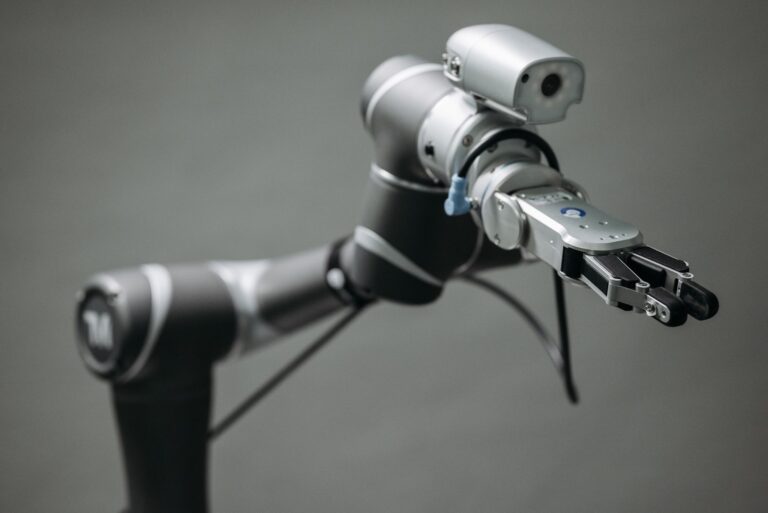
A food processing facility handling both fresh produce and prepared meals, for instance, needs equipment capable of switching between different sorting, cleaning, and packaging routines without extended downtime. Fixed-purpose industrial robots would require separate installations for each product category, while systems built around flexible task execution can potentially serve multiple functions within the same footprint. However, flexibility introduces engineering tradeoffs that cannot be ignored. Systems designed to handle multiple task types typically sacrifice some of the precision, speed, or payload capacity of purpose-built equipment. A robotic arm optimized for general manipulation may execute individual motions slightly more slowly than a robot engineered exclusively for high-speed component insertion, for example.
Technical Architecture and Capability Constraints in Multi-Task Systems
The technical foundation of task-automation systems requires different design priorities than conventional industrial robotics. Rather than optimizing for maximum speed in a single application, these systems emphasize sensory capabilities, computational flexibility, and mechanical adaptability. advanced vision systems, force-sensing feedback, and real-time decision-making capacity become essential features rather than optional add-ons, because the system must assess its environment and adjust approach mid-task rather than follow pre-calculated trajectories. integration of machine learning and computer vision represents a significant technical requirement for systems claiming to handle variable tasks.
The robot must identify objects, assess their characteristics, detect unexpected obstacles or variations, and modify its actions accordingly. A robotic system tasked with unpacking irregularly shaped items from containers would need to understand spatial relationships, predict how materials might shift as handling progresses, and avoid tangling or damaging contents—capabilities far removed from the straightforward repeated motion of traditional factory automation. A critical limitation often underestimated by operations planning such deployments involves the complexity of training and validation. Creating the datasets required to ensure reliable object recognition, developing the decision trees to handle edge cases, and validating safe operation across the range of real-world conditions the system might encounter represents substantial ongoing effort. Early implementations frequently discover that environmental factors—lighting variations, material wear, seasonal humidity changes—that seemed minor during testing create significant operational friction in deployment.
Real-World Application Scenarios for Adaptive Robotic Automation
Logistics and fulfillment operations represent one of the primary use cases driving development in task automation, as the sheer variety of products moving through modern distribution networks makes single-purpose robotics economically impractical at scale. An e-commerce fulfillment center handling thousands of distinct SKUs cannot feasibly dedicate a separate robotic system to each product type. Instead, flexible systems capable of picking, sorting, and packing items of dramatically different sizes, weights, and shapes provide the necessary versatility—though with the caveat that individual task execution remains measurably slower than purpose-built alternatives.
Secondary operations in manufacturing environments also benefit from task-flexibility. Deburring operations, surface inspection, material handling between process stations, and quality control checks often feature significant variation across different products and cannot justify dedicated automation. A factory producing multiple automotive component models can realize substantial labor reduction through task-oriented robotic systems deployed in these secondary roles, even if core production remains under conventional fixed automation. Healthcare settings have begun exploring adaptive robotic task automation for material handling, sterile component organization, and logistical operations that don’t involve direct patient contact—though regulatory approval and validation requirements in this sector proceed far more cautiously than in manufacturing contexts.
Deployment Challenges and Practical Implementation Considerations
Successfully implementing task-automation systems requires substantially different planning and integration approaches than deploying conventional industrial robotics. The system design phase must encompass not just mechanical and electrical engineering but also software architecture, sensor strategy, and data management—extending project timelines and requiring different expertise on implementation teams. Organizations accustomed to purchasing a welding robot and connecting it to production lines often find the broader technical scope of task-automation deployments more demanding than anticipated. The comparison between deploying three specialized robots versus one adaptive multi-task system reveals important practical tradeoffs.
Three single-purpose systems might cost less upfront, require less software development, and execute their specific tasks measurably faster. One adaptive system promises lower ongoing labor costs for changeover and reconfiguration, greater operational flexibility if product mix changes, and potentially more efficient facility space utilization. The economically rational choice depends entirely on the specific operation’s production variety, changeover frequency, and labor cost structure—and the correct answer differs dramatically between facilities. Integration with existing manufacturing execution systems, quality control workflows, and inventory management software presents another substantial practical consideration often underestimated during planning phases. Systems must feed data back into operational databases, alert human operators to conditions requiring intervention, and maintain detailed logs of actions taken—requirements that extend implementation timelines considerably beyond the robot’s mechanical installation.
Common Implementation Challenges and Limitations
Deployment data from diverse industrial implementations reveals certain recurring limitations that surprise organizations new to task-automation systems. The most frequent surprise involves the substantial gap between laboratory testing and real-world performance. A system that achieves 98 percent success rates during validation testing often performs closer to 94-96 percent in actual operation, where environmental factors, material inconsistencies, and edge cases not present in test scenarios emerge regularly. This reliability gap proves particularly problematic in operations with zero-tolerance quality requirements or where failed task attempts create downstream bottlenecks. Human workforce adaptation presents a less frequently discussed but equally significant limitation.
Organizations implementing task-automation systems often discover that workers require longer-than-expected training periods to understand the system’s capabilities and limitations, effectively troubleshoot unexpected failures, and make decisions about when to intervene versus allowing automated processes to continue. The social dynamics of worker displacement create real friction beyond the purely technical challenges, particularly in facilities where multiple shifts and workforce seniority systems affect how roles transition as automation expands. Another critical warning involves the vendor lock-in dimension that task-automation systems often create. Because the system’s software, sensor configuration, and mechanical design choices reflect specific engineering decisions, migrating to alternative platforms or modifying core system behaviors frequently requires vendor involvement, extensive software revalidation, or in some cases expensive re-engineering. Organizations should verify the extent of their future flexibility before committing to specific platforms.
Sensory Integration and Environmental Adaptation
The reliance on advanced sensory systems creates both opportunity and vulnerability in task-automation deployment. Systems utilizing computer vision, force feedback, proximity sensing, and thermal imaging gather rich environmental data enabling sophisticated decision-making—but also depend on these sensors maintaining calibration and remaining functional throughout the system’s operational life.
Sensor degradation, particularly in harsh industrial environments with dust, oil mist, vibration, or temperature extremes, can degrade system performance gradually without obvious failures. A facility deploying vision-based robotic systems in environments subject to ambient light fluctuations often discovers that system performance varies substantially between different times of day, under different lighting from facility windows, or when seasonal sunlight angles change. Addressing these challenges requires either environmental control measures that add facility costs or continuous sensor recalibration and software adaptation that adds operational overhead.
Integration with Human Workforce and Operational Decision-Making
The relationship between task-automation systems and human operators differs fundamentally from traditional automation, where robots and humans occupy clearly separated work zones with minimal interaction. Many contemporary task-automation systems operate in shared spaces, requiring humans to understand system capabilities and limitations well enough to work safely nearby or supervise its operations.
This creates training requirements substantially more demanding than either traditional robotics or conventional equipment operation. Facilities implementing these systems successfully report that the long-term operational value often depends less on the initial technical specifications than on how thoroughly operators understand system behavior, develop intuition for recognizing when the system encounters situations outside its reliable operating range, and make decisions about manual intervention versus continued automated processing. The most effective implementations invest heavily in operator training and create feedback mechanisms allowing operators to report system failures and unexpected behaviors that inform software updates and procedural modifications.
- —