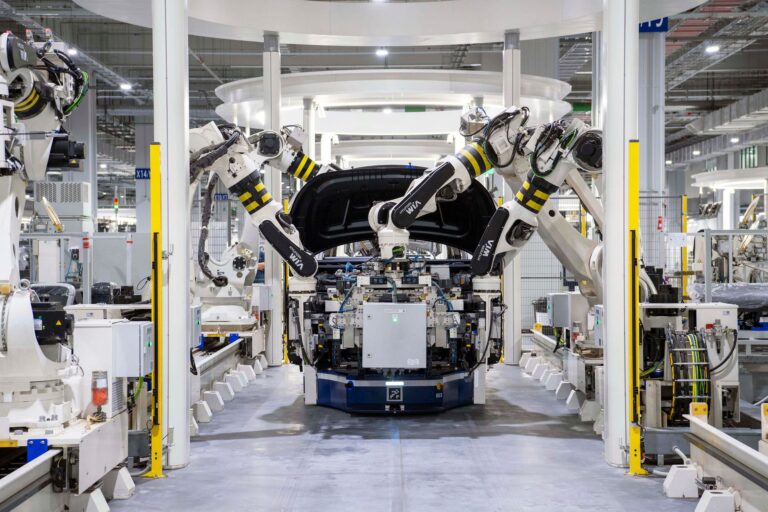

The imaging component market is entering a period of sustained expansion, with complete imaging systems projected to grow from $18.5 billion in 2025 to over $32 billion by 2035, driven primarily by automation adoption across manufacturing sectors. This growth reflects a fundamental shift in how industrial facilities approach quality control, inspection, and robotic operation—moving away from manual processes toward integrated vision-guided automation. In automotive assembly plants, for example, automated vision systems now inspect hundreds of parts per minute for defects invisible to human operators, setting the baseline for what’s becoming a non-negotiable capability in high-throughput manufacturing.
The expansion is uneven across imaging subsegments, with 3D imaging systems experiencing far more aggressive growth. The 3D imaging market alone is projected to expand from $38.7 billion in 2025 to $142.6 billion by 2035—a 13.9% compound annual growth rate that outpaces the broader category. This disparity reflects industry recognition that depth perception, which only 3D systems provide, is essential for tasks like robotic picking, part positioning, and surface inspection that 2D cameras cannot reliably perform.
Table of Contents
- What’s Driving the Imaging Component Growth Through 2035?
- The Shift From Manual Inspection to Automated Vision Systems
- 3D Vision Systems and AI Integration as Market Engines
- High-Speed Imaging and Real-Time Process Control
- Multispectral Imaging and Process Variability Challenges
- Impact on Semiconductor and Electronics Manufacturing
- Vision-Guided Robotics and the Integration Frontier
- Frequently Asked Questions
What’s Driving the Imaging Component Growth Through 2035?
The acceleration in imaging adoption traces to three interconnected forces: the cost of industrial labor, the precision limits of human inspection, and the capability maturation of AI-powered vision systems. Industrial facilities face chronic pressure to reduce scrap rates while maintaining throughput, a combination that manual inspection cannot achieve reliably. A pharmaceutical production line running at 300 pills per minute cannot rely on human inspectors to catch contamination or misprint defects consistently, yet imaging systems with deep learning can flag anomalies in real time without the accuracy degradation that comes with operator fatigue.
Market data shows industrial machine vision systems are projected to grow at approximately 8.2% CAGR through 2035, with optical detectors expanding at 7–9% annually. These underlying component markets are growing slower than 3D imaging, which suggests the real value creation lies not in the optical sensors themselves but in the intelligence and integration wrapping them. A 2025 electronics manufacturer deploying vision quality control might purchase the imaging hardware only once, but the software, integration, and retraining cycles continue indefinitely, creating recurring revenue opportunities that weren’t present in the era of static camera installations.
The Shift From Manual Inspection to Automated Vision Systems
Across automotive, electronics, food and beverage, and pharmaceutical sectors, the structural change is the same: human inspectors are being replaced, not necessarily by reducing headcount, but by reallocating those workers from repetitive checking tasks to higher-value roles like process troubleshooting and tooling maintenance. This reallocation only works, however, when the vision system’s false-negative rate—missed defects—is demonstrably lower than human performance. A critical limitation in early deployments was over-reliance on vision alone without integrating additional data streams, leading some facilities to discover that their imaging system was flagging 95% of actual defects but also generating 30% false positives, creating bottlenecks in the assembly line.
The integration challenge extends to legacy facilities. Retrofitting an existing production line with imaging systems is not simply a hardware installation; it requires recalibration of lighting, camera positioning, conveyor speed, and downstream handling systems to accommodate the new data flow. A company that installed a high-speed line-scan camera expecting to run at 300 frames per second might find its material handling system cannot react to rejection signals fast enough, turning the imaging system into a bottleneck rather than an acceleration. These integration headaches mean that first-generation automation projects often run 20–30% over budget in the deployment phase.
3D Vision Systems and AI Integration as Market Engines
The expansion of vision-guided robotics is directly tied to the adoption of 3D imaging systems, which provide the depth information necessary for a robot to position end effectors, avoid collisions, and manipulate variable objects. A collaborative robot picking components from a bin cannot function reliably with only 2D camera input; the 3D system tells the robot not just where the object is horizontally but at what angle and depth it sits, reducing pick failures from roughly 5–10% to below 1% in production deployments. The $103.9 billion growth projected in the 3D imaging market by 2035 reflects the centrality of this capability to any truly autonomous system.
Deep learning and artificial intelligence have become inseparable from modern imaging deployments. A vision system trained on thousands of labeled defect images can detect anomalies—including ones it was never explicitly trained to recognize—with performance that approaches or exceeds specialized human inspectors. However, this capability carries a significant warning: models trained on defects from a supplier’s 2024 production line may fail catastrophically when that supplier changes their manufacturing process or material source in 2026. Facilities deploying AI-based vision systems often find they must maintain continuous feedback loops and periodic retraining, adding operational complexity that was not present in rule-based or traditional machine vision approaches.
High-Speed Imaging and Real-Time Process Control
Demand for high-speed line-scan cameras with resolutions above 16K pixels is accelerating, driven by the need to inspect products at production-line speed without slowing throughput. A semiconductor fabrication plant running in-line metrology systems must measure pattern dimensions on silicon wafers to tolerances of hundreds of nanometers while the wafer moves through the inspection station at normal process speed; this is impossible with conventional area cameras and demands specialized line-scan hardware. The trade-off is cost: a 16K-pixel line-scan camera system can cost $40,000–$80,000, compared to $2,000–$5,000 for a conventional area camera, making these deployments economically viable only at facilities processing millions of units annually.
Integration of imaging systems with automated material handling—conveyor systems, robotic arms, sorting equipment—has become a standard architectural pattern. Rather than vision systems being isolated measurement tools, they now function as the sensory input for closed-loop material flow decisions. A defect detected by imaging triggers an immediate response: the conveyor diverts the part to a secondary inspection station, a robot removes the part from the line, or a quality database flags the batch for analysis. The technical challenge is not the imaging capability but the integration layer ensuring sub-100-millisecond latency between detection and response.
Multispectral Imaging and Process Variability Challenges
Multispectral imaging—capturing information across multiple wavelength bands rather than just visible light—is gaining traction for advanced packaging quality control, particularly in high-value electronics and pharmaceuticals. A multispectral system can detect microscopic defects like cracks in die-attach adhesive or contamination on circuit traces that would be invisible to standard visible-light imaging. However, multispectral systems are significantly more expensive, more complex to calibrate, and generate substantially more data per inspection than conventional imaging, creating downstream processing bottlenecks if the data pipeline is not designed for it.
A critical limitation of imaging-based quality control, regardless of spectral approach, is sensitivity to environmental variation. Lighting changes, camera temperature drift, and vibration of the inspection fixture can all degrade system performance, sometimes causing day-to-day reliability swings of 5–15% in defect detection rates. Facilities implementing imaging systems must invest in environmental controls—stable lighting, temperature regulation, vibration isolation—that themselves add 15–25% to deployment costs. Without these controls, the system may work perfectly during initial validation and then fail sporadically in production, eroding confidence in automation investments.
Impact on Semiconductor and Electronics Manufacturing
In semiconductor fabrication, the adoption of in-line metrology—using imaging systems to measure critical dimensions in real time during production—is reshaping how fabs approach process control. Traditionally, quality assurance relied on sampling methods: inspecting 5% of wafers at dedicated metrology stations outside the production flow, then analyzing statistical trends days later. Real-time imaging allows immediate detection of tool drift or process excursions, enabling fab engineers to intervene before an entire batch becomes scrap.
This shift has driven adoption of precision imaging systems throughout semiconductor fabs, contributing significantly to the industrial machine vision market’s 8.2% projected growth rate. Electronics contract manufacturers are using integrated imaging systems for automated optical inspection (AOI) of printed circuit boards at speeds of 100+ boards per minute, with defect detection capabilities that catch solder bridge defects smaller than 50 micrometers. The economic impact is substantial: a single missed solder defect reaching a customer can trigger field returns costing $500–$5,000 per unit, making even a $50,000 AOI system economically justified after just a handful of prevented failures.
Vision-Guided Robotics and the Integration Frontier
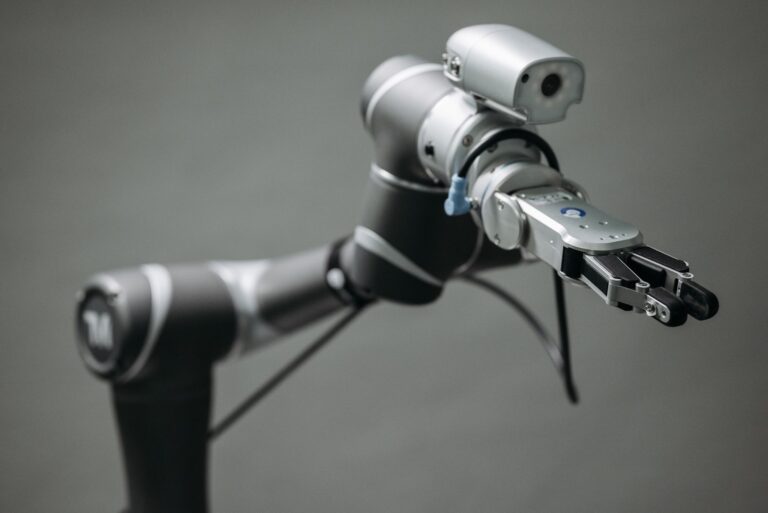
Vision-guided robotic systems represent the frontier of imaging integration, where visual feedback enables robots to perform tasks previously impossible with fixed programming. A collaborative robot equipped with 3D imaging and AI can now handle part orientation variability, pick objects of different sizes from an unstructured bin, and adapt its trajectory in real time based on visual feedback.
These systems are expanding into logistics, order fulfillment, and recycling facilities where object variability would have previously required human operators. The technical challenge is not the individual components but the integration—ensuring camera calibration, robot positioning accuracy, and real-time processing latency all align to enable reliable operation. A 5-millimeter error in camera calibration can render a vision-guided pick system useless, making the installation and commissioning phase of these systems substantially more complex than traditional robotic deployments that rely on fixed positioning.
- —
Frequently Asked Questions
What’s the difference between 2D and 3D imaging systems in manufacturing?
2D systems capture flat images useful for detecting surface defects and presence/absence checks. 3D systems provide depth information, enabling robots to position parts precisely and identify internal defects. 3D systems cost more but are essential for robotic manipulation and complex inspection tasks.
Why is AI integration becoming mandatory for imaging systems?
AI-trained models can detect defect patterns in images that traditional rule-based systems cannot, adapting to new defect types without manual programming. This capability is critical as products evolve and manufacturing processes change, though it requires ongoing retraining.
How much does a high-speed imaging installation cost?
Basic area cameras range $2,000–$5,000, while specialized 16K-pixel line-scan systems cost $40,000–$80,000. Total deployment cost, including integration, lighting, and infrastructure, typically runs 3–5 times the hardware cost alone.
What’s the biggest challenge in deploying imaging systems?
Integration complexity. The imaging system itself may work reliably, but connecting it to material handling, robots, and downstream quality databases requires sub-100-millisecond latency and environmental controls, adding 15–25% to project costs.
Which industries are adopting imaging fastest?
Semiconductor fabrication, automotive assembly, electronics contract manufacturing, and pharmaceutical production are leading adoption, driven by high-volume throughput and low tolerance for defects.
Why is 3D imaging growing faster (13.9% CAGR) than general imaging systems (6.5% CAGR)?
3D imaging enables robotic manipulation and advanced process control that 2D systems cannot achieve, making it essential infrastructure for true production automation. 2D imaging alone cannot satisfy the emerging requirements of vision-guided systems.