
AI² Robotics, a Shenzhen-based robotics company, secured $735 million in funding on June 29, 2026, bringing its valuation to approximately $2.8 billion—a milestone that underscores the intensity of investment in humanoid robotics technology. The funding round included participation from the National Small and Medium Enterprises Development Fund, Sino Biopharmaceutical, Moutai Group, CICC Capital, and GSR Ventures, demonstrating how capital is flowing from state-backed entities, industrial corporations, and financial institutions simultaneously into the sector. This convergence of investor types signals genuine market conviction rather than speculative hype.
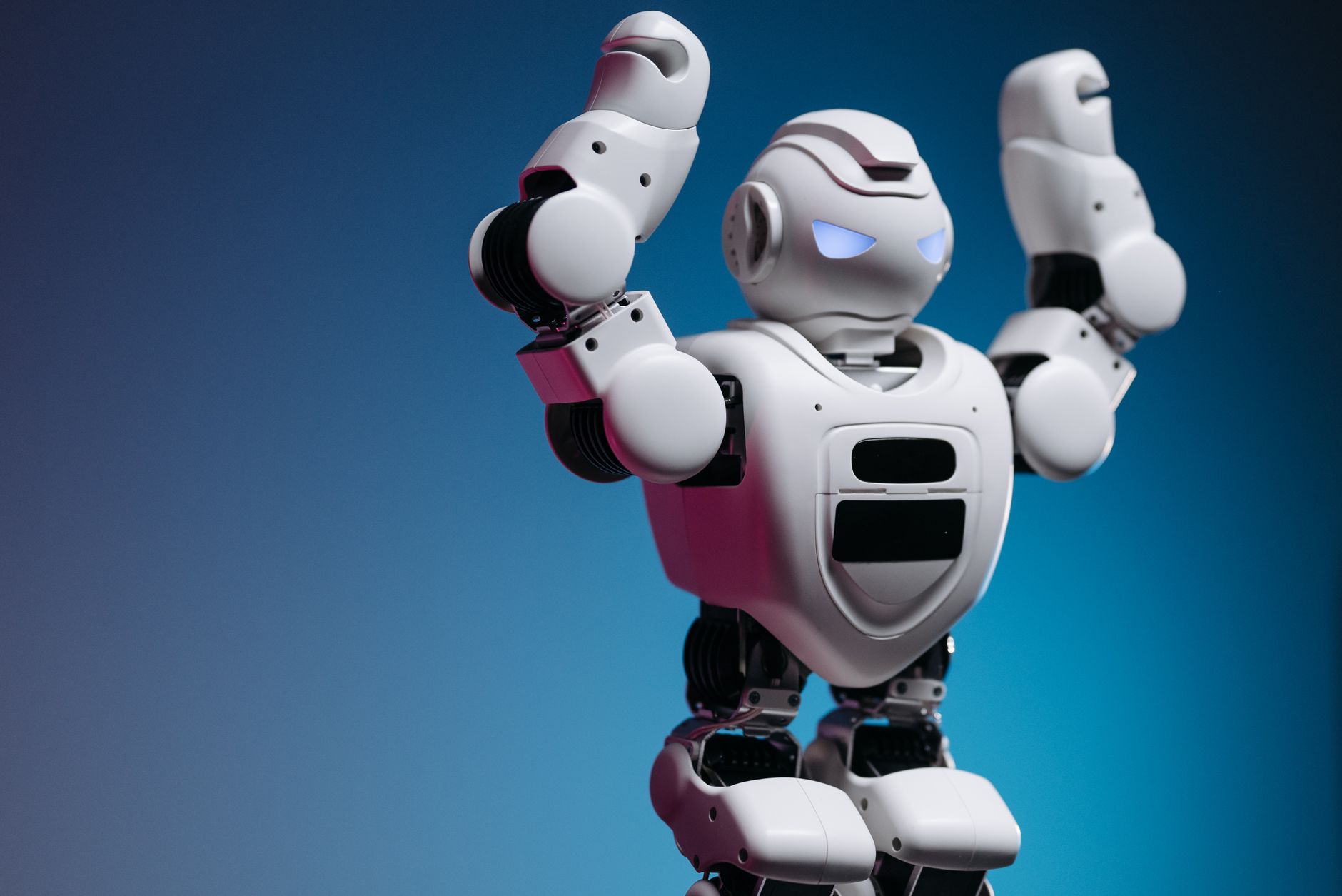
The company produces a wheeled mobile manipulator with a humanoid torso and five-fingered hands known as AlphaBot, positioning itself distinctly within China’s competitive robotics landscape. Where most Chinese humanoid robot makers pursue legged designs, AI² Robotics’ wheeled approach represents a deliberate engineering choice that prioritizes stability and load capacity over bipedal mimicry. The funding injection provides substantial capital for scaling manufacturing, expanding research, and competing against other well-funded robotics startups that emerged from similar funding cycles in 2024 and 2025.
Table of Contents
- Why Does Chinese Humanoid Robotics Command Such Massive Capital Infusions?
- The Wheeled Design Strategy and Its Trade-offs
- Understanding AlphaBot’s Hardware and Operational Scope
- The Investor Coalition and What It Reveals About Market Structure
- Valuation Dynamics and Competitive Pressure
- China’s Robotics Ecosystem and Strategic Positioning
- Manufacturing Scale and the Path to Profitability
Why Does Chinese Humanoid Robotics Command Such Massive Capital Infusions?
The $735 million funding round reflects a strategic bet on physical AI—robotics systems that perform real-world manipulation tasks rather than purely computational work. China’s government has made robotics and automation core pillars of industrial modernization, particularly as manufacturing faces labor constraints and pressure to increase precision. State-backed participation through the National Small and Medium Enterprises Development Fund signals that this is not merely a commercial venture but an initiative aligned with national technology priorities.
The industrial investor base—including Moutai Group, a massive spirits and beverage conglomerate—suggests AI² Robotics’ systems have applications across multiple sectors. Manufacturing environments, logistics hubs, and processing facilities all require mobile manipulation capabilities that can handle varied tasks without extensive reprogramming. Unlike pure software plays or semiconductor companies, robotics companies like AI² Robotics represent tangible infrastructure that customers must physically integrate, creating stickiness and recurring revenue opportunities once deployed at scale.
The Wheeled Design Strategy and Its Trade-offs
AI² robotics’ choice to build wheeled mobile manipulators rather than bipedal or legged systems reflects a practical engineering calculation. Wheeled platforms offer superior stability when carrying heavy loads, operate reliably on factory floors and warehouse ramps, and consume significantly less power than legged systems—a crucial advantage for round-the-clock industrial deployment. The tradeoff is reduced adaptability to uneven outdoor terrain; a legged robot might traverse a rocky construction site, while a wheeled system needs prepared surfaces.
The market‘s receptivity to this design philosophy matters. While Boston Dynamics and other international competitors have invested years in bipedal locomotion, AI² Robotics’ investors clearly viewed the wheeled approach as commercially viable and differentiated. This confidence reflects production-readiness; wheeled systems can be manufactured at scale immediately, whereas legged designs still require extensive prototype validation. However, competitors pursuing legged designs may eventually claim superior versatility, potentially limiting wheeled-robot market share in outdoor or unstructured environments.
Understanding AlphaBot’s Hardware and Operational Scope
The five-fingered hand design is a deliberate technical choice that significantly increases manipulation complexity and cost compared to simpler gripper systems. Five-fingered hands enable object manipulation without specialized fixtures—grasping a coffee mug, opening a door, or manipulating tools in the human-scale environment. The tradeoff: increased mechanical fragility, more sensors requiring calibration, and higher repair costs when fingers jam or servos fail in dusty or wet industrial settings.
AlphaBot’s humanoid torso design allows it to reach high shelves, work at bench height, and operate in workspaces designed around human ergonomics without extensive facility redesign. Factories and warehouses already have doorways, work tables, and tool racks at human dimensions. A system that fits that existing infrastructure reduces deployment friction. The limitation is that truly humanoid design adds weight, requires more sophisticated balance control, and increases power draw compared to lower-profile designs optimized purely for reach and payload.
The Investor Coalition and What It Reveals About Market Structure
The diversity of AI² Robotics’ investors—government funds, pharmaceutical companies, beverage conglomerates, and venture firms—indicates that robotics now spans multiple industrial sectors rather than remaining confined to automotive or electronics manufacturing. Moutai Group’s participation is particularly instructive; the company operates massive production facilities where beverage bottling, packaging, and quality inspection could theoretically be partially automated. This suggests AI² Robotics has already demonstrated viability in domains beyond traditional electronics or automotive.
CICC Capital and GSR Ventures represent traditional venture capital and deep-pocketed institutional investors, indicating they believe humanoid robotics can generate venture-scale returns—typically meaning exits valued at $5–20 billion or greater. The presence of both venture capital and state-backed institutions in a single round creates potential tensions; venture investors prioritize return on capital, while government funds often accept lower returns if strategic objectives are met. This structure may actually benefit AI² Robotics by reducing pressure for aggressive exit timelines that could force premature product decisions.
Valuation Dynamics and Competitive Pressure
At $2.8 billion post-funding, AI² Robotics commands a valuation that exceeds many established industrial robotics companies despite operating for a fraction of their history. The valuation reflects confidence in humanoid robots as a major market shift, not incremental improvement. Other Chinese robotics startups, including X Square Robots, reached similar $2.8 billion valuations in the same period, suggesting the market may be pricing a wave of Chinese robotics companies, not just individual winners.
However, high valuations create risk. If AI² Robotics cannot achieve significant revenue scale within 3–5 years, later funding rounds or acquisition discussions will face difficult markdowns. The company must transition from well-funded startup to a business generating billions in revenue, which requires solving reliability, cost reduction, and customer adoption challenges simultaneously. Competitors at similar valuations face identical pressures, potentially triggering consolidation or failures among weaker players.
China’s Robotics Ecosystem and Strategic Positioning
AI² Robotics’ prominence reflects broader shifts in where robotics innovation concentrates. China now houses multiple well-funded humanoid robotics startups competing for contracts, customers, and ecosystem partnerships. This creates an innovation engine but also intensifies price competition; as multiple vendors target the same markets, they will eventually pressure each other on cost and performance.
International competitors such as Boston Dynamics and Tesla’s Optimus program operate under different capital structures and timelines, but they will face price and capability competition from Chinese entrants. The government backing visible in this funding round—through the National Small and Medium Enterprises Development Fund—signals that China views robotics as essential infrastructure, potentially worthy of industrial policy support similar to semiconductors or electric vehicles. Companies with government backing sometimes enjoy preferential access to state purchasing, subsidized facilities, or regulatory tailwinds, though these advantages are rarely formalized publicly.
Manufacturing Scale and the Path to Profitability
With $735 million in new capital, AI² Robotics must now prove it can manufacture AlphaBot at meaningful scale—thousands of units annually rather than dozens. Manufacturing a humanoid robot requires precision assembly, specialized components like actuators and vision systems, and integration testing that cannot easily be automated initially. The company’s ability to reach profitability depends entirely on growing volume while holding unit costs steady or declining, a challenge that has humbled many robotics startups.
The wheeled design choice becomes significant at this stage. Wheeled systems require fewer articulated joints, potentially simplifying manufacturing and quality control compared to legged designs. If AI² Robotics can scale manufacturing to 5,000–10,000 units annually within two years, the $735 million funding becomes justified; if volume stalls at hundreds of units, the capital will have been spent on overhead and R&D refinement without revenue growth to match the spending rate.