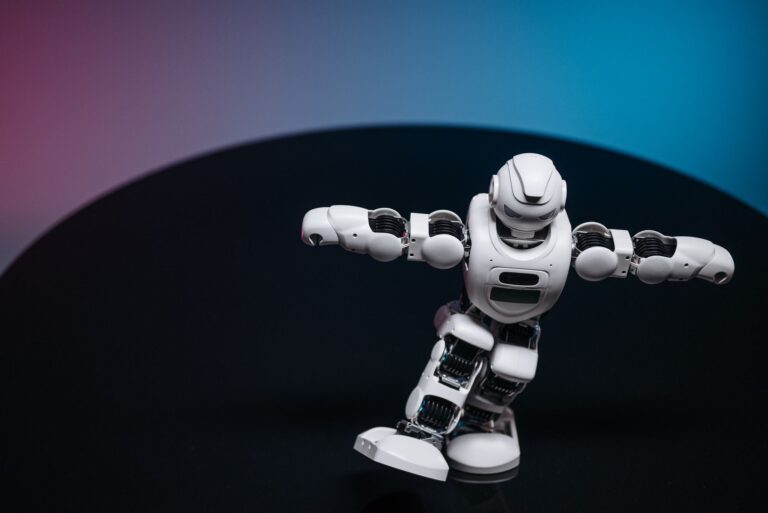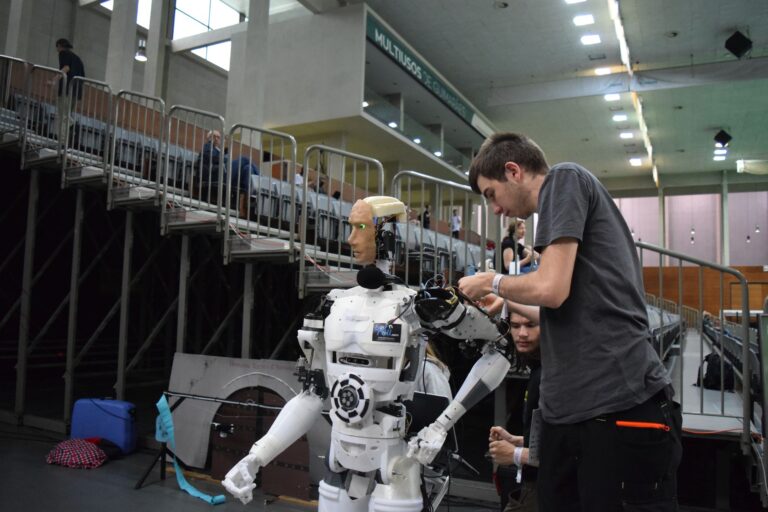

For the first time, humanoid robots have successfully performed live surgery under the real-time control of human surgeons. In early July 2026, a team at UC San Diego’s Advanced Robotics and Controls Lab (ARCLab) completed seven medical procedures, including a successful gallbladder removal, using two teleoperated Unitree G1 humanoid robots. The breakthrough represents a fundamental shift in how surgery can be delivered, particularly for patients in remote or underresourced areas where access to qualified surgeons remains limited. The procedures were guided by surgeons Charles Goldberg and Preetham Suresh from UC San Diego School of Medicine, with oversight from Professor Michael Yip, who led the research initiative.
Rather than replacing surgeons, the robots extended their reach—the human operators maintained constant control through motion capture technology and specialized pedal systems, performing tasks with precision that rival traditional surgical techniques. The fact that two humanoid robots successfully completed an entire procedure together demonstrates that surgical robotics need not depend on massive, stationary equipment. The scale of the accomplishment becomes clearer when considering the robot’s specifications: standing just five feet tall and weighing 60 pounds, the Unitree G1 represents a departure from the bulky surgical robots currently found in many operating rooms. This compact design opens possibilities for deployment in settings where space and infrastructure are significant constraints.
Table of Contents
- How Are Humanoid Robots Performing Complex Surgery?
- The Unitree G1 Humanoid Robot: Specifications and Design
- Real-Time Teleoperation: How Surgeons Control Remote Robots
- Extending Healthcare to Underresourced Regions
- Technical and Regulatory Challenges Facing Surgical Robotics
- The UC San Diego Research Team and Their Methodology
- The Seven Procedures: Demonstrating Surgical Versatility
- Frequently Asked Questions
How Are Humanoid Robots Performing Complex Surgery?
The surgical procedures completed in July 2026 ranged from routine physical examinations to sophisticated surgical interventions. Among the seven procedures were two major surgeries that demonstrated the robots‘ capability to perform intricate, multi-step operations. The first major surgery was a cholecystectomy—the removal of a gallbladder—performed with one humanoid robot working in coordination with a human surgeon. The second major surgery was completed with two humanoid robots operating as a synchronized team, with neither human nor robot performing the procedure in isolation. The key innovation enabling these operations was the robots’ ability to synchronize both arms simultaneously to perform delicate, interdependent tasks.
During a surgical procedure, one robotic arm could hold tissue steady while the other cut or sutured—operations that require constant coordination and real-time adjustment. This dual-arm synchronization is not trivial; it demands precision at the millimeter scale and responsiveness that must occur without perceptible delay. The motion capture and foot pedal control systems allowed surgeons to translate their own hand and body movements into corresponding robot actions, creating a direct line between surgical intention and execution. Compared to older telepresence surgical systems that rely on pre-programmed motions or heavily assisted movement, the UC San Diego system operates on direct human teleoperation. This approach prioritizes surgeon autonomy and real-time decision-making, placing the human operator at the center of every action rather than having the robot execute a predetermined sequence.
The Unitree G1 Humanoid Robot: Specifications and Design
The Unitree G1 robots used in the UC San Diego procedures represent a specific design philosophy: compact, mobile, and capable of performing tasks in environments not originally designed for surgical equipment. At five feet tall and 60 pounds, each robot is significantly lighter and smaller than the da Vinci Surgical System or other established robotic surgery platforms, which can weigh hundreds of pounds and occupy substantial floor space. This size difference is not merely an engineering curiosity—it reflects a fundamental shift in how surgical robotics might be distributed globally. The robots’ lightweight and compact nature create both advantages and limitations. On the advantage side, they can be transported, deployed in field hospitals, and operated in clinical settings with minimal infrastructure modifications. A remote clinic in a developing region, for example, would not need to invest in reinforced flooring or specialized operating room architecture.
On the limitation side, the smaller size potentially constrains the payload and reach compared to larger systems. Additionally, the humanoid form factor, while conceptually appealing, may require different ergonomic considerations than arm-based surgical robots designed specifically for operating room layouts. Critically, the reliability and durability of humanoid robots in a sterile surgical environment remains an open question. Traditional surgical robots are built with extensive redundancy, sealed against contamination, and designed to operate for thousands of hours in sterile conditions. The Unitree G1, by contrast, is a research platform not yet certified for routine clinical use. Deployment in actual surgical settings would require extensive validation, sterilization protocols, and regulatory approval.
Real-Time Teleoperation: How Surgeons Control Remote Robots
The control system linking surgeon to robot operates through motion capture technology and specialized foot pedals. The surgeon wears sensors that track the position and movement of their hands, arms, and potentially their head or torso. This motion data is transmitted to the humanoid robots, which interpret and reproduce the surgeon’s movements in real time. The foot pedals add an additional layer of control, allowing the surgeon to switch between different modes of operation or fine-tune the robot’s actions without removing their hands from the control position. Real-time teleoperation introduces latency as a critical constraint. Network delays—even a fraction of a second—can degrade the surgeon’s ability to perform precise movements or react to unexpected tissue resistance or bleeding.
In the UC San Diego procedures, the robots and control systems were operated in proximity, likely on a dedicated, low-latency network. This setup differs significantly from a scenario in which a surgeon in San Francisco might operate a robot in rural Guatemala or sub-Saharan Africa, where network infrastructure and satellite latency could introduce unacceptable delays. The research team’s close coordination of systems in a controlled laboratory environment successfully demonstrated the technical feasibility; extending this to truly remote scenarios introduces complications that have not yet been fully resolved. The motion capture approach also contrasts with haptic feedback systems, which provide tactile sensation back to the surgeon. Without haptic feedback, the surgeon operates partly blind to tissue resistance, bleeding patterns, and other sensory cues that human surgeons normally use. The UC San Diego team addressed this through visual feedback and surgeon judgment, but the absence of haptic sensation represents a meaningful gap compared to traditional surgery or more advanced robotic systems that attempt to recreate touch.
Extending Healthcare to Underresourced Regions
The humanitarian potential of this technology is substantial. In regions lacking sufficient surgical specialists—much of sub-Saharan Africa, Southeast Asia, and Central America—humanoid surgical robots could theoretically allow a qualified surgeon to operate on patients thousands of miles away. A surgeon in a major medical center could guide robot hands through procedures while a local medical team manages anesthesia, patient positioning, and post-operative care. The Unitree G1’s compact size and lower cost compared to traditional surgical robots make this scenario more feasible than it would be with existing systems. Yet the reality of deployment is more complex than simply shipping robots to underresourced regions.
Network infrastructure must support low-latency video transmission and control signals; local medical teams require training to support robotic procedures; regulatory frameworks do not yet exist in most countries; and the question of liability and accountability in remote surgery remains unresolved. A surgical complication occurring in a hospital in Nigeria, performed by a surgeon in New York, raises difficult questions about who is responsible, which jurisdiction’s laws apply, and whether informed consent can be truly obtained across such boundaries. These are not engineering problems; they are policy, ethical, and legal challenges that will shape how this technology is adopted. The cost factor also deserves attention. While the Unitree G1 is cheaper than legacy surgical robots, the full system—including control stations, network infrastructure, training, and regulatory compliance—remains expensive by the standards of global health. A regional hospital in a low-income country might invest half a million dollars in one surgical robot but receive only a handful of surgeons capable of operating it remotely, and those surgeons must overcome time zone challenges, language barriers, and the cognitive load of operating across distance.
Technical and Regulatory Challenges Facing Surgical Robotics
The UC San Diego demonstration operated within the controlled environment of a research laboratory with dedicated equipment, network oversight, and immediate availability of expert support. Translating this achievement into routine clinical practice requires solving several persistent technical problems. Chief among these is reliability under stress—surgical procedures are inherently unpredictable, with bleeding, adhesions, anatomical variations, and equipment malfunctions all possible. A humanoid robot’s joint servos, actuators, and control electronics must withstand the demands of surgery without failure. Existing surgical robots address this through extensive redundancy and component hardening; the Unitree G1 and similar research platforms have not yet undergone the validation testing necessary to establish their safety record. A second challenge is regulatory approval. The U.S.
Food and Drug Administration, the European Medicines Agency, and similar bodies in other countries require extensive clinical trials and safety documentation before approving any new surgical device. A system that performs seven procedures in a research setting is far from the tens of thousands of procedures required to establish safety and efficacy profiles for regulatory acceptance. The pathway to FDA approval for a humanoid surgical robot would likely take several years and cost tens of millions of dollars—a barrier that may limit which organizations can bring such systems to market. The third challenge is skill transfer. Surgeons operating traditional surgical robots undergo specific training programs; competency is assessed, and ongoing training is mandated. Humanoid robot surgery introduces new ergonomic and control paradigms. Can a surgeon with 20 years of traditional surgical experience instantly adapt to humanoid teleoperation? Does training need to begin in surgical residency, or can it be added during a surgeon’s career? These questions remain largely unexplored, and the answers will shape how quickly this technology enters clinical practice.
The UC San Diego Research Team and Their Methodology
Professor Michael Yip and his team at the Advanced Robotics and Controls Lab approached the challenge with both technical rigor and pragmatic planning. Rather than attempting a single, high-stakes surgery as a publicity stunt, the team performed seven procedures of varying complexity, starting with routine examinations and progressing to major surgical interventions. This staged approach gathered data on system reliability, control responsiveness, and surgeon adaptation across different scenarios.
The involvement of actual surgeons from UC San Diego School of Medicine—Charles Goldberg and Preetham Suresh—ensured that the demonstration was clinically meaningful rather than a mere engineering exercise. The research inherently required deep collaboration between roboticists, surgeons, anesthesiologists, and operating room staff. Roboticists designed and refined the control systems; surgeons provided feedback on usability and identified what worked and what did not; operating room teams ensured sterility and patient safety. This multidisciplinary approach reflects the reality that surgical robotics cannot be developed by engineers alone; clinical expertise is essential.
The Seven Procedures: Demonstrating Surgical Versatility
The collection of seven procedures provides insight into the breadth of what the humanoid robots demonstrated. In addition to the two major surgeries—the cholecystectomy and a second complex procedure performed by two robots working together—the team completed routine physical examinations and other interventions of intermediate complexity. This variety serves as a proof-of-concept across different surgical domains. A system that works only for gallbladder removal might be useful but limited; a system demonstrating capability across multiple procedure types suggests broader technical applicability.
The successful coordination of two humanoid robots performing a single procedure together represents a distinct achievement. Rather than one robot handling the primary surgical task while another assists, both robots contributed meaningfully to completing the operation. This team-based approach opens the possibility of procedures that exceed the capabilities of a single robot, though it also introduces the complexity of coordinating two independent systems with slightly different responses and potential timing mismatches. The UC San Diego team’s completion of this procedure demonstrates that such coordination is technically achievable, though challenges in synchronization, sensor fusion, and error recovery would need to be addressed before such systems enter routine clinical use.
Frequently Asked Questions
Can surgeons operate humanoid robots from across the world?
In theory, yes, but significant challenges remain. Latency—the delay between a surgeon’s movement and the robot’s response—becomes problematic over long distances and satellite links. The UC San Diego procedures operated on a dedicated, low-latency local network. Truly global remote surgery would require solving network delays, establishing liability frameworks, and addressing regulatory questions about who is responsible if complications occur across international borders.
Is this technology available for patients now?
Not yet. The UC San Diego demonstration was a research breakthrough, not a cleared medical product. The humanoid robots used are research platforms that have not undergone FDA approval or the extensive clinical trials required for routine surgical use. Deployment in actual hospitals would likely require several years of additional development and regulatory processes.
How much does a humanoid surgical robot cost?
The Unitree G1 robots are significantly cheaper than traditional surgical systems like the da Vinci, but the complete surgical system—including control stations, training, and regulatory compliance—remains expensive. Exact pricing for a surgical-grade humanoid system has not been publicly disclosed, as these are still research platforms.
Are these robots replacing surgeons?
No. The robots are tools controlled by surgeons in real time. The human surgeon directs every movement through motion capture technology. In the UC San Diego procedures, surgeons remained in active control throughout. The goal is to extend a surgeon’s reach and capability, not to remove the surgeon from the equation.
Why use humanoid robots instead of traditional surgical arms?
Humanoid robots are more compact, lighter, and potentially more portable than traditional robotic surgery systems. A five-foot, 60-pound robot can be transported and deployed more easily than multi-ton surgical platforms. This makes humanoid systems potentially useful for field hospitals, remote clinics, or regions with limited infrastructure. Traditional surgical arms, however, are more specialized for operating room environments and have extensive regulatory approval.
What happens if the internet connection fails during surgery?
Immediate loss of surgeon control. This is why the UC San Diego procedures operated on a dedicated, reliable network in a research lab rather than over the public internet or satellite links. Network reliability and fail-safe protocols represent ongoing technical challenges for any teleoperated surgical system. The conditions of these initial demonstrations—controlled environment, reliable connectivity, nearby surgical team—differed significantly from a scenario involving remote international surgery.