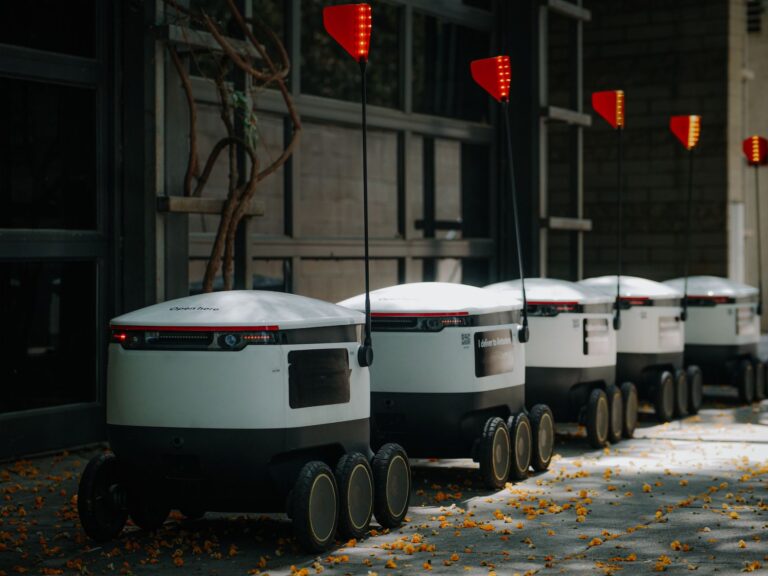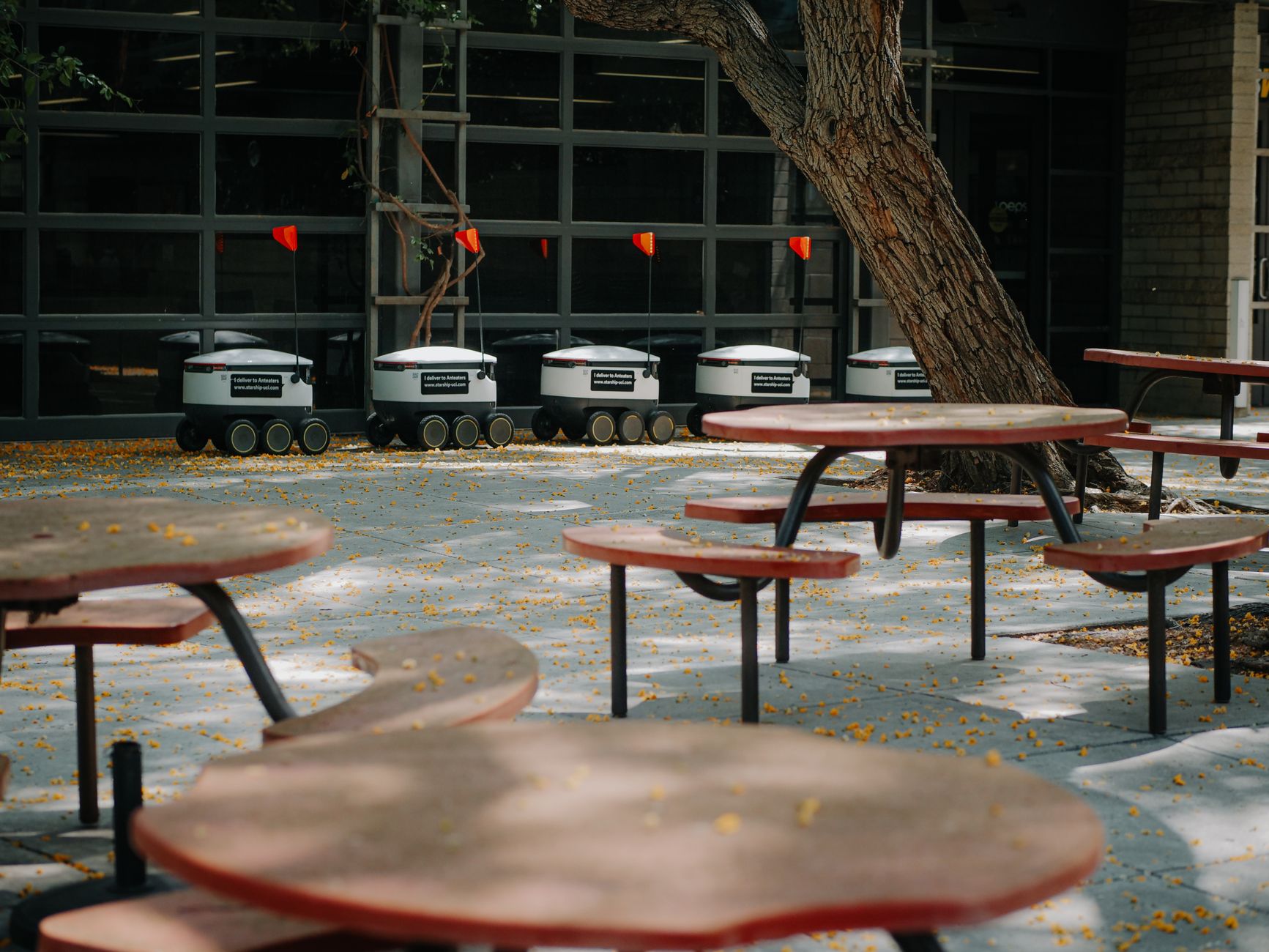

DoorDash has expanded its autonomous delivery operations to New Mexico, deploying robot fleets to navigate both roadways and residential areas in select regions. The move represents a significant scaling effort for the company’s robotics program, testing how autonomous delivery systems perform across varied terrain and infrastructure common to the Southwest. The deployment marks a growing phase for autonomous last-mile delivery, moving beyond single-city pilots into multi-region operations.
The robots operating in New Mexico face distinct challenges compared to coastal pilots tested in previous years. Residential areas with longer driveways, varied street layouts, and different weather patterns create different navigation demands than dense urban environments. This geographic diversity provides valuable data for engineering teams working to refine how autonomous systems handle variable real-world conditions.
Table of Contents
- What Autonomous Delivery Robots Actually Do on Roads and Driveways
- Technical Infrastructure and On-Road Navigation Limitations
- State Regulation and Testing Authority
- Operational Efficiency and Real-World Economics
- Safety Records and Risk Factors in Mixed Environments
- Integration With Existing Delivery Networks
- Data Collection and Iterative Improvement Cycles
What Autonomous Delivery Robots Actually Do on Roads and Driveways
Autonomous delivery robots are typically small, wheeled units designed to travel at pedestrian speeds, carrying packages weighing a few pounds to 15-20 pounds depending on the model. Unlike self-driving cars, these robots operate at speeds of 4-10 miles per hour, giving pedestrians and vehicles ample reaction time. On roadways, they use sidewalks and bike lanes when available, crossing streets at designated pedestrian crossings with advanced camera and sensor systems detecting traffic lights and pedestrian signals. In residential settings, robots must handle unpaved driveways, dirt roads, and varying surface conditions far more complex than urban pavement.
A driveway with loose gravel or a pothole presents actual challenges to robot navigation systems, requiring onboard weight distribution and suspension engineering quite different from what works on flat city blocks. Some New Mexico neighborhoods have longer distances between streets and residences, forcing robots to travel greater solo distances than traditional urban environments allow. The key operational advantage is predictability—robots follow predetermined safe routes and maintain consistent performance across days and weather conditions. This differs from human delivery methods, where performance varies by courier mood, traffic, and individual decision-making.
Technical Infrastructure and On-Road Navigation Limitations
Deploying robots at scale requires real-time GPS mapping, continuous cellular connectivity for remote monitoring, and backup systems for when automation fails. New Mexico’s terrain includes areas with weaker cellular coverage than urban centers, creating genuine technical constraints. Robots need to identify when conditions exceed their operational limits and request human intervention—rain on sensors, unexpected obstacles, or software errors all require failover protocols. One often-overlooked limitation is weather resilience. While New Mexico has clear skies much of the year, monsoon seasons bring dust storms that severely degrade camera-based navigation. Snow, though rare in most of the state, can make sensor calibration unreliable.
Robots with inadequate weatherproofing can fail entirely, and replacing waterlogged units becomes expensive. Several autonomous vehicle programs have discovered weather limitations only after large-scale deployments encountered unexpected seasonal patterns. Roadway interaction presents another constraint. Delivery robots sharing sidewalks and streets with pedestrians, cyclists, and vehicles create potential conflict points. A robot that stops unexpectedly or navigates unpredictably can cause accidents. This is why most deployments keep robots strictly to planned, mapped routes and restrict operation to specific time windows.
State Regulation and Testing Authority
New Mexico has positioned itself as a testing ground for autonomous technologies, offering regulatory clarity that some other states withhold. The state’s approach attracts companies seeking to conduct real-world operations without excessive legal friction. This regulatory environment is a primary reason DoorDash and similar companies choose New Mexico for expanded pilots. However, regulation varies significantly across municipalities within New Mexico. A city may welcome robot operations while neighboring jurisdictions restrict them or require special permitting.
Companies operating across multiple towns must navigate these fragmented local rules, often leading to robots being active in some neighborhoods but prohibited in others just miles away. This patchwork creates operational complexity that larger, single-city pilots avoid entirely. Liability questions remain partially unresolved in most regulatory frameworks. If a robot malfunctions and causes property damage or injury, liability assignment between the operator, municipality, and manufacturer remains contested in many states. This legal ambiguity creates business risk that conservative companies price into their expansion decisions.
Operational Efficiency and Real-World Economics
Autonomous delivery robots can operate at lower cost-per-delivery than human couriers once deployment scale reaches certain thresholds, typically several hundred units across a region. A robot completing 50-75 deliveries per day versus a courier managing 100-150 creates different unit economics. The capital cost of robot units—generally $15,000 to $40,000 per unit depending on sophistication—requires significant order volume to justify financially. The actual economics are far more granular than companies typically admit.
Weather-related downtime, maintenance costs for failed units, and the need for human supervisors for non-autonomous final delivery segments all reduce the theoretical savings. A residential delivery requiring entry through a gated community or a building with interior corridors still needs human completion, making door-to-door autonomous delivery mathematically inferior in many cases. New Mexico’s lower urban density compared to coastal pilot cities means longer distances between delivery clusters, reducing the number of package pickups per robot per day. This density challenge is precisely why choosing New Mexico represents a harder operational test than maintaining pilots in San Francisco or Los Angeles, where delivery clusters support higher robot utilization rates.
Safety Records and Risk Factors in Mixed Environments
Autonomous delivery robot programs have maintained reasonably clean safety records in controlled environments, but incidents do occur. Robots have collided with parked vehicles, failed to navigate around temporary obstacles, and malfunctioned while crossing roads. These incidents are statistically rare relative to operating hours, but they establish proof that the technology is not risk-free. Residential areas introduce pedestrian variables that controlled environments eliminate. Children, pets, and residents unfamiliar with robot operations can trigger unpredictable interactions.
A robot hesitating while a dog approaches or failing to yield properly when a pedestrian walks toward it introduces real safety uncertainty. Unlike closed-course testing, real neighborhoods contain variables that engineering teams cannot fully predict or control. The most significant risk factor is automation bias—people assuming robots work perfectly and therefore not monitoring them closely. Pedestrians might step in front of a robot believing it will stop, not realizing sensors have missed them. This behavioral hazard is systemic to autonomous systems deployment and cannot be engineered away; it requires cultural adaptation as communities adjust to robot presence.
Integration With Existing Delivery Networks
DoorDash operates one of the largest on-demand delivery networks in North America, creating a potential advantage for robot integration. Existing customer relationships, merchant partnerships, and delivery zone mapping provide infrastructure that pure robotics startups must build from scratch. This integration advantage often receives less attention than the robot technology itself, but it represents a genuine competitive moat.
However, integrating autonomous systems with existing human-courier networks creates logistical complexity. Robots excel at specific delivery profile types—packages under 20 pounds, single-recipient addresses with driveway access, within 2-3 miles of fulfillment centers. Multi-package routes, apartment buildings, or deliveries requiring customer interaction fall back to human couriers, forcing hybrid operations that increase coordination overhead.
Data Collection and Iterative Improvement Cycles
Every autonomous delivery robot deployment generates massive datasets—millions of sensor readings, thousands of decision-tree branches navigated, hundreds of edge cases encountered. This data becomes the raw material for improving navigation algorithms, predicting failure modes, and optimizing route planning. Large-scale deployment across New Mexico creates data collection at volumes difficult to achieve in smaller pilots.
New Mexico’s geographic and demographic diversity offers valuable training variety. Desert roads present different visual environments than pine forest areas or suburban developments. Robots learning to navigate this range develop more robust models than systems trained primarily on homogeneous terrain. This generalization benefit is a legitimate advantage of geographic expansion that extends beyond simple business scaling into technical improvement—the robots operating in Albuquerque benefit from data collected by robots operating in rural southern New Mexico, creating a learning network effect.