
A recent video featuring the NEO humanoid robot has reignited a longstanding debate in robotics about the uncanny valley—the unsettling feeling humans experience when confronted with machines that look almost, but not quite, human. The footage sparked discussion across robotics forums and social media about whether achieving greater human-likeness in robot design is actually desirable, or whether it creates psychological discomfort that undermines their effectiveness in human environments.
This isn’t a new question, but NEO’s specific implementation has forced engineers and designers to confront a practical dilemma: what level of anthropomorphism serves robots best, and at what point does added realism become a liability rather than an asset? The uncanny valley effect, first theorized in the 1970s, describes a dip in human comfort as something becomes increasingly human-like without crossing the threshold into genuine humanity. NEO’s case demonstrates that this effect remains relevant to real-world robotics development, regardless of how much progress the field has made. The video prompted designers and researchers to reconsider whether sleek, distinctly robotic forms might actually build better human-robot interaction than the push toward increasingly realistic android features.
Table of Contents
- What Makes Humanoid Robots Trigger the Uncanny Valley Response?
- The Engineering Reality Behind NEO’s Humanoid Design
- Why the Uncanny Valley Matters for Actual Robot Deployment
- Rethinking Robot Design Strategy—Avoiding the Trap
- The Limits of Current Computer Vision and Motor Control in Humanoid Systems
- How Design Studios Are Responding to the NEO Debate
- The Ongoing Question of Robot Embodiment and User Experience
- Frequently Asked Questions
What Makes Humanoid Robots Trigger the Uncanny Valley Response?
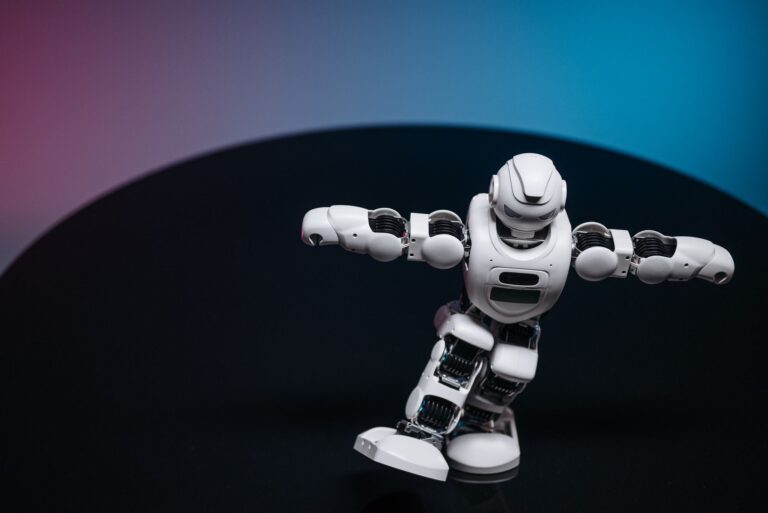
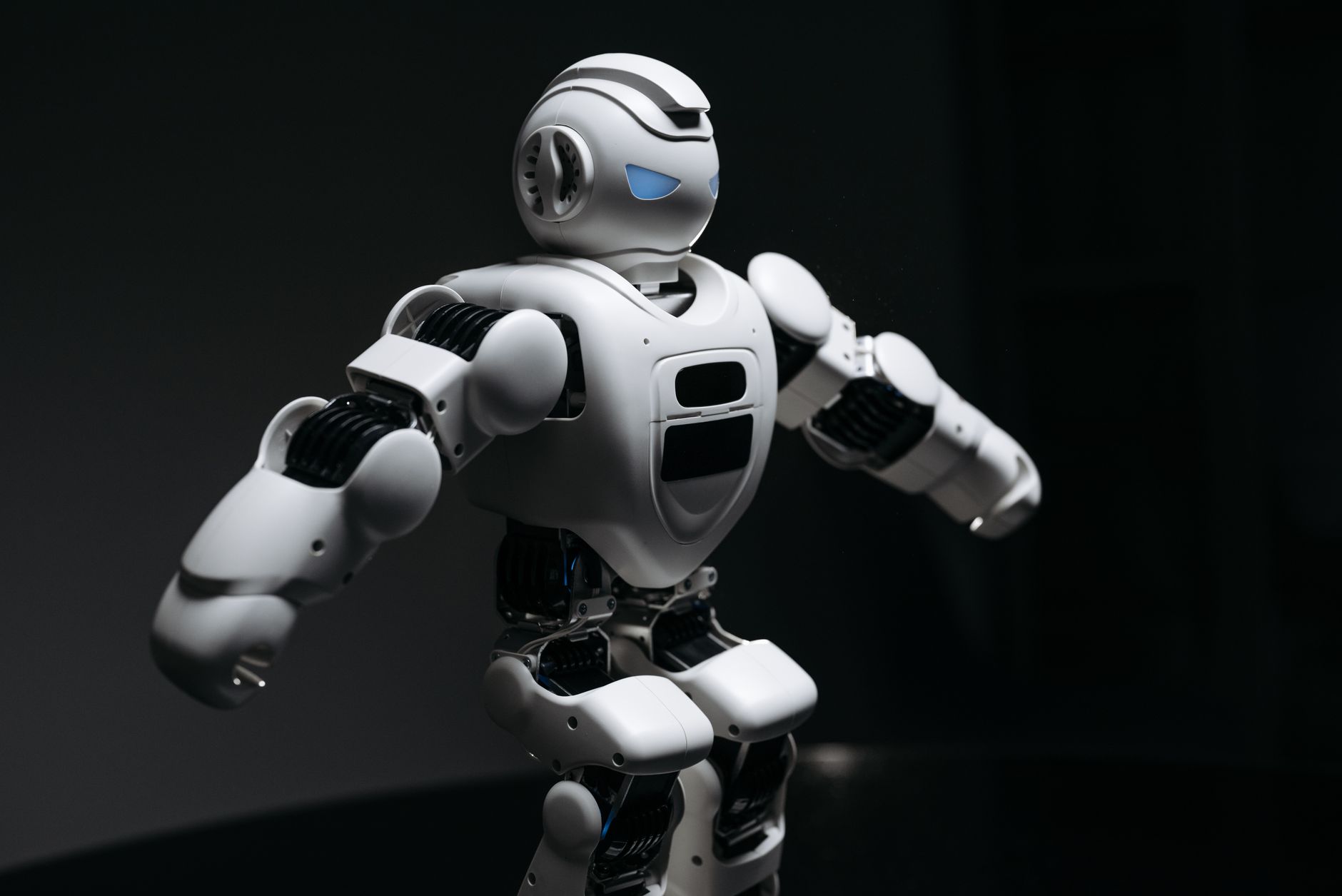
The uncanny valley operates on human psychology rather than engineering logic. When robots display human-like movement, facial expressions, or proportions without matching human subtlety, our brains register something as wrong—familiar enough to process using human-recognition systems, yet different enough to trigger alarm. Imperfect eye movement, slight delays in speech synchronization, or joints that move too smoothly can all contribute to this effect. NEO’s demonstration appears to have included one or more of these near-human characteristics without achieving the full coherence required to cross into the “human” category, landing instead in the uncomfortable middle ground.
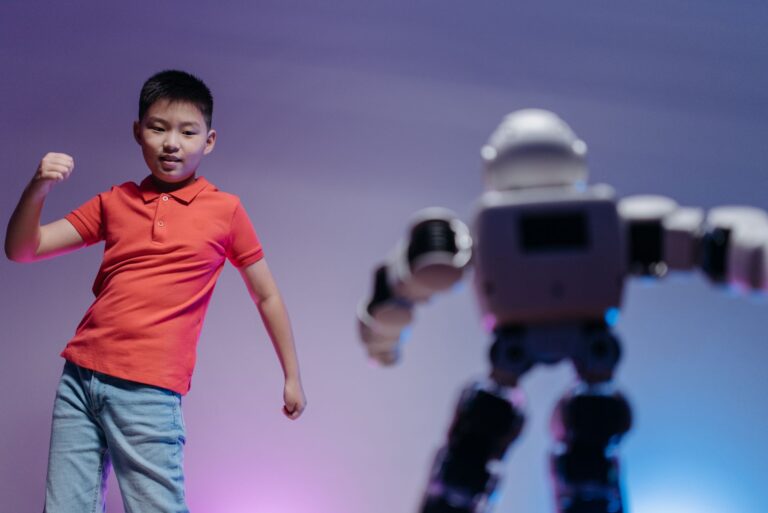
This response isn’t arbitrary or easily overridden. Neuroscience research suggests the uncanny valley response involves the same brain regions that process biological motion and social threat detection. When a robot moves almost like a human but with subtle wrongness, those threat-detection systems activate, producing the characteristic feeling of discomfort. The effect varies individually—some people are far more susceptible than others—but the phenomenon is consistent enough to influence real purchasing decisions and workplace acceptance of robots.
The Engineering Reality Behind NEO’s Humanoid Design
Building a humanoid robot involves substantial trade-offs that go far beyond aesthetics. Achieving human-like proportions and movement requires specific structural compromises: the weight distribution needed for bipedal balance, the joint configurations that allow human-range motion, the power systems that must fit within human-scale dimensions. These constraints often lead designers to make NEO-like choices that create the uncanny valley problem rather than solve it. A robot might achieve 85 percent of human movement fluidity while consuming 200 percent of the energy a human would need for the same task.
The limitation many designers face is that the closer you push toward human realism, the more expensive and complex the engineering becomes. Creating perfect human hand motion requires extraordinary actuator precision. Achieving natural facial expressions requires dozens of micro-motors. These additions accumulate cost, power consumption, and maintenance requirements without necessarily improving the robot’s functional performance. A warehouse robot or manufacturing assistant often works better with distinctly non-human form factors that communicate their purpose through their alien design rather than trying to blend in as pseudo-humans.
Why the Uncanny Valley Matters for Actual Robot Deployment
The uncanny valley isn’t merely a psychological curiosity—it directly affects whether robots get accepted and used in real environments. Factories, hospitals, and offices considering robot deployment need workers and patients to feel safe around these machines. A robot that triggers strong discomfort won’t be welcomed into a care facility, regardless of its technical capabilities.
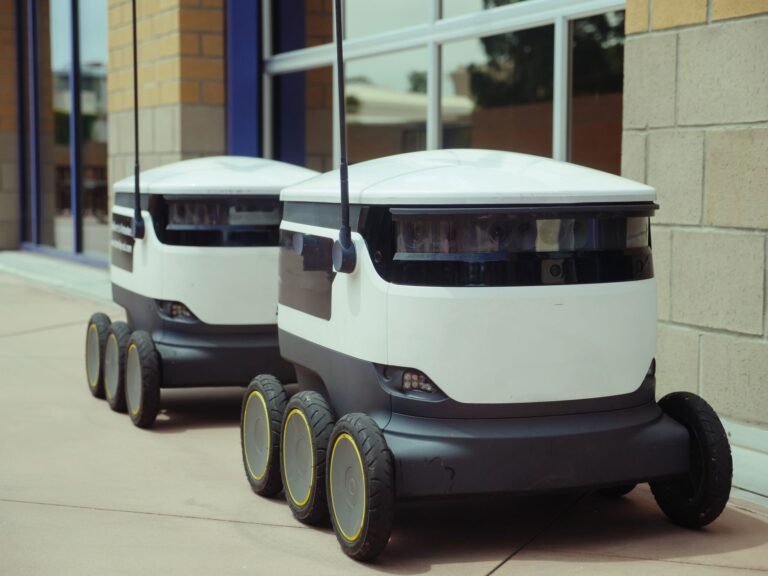
NEO’s video prompted this practical question: does the investment in human-like features actually improve deployment outcomes, or does it create resistance that undermines adoption? Several real-world deployments have taught this lesson already. Cleaning robots that look unmistakably robotic are widely accepted. Care robots that attempt greater human similarity have faced skepticism and workplace resistance despite equivalent or superior performance specifications. The visual design communicates something fundamental about the robot’s role and trustworthiness that technical specs alone cannot convey.
Rethinking Robot Design Strategy—Avoiding the Trap
Rather than chasing human-likeness, leading robotics firms are increasingly reconsidering their design philosophy. Some are deliberately moving away from humanoid forms where the application doesn’t demand it, choosing instead to optimize for the specific task while making the robot’s mechanical nature obvious and intentional. This represents a strategic reversal from years of research focused on achieving more convincing androids.
The trade-off is straightforward: embrace the robot’s mechanical identity through design, and you avoid triggering the uncanny valley while potentially improving functionality and reducing cost. Pursue human realism, and you gain the theoretical advantage of seamless human-robot interaction but risk creating psychological resistance. The NEO debate has made this choice more visible to decision-makers who were previously convinced that human-likeness was always the goal worth pursuing.
The Limits of Current Computer Vision and Motor Control in Humanoid Systems
Even with substantial engineering investment, current robots cannot consistently match human movement quality across all conditions. This creates a persistent uncanny valley problem: the higher the resolution of the robot’s sensors and the more sophisticated its motion planning, the more obvious become the small failures—the slightly wrong timing of a gesture, the almost-right-but-not-quite response to unexpected obstacles. A robot that moves in a distinctly mechanical way sidesteps this problem by setting different expectations.
The warning here applies to developers pushing hard on humanoid design: incremental improvements toward human realism don’t yield incremental improvements in human acceptance. Rather, they can trigger stronger uncanny valley responses by creating closer-but-still-wrong approximations of human motion. The psychological response is nonlinear, which means that spending twice as much engineering effort on motion quality may produce worse outcomes in terms of human comfort and acceptance.
How Design Studios Are Responding to the NEO Debate
Following the NEO video, several major robotics design firms have publicly reconsidered their approaches. Some have shifted investment toward robots with clearly stylized, non-humanoid appearances that signal their mechanical nature through aesthetic choices.
Others are taking a more segmented approach: pursuing human realism only in specific domains where direct human-robot collaboration at close range is genuinely required, while defaulting to distinctly mechanical designs for other applications. This represents a maturation of the field beyond the assumption that all robots should look increasingly human. Instead, design choices are becoming more intentional, driven by actual deployment requirements rather than theoretical ideals about human-robot coexistence.
The Ongoing Question of Robot Embodiment and User Experience
The NEO case ultimately reflects a deeper question about what robots are for and how they should present themselves in human spaces. A humanoid design communicates certain messages about capability and role, but those messages can clash with the psychological reality of how humans process near-human forms.
The video’s debate will likely inform the next generation of robot design, pushing teams to justify not just the technical feasibility of human-likeness but its actual necessity for the application at hand. What emerges from this discussion is a recognition that robotics engineering isn’t purely technical—it’s also deeply social and psychological. The most effective robots may not be the most human-like, but rather those whose design honestly communicates their nature and purpose while avoiding the psychological friction that the uncanny valley creates.
Frequently Asked Questions
What is the uncanny valley, exactly?
It’s a dip in human comfort that occurs when something looks almost human but not quite. The closer an object approaches human likeness without achieving it, the more psychological discomfort it can trigger.
Does every humanoid robot trigger the uncanny valley response?
No—individual susceptibility varies significantly. Some people are more sensitive to the effect than others, and context matters. The same robot may feel acceptable in some settings and unsettling in others.
Are roboticists abandoning humanoid designs altogether?
Not entirely. Humanoid forms remain useful in specific applications requiring direct human interaction or human-environment compatibility. However, many teams are now questioning whether all robots need humanoid design, rather than assuming it’s always the goal.
Could better AI and motion control solve the uncanny valley problem?
Improved technology can reduce the magnitude of near-human movement failures, but research suggests the uncanny valley may persist even as technical performance improves. Making something more convincingly almost-human doesn’t necessarily make it less unsettling.
Why do some robots look distinctly mechanical despite having human-like capabilities?
Intentional mechanical design sidesteps the uncanny valley by communicating the robot’s true nature through its appearance. This often reduces psychological friction while potentially lowering engineering complexity and cost.