
Modern robotics laboratories have developed sophisticated systems that replicate the perception and locomotion strategies of animals to create machines capable of navigating complex, unstructured environments with remarkable adaptability. Rather than forcing rigid mechanical systems to conform to predetermined paths, these robots observe how creatures—from insects climbing vertical surfaces to quadrupeds traversing rocky terrain—gather sensory information and respond dynamically to their surroundings. A notable example is the development of legged robots that mimic the gait patterns and balance mechanisms of animals, allowing them to traverse obstacles that would immobilize traditional wheeled or tracked platforms.
The fundamental insight driving this approach is that evolution has solved many locomotion and perception problems through millions of years of optimization. By studying how a cat’s vestibular system maintains balance during falls, how an insect’s compound eyes process motion for navigation, or how a spider distributes weight across eight legs on uneven ground, engineers gain blueprints for systems that perform reliably without requiring exhaustive pre-programming. This bio-inspired methodology produces robots capable of functioning in environments—rubble fields, forest floors, steep inclines—where conventional machines fail.
Table of Contents
- How Do Bio-Inspired Robots Replicate Animal Sensing Strategies?
- What Enables Bio-Inspired Mobility Across Challenging Terrain?
- Where Are Bio-Inspired Systems Being Deployed?
- What Are the Engineering Tradeoffs in Bio-Inspired Design?
- How Do Perception and Mobility Systems Integrate?
- What Limitations Define Current Bio-Inspired Platforms?
- What Research Directions Are Shaping the Future?
- Frequently Asked Questions
How Do Bio-Inspired Robots Replicate Animal Sensing Strategies?
Animal sensory systems evolved to extract actionable information from complex, dynamic environments with minimal computational overhead. Insects use distributed neural processing and simple optical flow calculations to navigate and avoid obstacles, a strategy far more efficient than the centralized processing required by conventional computer vision systems. Bio-inspired robots implement similar principles by equipping sensors that mimic compound eyes, tactile arrays modeled after whisker organs in rodents, or pressure-sensitive skin that provides spatial awareness without heavy computation. The translation of biological sensing into engineered form requires careful adaptation. A robot designed to mimic the echolocation of bats, for instance, cannot simply replicate sonar emissions; engineers must account for the fundamental differences in scale, environment, and available energy.
One practical example is the development of robots with neuromorphic vision sensors—cameras that respond to changes in brightness rather than capturing full image frames—a principle borrowed from the visual cortex. These sensors consume far less power and process information faster than standard cameras, making them valuable for autonomous systems with limited battery capacity. A critical limitation emerges when trying to perfectly replicate biological sensors: the biological systems evolved to solve specific ecological niches, not arbitrary robotic tasks. A robot inspired by insect navigation may excel in cluttered indoor spaces but falter in open areas where the sensory redundancy that insects rely on becomes unnecessary overhead. Engineers must identify which aspects of animal perception are transferable and which require redesign for mechanical platforms.
What Enables Bio-Inspired Mobility Across Challenging Terrain?
The mobility of legged animals relies on coordinated responses between sensory feedback, neural control circuits, and muscular actuation—a tight feedback loop that standard robotic actuators struggle to replicate. Quadrupedal robots inspired by mammals learn to adjust their gait in real-time by detecting ground contact, weight distribution, and terrain texture through sensors embedded in their legs and feet. Unlike a wheeled robot that can become stuck by a single obstacle, a legged system with adaptive locomotion can step over, around, or through disruptions. Central pattern generators—neural circuits that produce rhythmic motion without requiring conscious control—represent a key biological mechanism that robotic researchers have begun implementing in artificial systems. These circuits allow animals to maintain coordinated gaits while simultaneously processing other sensory inputs, and their artificial equivalents enable robots to navigate while responding to sudden changes in terrain or unforeseen obstacles.
A practical demonstration involves quadrupedal platforms that maintain forward motion across stepping stones, sand dunes, and rubble while adjusting stride length and frequency in response to real-time feedback—tasks that would require explicit reprogramming on conventional platforms. A significant engineering challenge involves the energy cost of legged locomotion compared to wheeled designs. Biological legged systems are optimized for metabolic efficiency, but robotic actuators consume power rapidly during dynamic motion. Most bio-inspired legged robots operate for limited duration before requiring recharging, creating a tradeoff between mobility capability and operational endurance. Additionally, the complexity of modeling and controlling multiple joints means that adding a seventh or eighth leg may actually reduce reliability rather than improve it, contrary to what simple analogies to arthropods might suggest.
Where Are Bio-Inspired Systems Being Deployed?
Disaster response and search-and-rescue operations represent one of the most compelling use cases for bio-inspired mobility systems. In collapsed structures, collapsed mines, or earthquake rubble, the ability to navigate irregular surfaces, climb over debris, and squeeze through confined spaces directly translates to the speed and effectiveness of rescue operations. Legged platforms can traverse terrain that would trap conventional vehicles, bringing sensing systems and potential retrieval equipment into environments humans cannot safely enter initially. Academic research facilities and government laboratories have developed increasingly sophisticated bio-inspired platforms for field deployment.
These systems gather environmental data from remote locations—measuring soil composition on unstable slopes, assessing structural integrity of damaged infrastructure, or conducting reconnaissance in environments with hazardous atmospheric conditions. The integration of animal-inspired perception and locomotion allows these robots to operate with minimal human teleoperation, reducing the cognitive load on operators and allowing a single human team to coordinate multiple platforms simultaneously. Industrial applications remain limited compared to research demonstrations, partly because most manufacturing and warehouse environments are controlled and optimized for existing machine designs. Where structured environments exist, conventional robots with simpler control systems often perform adequately. Bio-inspired systems show clearer advantages in unstructured, outdoor, or hazardous settings where the flexibility and adaptability of animal-inspired principles justify the added complexity and cost.
What Are the Engineering Tradeoffs in Bio-Inspired Design?
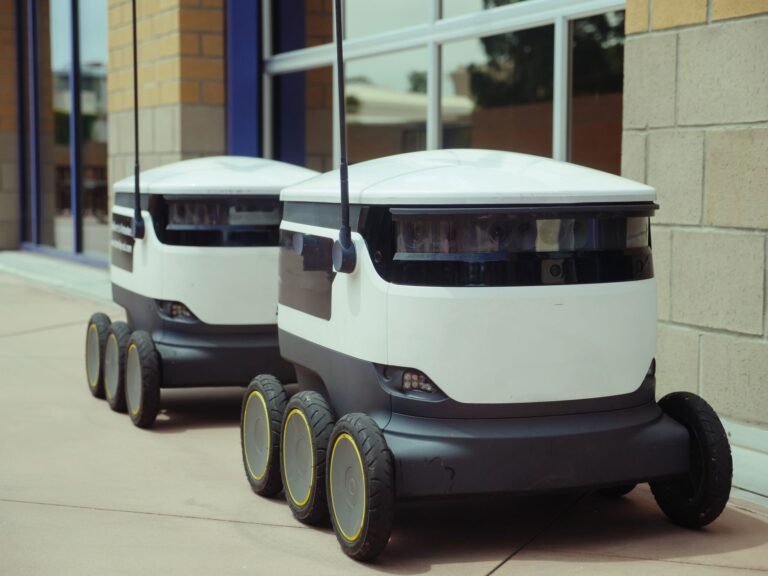
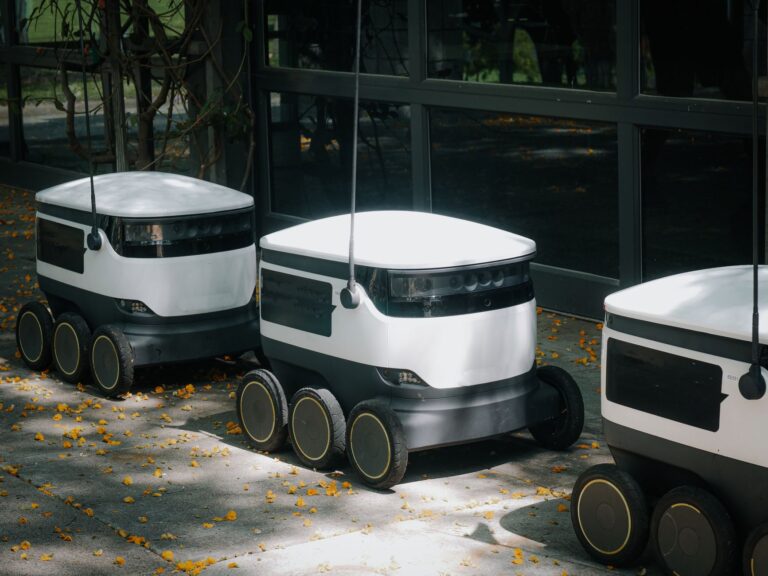
Creating a robot that combines sophisticated perception with adaptive mobility requires substantial increases in computational power, sensing hardware, and software complexity compared to conventional platforms. A quadrupedal robot with pressure sensors in each foot, stereo cameras, inertial measurement units, and processing systems to coordinate locomotion and perception might weigh several kilograms and consume hundreds of watts during active motion. By contrast, a wheeled delivery robot performing similar navigation tasks in controlled environments can operate with far simpler electronics and lower power consumption. The question of fidelity versus practicality runs throughout bio-inspired robotics. Engineers must decide how closely to follow biological principles and where to diverge. A hexapod robot inspired by insects could theoretically climb vertical surfaces using adhesive pads like real insects do, but synthetic adhesives often fail after dozens of climbing cycles.
More practically, engineers might use passive claws or magnetic feet, accepting that the system is less graceful than its biological inspiration but more reliable for repeatable industrial tasks. These compromises reveal that “bio-inspired” does not mean “biologically identical”—it means borrowed principles adapted to engineering constraints. Validation and testing also become more difficult with bio-inspired systems. Conventional robots can be tested against controlled benchmarks with well-defined success metrics. Bio-inspired platforms operating in unstructured environments require extensive field testing across varied conditions to establish reliability. A robot that performs flawlessly in laboratory simulations of rocky terrain may encounter failure modes in real field conditions that testing cannot predict.
How Do Perception and Mobility Systems Integrate?
The closed-loop integration of perception and locomotion represents the core advantage of bio-inspired robotics over traditional sequential systems where navigation planning precedes movement. In biological systems, sensing and movement occur simultaneously and inform each other constantly; a cat adjusting its paw placement while leaping does so based on continuous visual feedback, not pre-calculated trajectories. Robotic systems attempting to replicate this require architectures where sensor data flows in parallel to motor control, with the ability to adjust commands mid-action. Implementing true sensorimotor integration requires processing speeds that match or exceed biological systems.
A robot detecting a slippery surface through pressure sensors must adjust motor commands within milliseconds to avoid falling—delays measured in seconds render the feedback useless. This constraint often pushes bio-inspired robots toward distributed processing, where decision-making occurs locally at limbs or segments rather than centralizing all computation, mirroring the distributed neural processing of animals. A practical limitation emerges from the latency introduced by wireless communication and centralized processing. A robot controlled by a human operator via radio link cannot achieve the tight sensorimotor coupling of a biological system, making it unsuitable for tasks requiring immediate reaction to terrain changes. Autonomous operation with onboard processing solves this problem but introduces new challenges: the algorithms must be robust enough to handle failures without human oversight, a requirement that often exceeds current artificial intelligence capabilities in novel environments.
What Limitations Define Current Bio-Inspired Platforms?
Energy autonomy remains a primary constraint. Most bio-inspired legged robots operate for 30 minutes to a few hours before requiring recharging, compared to the weeks or months of autonomous operation achievable with larger traditional vehicles. This limitation stems partly from the inefficiency of current actuators compared to biological muscle, and partly from the heavy computational and sensing systems required for autonomous operation. A bio-inspired quadruped designed for search-and-rescue scenarios might provide superior terrain traversal but require frequent battery changes that limit its practical deployment range.
Reproducibility and individual variation present another challenge. Biological systems exhibit natural variation—no two animals move identically—and this variation provides robustness. Engineered systems, by contrast, are designed to be repeatable and consistent. When engineers attempt to implement principles like “learn gait patterns through experience,” they must create algorithms that capture the flexibility of biological learning while maintaining the precision expected of engineered systems. Most current implementations remain relatively brittle, performing well in the specific conditions they were tested on but degrading when deployed in novel scenarios.
What Research Directions Are Shaping the Future?
Current research increasingly focuses on hybrid approaches that combine bio-inspired principles with modern machine learning. Rather than explicitly programming locomotion rules or sensor fusion algorithms, researchers train neural networks on biological data—analyzing how animals move across specific terrain types, how their sensory systems filter noise, how they learn new behaviors. This approach potentially captures subtle principles that explicit programming would miss, though it introduces new challenges around data requirements, computational cost, and interpretability.
Another emerging direction involves modular and reconfigurable platforms where different leg configurations, sensor suites, and control algorithms can be swapped to match specific task requirements. Rather than designing a single bio-inspired robot, researchers develop component libraries inspired by animal systems—adhesive pads, compliant joints, distributed tactile sensors—that can be combined for different applications. This modular approach mirrors how evolution produces diversity through recombination of existing mechanisms rather than entirely new inventions, potentially accelerating the development of specialized systems for specific operational environments.
Frequently Asked Questions
How much does a bio-inspired robot cost compared to conventional robots?
Cost varies widely. Research platforms range from tens of thousands to hundreds of thousands of dollars depending on sophistication. Commercial applications remain limited, making direct price comparisons difficult. Conventional purpose-built robots for specific tasks usually cost less upfront but offer less adaptability.
Can bio-inspired robots operate completely autonomously?
Most current systems can operate autonomously for limited durations and in tested environments. Complex reasoning, learning from novel scenarios, and true adaptability to unexpected conditions remain open challenges. Most deployed systems still rely on some degree of human oversight or pre-programmed scenarios.
Why aren’t bio-inspired robots more common in industry?
Unstructured environments are rare in manufacturing and logistics, where engineered systems optimized for controlled conditions work reliably and cost-effectively. Bio-inspired complexity becomes advantageous primarily in disaster response, exploration, and hazardous environments where conventional robots fail.
What animal behaviors are easiest to replicate robotically?
Rhythmic locomotion patterns and distributed sensorimotor responses translate most directly. Animal behaviors requiring complex cognition, learning, or social interaction remain far beyond current robot capabilities, while simple reactive behaviors like balance correction or obstacle avoidance adapt readily.
How long do bio-inspired robots typically operate on a single battery charge?
Most research platforms operate for 30 minutes to several hours of active use, depending on terrain, behavior, and platform size. This represents a significant limitation compared to traditional robots, which can often operate for days on a single charge in controlled environments.
Are bio-inspired robots better at obstacle avoidance than conventional robots?
They handle unexpected or irregular obstacles more effectively due to adaptive locomotion and integrated sensorimotor feedback. However, conventional robots with pre-mapped environments and LiDAR still outperform them in speed and precision within known spaces. The advantage appears primarily in novel or changing environments.