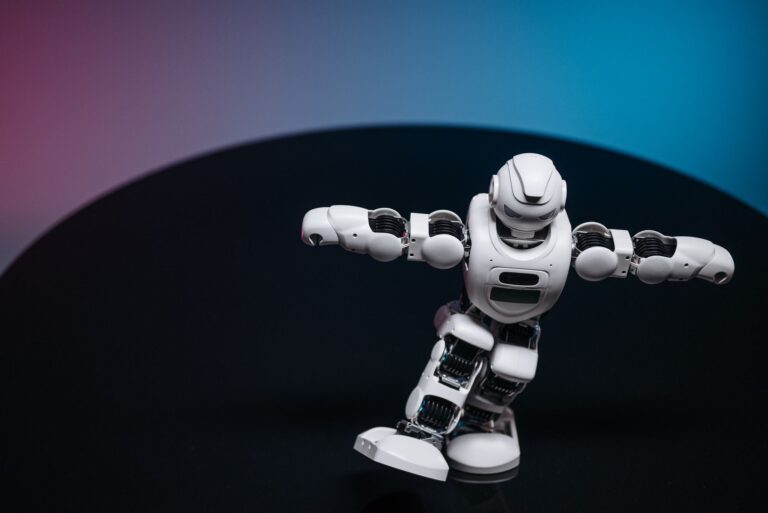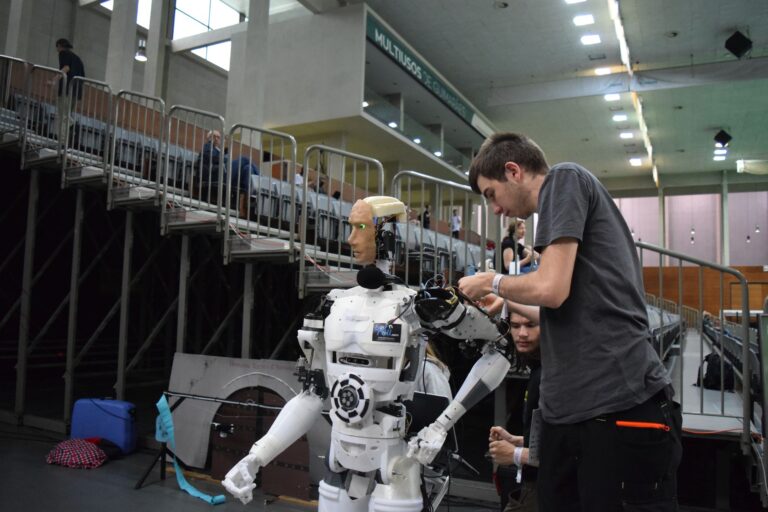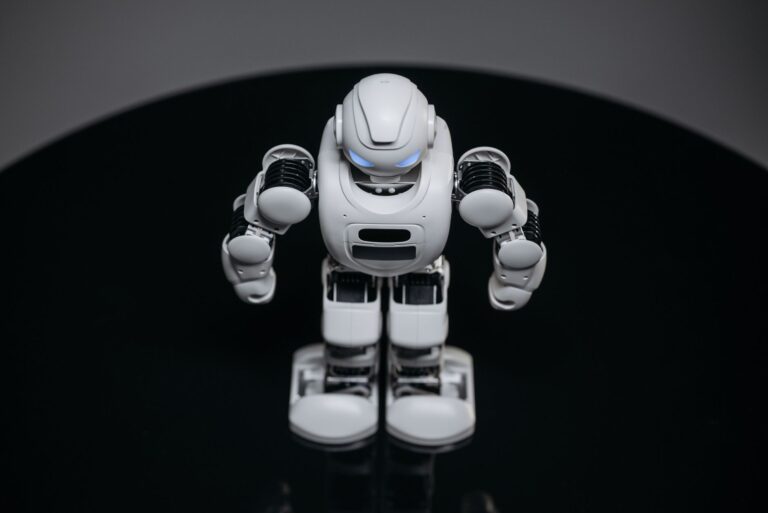

Next-generation humanoid robots made their market debut at the World Artificial Intelligence Conference 2026 in Shanghai, with more than 300 physical robots on display across the four-day event from July 17-20. The scale of the show—attracting over 1,100 exhibitors and 3,000 exhibits, including 208 embodied intelligence terminals—signals a transition from lab prototypes to production-ready machines. For the first time at a major trade event, the focus shifted away from demonstrating basic motor skills like walking or dancing toward practical industrial capabilities, including continuous 24-hour operation and autonomous task execution from human verbal instructions.
The WAIC 2026 exhibition featured several machines designed for immediate deployment in manufacturing, logistics, and service sectors. Matrix Robotics unveiled the MATRIX-3, its third-generation general humanoid robot, with production capacity of 5,000 units planned for 2026 and a target of 10,000 units for 2027. AGIBOT was designated the “Gem of the Exhibition”—the only embodied AI product selected for this honor among 10 items chosen by organizers—and debuted four robots simultaneously, including the A3 Ultra model alongside companion units designed for education and manufacturing environments.
Table of Contents
- What Makes These Robots Ready for Real-World Work?
- The Competition Between Robot Platforms and Design Philosophies
- How Quickly Are These Systems Evolving in Capability?
- What Should Manufacturers Consider Before Deploying These Robots?
- What Are the Supply Chain and Maintenance Risks?
- How Are Educational and Specialty Variants Expanding the Market?
- What Do the Exhibition Numbers Reveal About Market Maturation?
What Makes These Robots Ready for Real-World Work?
The robots unveiled at WAIC 2026 reflect a fundamental shift in engineering priorities. Instead of prioritizing human-like appearance or impressive motor tricks, manufacturers focused on systems capable of operating in factory and warehouse environments where downtime directly affects production schedules. Mech-Mind robotics demonstrated multi-robot collaboration using “eye-brain-hand” coordination technology, showing three units working together to handle industrial tasks: autonomous loading, assembly work, and bin transport. This represented the first public demonstration of such coordinated multi-robot systems designed specifically for manufacturing automation.
The limitations, however, remain clear. While these robots can execute instructions from vague verbal prompts, their performance in truly novel environments—spaces they were not trained on or that lack standard industrial layouts—remains untested at scale. The MATRIX-3, despite its ambitious production targets, faces the practical constraint of supply chain dependencies for components like vision sensors and actuators. No manufacturer at WAIC disclosed specific failure rates, maintenance intervals, or total cost-of-ownership figures, making direct ROI comparisons between robots and existing automation methods difficult for purchasing engineers.
The Competition Between Robot Platforms and Design Philosophies
Rather than a single winning design emerging, WAIC 2026 showcased competing philosophies about what a production humanoid should look like and how it should operate. X-Humanoid’s debut of 3D solutions tailored for five major scenarios represented one approach: specialized variants optimized for specific industry problems rather than a one-size-fits-all unit. AGIBOT’s strategy of launching multiple robots at once—the A3 Ultra for industrial work, the X2 Edu for educational settings, the G2 Max for different payload requirements, and the OmniHand 3 Ultra-M as a specialized gripper system—indicates a portfolio approach where customers select machines based on exact application requirements rather than choosing a single platform.
This fragmentation creates both opportunity and risk for early adopters. A factory planning a robot deployment must now evaluate not just the capabilities of a single machine but also the ecosystem support, spare parts availability, and software compatibility across different manufacturers. The comparison becomes more complex than previous automation transitions, where choices between, say, traditional conveyor systems and robotic arms were straightforward. No two robots at the exhibition used identical software stacks or communication protocols, meaning integration into existing production systems requires custom engineering work in most cases.
How Quickly Are These Systems Evolving in Capability?
The year-over-year progression from prior exhibitions reveals acceleration in the types of tasks robots can handle. Demonstrations at earlier 2025 events featured robots performing choreographed routines or grasping isolated objects in controlled lab settings. By 2026, the same manufacturers displayed systems handling continuous, unscripted manufacturing work alongside human teams. The Mech-Mind multi-robot system performing bin transport demonstrates this leap: the task involves real-world variations in bin size, weight distribution, and warehouse layout—problems that require adaptive visual processing and collaborative decision-making between units.
However, the robots still operate within carefully bounded conditions. None of the 300+ units on display were tested in genuinely unstructured environments like a cluttered construction site or a disaster response scenario. The tasks chosen for WAIC demonstration—assembly work, object transport, bin loading—were selected because they represent the achievable edge of current capability, not the frontier of what researchers are experimenting with in labs. Production timelines like the MATRIX-3’s target of 10,000 units by 2027 represent engineering confidence in current designs, but they also lock manufacturers into specific architectural choices for at least 12-18 months, making pivots toward fundamentally different approaches difficult once production ramps.
What Should Manufacturers Consider Before Deploying These Robots?
For factories and logistics companies evaluating robot deployment, the WAIC 2026 showcase provides concrete reference points for capability assessment but also exposes critical gaps in published information. The exhibition made clear that trained operators will remain necessary—these systems do not operate fully autonomously in the sense of self-diagnosing problems and adapting workflows without human oversight. A facility planning to replace 10 full-time workers with robots should expect to hire 2-3 technicians who understand both the robot’s control systems and the manufacturing processes the robots execute. The capital cost comparison remains opaque.
WAIC organizers and manufacturers declined to publish unit pricing for any of the featured systems, citing regional variations and bulk-purchase discounts. This information asymmetry means early adopters will negotiate individually, paying premium prices for machines that later competitors might purchase at 30-40% discounts once production volumes increase. The MATRIX-3’s planned production capacity of 5,000-10,000 units annually suggests pricing strategies designed to maintain margins during market expansion, not aggressive pricing to saturate markets quickly. Smaller manufacturers without significant capital budgets may find themselves unable to access these technologies until secondary markets emerge in 3-5 years.
What Are the Supply Chain and Maintenance Risks?
A critical limitation of the current humanoid robot market is its dependence on components from a narrow supplier base. Vision systems, torque sensors, and high-speed actuators come from a small number of manufacturers, most based in Asia. If geopolitical disruptions affect these supply chains, robot manufacturers’ ability to fulfill commitments like the MATRIX-3’s production targets could collapse within months. No manufacturer at WAIC disclosed redundant supplier relationships or redesign timelines if primary component suppliers became unavailable.
Maintenance represents another underexplored risk. The humanoid form factor means these robots have dozens of moving joints, each requiring calibration and replacement over time. A factory might purchase a MATRIX-3 unit for a specific task only to discover that wear patterns require component replacement every 6-12 months rather than the 3-5 years that traditional automation equipment typically operates between major service intervals. Local service networks for repairs barely exist outside of Shanghai and other major Chinese technology hubs, meaning downtime could stretch to weeks if a unit fails in a remote facility.
How Are Educational and Specialty Variants Expanding the Market?
AGIBOT’s launch of the X2 Edu alongside industrial models signals manufacturer confidence that humanoid robots can serve markets beyond manufacturing and logistics. Educational institutions in China have begun deploying these systems in STEM programs, with the model specifically designed to allow students to program and modify robot behavior. This creates a pathway to broader market adoption: students trained on X2 Edu units may later recommend or purchase industrial variants when they enter manufacturing or engineering roles.
The OmniHand 3 Ultra-M specialized gripper variant also illustrates an emerging pattern: manufacturers are discovering that the humanoid form factor is less critical than the underlying actuation and control systems. By offering modular end-effectors optimized for specific tasks—high-precision assembly work, heavy object handling, delicate component manipulation—companies can sell the same underlying robotic platform to diverse industries. A single MATRIX-3 unit could potentially be configured with different hands depending on whether it’s performing food packaging versus semiconductor assembly work.
What Do the Exhibition Numbers Reveal About Market Maturation?
The presence of 208 embodied intelligence terminals among 3,000 total exhibits reflects both the growth of the humanoid robot sector and its continued small size relative to the broader artificial intelligence market. For context, conventional industrial automation equipment—conveyors, CNC machines, traditional robotic arms—represented thousands of additional exhibits at WAIC. Humanoid robots remain a specialized category, interesting to investors and early adopters but not yet embedded into standard manufacturing practice for most companies. The 300+ physical robots on display represented perhaps 100-150 different companies worldwide, concentrated heavily in China and Southeast Asia, with limited European and North American representation.
The MATRIX-3’s production targets reveal manufacturer ambitions but not confirmed market demand. Manufacturing 5,000 units annually requires identifying 5,000 factories or logistics operations willing to invest in deployment, training staff, and accepting the integration risks these systems entail. The Gem of the Exhibition award given to AGIBOT’s A3 Ultra underscores that market leadership remains undecided—if a single product had achieved dominance, the award would have gone to an established market leader. Instead, the diversity of designs and manufacturers suggests the next 12-24 months will determine which technical approaches prove reliable in production environments and which companies can sustain competitive advantages through software ecosystem development and supply chain management.