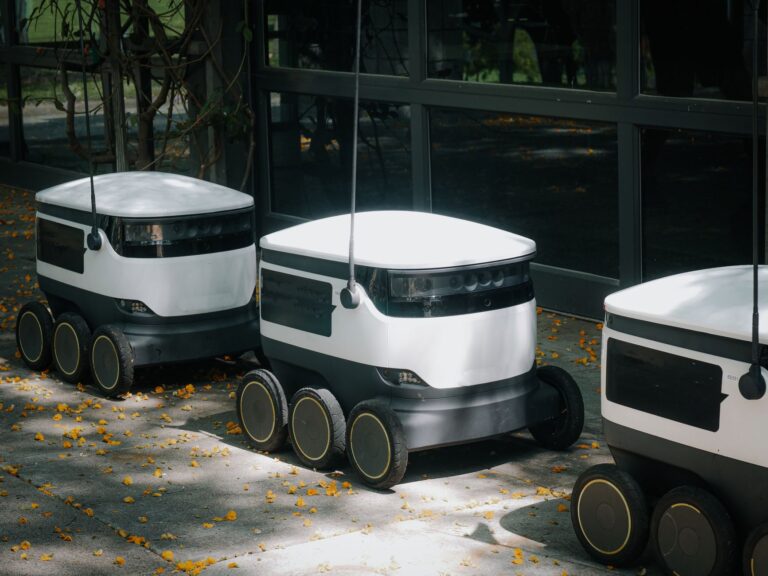

Autonomous trucking software platforms provide the digital backbone for managing self-driving freight fleets, handling real-time routing, vehicle coordination, load optimization, and regulatory compliance across multiple vehicles simultaneously. Unlike individual self-driving trucks that focus on steering and acceleration, these platforms sit at the operational level—dispatching loads, monitoring vehicle health, predicting maintenance needs, and adjusting routes dynamically based on traffic, weather, or equipment failures. A platform controlling a fleet of autonomous trucks across regional routes must handle far more complexity than a single vehicle; for instance, if one truck encounters mechanical issues, the software must reassign its freight to other available vehicles, recalculate delivery schedules for multiple customers, and notify shippers of revised arrival times—all decisions typically made by a dispatch center staffed with humans.
These platforms are distinct from the vehicle-level autonomy that handles steering and obstacle detection. The trucking software platform orchestrates the business logic: where freight goes, which truck carries it, when pickups occur, how to optimize fuel consumption, and what happens when conditions change mid-route. Some existing platforms are being retrofitted onto partially autonomous vehicles, while others are being designed from the ground up for fully autonomous fleets that still lack widespread deployment.
Table of Contents
- How Autonomous Trucking Software Coordinates Self-Driving Fleet Operations
- Real-Time Monitoring and Communication in Autonomous Fleet Management
- Integration with Existing Freight Logistics Networks
- Safety Systems and Redundancy in Autonomous Trucking Platforms
- Regulatory Compliance and Operational Constraints
- Driver Transition and Workforce Adaptation
- Platform Scalability and Real-World Performance Constraints
- Frequently Asked Questions
How Autonomous Trucking Software Coordinates Self-Driving Fleet Operations
autonomous trucking software platforms centralize decision-making for large fleets by aggregating real-time data from every vehicle—GPS location, fuel state, cargo weight, engine diagnostics, current route, and estimated time of arrival. This data allows the platform to balance competing priorities: minimize empty miles (trucks traveling without cargo), meet delivery windows, reduce fuel costs, and maintain vehicle health. When a new shipment request arrives, the software evaluates which truck is best positioned to pick it up, calculates the route that minimizes total miles for existing shipments plus the new load, and checks whether the truck has available capacity and remaining duty time before drivers (if present) or vehicle charge cycles require stops. The coordination layer becomes essential when multiple autonomous vehicles must share infrastructure.
Imagine a distribution hub where four autonomous trucks need to back into loading docks simultaneously—only two docks exist. The platform must sequence their arrivals, tell each when to proceed, and prevent collisions by controlling speed and stopping positions. Human dispatchers do this informally through radio communication; software must encode these decisions algorithmically. Without proper coordination, autonomous vehicles will sit idle, refuse to move until told, or create deadlock scenarios where no truck can proceed. Some platforms also integrate external routing services (weather data, road closures, traffic predictions) to anticipate delays and proactively reroute freight away from congestion.
Real-Time Monitoring and Communication in Autonomous Fleet Management
Fleet management software must continuously monitor vehicle health and predict failures before they strand cargo on the highway. trucks report engine temperature, tire pressure, brake wear, transmission fluid condition, and battery state of charge (for electric vehicles) to a central database. The platform analyzes these streams to flag degradation: if tire pressure drops 0.5% per day, the software predicts tire failure in four days and schedules maintenance before that occurs, rather than waiting for a blowout to halt operations. This predictive capability is critical because a self-driving truck cannot safely pull over and repair itself. A significant limitation of current platforms is communication latency and reliability.
If cellular coverage drops—common in rural areas and tunnels—the truck loses contact with the fleet management system. The vehicle itself (with its onboard autonomy stack) can continue safely, but the platform loses visibility and control. Some trucks might continue to their destination following cached instructions, while others might stop and wait for reconnection, creating delays. Operators must choose between aggressive automation (continue even without contact) or conservative safety (halt and wait for confirmation), and both choices carry costs. Platform designers typically implement fallback rules: if a truck loses contact, it follows its last known instruction until connectivity returns or timeout occurs.
Integration with Existing Freight Logistics Networks
Most autonomous trucking platforms must coexist with traditional freight systems—human drivers, smaller carriers, third-party logistics providers, and customer systems that don’t natively understand autonomous capabilities. A large shipper with autonomous trucks in its own fleet still receives orders from customers expecting pickups from anywhere, not just the home distribution center. The platform must interface with external TMS (transportation management system) software, which is often decades old and designed for human dispatch. This requires API translation layers: the platform accepts a pickup order through standard EDI formats, calculates what an autonomous truck can handle (weight, hazmat restrictions, delivery window compatibility), and confirms availability back through legacy systems.
The integration friction creates operational inefficiency. A customer might request a pickup with a 2-hour window—the autonomous fleet platform might find an optimal pickup time at hour 0:45, but the customer’s legacy system doesn’t allow modification and rejects the response. The platform must then hold a truck idle until the requested window arrives, wasting fuel and vehicle availability. Some companies running autonomous fleets overcome this by offering customers incentive pricing for flexible pickup windows (lower rates in exchange for a wider time range), but this requires retraining customers and sales teams. Platforms that integrate smoothly with modern logistics networks gain competitive advantage, but this remains rare in an industry where many trucking brokers still use 15-year-old software.
Safety Systems and Redundancy in Autonomous Trucking Platforms
Autonomous trucking software must implement multiple layers of safety checks because failures can have serious consequences: a collision, a missed delivery during a critical shipment, a vehicle breakdown in hazardous conditions, or a security breach that allows unauthorized freight manipulation. Most platforms use deterministic logic for safety-critical decisions—never random choices or learning algorithms—so that safety auditors can mathematically prove the software will not make a dangerous choice in a known scenario. Load safety verification is one example: before the platform commits to loading a 40-ton trailer onto a truck rated for 36 tons, it must refuse and alert the operator. Human drivers might ignore weight limits in an emergency or misread scale numbers; autonomous systems have no such flexibility or excuse. Redundancy in decision-making is essential but costly.
If the platform calculates a route and recommends a turn, an independent safety module verifies that turn doesn’t violate speed limits or attempt an illegal maneuver. This dual-check doubles the computation cost. Some platforms implement geographic redundancy: if the primary data center managing the fleet becomes unavailable, a backup center assumes control. Trucks continue operating under the last known instruction set, but new shipments cannot be dispatched. A platform down for one hour might create a backlog of shipments requiring manual human dispatch to keep customer commitments alive. The redundancy prevents catastrophic fleet-wide shutdown but requires running parallel infrastructure and maintaining synchronized state—adding significant operational cost.
Regulatory Compliance and Operational Constraints
Autonomous trucking platforms must encode regulatory requirements as hard constraints. In the United States, federal law requires truck drivers to take a break after 11 hours of driving (later reduced in some scenarios). An autonomous platform might interpret this as: vehicles can drive for 11 hours, then must sit idle for 10 hours before resuming. But the regulation’s intent is driver fatigue; a self-driving truck doesn’t experience fatigue. Some regulators argue that autonomous vehicles should be exempt from hours-of-service rules, but platforms cannot assume exemption and must instead implement restrictions that make commercial sense.
A strategy some companies adopt is operating autonomous trucks in dedicated “hours-exempt” corridors—private roads or specific routes approved for extended operation—rather than fighting for blanket regulatory change. Weight limits, axle regulations, and hazmat restrictions vary by state and jurisdiction. A platform must know where each truck is located and apply the correct regulations: a truck crossing from Montana (higher weight limit) into Wyoming (lower limit) must reduce its cargo load at the border or take a detour. Implementing this requires detailed maps of regulatory boundaries and active enforcement of geofences that prevent overweight vehicles from entering restricted areas. Some platforms have failed to implement these correctly, leading to trucks attempting illegal routes or carrying illegal loads, resulting in fines and loss of operating authority. The complexity is magnified for companies operating in multiple countries, where regulations change fundamentally—fuel standards, safety certifications, allowable vehicle dimensions, and even which side of the road to drive on vary by nation.
Driver Transition and Workforce Adaptation
Most deployed autonomous trucking platforms do not operate fully driverless; they carry remote operators or onboard monitors who override the platform in emergencies or take control during complex scenarios like accidents or detailed maneuvering. This hybrid model preserves jobs while gradually introducing automation. A driver transitions from hands-on steering to monitoring-and-intervention, which requires different training and skills. Some drivers report higher stress in monitoring roles because responsibility is diffused: the automation handles most driving, but the operator might be blamed if something goes wrong while they were not actively controlling the vehicle.
Others find remote operation physically easier, allowing older or injured drivers to remain in freight transport longer. The transition period is economically painful for carriers. An autonomous platform might reduce per-mile operating costs by 20-30% once fully deployed, but transitioning from a fully human fleet requires retraining thousands of drivers, maintaining both systems in parallel, and managing employee relations as workforce reduction becomes inevitable. A large carrier might delay full autonomous deployment for years because the economic incentive, while real, doesn’t justify the social and political fallout. Smaller carriers with thin margins sometimes adopt faster, accelerating their transition and gaining competitive advantage—but they also bear higher risk if autonomous technology fails to meet expectations or regulatory approval stalls.
Platform Scalability and Real-World Performance Constraints
Autonomous trucking platforms face scalability challenges that aren’t obvious until deployment reaches regional or national scale. A platform designed to manage 50 trucks might use simple algorithms for load assignment (e.g., “give the load to the nearest available truck”); at 50,000 trucks, this greedy algorithm produces suboptimal routes and idle time because it makes local decisions without global visibility. Scaling requires more sophisticated optimization—solving variants of the traveling salesman problem for thousands of trucks and millions of potential shipments—but those algorithms are computationally expensive and might take minutes or hours to complete, which is too slow for real-time dispatch in a competitive freight market where opportunities are captured by whoever responds fastest.
A real-world example of scalability bottleneck occurred in early trial fleets: platforms designed for predictable linehaul routes (A to B, B to C, repeatedly) performed well, but when exposed to the chaotic reality of regional trucking—pickup requests from random locations, customers changing delivery requirements, trucks breaking down at odd times—the platforms responded slowly or made clearly suboptimal decisions. Some platforms solved this by limiting flexibility: only accepting shipments that fit pre-defined routes and refusing custom requests. This works for large shippers with predictable volumes but alienates small customers and reduces market reach. The tension between optimization quality, computation speed, and operational flexibility remains a core challenge as platforms attempt to scale beyond pilot deployments.
Frequently Asked Questions
Is a trucking platform the same as a self-driving truck?
No. Self-driving trucks focus on the vehicle level—steering, braking, obstacle detection. Platforms handle fleet-level operations: dispatch, route optimization, maintenance scheduling, and regulatory compliance across multiple vehicles.
Do autonomous trucking platforms require fully autonomous vehicles?
Not necessarily. Most deployed platforms today work with semi-autonomous vehicles or hybrid systems where remote operators provide oversight. Full driverless operation remains limited to specific approved corridors.
Can an autonomous trucking platform work with legacy freight software?
Yes, but with friction. Platforms typically integrate through APIs and data translation layers, though older customer systems may not support the flexibility that autonomous fleets require.
What happens if a truck loses communication with the platform?
The vehicle typically continues its last known instruction while awaiting reconnection. During extended outages, the platform loses visibility and dispatch capability, forcing manual intervention or halt-and-wait protocols.
How do platforms handle regulatory differences between states?
Through geofenced boundaries and rule databases that apply weight limits, hazmat restrictions, and hours-of-service regulations based on vehicle location. Crossing borders may trigger automatic adjustments.