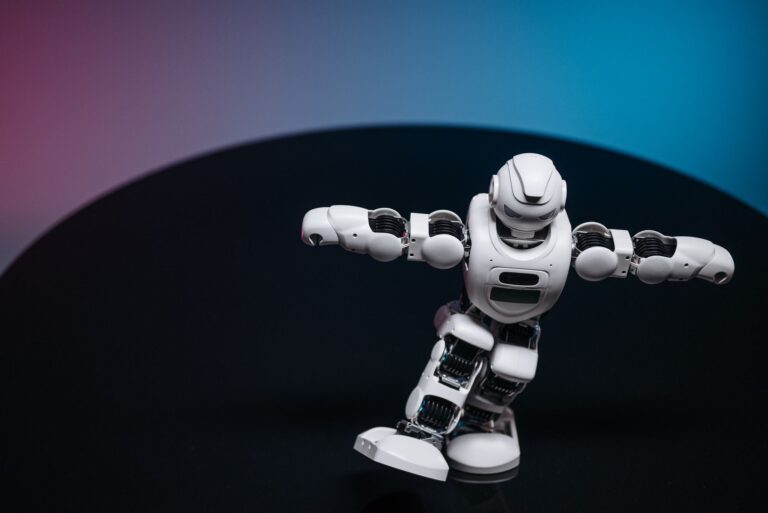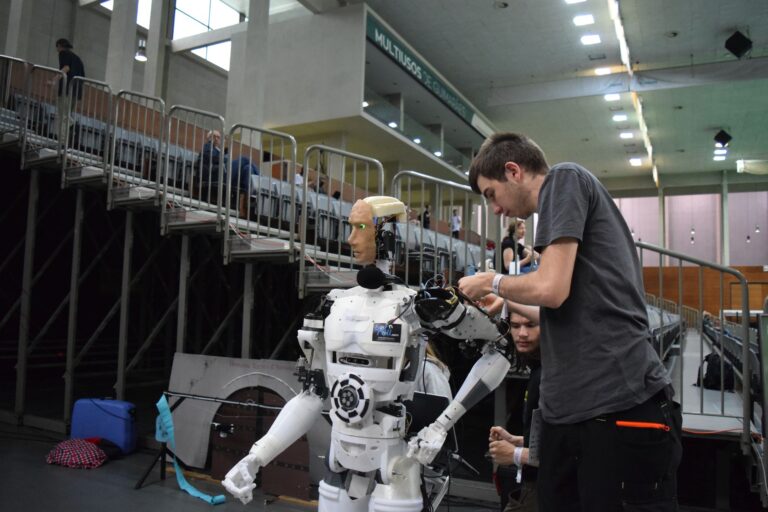

Industrial humanoid robots are deepening a fundamental conflict between manufacturers seeking efficiency gains and labor organizations fighting to protect worker jobs and working conditions. The deployment of bipedal, human-shaped robots in factories worldwide—particularly in automotive assembly, electronics manufacturing, and heavy goods production—has triggered strikes, contract negotiations, and regulatory scrutiny in multiple countries. Tesla’s decision to integrate humanoid prototypes into its manufacturing lines, combined with similar moves by suppliers in Germany, Japan, and South Korea, has accelerated labor tensions that extend beyond traditional automation concerns.
The dispute centers on a critical difference between previous robot waves and humanoid systems: these machines can theoretically replace entire job categories rather than augment specific tasks. Unlike fixed robotic arms bolted to assembly lines for 20 years, humanoid robots promise flexibility to move between stations, adapt to new production lines, and perform dexterous work humans traditionally did. This capability has prompted unions to demand binding commitments on headcount preservation, retraining programs with income guarantees, and transparency about deployment timelines—demands manufacturers say would undermine the economic case for the technology.
Table of Contents
- Why Humanoid Robots Are Reshaping Manufacturing Labor Dynamics
- Current Deployment Challenges and the Reality Gap
- Union Organizing and Worker Responses Escalate
- The Economic Tradeoff: Efficiency Gains vs. Disruption Costs
- Technical Limitations Create Ongoing Risks and Barriers
- Regulatory Frameworks and Liability Questions Emerge
- The Reality of Implementation: Pace and Scale Lag Predictions
- Frequently Asked Questions
Why Humanoid Robots Are Reshaping Manufacturing Labor Dynamics
The mechanical precision of traditional industrial robots made them valuable but limited: a welding arm executes one task brilliantly but requires complete reprogram for a different operation. humanoid robots introduce a different proposition—a machine that can theoretically navigate a factory floor, grasp irregular objects, perform assembly work requiring hand-eye coordination, and pivot to new roles as production priorities shift. This flexibility is why manufacturers see them as qualitatively different from earlier automation investments.
For manufacturers, the labor-cost argument is direct: production lines in developed economies rely on workers whose wages, benefits, and downtime costs represent 30–50% of total manufacturing expense. A humanoid robot operating 24/7 with no benefits, no vacation, and predictable maintenance costs shifts that equation significantly. Companies testing these systems report reduced defect rates in some assembly tasks and the ability to operate lines during night shifts without premium pay. However, the upfront capital cost remains substantial, and deployment timelines are slower than vendors initially promised—a reality that limits how quickly widespread displacement could actually occur.
Current Deployment Challenges and the Reality Gap
The technical and operational limitations of today’s humanoid robots are substantial, though they receive less media attention than the labor implications. Current systems still struggle with dexterity in unstructured environments—dropping fragile components, failing on tasks that require adaptable grip strength, and requiring frequent human intervention during edge cases. A humanoid robot that excels at bolt-tightening may perform poorly at wire harness installation, the kind of task variation that defines real manufacturing floors.
Production environments are also far messier and more variable than the controlled demos vendors showcase. Factory floors have unstable surfaces, extreme temperatures in some sections, dust and coolant spray that damages sensors, and the accumulated chaos of human workers, parts, and tools. Humanoid robots deployed at scale would require significant infrastructure changes—upgraded flooring, climate control upgrades, reorganized workflows to minimize obstacles—all adding cost and complexity that manufacturers underestimated in early business cases. A critical warning: manufacturers rushing deployment without addressing these environmental factors often encounter high failure rates that damage the economic case for the investment, leading to projects being shelved or scaled back far below initial plans.
Union Organizing and Worker Responses Escalate
Labor organizations have moved beyond passive opposition to structured demands backed by strike action and political organizing. In Germany, IG Metall negotiated language in manufacturing contracts requiring employer notification and negotiation before deploying humanoid systems that would reduce headcount. In the United States, the United Auto Workers union made commitments from major manufacturers regarding transparency on robotics investments a centerpiece of contract talks, securing guarantees that wage scales would apply to positions eliminated through automation. Workers themselves express anxiety that extends beyond immediate layoff risk.
Assembly-line roles have historically provided stable, middle-class income without requiring college education—a pathway that has narrowed in many economies. Even if retraining programs are offered, workers often face age discrimination and difficulty matching previous wage levels in new roles. A comparison worth noting: retraining initiatives in manufacturing-heavy regions that experienced automation waves in the 1990s and 2000s showed that fewer than 40% of displaced workers found new employment at equivalent wage levels within three years, according to labor department analyses. This historical track record fuels union skepticism toward manufacturer promises that humanoid robot deployment won’t harm workers economically.
The Economic Tradeoff: Efficiency Gains vs. Disruption Costs
From a pure financial analysis, humanoid robots promise significant advantages for manufacturers willing to absorb deployment costs and operational disruption. A system that can perform maintenance work, material handling, and secondary assembly tasks across multiple production lines theoretically delivers flexibility that stationary robotics cannot. Yet the total cost of ownership often exceeds early projections.
Companies deploying humanoid systems must factor in infrastructure changes, continuous software updates as robots encounter new scenarios, human technicians needed to supervise and reprogram systems, and the cost of maintaining multiple units to handle redundancy. A concrete tradeoff emerges in medium-sized manufacturing operations: small enough that humanoid robots cannot achieve utilization rates justifying the capital expense, too large to avoid significant workforce disruption if deployment did proceed. These manufacturers represent a significant portion of global production, and many have shelved humanoid robot pilots after calculating actual implementation costs. Larger manufacturers with dedicated facilities for new technology and the scale to amortize costs more readily are seeing better financial outcomes, which concentrates humanoid deployment risk in specific regions and facilities rather than dispersing it across the manufacturing sector.
Technical Limitations Create Ongoing Risks and Barriers
The sensory and cognitive systems that allow humanoid robots to operate meaningfully remain brittle compared to human capability. Current systems rely on computer vision that fails in low-light conditions, thermal imaging that causes problems in extreme-temperature areas of factories, and touch sensors that cannot yet match human proprioception. A critical warning: robots deployed without adequate sensor redundancy and fail-safe systems can cause serious workplace accidents—crushing hands caught in a gripper, dropping heavy components, or colliding with workers on shared floors. Several injuries at pilot facilities have resulted in tightened safety protocols that slow deployment and increase oversight costs.
Safety certification for humanoid robots operating in shared human workspaces remains inconsistent across regions. The European Union has begun developing standards for collaborative robots that will eventually cover humanoids, but harmonized standards do not yet exist. This regulatory patchwork means manufacturers must navigate different safety requirements in different countries, adding complexity to deployment plans. Additionally, the software running these systems requires continuous refinement—what works in one factory configuration fails in another, demanding constant data collection, algorithm adjustment, and redeployment cycles that extend timelines and increase operational overhead significantly.
Regulatory Frameworks and Liability Questions Emerge
Governments and regulatory bodies are beginning to address humanoid robots through existing workplace safety rules, though many regulations were written for stationary equipment and do not map cleanly to mobile systems. South Korea has introduced tax incentives for robotics investments while simultaneously imposing new workplace safety certifications.
The European Union is considering mandatory insurance and liability frameworks for autonomous systems operating in human environments. These regulatory developments add cost and uncertainty to deployment timelines, as manufacturers must navigate changing requirements and obtain certifications that did not previously exist. Liability questions remain unsettled: if a humanoid robot causes workplace injury, who bears responsibility—the manufacturer, the facility operator, or the software developer? This ambiguity has made insurance companies cautious about underwriting humanoid robot operations, and some have imposed exclusions or premium surcharges that reduce the economic advantage the technology was supposed to provide.
The Reality of Implementation: Pace and Scale Lag Predictions
Early forecasts in 2022–2023 predicted rapid deployment of tens of thousands of humanoid robots across manufacturing by 2026. Actual deployment numbers are substantially lower, with most facilities still in pilot or small-scale trial phases.
Production constraints on the manufacturing side—humanoid robot makers themselves cannot produce units fast enough to meet theoretical demand—combine with the operational challenges described above to create a much slower adoption curve than initially projected. The labor dispute, therefore, is not yet a crisis of mass displacement but rather a contest over future conditions: unions seeking commitments now that will limit disruption when and if deployment accelerates, manufacturers seeking freedom to invest without regulatory constraint. For manufacturing workers and communities dependent on production facilities, the stakes of this negotiation are concrete—the outcome will shape whether humanoid robot deployment becomes a tool for improving productivity while preserving employment, or a mechanism for rapid workforce reduction that leaves workers and regions without adequate support.
Frequently Asked Questions
How many workers could humanoid robots displace if deployment accelerates?
Current estimates range widely, from negligible impact to 15% of manufacturing jobs over a decade, depending on sector and region. The uncertainty reflects that actual deployment pace remains far below early predictions.
Do manufacturers have financial incentive to deploy humanoid robots if labor costs are only part of their expense?
Yes, but the incentive is narrower than often presented. Labor cost reduction is meaningful in high-wage regions, but total cost of ownership—capital expense, infrastructure changes, maintenance, and software updates—often exceeds projections, limiting deployment to larger facilities with scale advantages.
What happens if a humanoid robot injures a worker?
Liability frameworks are still developing. Insurance coverage remains limited, and responsibility often cannot be clearly assigned between the robot manufacturer, the facility operator, and the software developer, creating legal and financial risk for all parties.
Are there manufacturing roles humanoid robots cannot replace?
Yes. Roles requiring extreme precision, judgment in highly variable conditions, or interpersonal interaction remain difficult for current systems. However, roles involving dexterous repetitive work, material handling, and structured assembly tasks are increasingly vulnerable.
What retraining programs are manufacturers offering displaced workers?
Programs vary widely and are a key point of labor negotiation. Most fall short of guaranteeing income continuity or rapid reemployment. Historical data suggests fewer than 40% of displaced manufacturing workers achieve wage-equivalent employment in new roles.
Which countries have the strictest requirements for humanoid robot deployment?
Germany and the European Union have imposed safety certifications and transparency requirements stricter than most other regions. The United States lacks unified federal standards, with requirements varying by state and industry.