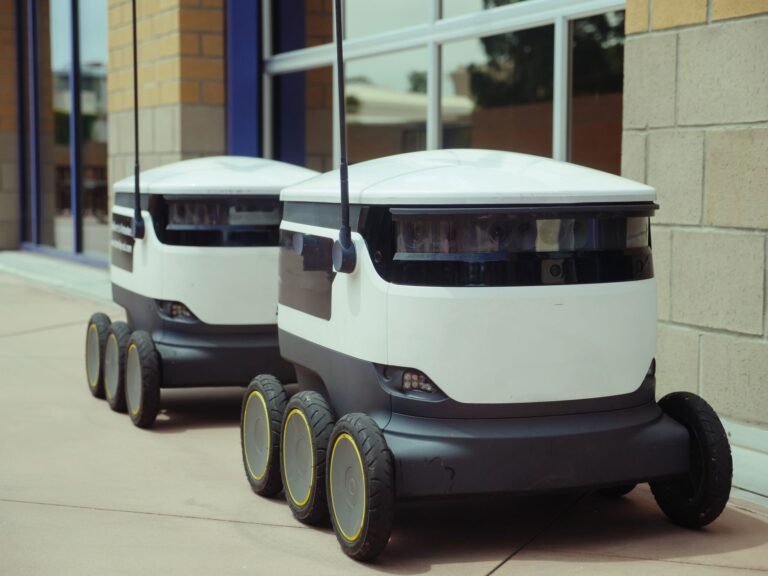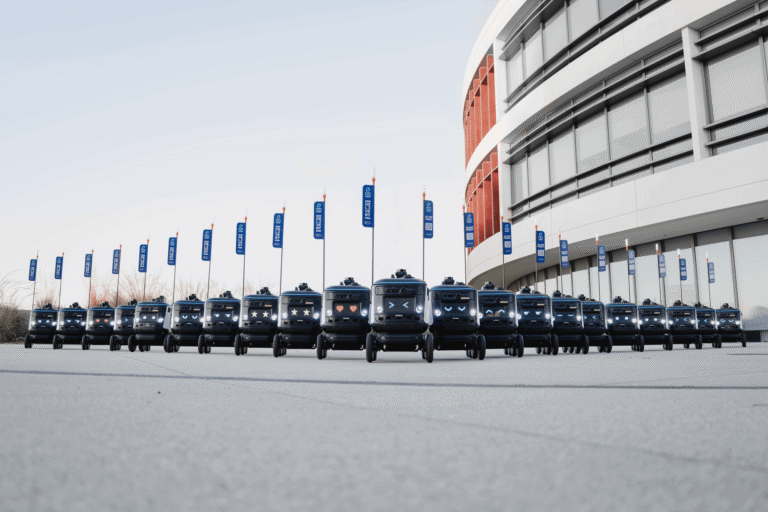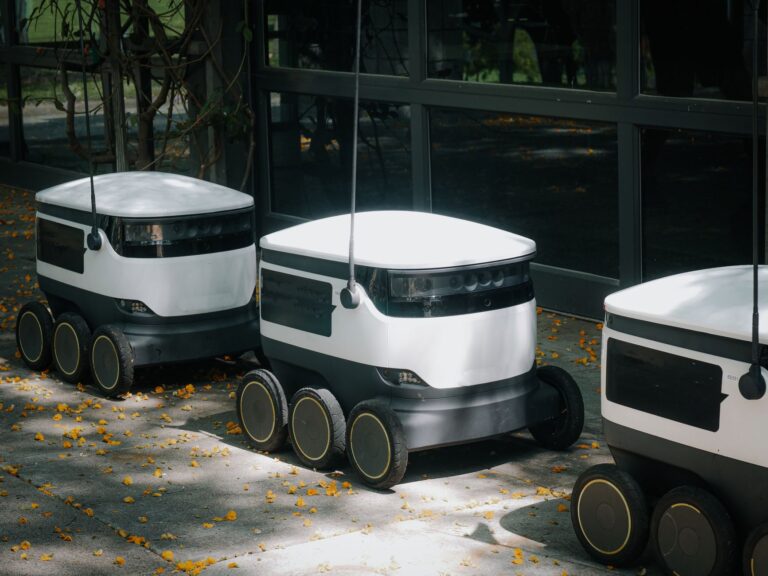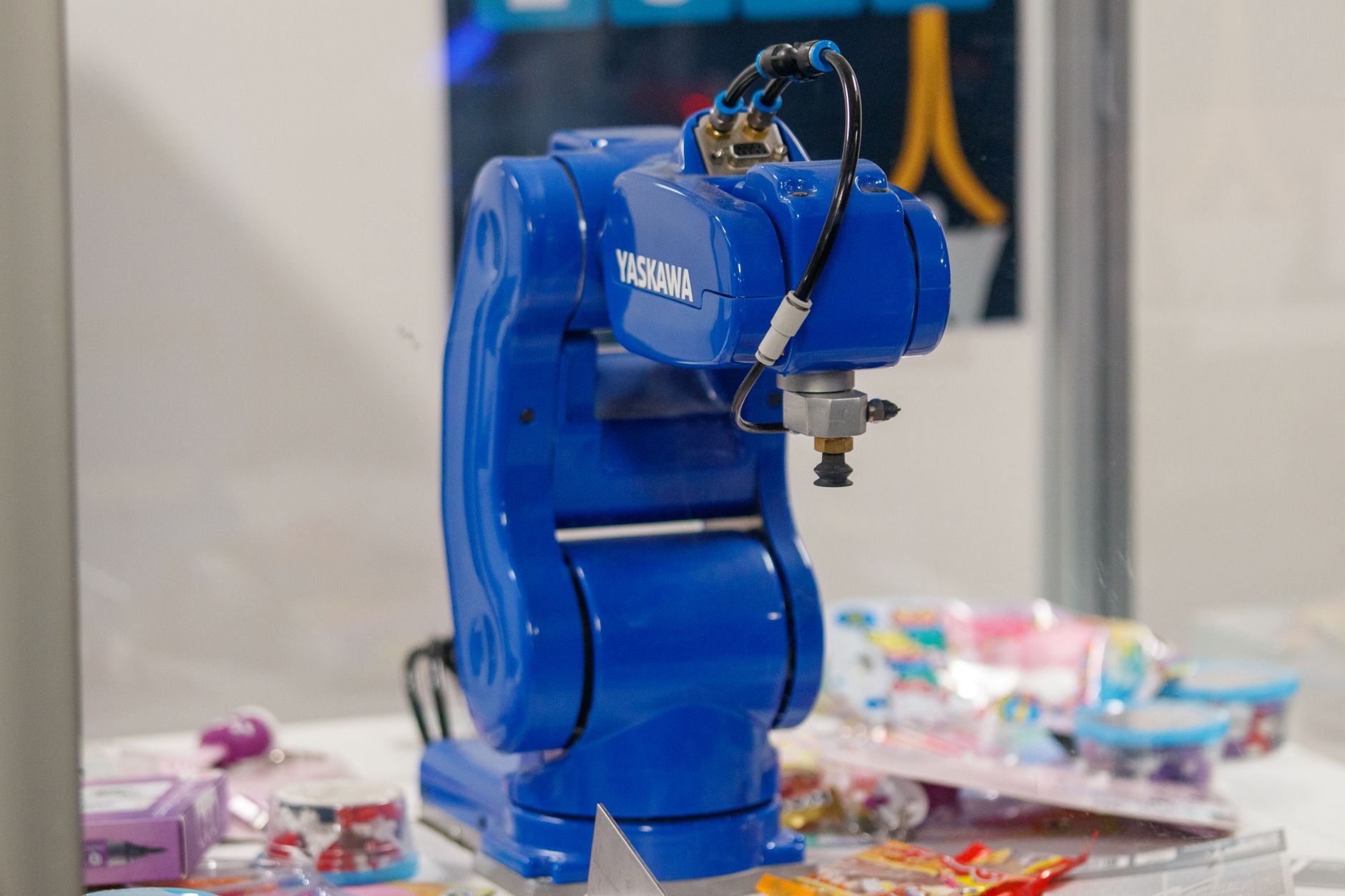

Autonomous warehouse robots rely on advanced visual perception systems to navigate complex environments and perform tasks without human intervention. A high-resolution 4K camera system serves as the robot’s primary sensory tool, providing the detailed visual information necessary for real-time decision-making. For example, a warehouse robot equipped with 4K cameras can distinguish between similar-sized packages, read shipping labels accurately, and detect obstacles in crowded aisles—capabilities that would be impossible with lower-resolution imaging.
The progression from standard definition to 4K cameras in warehouse automation represents a meaningful shift in how robots understand their surroundings. Where previous systems might capture general shapes and colors, 4K resolution delivers pixel density that enables granular object recognition, spatial mapping, and hazard detection. This improvement directly translates into faster cycle times, fewer errors, and safer autonomous operations in environments where robots work alongside human workers or navigate unpredictable layouts.
Table of Contents
- How Does 4K Camera Resolution Improve Warehouse Robot Navigation?
- The Technical Architecture Behind 4K Warehouse Vision Systems
- Real-World Warehouse Deployment Scenarios
- Integration Challenges and System Design Tradeoffs
- Common Failure Modes and Environmental Limitations
- Machine Learning and Continuous Improvement
- Energy Consumption and Operational Economics
- Frequently Asked Questions
How Does 4K Camera Resolution Improve Warehouse Robot Navigation?
Resolution determines how much visual detail a robot can capture in a single frame. A 4K camera captures approximately four times the pixels of 1080p, which means small objects and fine details become discernible instead of blurred.
In a warehouse context, this allows robots to read barcodes from greater distances, identify dropped items on the floor, and recognize subtle changes in shelf configuration—tasks that require clarity standard cameras cannot provide. Navigation accuracy improves measurably when robots can detect the precise edges of doorways, the exact positioning of pallets, and the location of personnel wearing safety vests. A robot navigating through a narrow aisle between towering shelves needs to distinguish the wall boundaries with precision; 4K imaging provides that clarity. However, higher resolution also increases computational load—processing 4K video streams in real time requires more powerful processors and faster data pipelines than lower-resolution systems, which can raise equipment costs and thermal management challenges.
The Technical Architecture Behind 4K Warehouse Vision Systems
A complete 4K camera system extends beyond the sensor itself to include lenses, image processors, and software pipelines that work together. Robots typically use multiple cameras—one forward-facing for primary navigation, side-mounted cameras for collision avoidance, and sometimes downward-facing cameras for floor-level object detection. Each camera streams data to an onboard processor or edge computing module where the visual information is analyzed, segmented, and converted into actionable commands within milliseconds.
The software layer performs several processing steps: image denoising, object detection and classification, semantic segmentation of the scene, and 3D spatial mapping. These tasks are computationally intensive; a robot processing multiple 4K streams simultaneously can consume significant power, which directly impacts battery life and operational duration. Thermal dissipation becomes critical in this design—processors handling continuous high-resolution video generate heat, and warehouses with temperature variations or dust accumulation can degrade performance over time.
Real-World Warehouse Deployment Scenarios
Large-scale fulfillment centers depend on autonomous mobile robots to move inventory between picking stations and shipping areas. A 4K camera system allows these robots to operate in semi-structured environments where shelf layouts vary and obstacles appear unpredictably. Consider a scenario where a warehouse robot encounters a misplaced item on the floor—the high resolution allows it to identify the object’s shape, color, and approximate position with enough accuracy to either avoid it or alert a human supervisor, depending on the robot’s programming.
Robotic systems also use 4K cameras for picking operations where the robot must identify specific items among many similar products. A robot tasked with selecting one item from a bin of dozens relies on 4K resolution to distinguish between variants, read product codes, and confirm the correct selection before moving it. Without this clarity, error rates would climb quickly, requiring human verification and slowing the entire workflow.
Integration Challenges and System Design Tradeoffs
Implementing 4K cameras in autonomous robots requires careful consideration of network bandwidth, storage, and processing power. Streaming or storing 4K video continuously consumes substantial data capacity; many warehouse systems address this by processing video on the robot itself rather than transmitting raw footage to a central server. This edge processing approach reduces latency and network congestion but requires the robot to carry more computing power.
The choice between onboard processing and cloud-based analysis involves a classic tradeoff: onboard systems respond faster but have limited computational resources, while cloud systems offer more processing power but introduce network dependency and latency. Most warehouse operations lean toward hybrid approaches where the robot performs essential real-time perception locally and sends selected frames or metadata to central systems for deeper analysis and learning. This balance requires careful engineering to ensure robots remain responsive even when network connectivity falters.
Common Failure Modes and Environmental Limitations
Warehouse environments present specific challenges to vision systems that manufacturers must engineer around. Bright overhead lighting can saturate camera sensors, while shadows from shelving create areas of extremely low light where object detection becomes unreliable. Dust accumulation on lenses degrades image quality gradually; robots operating in high-volume picking facilities may require frequent lens cleaning to maintain performance. Additionally, reflective surfaces like metallic storage containers and polished floors can confuse depth-sensing algorithms, leading to false obstacle detection or missed objects.
False positives and false negatives in perception directly impact operations. A robot might misidentify a shadow as an obstacle and stop unnecessarily, blocking the workflow. Conversely, a robot might fail to detect a small item on the floor and roll over it, causing equipment damage or safety concerns. Robust warehouse systems implement redundant sensing—combining 4K cameras with LiDAR or other distance sensors—to compensate for the limitations of any single technology. This redundancy increases cost but significantly improves reliability in environments where operational interruptions are expensive.
Machine Learning and Continuous Improvement
Modern warehouse robots use machine learning models trained on thousands of labeled images to recognize objects, classify items, and predict obstacles. A robot’s perception capability improves over time as the system collects more data and refines its models. 4K cameras provide the raw material—detailed imagery—that makes training more effective.
Models trained on high-resolution images can learn finer distinctions than those trained on lower-resolution data, resulting in better real-world performance. However, this reliance on machine learning introduces a significant constraint: the system performs well only on objects and scenarios resembled those in training data. A robot trained primarily in a particular warehouse layout or product mix may struggle when introduced to different environments. Seasonal product changes, new supplier shipments, or warehouse reconfigurations can all degrade perception performance until the system encounters enough examples to adapt.
Energy Consumption and Operational Economics
Processing 4K video streams consumes considerably more power than processing lower-resolution feeds, which affects a robot’s battery life and operational window. A robot with limited runtime due to power constraints must return to charging stations more frequently, reducing its utility. Warehouse operators must balance the benefits of high-resolution perception against the costs of larger batteries, more frequent charging, or increased power infrastructure.
The economic case for 4K cameras strengthens when the reduction in errors, collision incidents, and human interventions justifies the additional power consumption and hardware cost. In high-throughput facilities where a robot’s throughput directly translates to revenue, the increased accuracy and speed from 4K perception often yields positive return on investment. In lower-volume or less complex warehouses, simpler vision systems may suffice despite their limitations, making the upgrade a less compelling choice.
- —
Frequently Asked Questions
Can warehouse robots operate effectively without 4K cameras?
Yes—robots using lower-resolution cameras or LiDAR-only systems can perform basic navigation and transport tasks. However, operations requiring fine visual discrimination, label reading, or complex object identification benefit significantly from 4K clarity. The choice depends on the specific warehouse tasks and acceptable error rates.
How often do 4K camera lenses need maintenance in warehouse settings?
Lens degradation varies by facility. Warehouses with significant dust or airborne particles may require cleaning weekly or more frequently. Regular maintenance schedules, protective lens covers, and automated lens-wiping systems help maintain image quality over time.
Does 4K camera processing require an internet connection?
Not necessarily. Most systems process 4K video locally on the robot to avoid latency and dependency issues. Some facilities use hybrid approaches where real-time processing happens on the robot and logs are sent to central servers for analysis when connectivity is available.
What is the typical cost premium for 4K camera systems compared to standard cameras?
4K systems generally cost 2-4 times more than standard definition alternatives, including the camera, processors, and supporting infrastructure. However, operational gains often offset this premium in high-volume environments.
Can 4K cameras work effectively in low-light warehouse conditions?
4K sensors vary in low-light performance. High-end sensors perform better than budget options, but extremely dim conditions still degrade performance. Warehouses often combine 4K cameras with lighting improvements or supplementary sensors like LiDAR to handle challenging visibility zones.