
The robotics sector is experiencing unprecedented acceleration in 2026, driven by a combination of autonomous mobile robots (AMRs) and advanced artificial intelligence capabilities. The global robotics market has grown 34% year-over-year—the fastest rate in a decade—as companies deploy robots equipped with machine learning, natural language processing, and vision systems that enable them to operate with minimal human intervention. In June 2026 alone, major manufacturers announced significant escalations: BMW Group deployed Figure 03 robots following successful trials of Figure 02 at its Spartanburg plant, while AGIBOT transitioned 15,000 wheeled semi-humanoid robots from development into production deployment, signaling that robotics has moved beyond experimentation into scaled manufacturing.
This acceleration reflects a fundamental shift in what robots can do. Over 50% of autonomous mobile robots now integrate advanced AI technologies, while vision-language-action models—which allow robots to understand natural language instructions and perform multi-step tasks—have tripled in deployment and now appear in 40% of all new robot installations. The industry is transitioning from an era focused on making robots move to an era focused on making them think and act autonomously in complex, unstructured environments.
Table of Contents
- What’s Driving the Robotics Acceleration Beyond Traditional Industrial Automation?
- How AI Is Reshaping Robot Capabilities and Limitations
- Real-World Deployment Signals Robotics Entering Production Phase
- Investment Patterns Reveal Confidence in Robotics Economics
- Healthcare and Non-Industrial Applications Expanding Rapidly
- Training Method Transitions Reveal Practical Priorities
- The Transition From Foundational Research to Deployment Engineering
What’s Driving the Robotics Acceleration Beyond Traditional Industrial Automation?
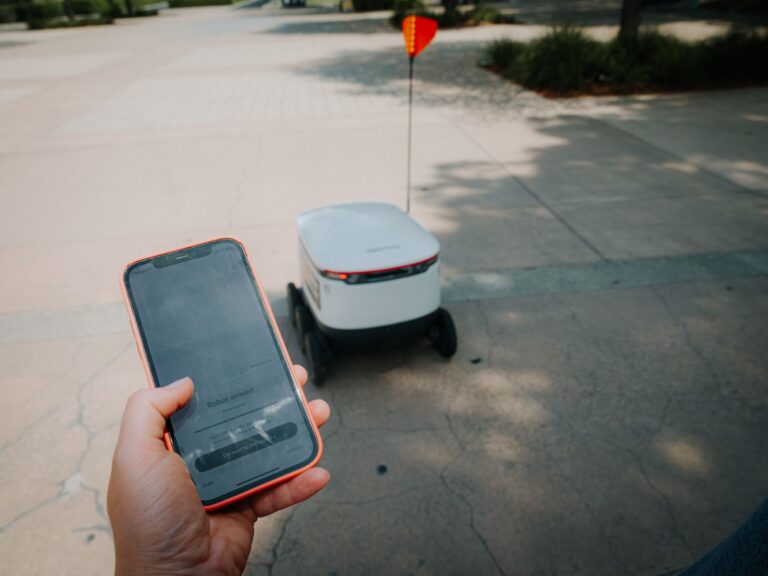
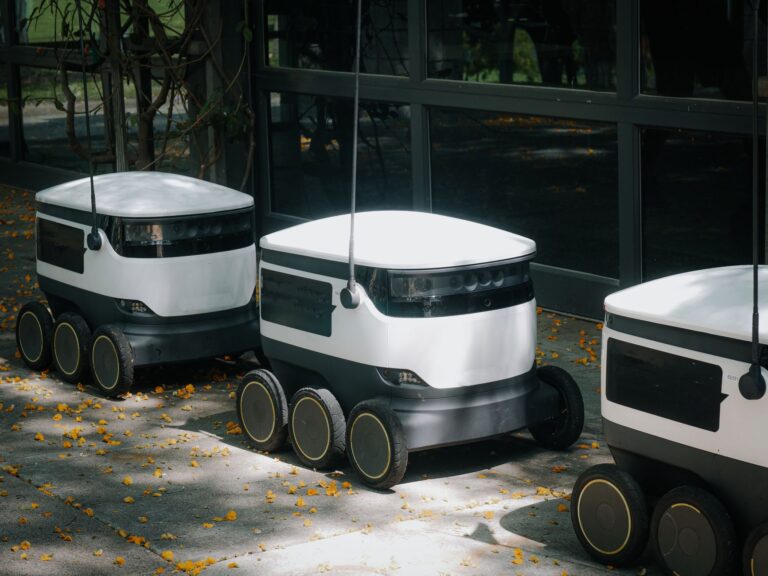
The surge extends far beyond traditional factory automation. The autonomous mobile robot market alone reached USD 5.49 billion in 2026, with projections climbing to USD 8.4 billion in 2027, reflecting accelerating adoption across logistics, warehousing, manufacturing, and emerging sectors. Venture capital continues to fuel this expansion, with robotics attracting $9.4 billion in global funding during 2025—a 41% increase compared to 2024—demonstrating strong investor confidence in the sector’s trajectory.
What distinguishes this growth from previous robotics cycles is the depth of AI integration. Industrial robot installations reached an all-time high of USD 16.7 billion, but these are increasingly intelligent systems rather than purely mechanical arms. Seventy percent of mobile robots in logistics and manufacturing are projected to utilize IoT technology by 2026, enabling real-time coordination, predictive maintenance, and adaptive workflows that weren’t possible with older generations of equipment.
How AI Is Reshaping Robot Capabilities and Limitations
Artificial intelligence is fundamentally changing how robots are trained and deployed. Imitation learning—where robots learn by observing human demonstrations—has surpassed reinforcement learning as the primary training method for manipulation tasks. This shift matters because it reduces training time and produces more predictable, safer behaviors, though it does require collecting high-quality human demonstration data, which can be labor-intensive and expensive at scale.
advanced models like NVIDIA’s Isaac GR00T exemplify this trend, enabling robots to understand natural language instructions and execute complex multistep tasks without explicit programming for each scenario. However, a critical limitation persists: while these systems can handle novel situations better than previous generations, they still struggle with edge cases and environments significantly different from their training data. The industry is moving toward what’s called “agentic AI”—combining analytical and generative AI to create truly autonomous robots capable of independent reasoning—but we’re still in the early stages of deployment at scale.
Real-World Deployment Signals Robotics Entering Production Phase
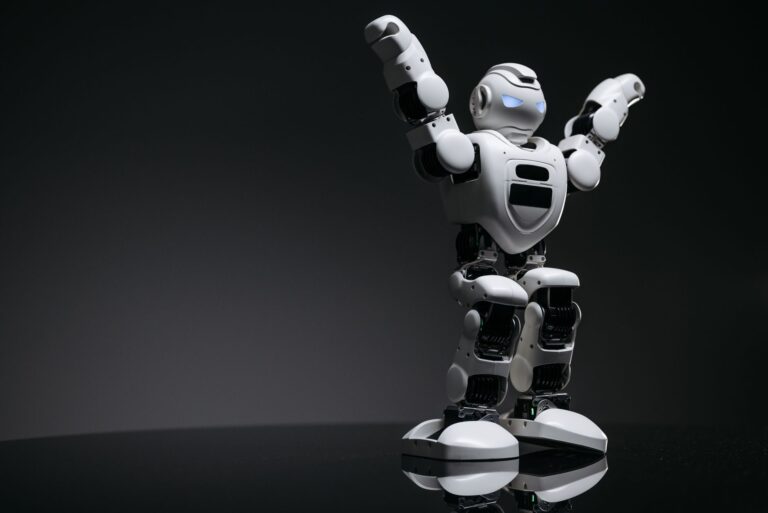
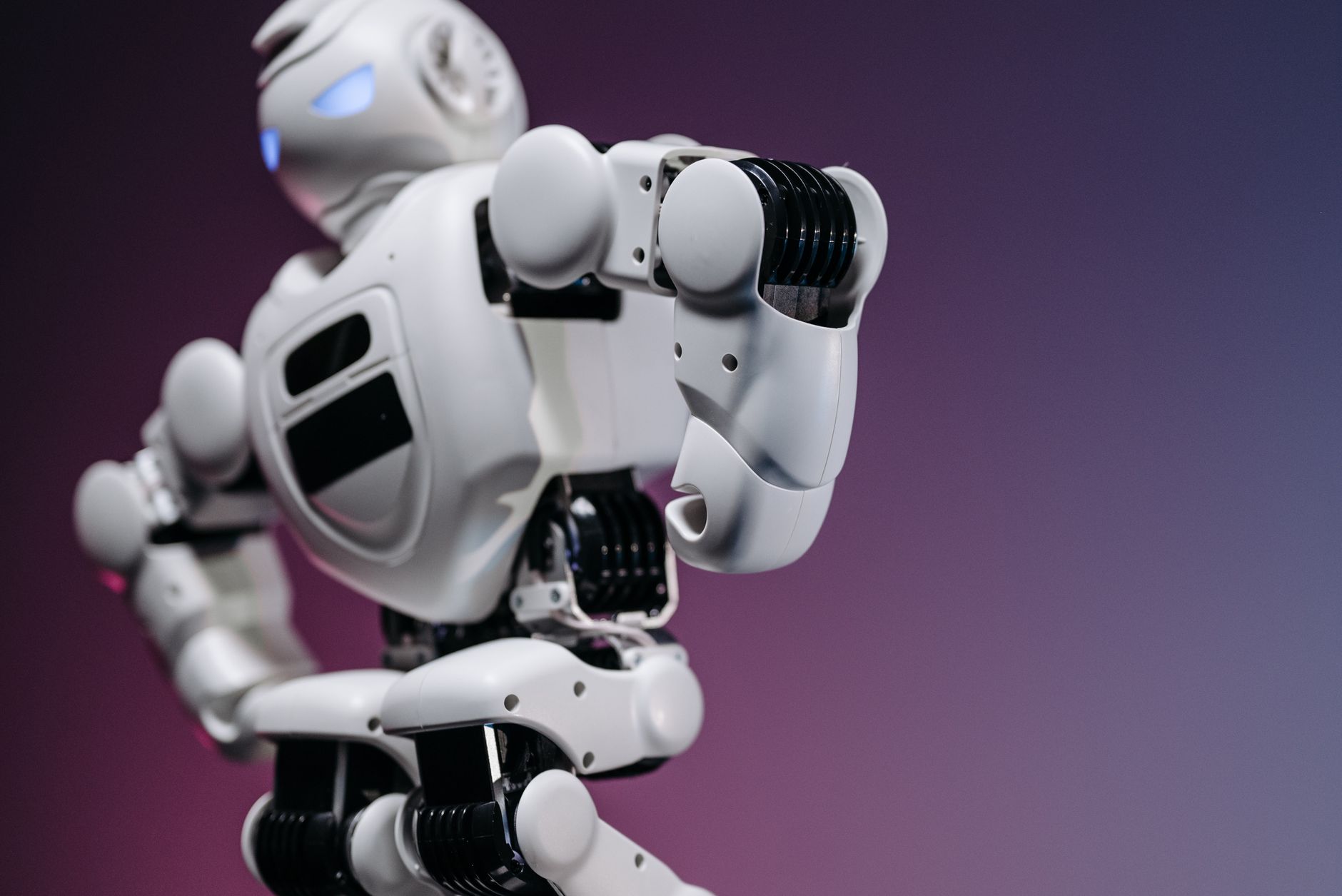
The deployment announcements of mid-2026 represent something qualitatively different from earlier robotics developments. When BMW group committed to Figure 03 robots following Figure 02’s proven performance at Spartanburg, they weren’t piloting an experimental system—they were scaling a validated production tool. Similarly, AGIBOT’s transition of 15,000 wheeled semi-humanoid robots to production deployment indicates that companies have moved beyond questions about whether robots can perform specific tasks and are now focused on how many they can manufacture and deploy.
ABB Robotics contributed to this momentum with the Flexley Stack F712, an AI-powered Visual SLAM forklift that expands the capabilities of autonomous mobile robots into new operational domains. These systems use simultaneous localization and mapping to navigate complex warehouses and factories without pre-programmed routes, adapting in real time to obstacles and layout changes. The breadth of these deployments across different manufacturers and applications suggests that robotics technology has crossed a threshold from specialized use cases to becoming standard infrastructure.
Investment Patterns Reveal Confidence in Robotics Economics
The venture capital surge—41% year-over-year growth to $9.4 billion in 2025—reflects not just speculative enthusiasm but increasing confidence in robotics’ return on investment. Companies are funding robotics ventures at rates not seen in the previous decade because the unit economics are improving: robots are becoming cheaper to build, faster to deploy, and capable of performing higher-value tasks than before. This financial momentum creates a positive feedback loop.
More funding enables faster innovation cycles, which produces better products, which justifies further deployment and investment. The comparison to other technology sectors is instructive: robotics funding is now comparable to early-stage biotech and cleantech, sectors with significant infrastructure requirements and long development cycles. This positioning suggests the industry has genuine conviction in robotics’ ability to drive productivity across multiple sectors, though it also means the market is pricing in expectations that must be met through continued technical progress.
Healthcare and Non-Industrial Applications Expanding Rapidly
Beyond manufacturing and logistics, robotics is penetrating adjacent sectors at accelerating rates. Healthcare-adjacent robotics deployments crossed 1,200 units in 2025 and are projected to reach 3,500 by the end of 2026. These systems range from surgical assistance robots to mobile units handling routine hospital tasks like transport and disinfection, but a limitation is worth noting: regulatory pathways for healthcare robots vary significantly by country and application, creating barriers to rapid scaling that don’t exist in industrial settings.
The expansion into healthcare demonstrates that the robotics opportunity extends beyond warehouse automation. Surgeries, patient transport, and lab work create different constraints than manufacturing—they require higher reliability standards, different safety certifications, and more intensive oversight. Yet the same AI innovations enabling warehouse robots are being adapted to these domains, with natural language interfaces helping medical staff control systems and machine vision helping robots navigate hospital environments with adequate safety margins.
Training Method Transitions Reveal Practical Priorities
The shift from reinforcement learning to imitation learning as the primary training method reflects pragmatic engineering decisions. Reinforcement learning, which trains robots by rewarding desired behaviors, is powerful but computationally expensive and can produce unpredictable behaviors during training. Imitation learning, which learns from demonstrations, trains faster and produces more interpretable results, though it requires human experts to generate high-quality training data.
This transition indicates the industry is prioritizing deployment speed and safety over exploring novel learning approaches. Companies have concluded that for production systems, predictable behavior learned from human examples outweighs the theoretical advantages of pure reinforcement learning. This preference constrains innovation in certain directions while accelerating it in others—it favors companies with access to expert demonstration data but enables faster scaling once training datasets are prepared.
The Transition From Foundational Research to Deployment Engineering
The robotics industry is formally entering what stakeholders call the “era of deployment”—a shift from the previous foundational era, where research focused on making robots move reliably, to an era where engineering focuses on making robots make intelligent autonomous decisions in the real world. This transition is substantive. It means companies are now hiring deployment engineers, manufacturing specialists, and operations managers rather than primarily Ph.D. researchers in robotics and machine learning.
Industrial robot installations at USD 16.7 billion represent the largest recorded investment in robotic hardware, and the composition of that investment has changed. A decade ago, most of that spending went to highly specialized, fixed-installation robots performing repetitive tasks in controlled environments. Today, a growing proportion funds mobile robots, collaborative systems, and AI-equipped machines capable of operating in dynamic settings. The era of deployment has specific requirements: reliability at scale, serviceable designs, clear cost-per-task economics, and integration with existing warehouse and factory systems—none of which are solved by robotics research alone.
- —